
Walking into a mass-market furniture store and seeing pre-distressed plastic shelves for $150 is enough to make any authentic creator cringe. I remember spending a whole weekend and nearly $200 trying to buy that “perfectly unpolished” look from a catalog only to realize my room looked like a sterile showroom instead of a personal sanctuary. The heart of this aesthetic is not found in a box but in the grit and history of items you transform yourself. If you want a space that feels lived-in, rebellious, and deeply personal without draining your bank account, you are in the right place. We are moving away from polished perfection and toward something much more interesting.
Executive Summary
This guide provides a comprehensive roadmap to achieving a moody, alternative aesthetic through 23 specific projects that prioritize texture and character over cost. You will discover how to use common household items and thrift store finds to create high-impact visual elements that typically retail for hundreds of dollars. We cover everything from textile distressing to industrial lighting hacks with a focus on projects that cost less than $15 and take under two hours to complete. By the end of this article, you will have a clear strategy for layering textures, managing low-light plants, and aging materials to create a cohesive grunge environment. We specifically exclude expensive professional upholstery or permanent structural changes, making this perfect for renters and students on a budget.
1. Distressed Record Displays
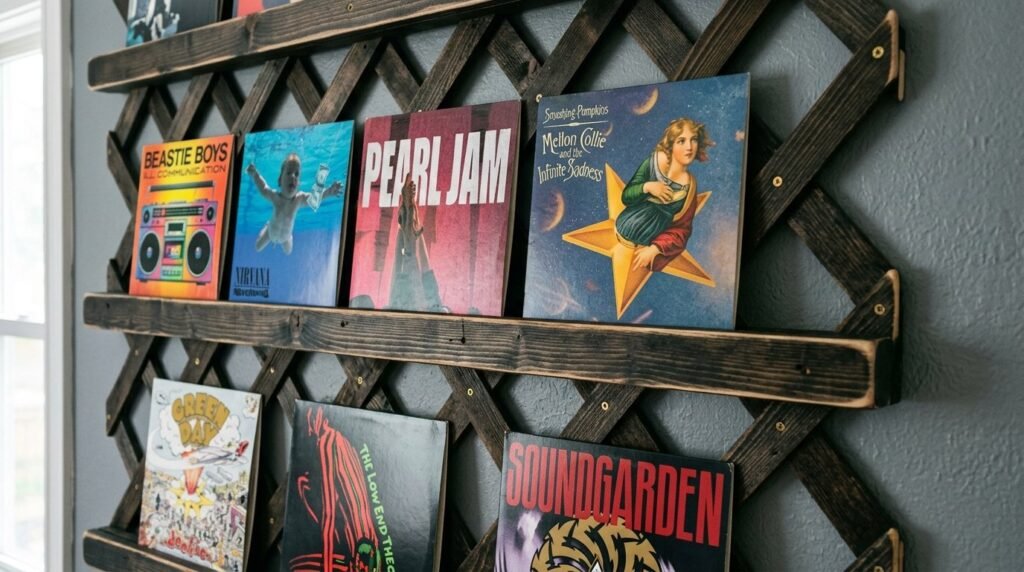
Vinyl adds immediate soul to a room but high-end display ledges are surprisingly pricey. I have found that using simple wooden molding from a hardware store painted in a matte charcoal creates a much better vibe. You can buy an eight-foot strip of lattice molding for about $5 and cut it into four sections. Sand the edges roughly to let the natural wood peek through the dark paint. This creates a raw look that makes the album art pop. One common mistake is mounting these too perfectly straight. A slight staggered layout feels much more organic and less like a corporate music store.
2. Thrifted Mirror Aging
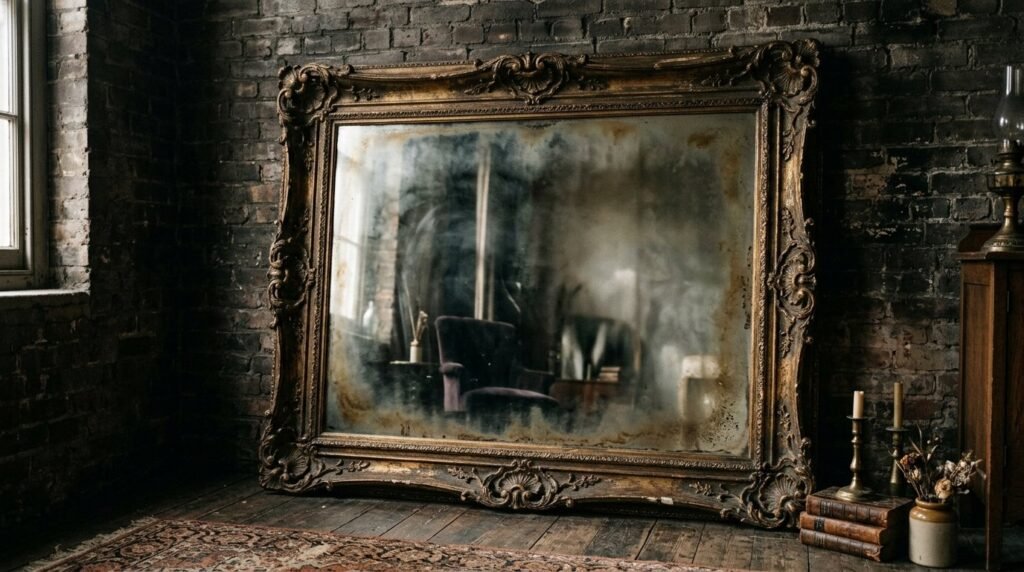
New mirrors are too shiny for a moody space so I always look for heavy frames at estate sales. To age the glass itself without using dangerous chemicals, I use a simple mix of black tea and a tiny bit of silver spray paint on the back of the glass. Remove the cardboard backing and lightly mist the silver paint from a distance then dab it with a sea sponge soaked in strong tea. This creates a foggy, antique look for under $10. It takes about an hour to dry. Make sure you do not over-saturate the sponge or the paint will run in streaks.
3. Industrial Chain Accents
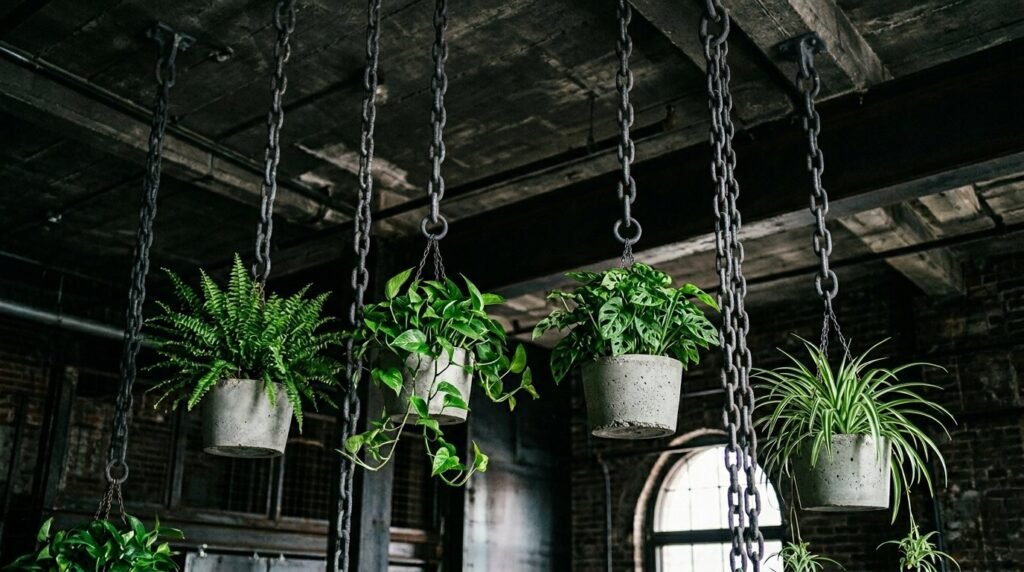
Heavy metal chains are the ultimate grunge accessory for hanging plants or even creating a room divider. Instead of buying “decorative” chains, head to the local hardware store and buy bulk zinc chain for roughly $0.80 per foot. I’ve noticed that soaking the chain in a bucket of salt water overnight gives it a dull, oxidized finish that looks decades old. It is a quick way to add weight to a corner. Just be sure to use heavy-duty ceiling hooks rated for at least 30 pounds if you are hanging heavy pots.
4. Bleach Splatter Textiles
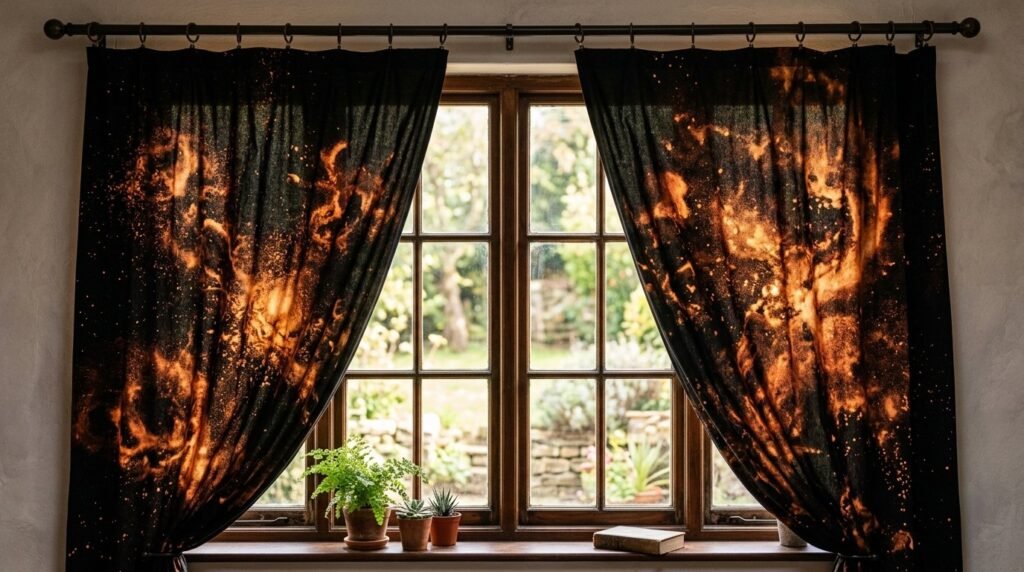
Black bedding or curtains can feel flat until you add some controlled chaos. I once took a pair of $15 black cotton curtains and used a spray bottle filled with a 50/50 bleach and water mix to create a nebula effect. It turns the fabric a rusty orange color that fits the grunge palette perfectly. This project costs almost nothing if you already have bleach. Work outdoors to avoid fumes and rinse the fabric in cold water immediately once you hit the desired color. A common error is spraying too close which creates large soggy holes instead of cool splatters.
5. Vintage Magazine Collages
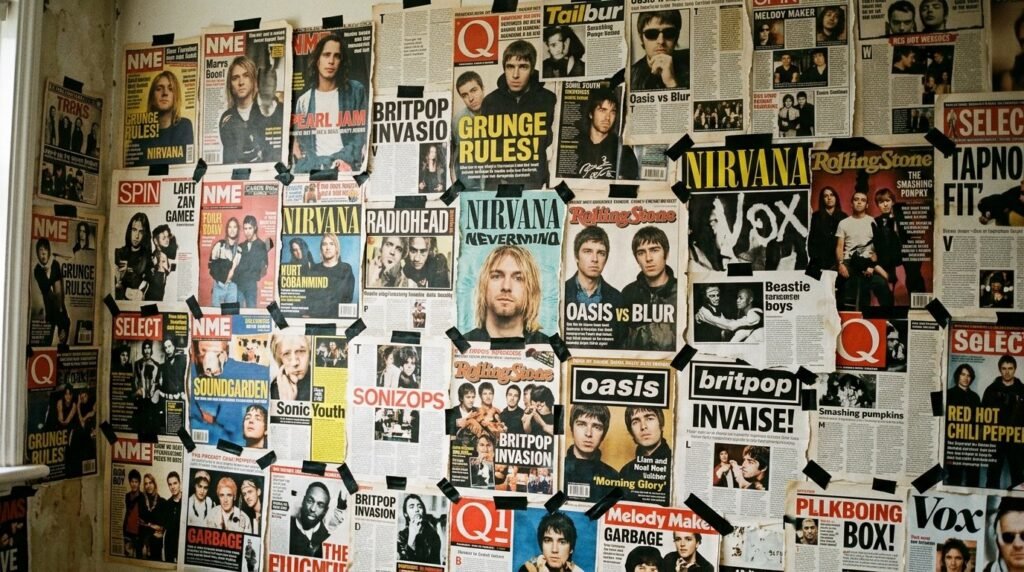
A massive wall of images is a staple of this style but buying “art prints” is a waste of money. I recommend hitting up local used bookstores for 1990s fashion or music magazines which usually go for $2 an issue. Rip the pages out by hand rather than using scissors to get those fuzzy, white edges. I’ve seen this work best when you overlap the pages slightly and use black masking tape on the corners instead of hidden glue. It adds a layer of intentional messiness that defines the room.
6. Layered Rug Textures
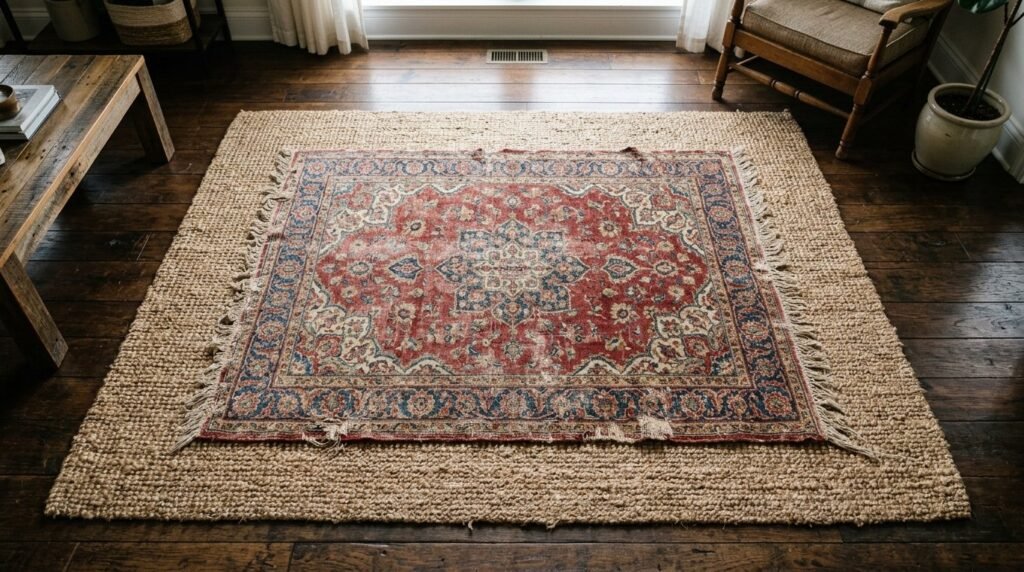
Grunge floors should feel cozy but worn down. I often find that a single large rug looks too formal. Instead, I layer a cheap jute rug over a smaller, faded Persian-style rug found at a thrift shop. You can often find stained rugs for $20 because people think they are ruined, but in a grunge room, those imperfections are features. I’ve tried cleaning them with just a stiff brush to keep the “lived-in” texture without making them look brand new. It creates a heavy, grounded feeling in the room.
7. Handwritten Lyric Walls
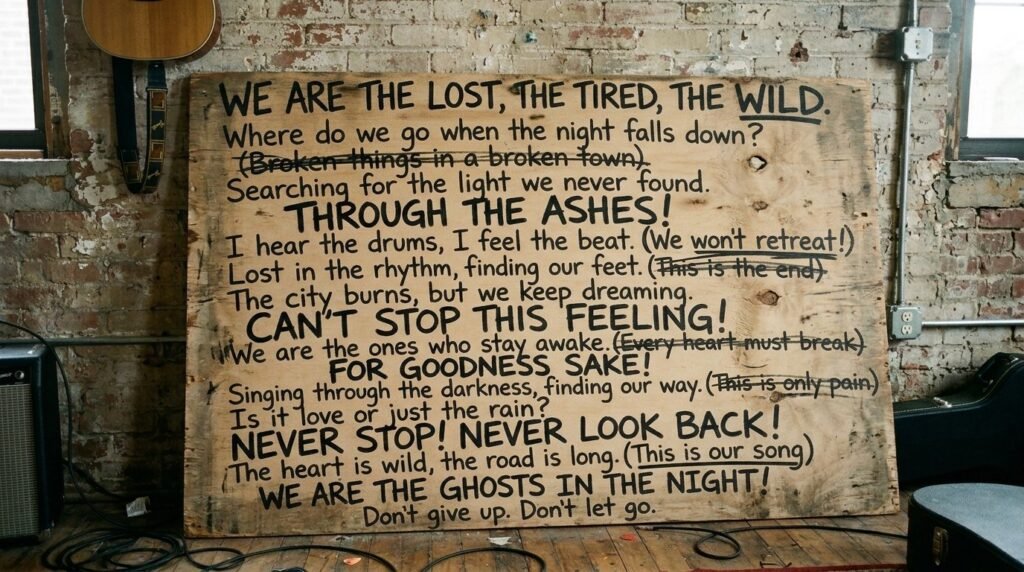
Personalizing your space with text adds a literary, brooding element. I use a thick black paint pen to write song lyrics or poetry directly onto a painted canvas or a piece of reclaimed plywood. In my experience, keeping the handwriting slightly messy and varying the size of the letters makes it look like a private journal entry. This project costs about $6 for the pen. If you make a mistake, do not paint over it. Just cross it out and keep going. The “errors” actually contribute to the authentic feel.
8. Concrete Pot Aging
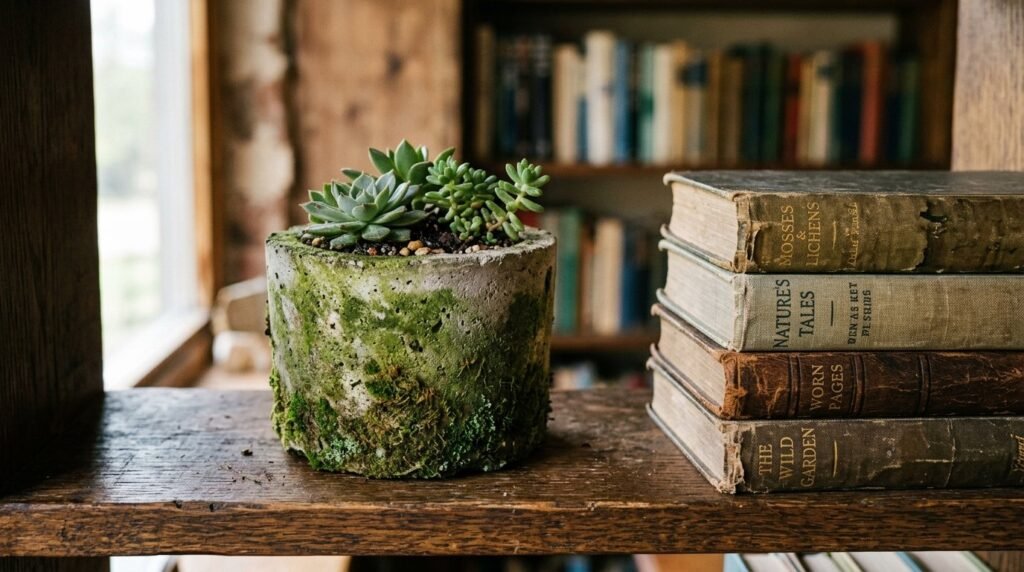
Concrete planters are great but they often look too clean when they come from the store. To get that mossy, weathered look quickly, I wipe the outside of a $4 concrete pot with plain yogurt and leave it in a shaded, damp spot for a week. The bacteria in the yogurt encourages natural lichen and moss growth. It sounds strange but it works incredibly well for adding a touch of nature that feels ancient rather than fresh. Just make sure the pot is outdoors while the “aging” process happens.
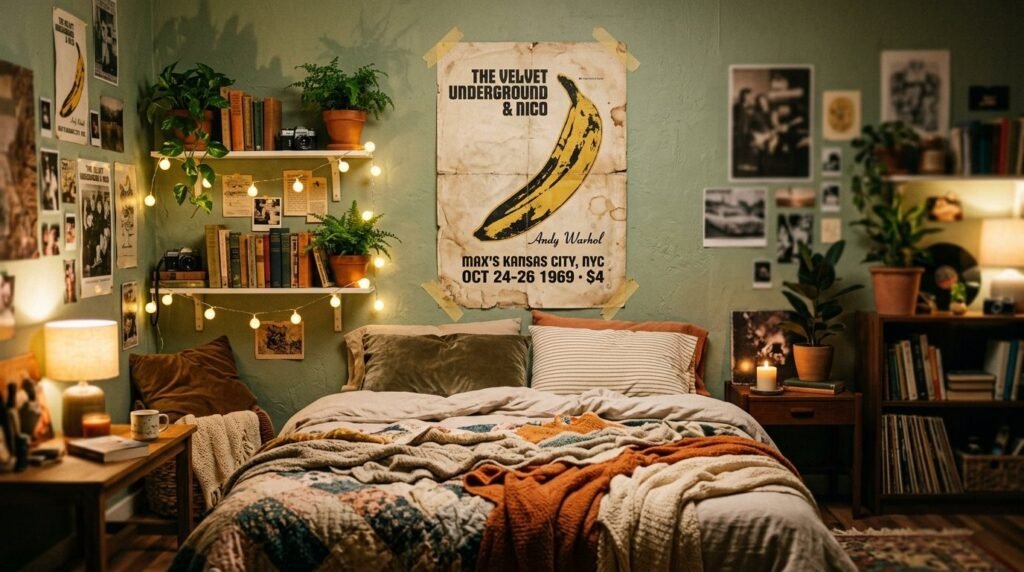
9. Band Poster Distressing
Brand new posters look out of place in a room that values history. I like to take a new $10 poster and lightly sand the surface with fine-grit sandpaper to dull the ink. Then, I crumple it into a tight ball and flatten it back out. If you want a stained look, wipe a damp coffee filter over the creases. This gives the paper a leathery, vintage texture that looks like it has been moved from apartment to apartment for years. It is a five-minute task with a massive visual payoff.
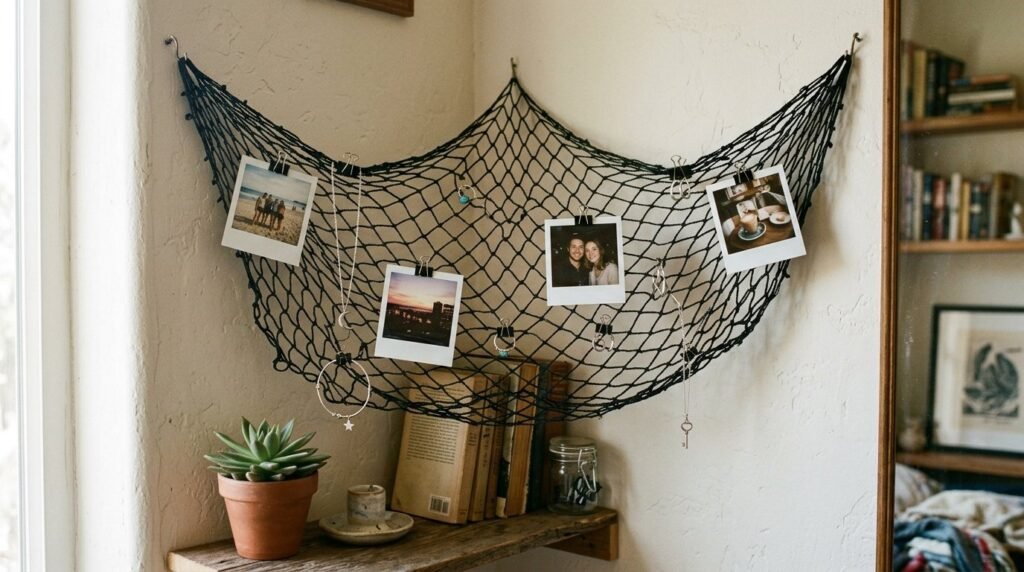
10. Fishnet Wall Organizers
Using fishnet as a wall hanging is a classic way to display Polaroids or jewelry. You can buy a large decorative net for $12 online or at a party supply store. I prefer to dye mine a darker gray using a $4 bottle of fabric dye. Stretch it across a corner and use small black binder clips to attach your items. It provides a structured but loose way to organize clutter. Avoid using white nets as they tend to look more “nautical” than “grunge” unless they are heavily dyed.
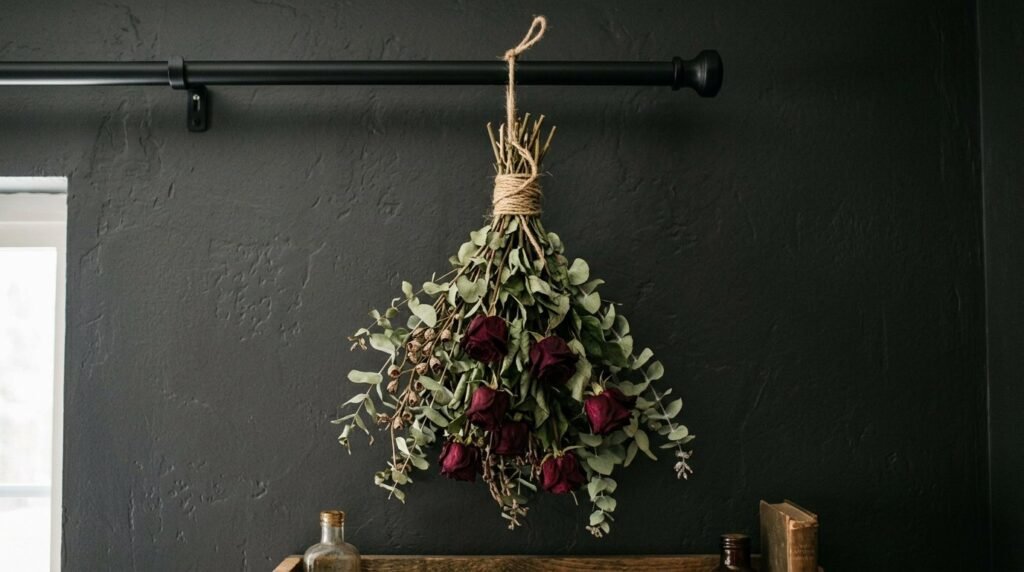
11. Dried Flower Bundles
Dead things can be beautiful in the right context. I never throw away bouquets. Instead, I hang them upside down with twine from a curtain rod for two weeks until they are completely brittle. In my experience, eucalyptus and baby’s breath hold their shape the best. This adds a Victorian, gothic layer to the room for $0 since you are just repurposing old flowers. A common mistake is hanging them in a humid bathroom where they will just get moldy instead of drying out.
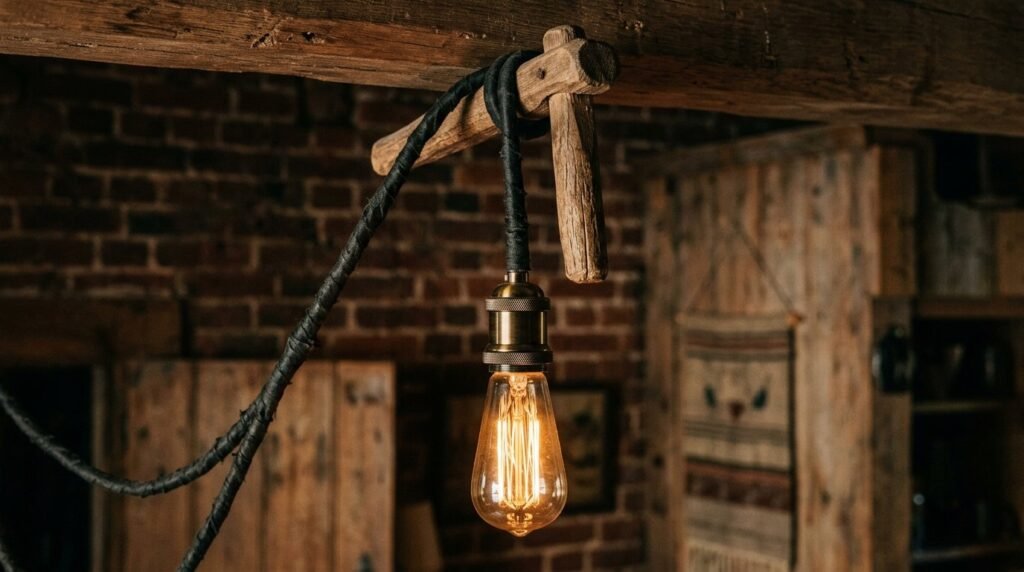
12. Exposed Wire Lighting
Traditional lampshades can feel too “suburban.” I like to take a basic $10 pendant light cord and wrap the wire in black friction tape to give it a rugged, matte texture. Pair it with an Edison-style bulb for a warm, amber glow. I’ve noticed that hanging the cord over a simple wooden peg or a thick metal nail looks much better than a standard ceiling fixture. This provides an industrial edge that perfectly complements dark walls. Just ensure your bulb wattage does not exceed the cord’s rating for safety.
13. Ripped Fabric Garlands
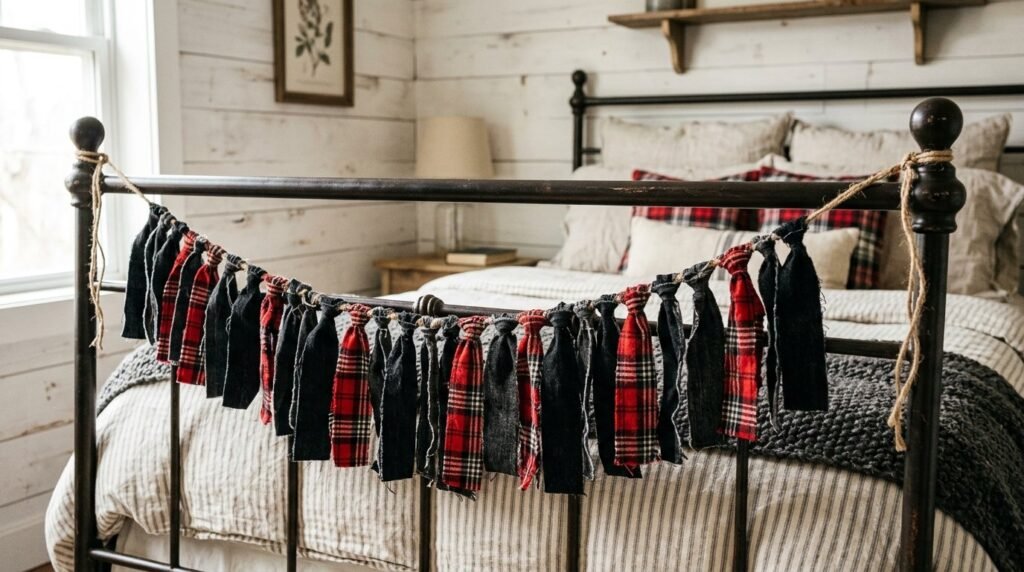
Instead of plastic bunting, I use scraps of old flannel shirts or black denim. Rip the fabric into long strips about two inches wide. The frayed threads are the key here. Tie them onto a length of thick twine and hang them across a window or bed frame. It adds a soft, tactile element that breaks up the hard lines of a room. This is a great way to use clothing that is too torn to wear. It costs nothing and takes about 20 minutes to assemble.
14. Old Book Stacks
Books are the best cheap decor. I visit the “clearance” bins at libraries where books are often $0.50 each. I look for hardcovers with the dust jackets missing. I’ve seen many people benefit from stacking these by color or even turning the spines inward to show the yellowed pages. This creates a neutral, textured look that feels intellectual and moody. A stack of five books makes a perfect $2.50 side table for a floor lamp or a coffee mug.

15. Patina Metal Shelving
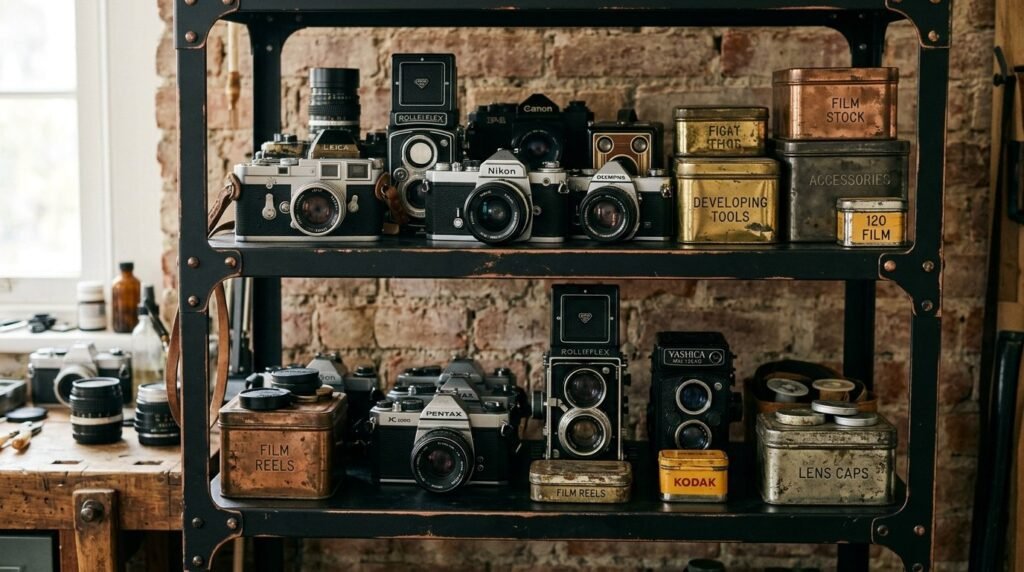
Basic metal utility shelves are cheap but they look like they belong in a garage. I like to spray mine with a matte black primer and then lightly dry-brush some copper paint over the edges. This creates a faux-oxidized look that mimics expensive antique metal. You can get a can of primer for $6 and a small tube of copper paint for $3. It transforms a basic $20 shelf into a statement piece. Avoid using high-gloss paint as it ruins the industrial effect.
16. Flannel Chair Reupholstery
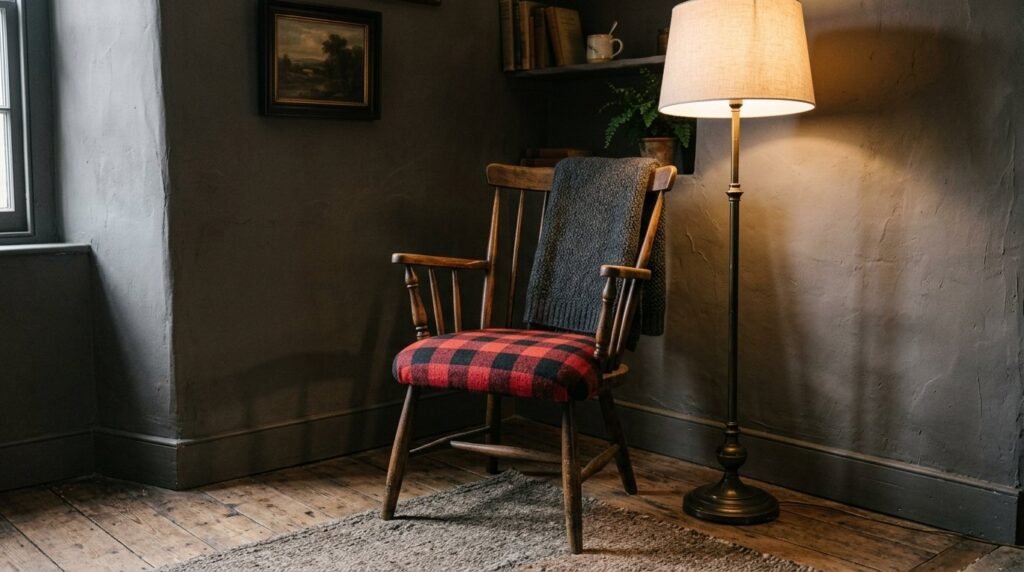
If you have a boring wooden chair, you can transform the seat with an oversized thrifted flannel shirt. Just unscrew the seat pad, wrap the fabric tightly around it, and staple it to the bottom with a heavy-duty stapler. It takes about 10 minutes and costs roughly $5 for the shirt. I’ve tried this with denim as well, but flannel adds a much-needed softness to the grunge aesthetic. Make sure the fabric is pulled taut so it doesn’t bunch up when someone sits down.
17. Spray Paint Stencils
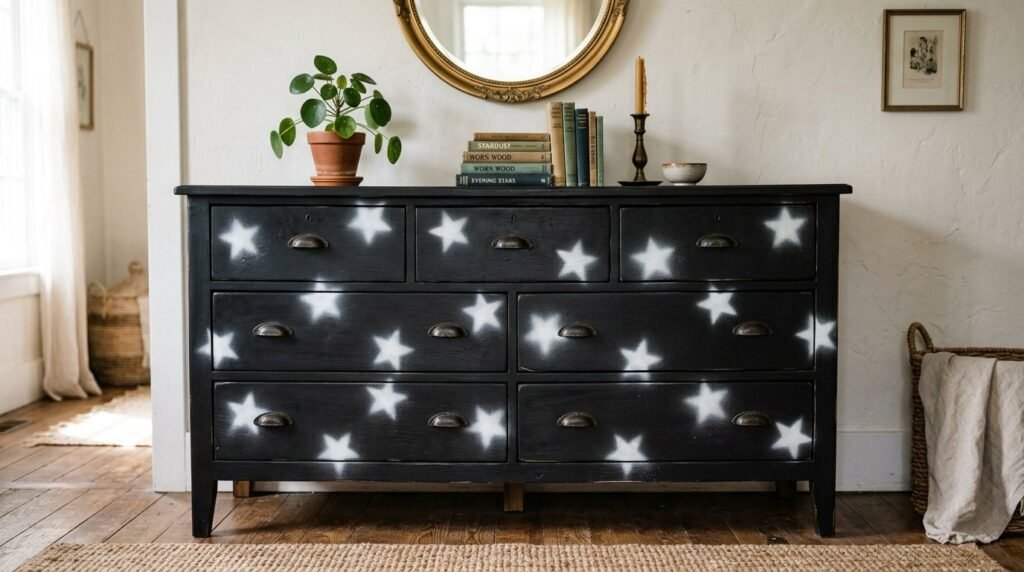
Adding a graphic element to a dresser or a wall can be done with simple cardboard stencils. I like to cut out abstract shapes or star patterns and use a very light coat of matte spray paint. The trick is to hold the stencil slightly away from the surface so the edges come out a bit blurry and soft. This “overspray” look feels much more authentic to the DIY scene than a crisp, perfect line. A can of paint is about $7 and one can will last for multiple projects.
18. Polaroid String Lights
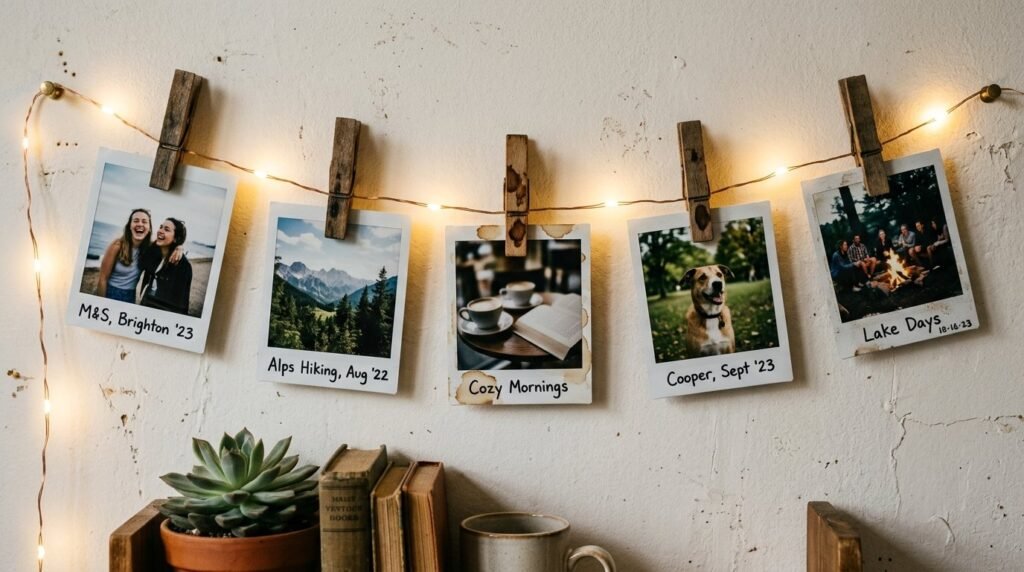
Lighting should be low and scattered. I take a basic $8 string of warm white LEDs and use small wooden clothespins to attach instant photos or film strips. I’ve noticed that if you soak the clothespins in coffee for an hour, they take on a dark, weathered wood tone that blends into the background. It turns a generic dorm-room staple into something that feels curated and personal. It provides enough light to see by without ruining the moody atmosphere of the room.
19. Rough Wood Shelving
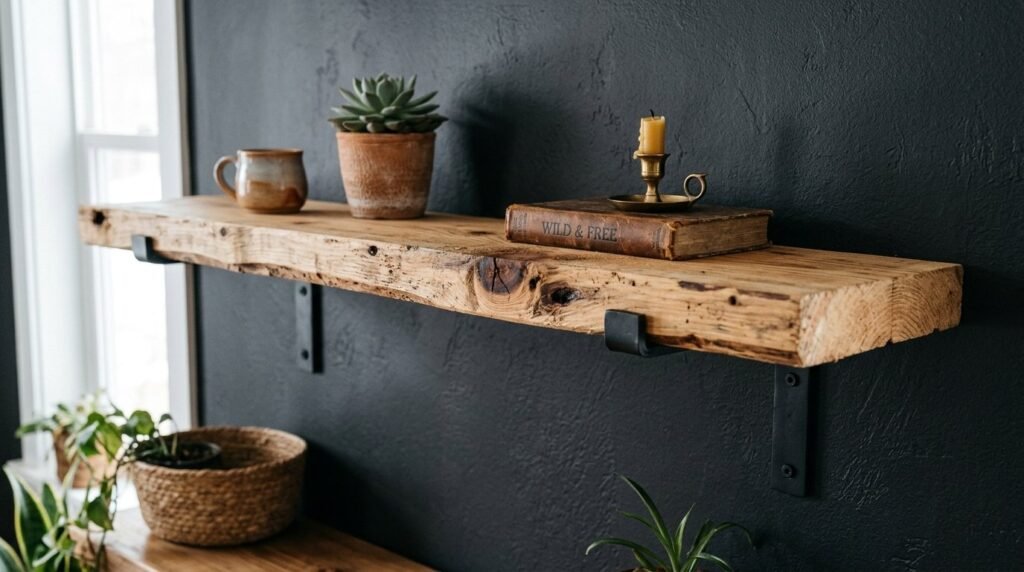
Instead of buying finished shelves, I go to a local lumber yard and ask for “seconds” or scrap pieces of cedar or pine. These often have knots and cracks that a furniture maker would hate, but they are perfect for us. I mount them with simple black L-brackets from the hardware store. The total cost is usually under $15. I’ve noticed that leaving the wood unsealed allows it to age naturally over time, picking up scuffs that just add to the character of the room.
20. Vinyl Tape Borders
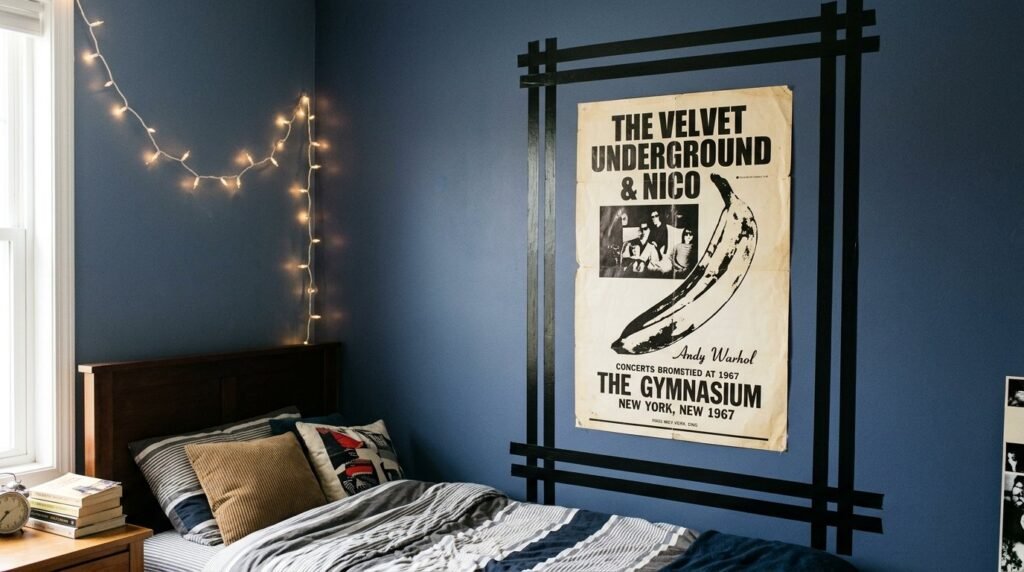
If you cannot paint your walls, black vinyl electrical tape is your best friend. I use it to create “frames” directly on the wall around posters or to create a faux wainscoting effect. It is easy to remove and leaves no residue, making it perfect for renters. A roll costs about $2. I once used it to create a grid pattern on a closet door and it completely changed the energy of the space. Just be sure to wipe the wall with a dry cloth first so the tape sticks well.
21. Safety Pin Art
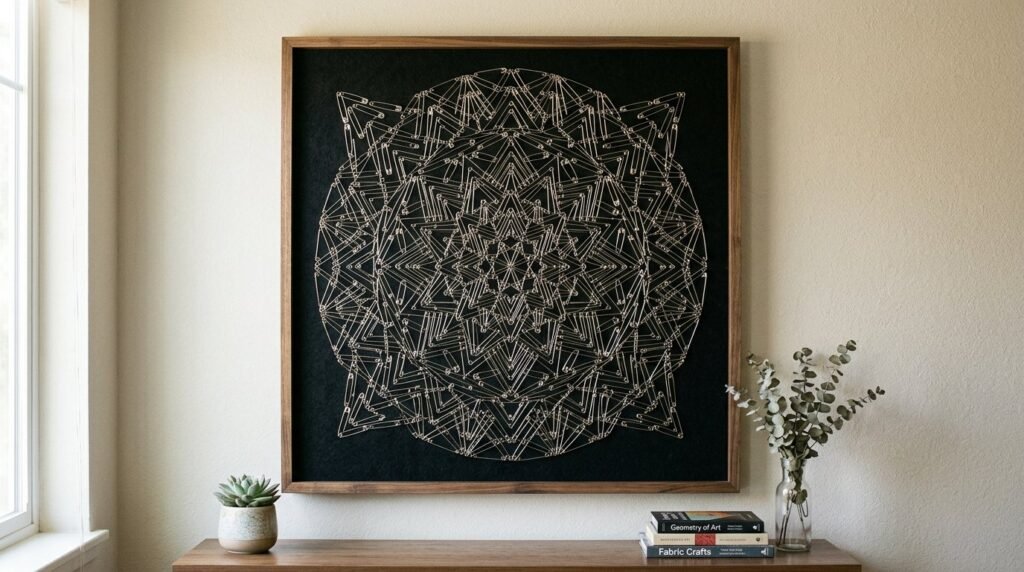
Safety pins are a core symbol of DIY culture. I like to take a piece of black felt or heavy canvas and create patterns using hundreds of silver safety pins. You can buy a bulk pack of 500 pins for about $8. The metallic shimmer against the dark fabric looks like industrial embroidery. It is a time-consuming project but very meditative. I’ve seen this work well as a small framed piece or even a large wall hanging.
22. Crushed Velvet Draping
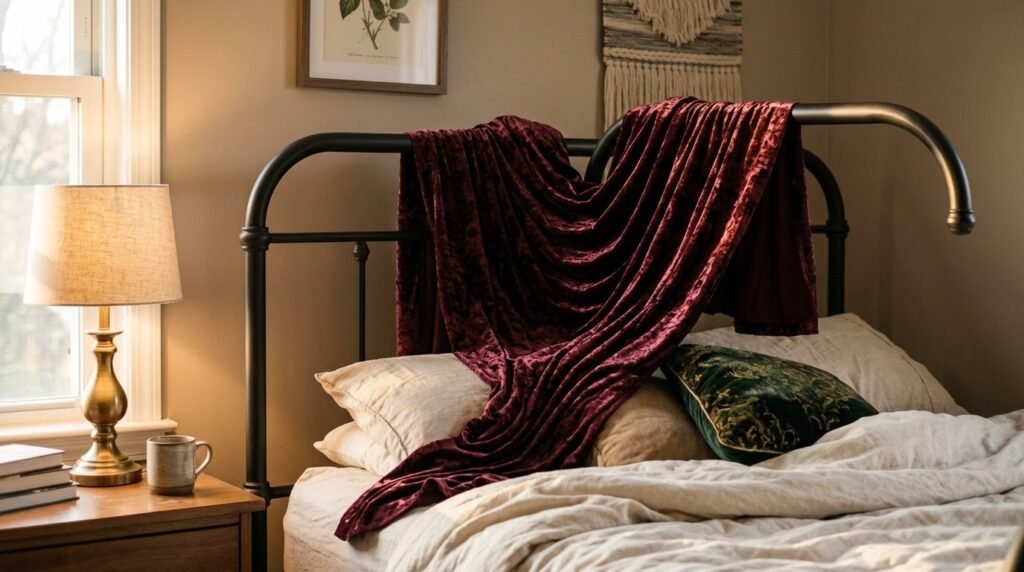
Velvet adds a layer of “faded glamour” that balances the harsher industrial elements. I look for velvet remnants at fabric stores or large velvet dresses at thrift shops that I can cut open. Drape the fabric over a lampshade or a headboard. It catches the light in a beautiful, dramatic way. This usually costs under $10. I’ve noticed that darker jewel tones like burgundy or forest green work best for maintaining that moody, grunge room decor diy vibe.
23. Thrifted Frame Gallery
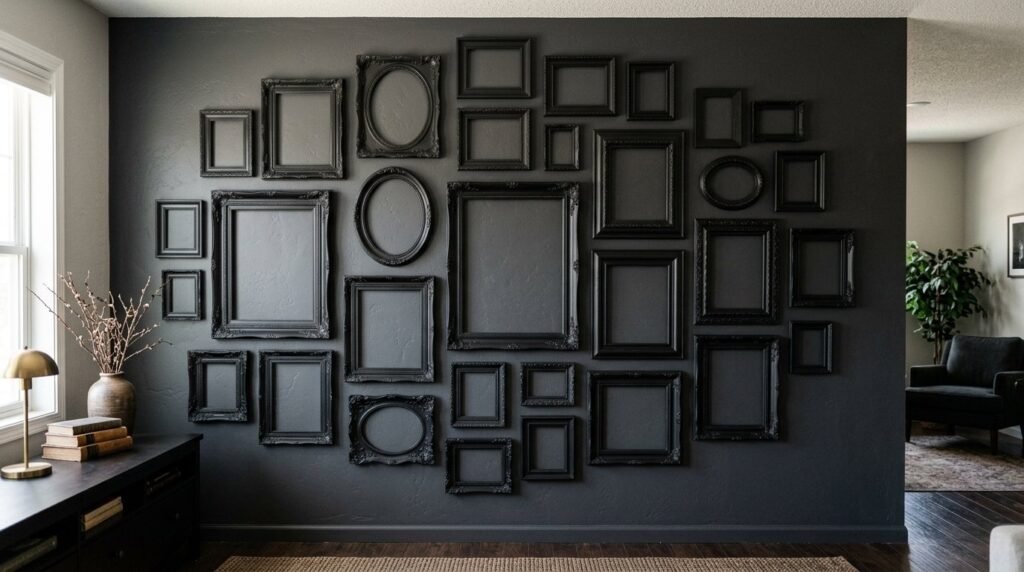
Empty frames can be just as powerful as art. I buy mismatched frames from the thrift store for $1 to $3 each, remove the glass, and paint them all the same matte black. Hanging a cluster of empty frames creates a structural, architectural interest on a blank wall. It is a very low-cost way to fill a large space. I’ve tried mixing different styles like ornate baroque with simple modern frames for the best visual tension.
Frequently Asked Questions
How do I make a grunge room look intentional rather than just messy?
The key is a consistent color palette. While the items themselves are distressed or “messy,” keeping your colors to a tight range of charcoal, olive, burgundy, and tan creates a cohesive look. I’ve noticed that when everything shares a similar tone, the eye perceives it as a curated collection rather than a pile of junk. Focus on layering textures like wool, metal, and wood to provide depth without adding clutter.
Is grunge room decor diy expensive to start?
Actually, it is one of the most budget-friendly styles because it celebrates used and “damaged” items. Most of the projects listed here cost under $15. You can often find your best materials in the “as-is” section of stores or at the bottom of bins at thrift shops. The most expensive part is usually the initial tools like a basic drill or a staple gun, but even those can be borrowed or bought used.
What are the best colors for this aesthetic?
Deep, desaturated colors work best. Think of colors you would see in an old factory or a rainy forest. Slate gray, forest green, deep plum, and rusty orange are excellent choices. I suggest using a matte black as your “neutral” instead of white. White can often feel too bright and sterile for this style, whereas a dark base allows your DIY projects and textures to stand out.
How can I make my room smell like the aesthetic?
Aesthetics are multi-sensory. Instead of sweet or floral candles, look for scents like sandalwood, tobacco, patchouli, or cedarwood. These “earthier” scents complement the wood and textile elements of the room. I’ve tried using incense, which also provides a bit of ritual and smoke that fits the moody vibe perfectly. Just be careful with open flames around all those textiles.
Can I do this in a small apartment?
Absolutely. In fact, the grunge style often works better in small spaces because it feels “cozy” and “enveloping” rather than “cramped.” Using vertical space with net organizers and wall-mounted record ledges keeps the floor clear while still allowing you to display your personality. Lighting is your best tool in a small room—use multiple small light sources rather than one big overhead light to create corners and shadows.
How do I clean distressed decor without ruining it?
You want to remove dust without removing the “character.” For textiles, use a gentle cold wash and air dry to keep the frayed edges intact. For wooden or metal items, a simple dry microfiber cloth is usually enough. Avoid harsh chemical cleaners that might strip away the tea-stains or paint patinas you’ve worked hard to create. If an item gets a new scuff, just consider it part of the ongoing DIY process.
Is this style suitable for kids or pets?
Yes, because it is incredibly forgiving. If a dog scratches a wooden shelf or a kid spills something on a distressed rug, it usually just blends in. It is much less stressful than living in a “minimalist” white house where every speck of dirt is visible. I’ve seen many people benefit from this style precisely because it accommodates the reality of a busy, lived-in home.
What are some good places to find materials?
Beyond thrift stores, look at Facebook Marketplace, Craigslist “free” sections, and even your own recycling bin. Glass jars can become candle holders, and old cardboard can be stencils. Hardware stores are great for raw materials like chain, wire, and unfinished wood. I’ve noticed that asking friends for their “trash” often results in the best project starters.
How do I incorporate plants into a dark room?
Choose low-light survivors like Pothos, Snake Plants, or ZZ Plants. These thrive in the moody, indirect light that defines the grunge look. I’ve tried putting them in my aged concrete pots or hanging them with industrial chains. If your room is truly dark, high-quality dried botanicals are a great alternative that requires zero maintenance and fits the “faded” look perfectly.
Can I mix grunge with other styles?
Yes, “Soft Grunge” mixes in more pastels and florals, while “Industrial Grunge” leans harder into metal and raw wood. The beauty of a DIY approach is that you can pivot. If you want it to feel more “Dark Academia,” just add more old books and gold frames. The core of grunge is authenticity, so if you like an item, find a way to distress it and make it yours.
What lighting is best for a DIY look?
Avoid “daylight” or “cool white” bulbs. They are too clinical. Use “warm white” or “amber” bulbs to create a soft, glowing atmosphere. I’ve noticed that using multiple low-wattage lamps instead of one bright one makes the room feel much larger and more interesting. String lights and Edison bulbs are your best friends here for creating that specific 90s-inspired glow.
How do I know when a room is “finished”?
In my experience, a grunge room is never truly finished—it evolves with you. If you find a new cool magazine or a piece of wood on the street, you find a place for it. When the space feels like a true reflection of your interests and you feel relaxed the moment you walk in, you’ve succeeded. It is about the feeling of the space, not a checklist of furniture.
Conclusion
Creating an authentic space doesn’t require a massive budget or a professional design degree. By focusing on these 23 grunge room decor diy projects, you are choosing to build a sanctuary that values character over consumerism. I’ve seen how small changes like a hand-painted lyric wall or a tea-stained mirror can completely transform a space from a generic room into a personal haven. The most important thing is to start somewhere—pick one project this weekend and see how it feels to create something with your own hands. If you found these ideas inspiring, save this post on Pinterest and share it with someone who is ready to ditch the showroom look for something a bit more real. Your space should tell your story, so start writing it today.