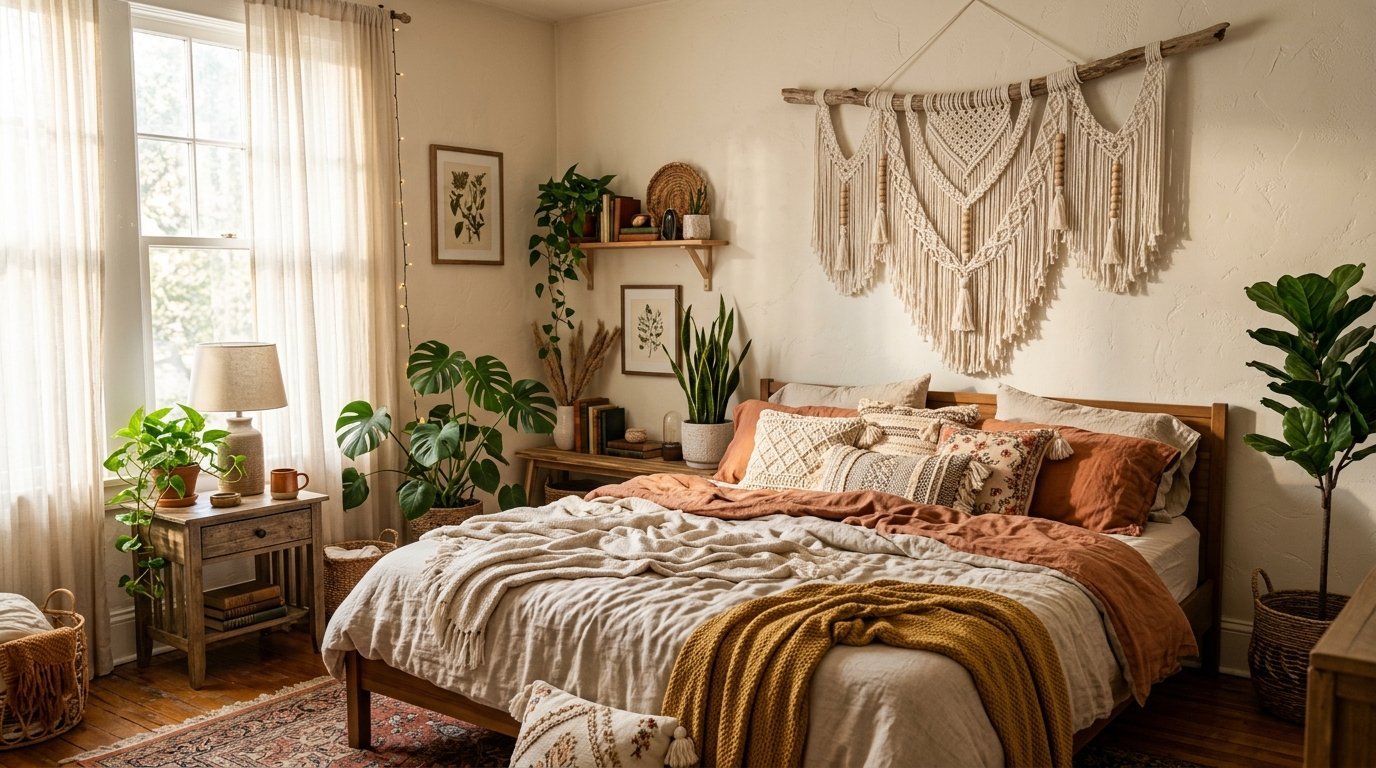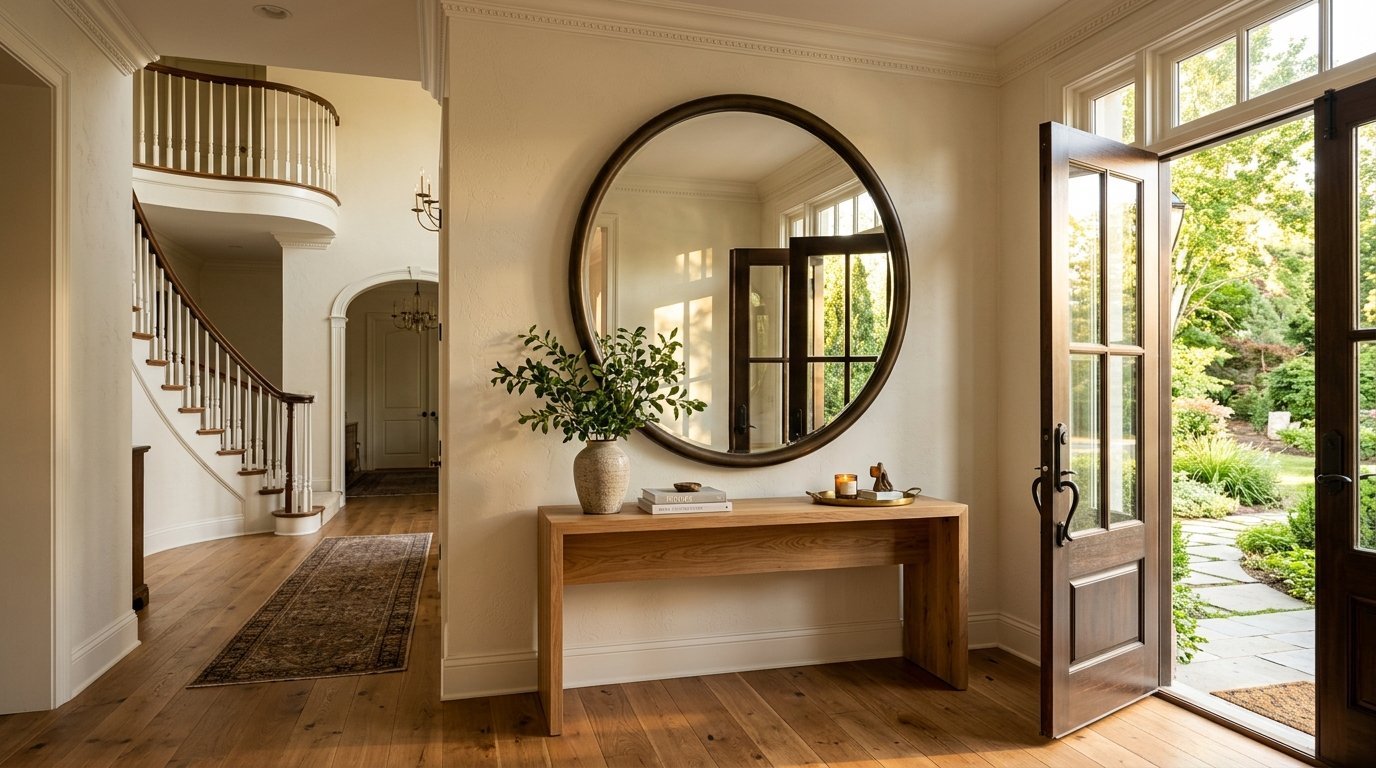
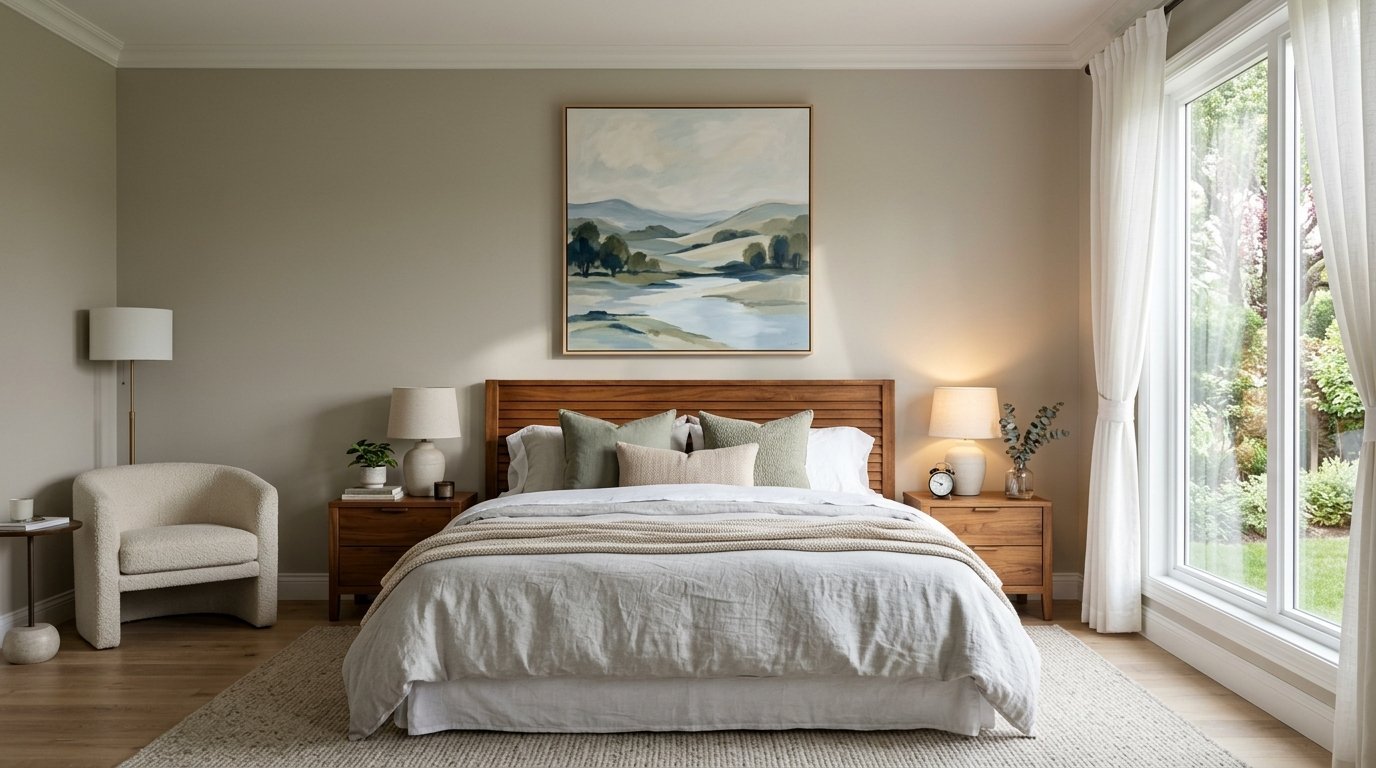
You just bought a beautiful canvas for your sleeping space. You hold it against the drywall. You step back and stare. Something looks completely wrong. The room feels disconnected. The artwork looks like it floats away into the ceiling. Most people guess where to put a nail. They end up with a disjointed wall. I walked into my own sleeping space last year and felt that exact frustration. A dusty frame and cloudy glass ruined the feel of my home. I needed a true Vida De Luxo standard for my space. I grabbed my tape measure and set to work. I figured out exactly where frames belong. You need precise numbers. You need exact spacing. We will fix your walls today.
You will get exact measurements for every wall layout. You will know exactly where to put your nail. I will show you the exact distance between your mattress and your artwork. We will cover spacing for tall ceilings and standard rooms. You will get the exact numbers for guest bedrooms and primary suites. I share my personal cleaning routine to keep glass perfect. We will cover the exact spacing for a relaxing bedroom. Your room will look like a professional magazine feature today. Your house blueprints deserve a flawless finish. You will save time and avoid putting unnecessary holes in your drywall.
What Is the Exact Height to Hang Art Above a Bed?
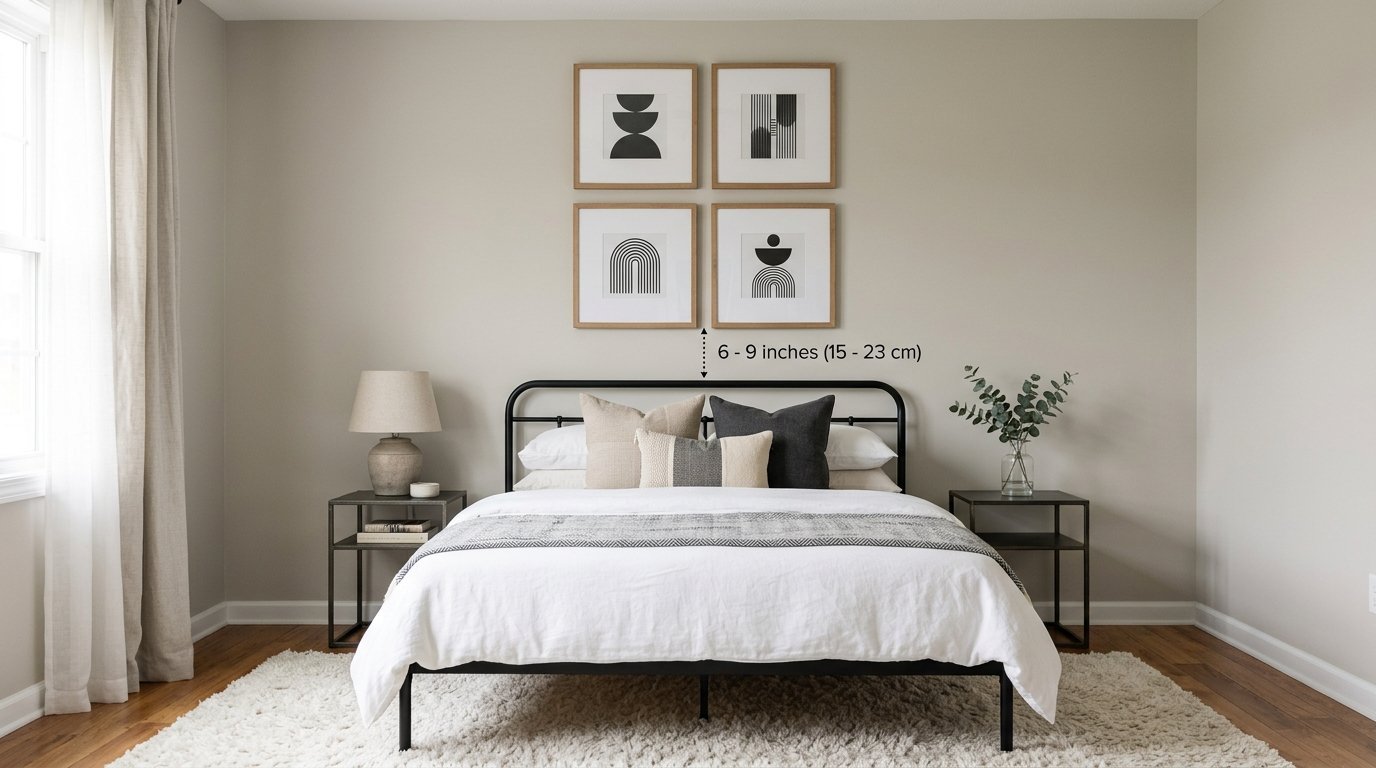
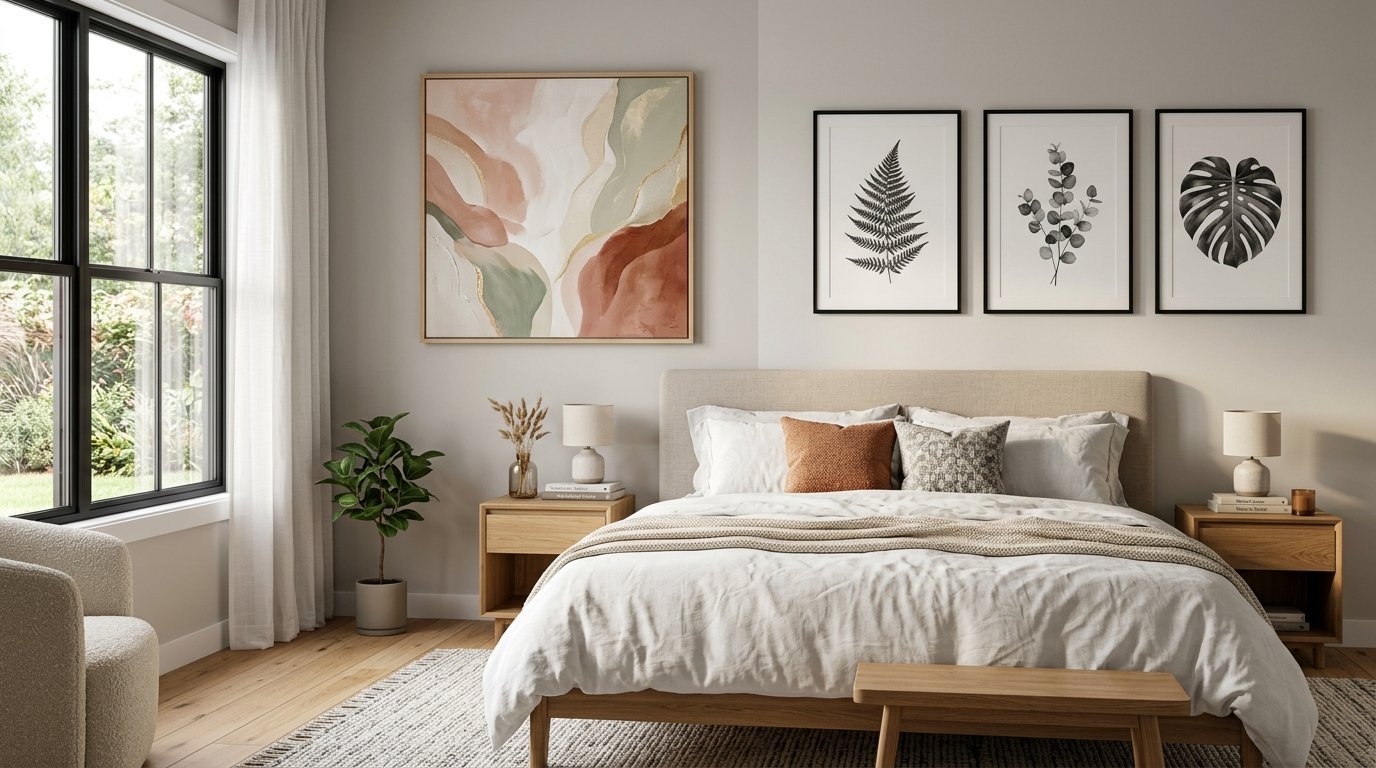
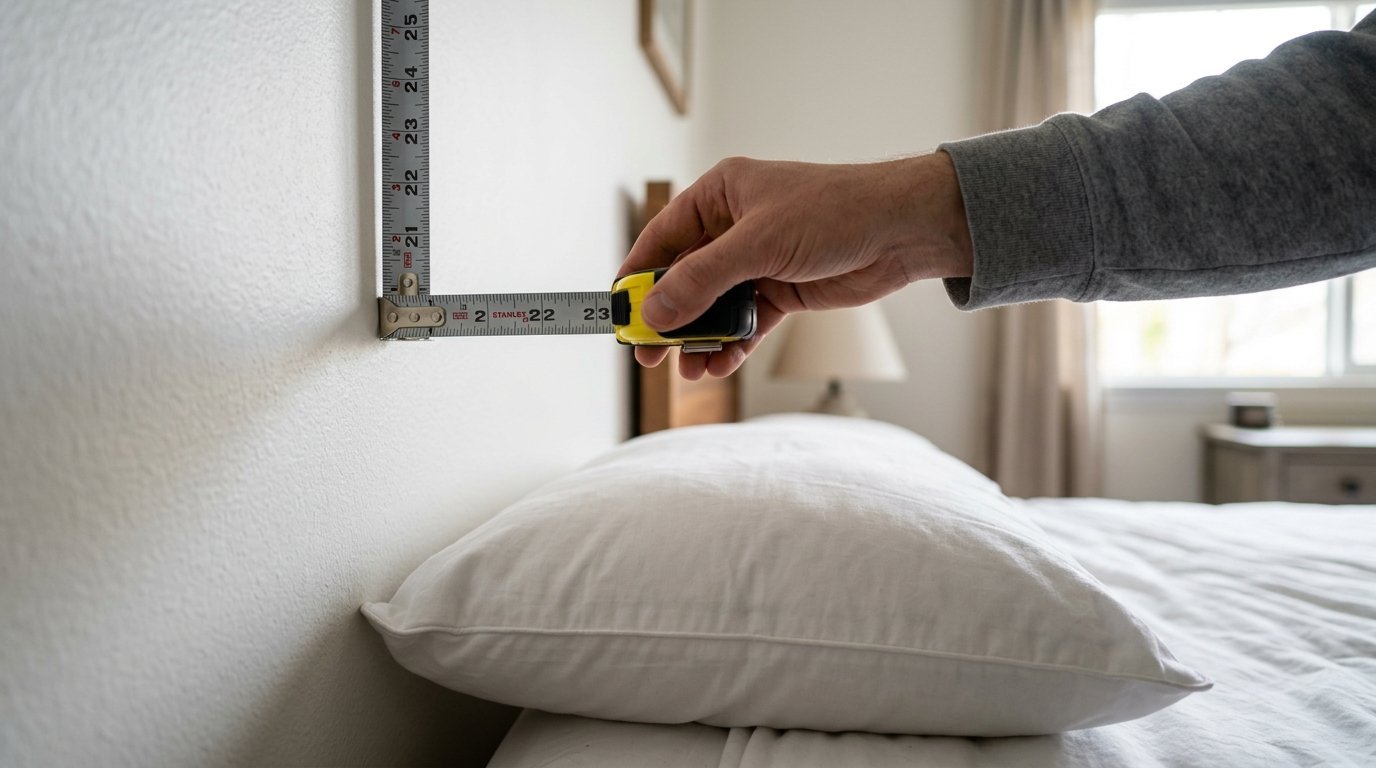
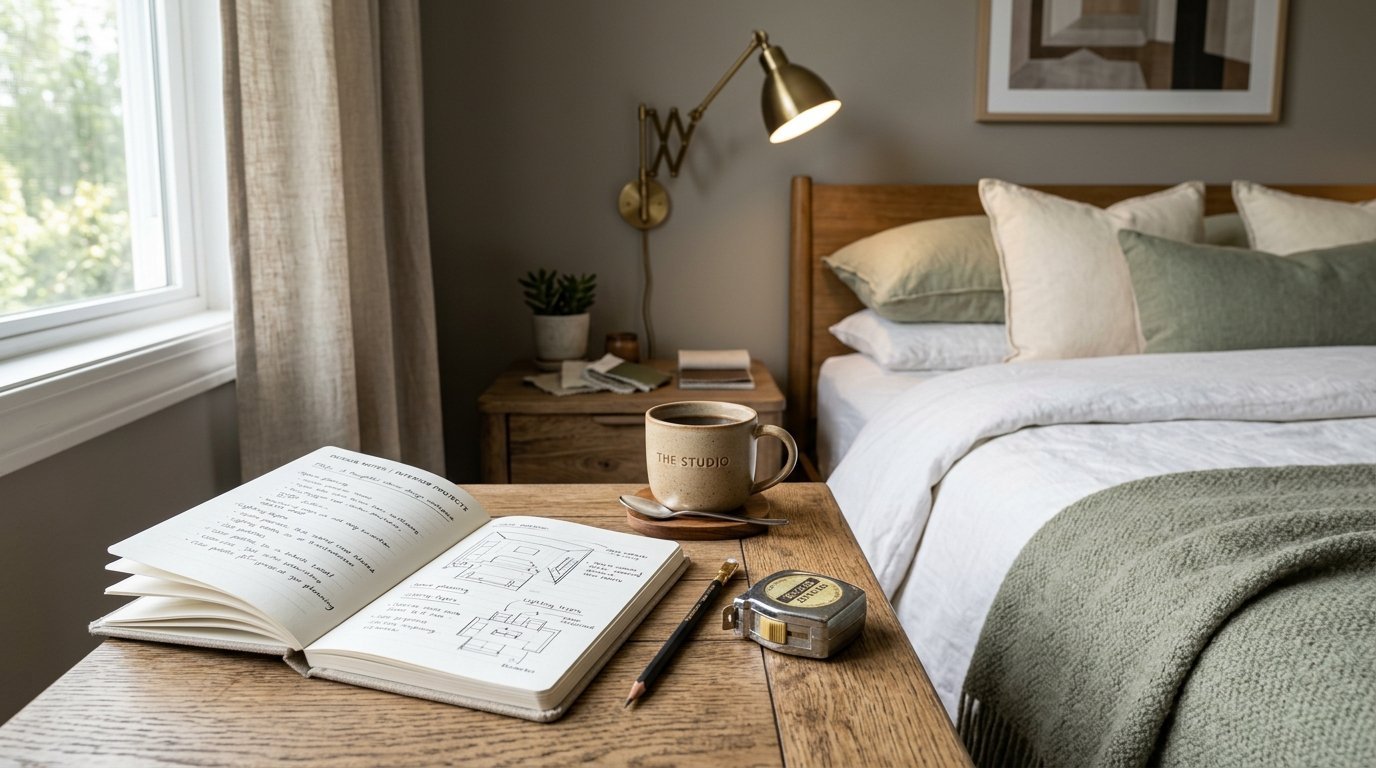
Your artwork needs to connect with your furniture. The space between the bottom frame edge and the mattress top matters most. You must measure exactly eight to ten inches above the headboard. Do not guess this measurement. Grab a metal Stanley tape measure. Mark the drywall with a soft pencil. This specific distance creates a visual anchor. The bed and the art become one cohesive unit.
If you hang the piece too high, it looks lost. The piece floats in the middle of nowhere. If you hang it too low, you bump your head on the glass. Eight to ten inches gives you clearance. It keeps the visual connection strong. This rule works for almost every situation. You just need to follow the math.
I see people making mistakes with this distance all the time. They eyeball the center of the wall. The center of the wall is always wrong. The center of the wall ignores the furniture entirely. You must base your math on the furniture below the art. The furniture anchors the entire room.
How Do Headboards Change Your Measurement?
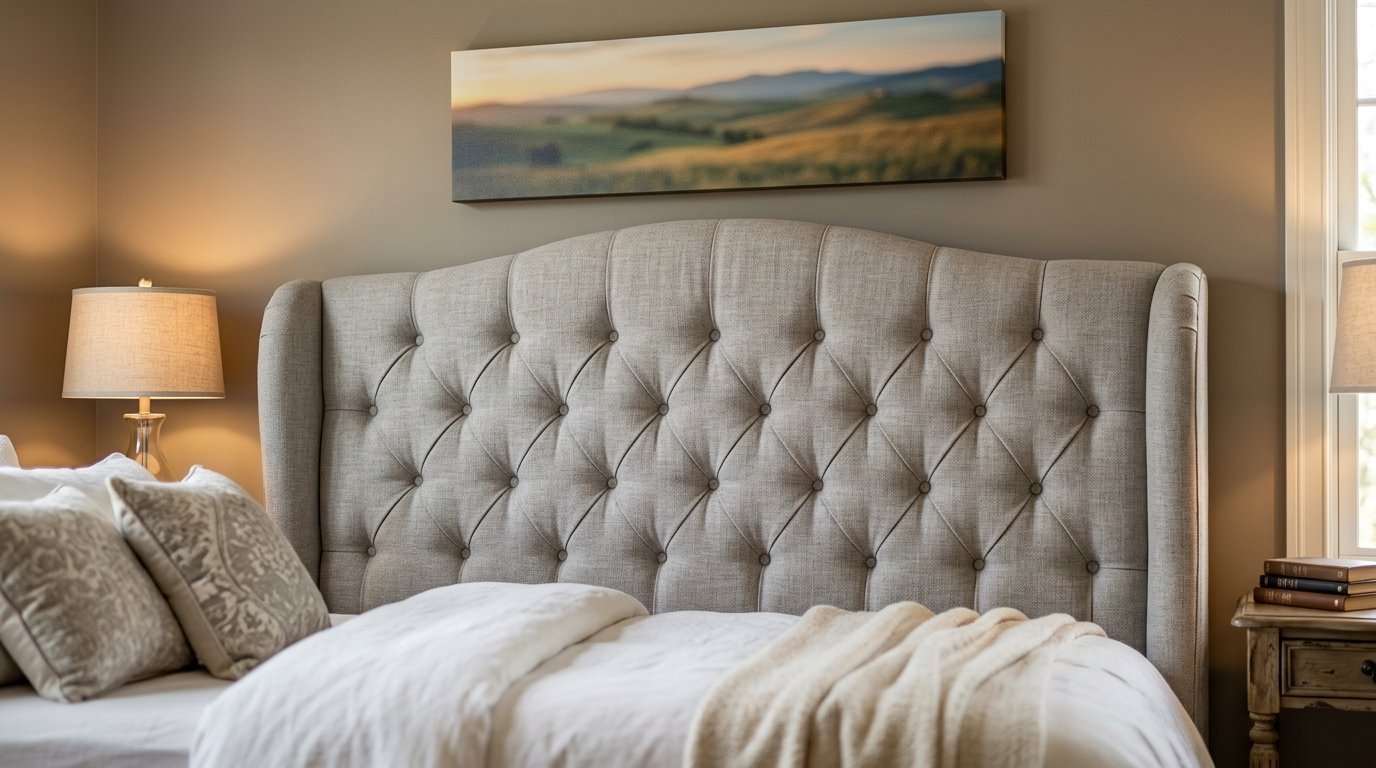
You might have a tall upholstered headboard. You might sleep on a simple metal frame. Your furniture changes everything. If you have no headboard at all, measure from your pillows. Place your sleeping pillows flat against the drywall. Measure eight inches up from the top pillow edge. This becomes your starting line.
If you have a massive wooden headboard, measure from the top wood edge. The eight inch rule still applies. You want the frame to feel attached to the furniture below it. Sometimes a headboard has a curved top. Find the highest peak of that curve. Measure your eight inches from that single peak.
I once helped a friend with a giant tufted headboard. She wanted to center the art between the headboard and the ceiling. The ceiling was ten feet high. The art looked ridiculous up there. We lowered it to eight inches above the tufted fabric. The room instantly felt right. The master bedrooms decor finally felt grounded.
Does Ceiling Height Change Where You Place Frames?
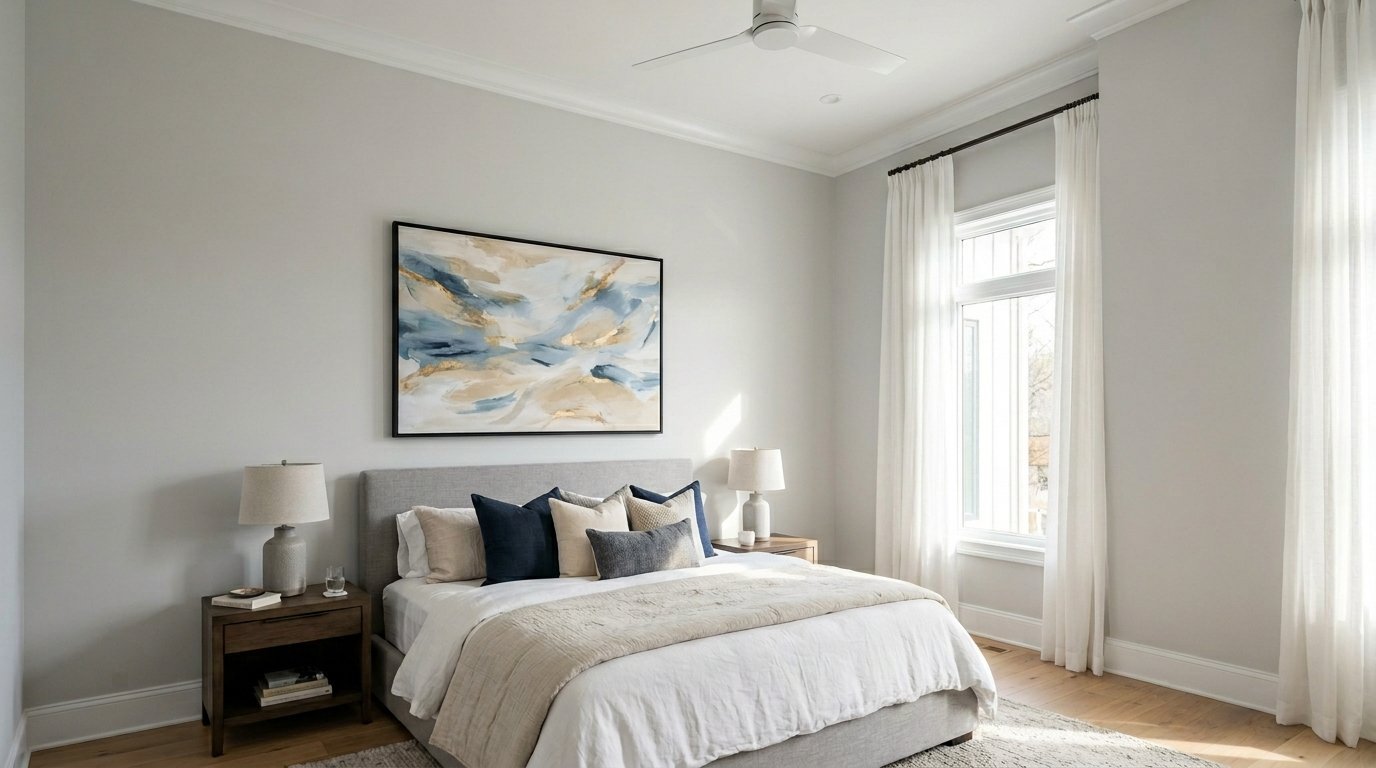
Standard homes have eight foot ceilings. Custom homes often feature ten foot ceilings. You might feel tempted to push art higher in tall rooms. Do not do this. Art belongs to the furniture below it. Art does not belong to the ceiling above it. A neutral bedroom feels calm when items sit at eye level.
Keep the bottom edge eight inches above the furniture. You can use larger canvases to fill tall blank spaces. Do not just raise a small canvas. A small piece hung high looks like a floating island. You want to fill the vertical space with larger objects instead.
If you have vaulted ceilings, the same rule applies. Ignore the slanted drywall above you. Focus entirely on the mattress and the floor. Anchor everything to the ground level. Your eyes naturally rest at a specific height when you walk into a room. You want your artwork waiting right there.
How to Center Art Perfectly Without Math Errors
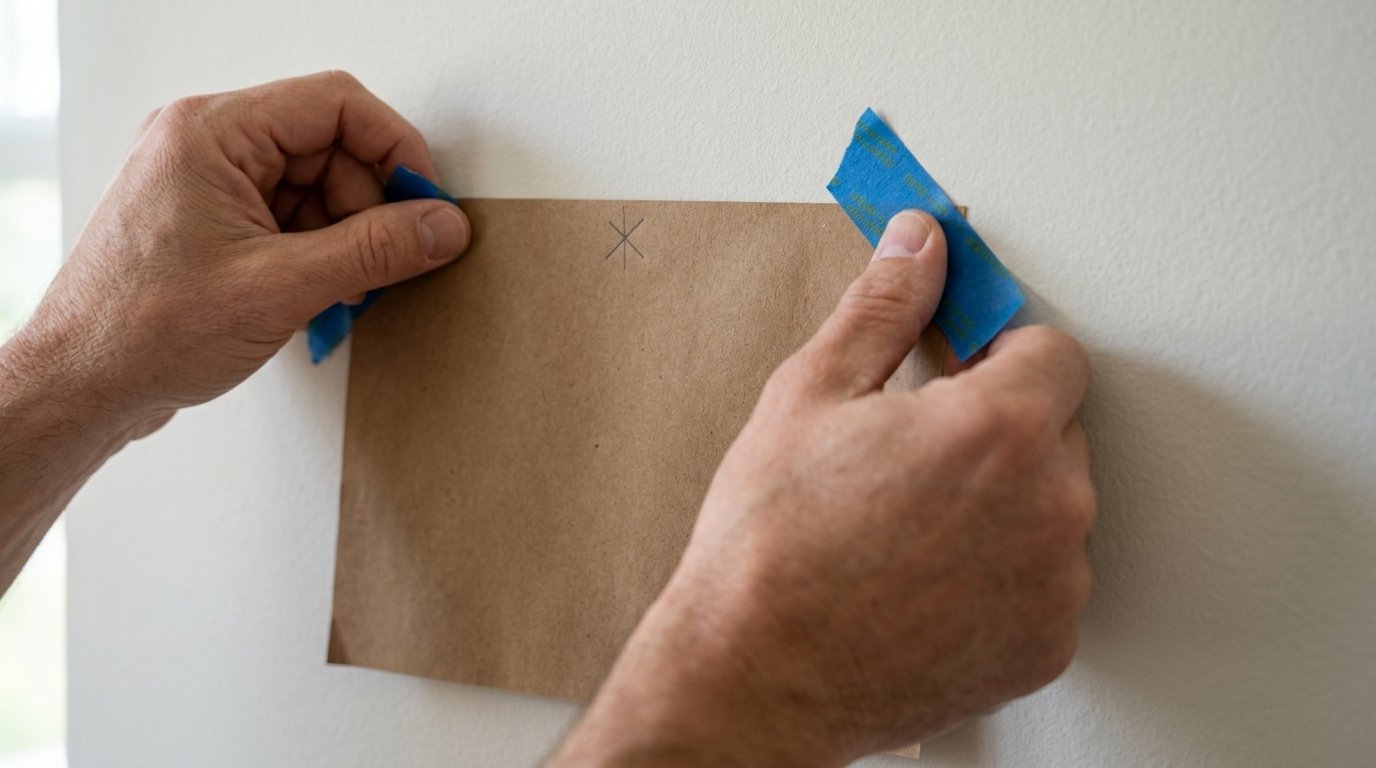
Math causes mistakes. You do not need to calculate center points in your head. Cut a piece of craft paper exactly the size of your frame. Tape the paper to the drywall using Scotch painters tape. Step back and look at the placement. Move the paper until it sits exactly right. You can measure from the floor to be perfectly sure.
Once the paper is perfect, mark the top center point. Hammer your nail straight through the paper mark. Tear the paper away. You will never put an extra hole in your wall again. This trick saves so much frustration.
Before you put the piece on the wall, clean it perfectly. I prefer a specific zig zag cleaning routine. I use Norwex cloths and distilled water. Sometimes I use rubbing alcohol. I avoid acidic cleaners entirely. I once ruined a vintage frame. The acid in a vinegar spray peeled gold paint right off the wood. Stick to safe cleaners like Sprayway or Invisible Glass.
What Are the Best Layouts for Master Bedrooms Decor?
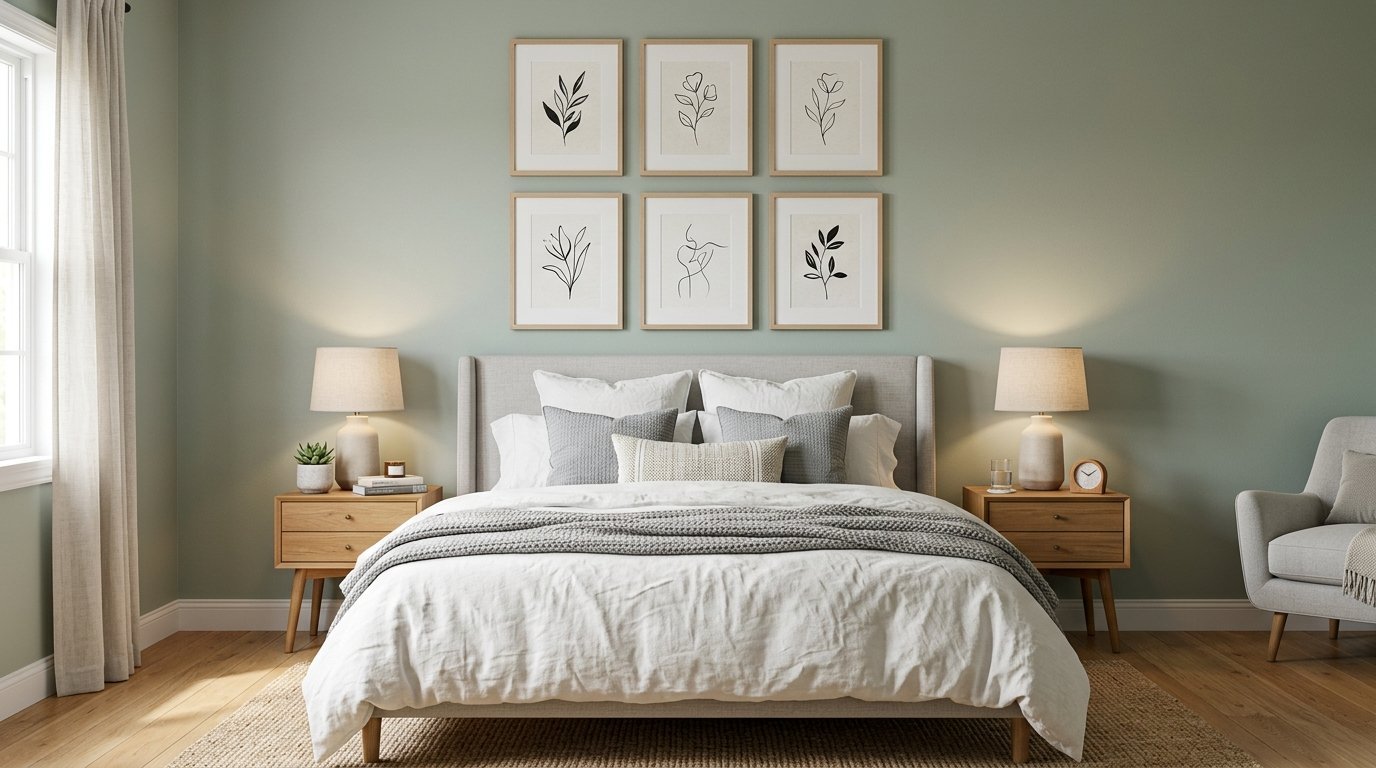
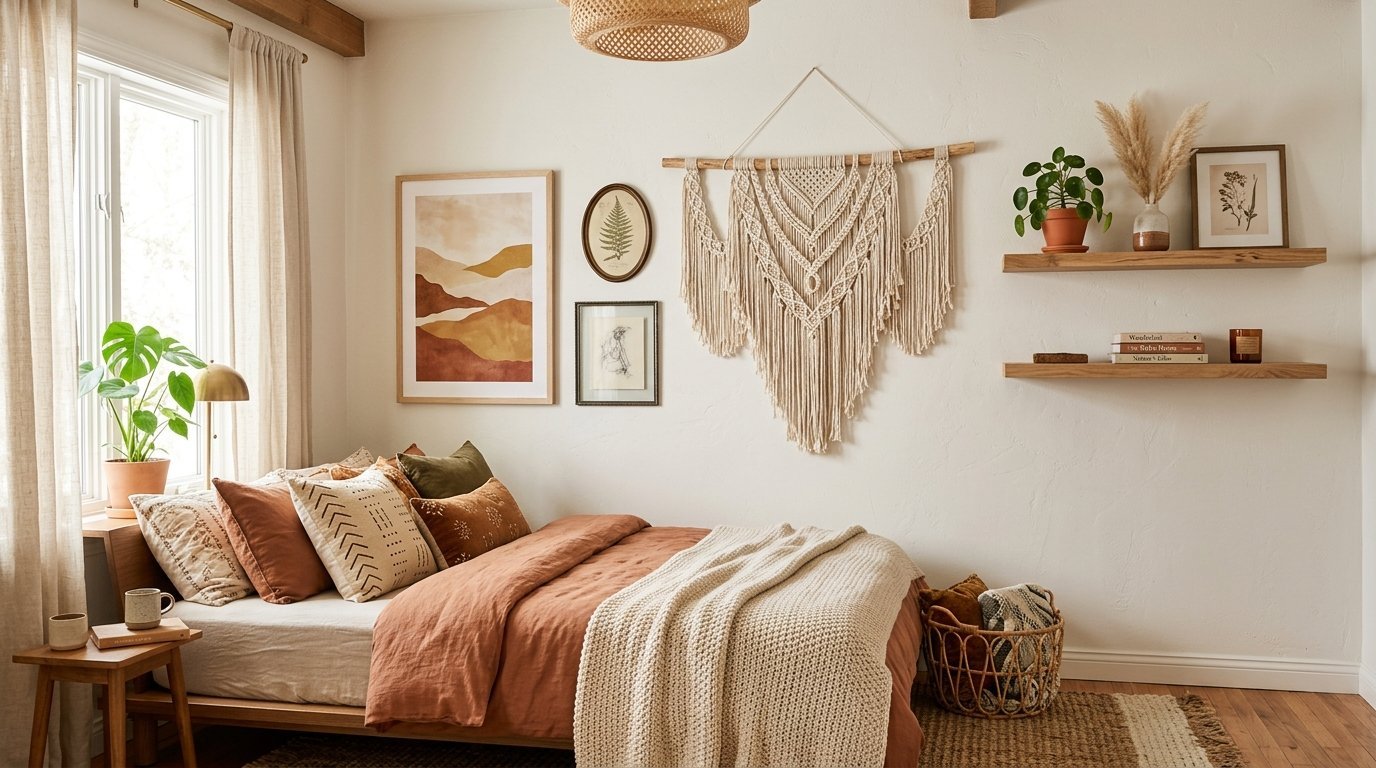
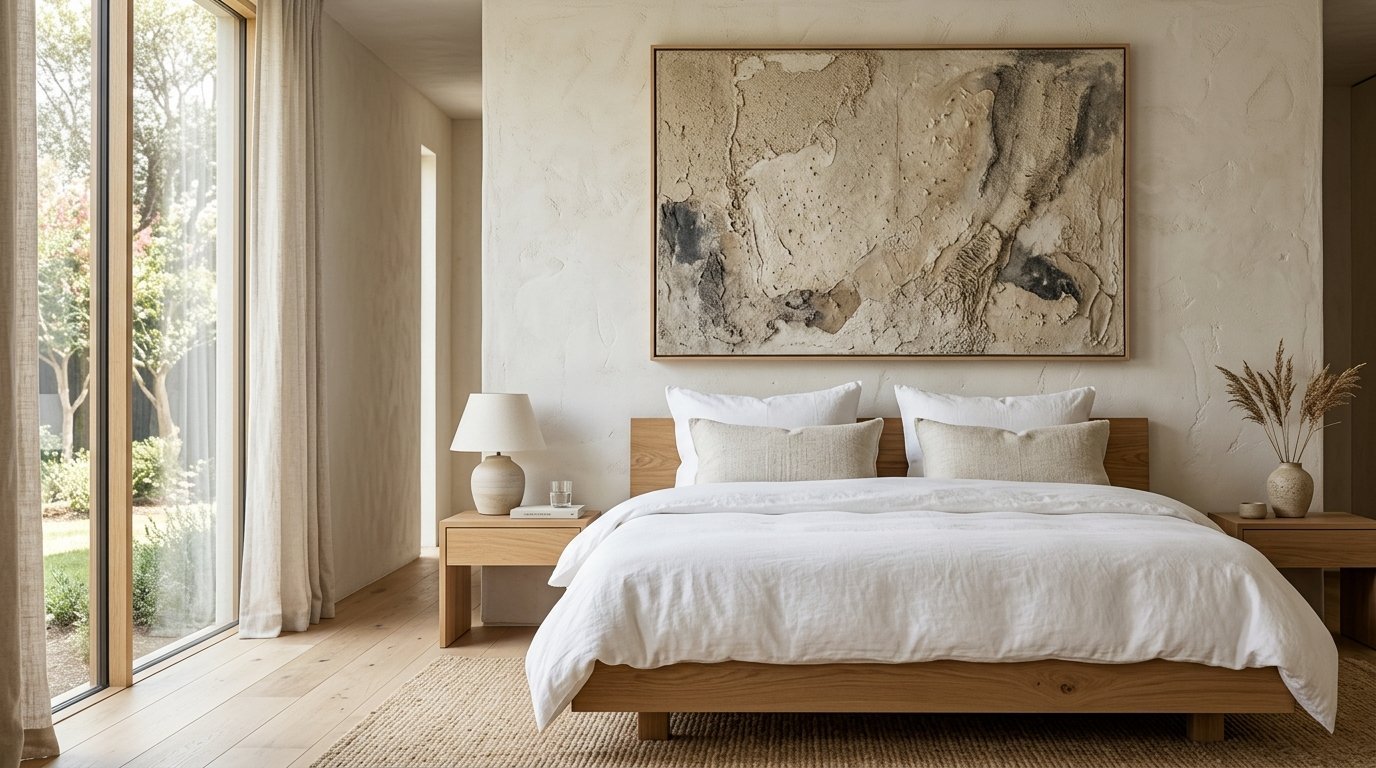
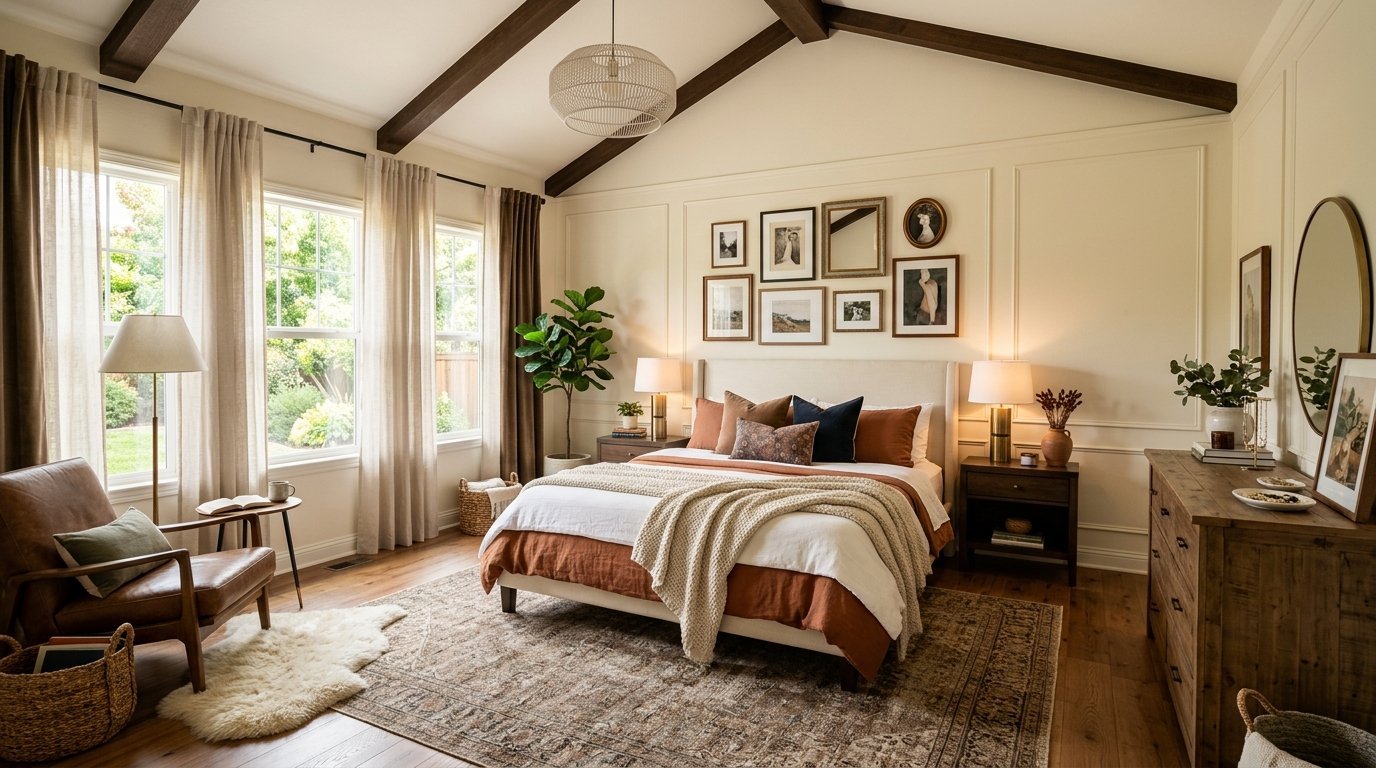
You have two main choices for a primary suite. You can hang one massive canvas. You can hang a grid of smaller frames. A single large canvas feels modern and clean. A grid feels collected and personal. Both options look beautiful when done correctly.
For a single piece, choose art that spans two thirds the width of your mattress. A piece that is too narrow looks weak. A piece wider than the mattress looks top heavy. Two thirds is the perfect proportion. It balances the visual weight of the room perfectly.
For a grid, space each frame exactly two inches apart. Two inches is the magic number. It keeps the collection tight. The pieces act as one large unit. Treat the entire grid as a single piece of art. Measure eight inches from the headboard to the bottom edge of the lowest frames.
How to Style Renter Safe Walls Without Damage
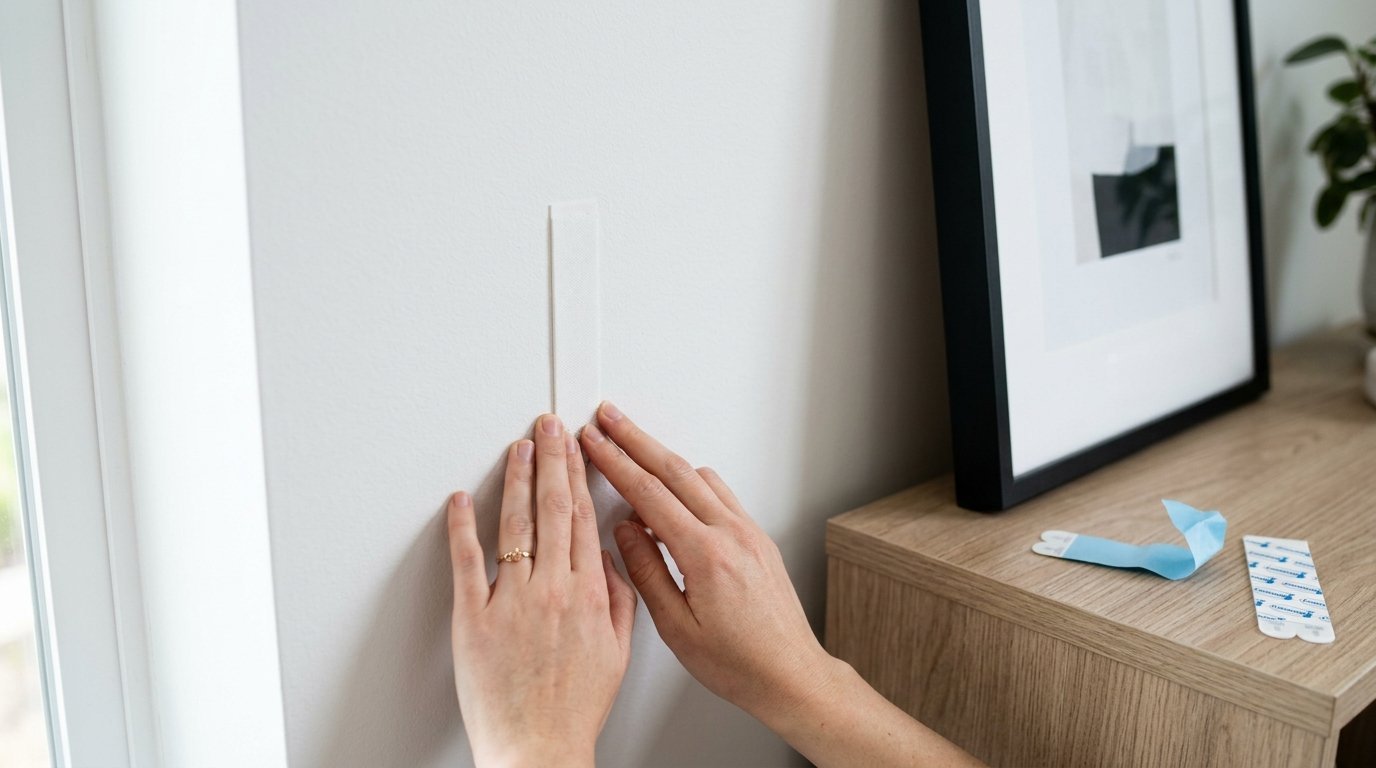
Many people cannot put nails in their drywall. You might live in an apartment. You might change your mind often. Adhesive strips work perfectly for this. Command strips are my favorite choice. You must read the weight limits on the package. Two large strips usually hold ten pounds.
Clean the drywall with rubbing alcohol first. Do not skip this step. The adhesive needs a perfectly clean surface to grip. Press the strip firmly for thirty seconds. Wait a full hour before you hang the frame.
I use this trick for holiday themed nursery photography backgrounds. It works perfectly every single time. The backdrops stay put during the entire photoshoot. When I am done, I pull the tab and the strip pops off. The wall looks completely untouched. You can use this trick for heavy mirrors too if you use the heavy duty hook versions.
What Are the Worst Mistakes You Can Make?
People make three huge mistakes. The first mistake is hanging items too high. We already solved that problem. The second mistake relates to materials. I tried making a farmhouse welcome sign from pine wood. I threw the piece away three months later. It looked completely mass produced. Choose authentic vintage pieces or original canvas works.
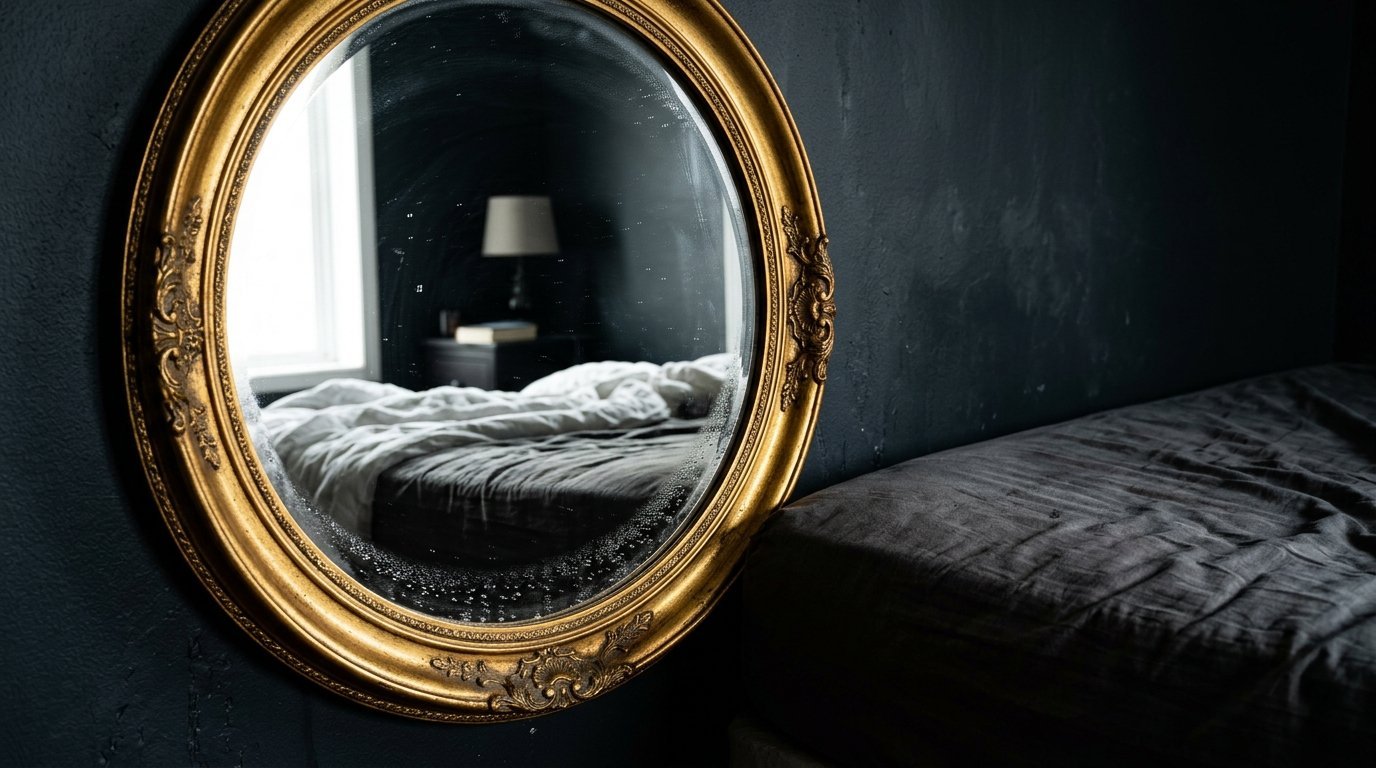
The third mistake is ignoring airflow. Three years ago, damp air destroyed a beautiful piece in my hallway. Last summer, I watched a gold framed circle mirror gather moisture along the bottom curve in my sleeping space. I had placed it too close to the mattress.
You need that eight inch gap. The gap allows air to move freely around the glass. Our bodies release moisture while we sleep. That moisture travels straight up the drywall. If your glass sits flat against the mattress, the moisture gets trapped. The backing paper will rot. The glass will get cloudy. Give your pieces room to breathe.
Comparison of Wall Fasteners
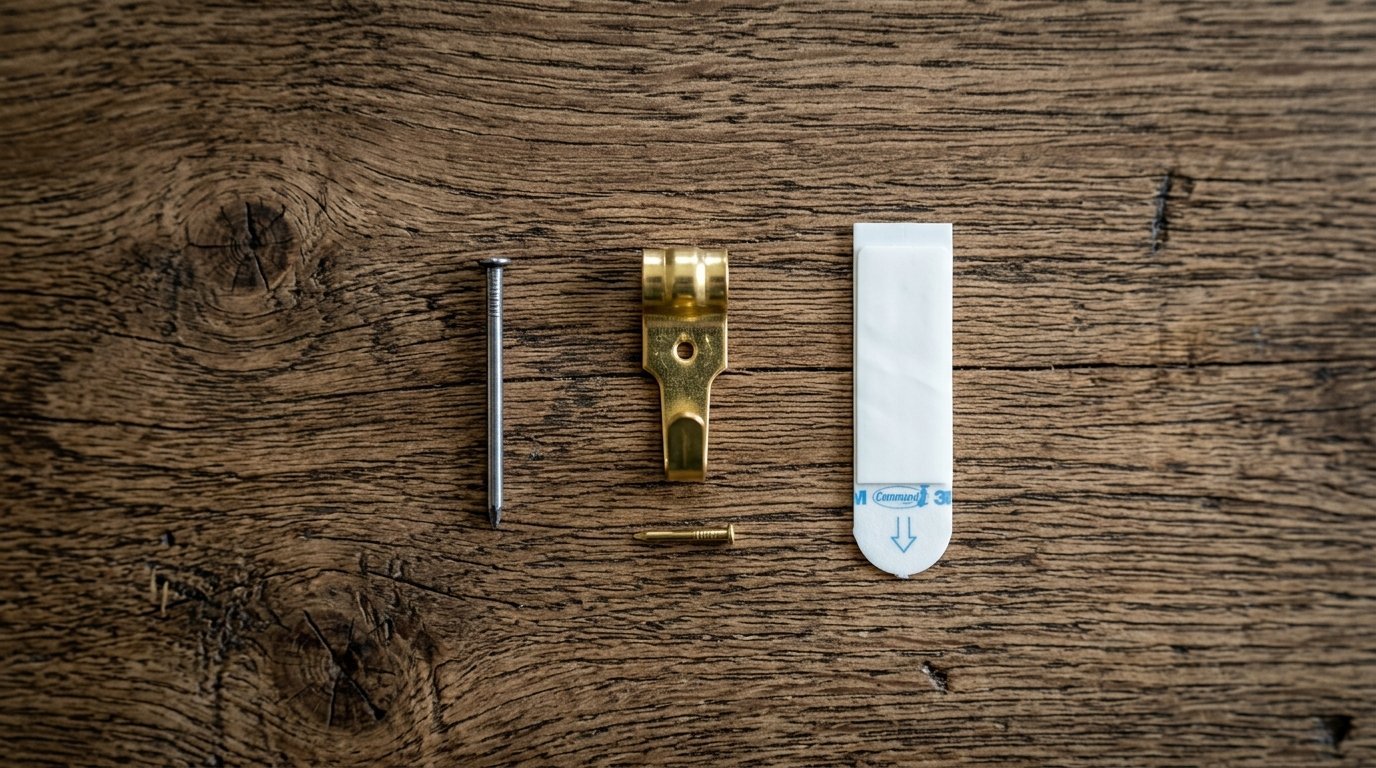
You have several choices for attaching hardware to your drywall. I have tested all of these options. Here is a list comparing the most common choices.
- Standard Nails. These work well for very light canvases under two pounds. They leave a tiny hole. They pull out easily if you make a mistake.
- Oook Picture Hangers. These use a tiny angled nail and a metal hook. They hold up to thirty pounds. They leave a very small hole. They are my absolute favorite choice for heavy frames.
- Plastic Drywall Anchors. You must drill a large hole to use these. They hold up to fifty pounds. They create massive holes in your wall. I avoid these whenever possible.
- Toggle Bolts. These hold the heaviest mirrors perfectly. They require a massive drill bit. They grab the back of the drywall. You cannot remove them easily.
- Command Strips. These leave zero holes in the drywall. They hold up to sixteen pounds. You must follow the instructions perfectly or they will fail.
- Gorilla Mounting Tape. This double sided tape holds things forever. It will absolutely tear the paper off your drywall when you remove it. Do not use this in a rental.
Proper Placement for Different Bed Sizes
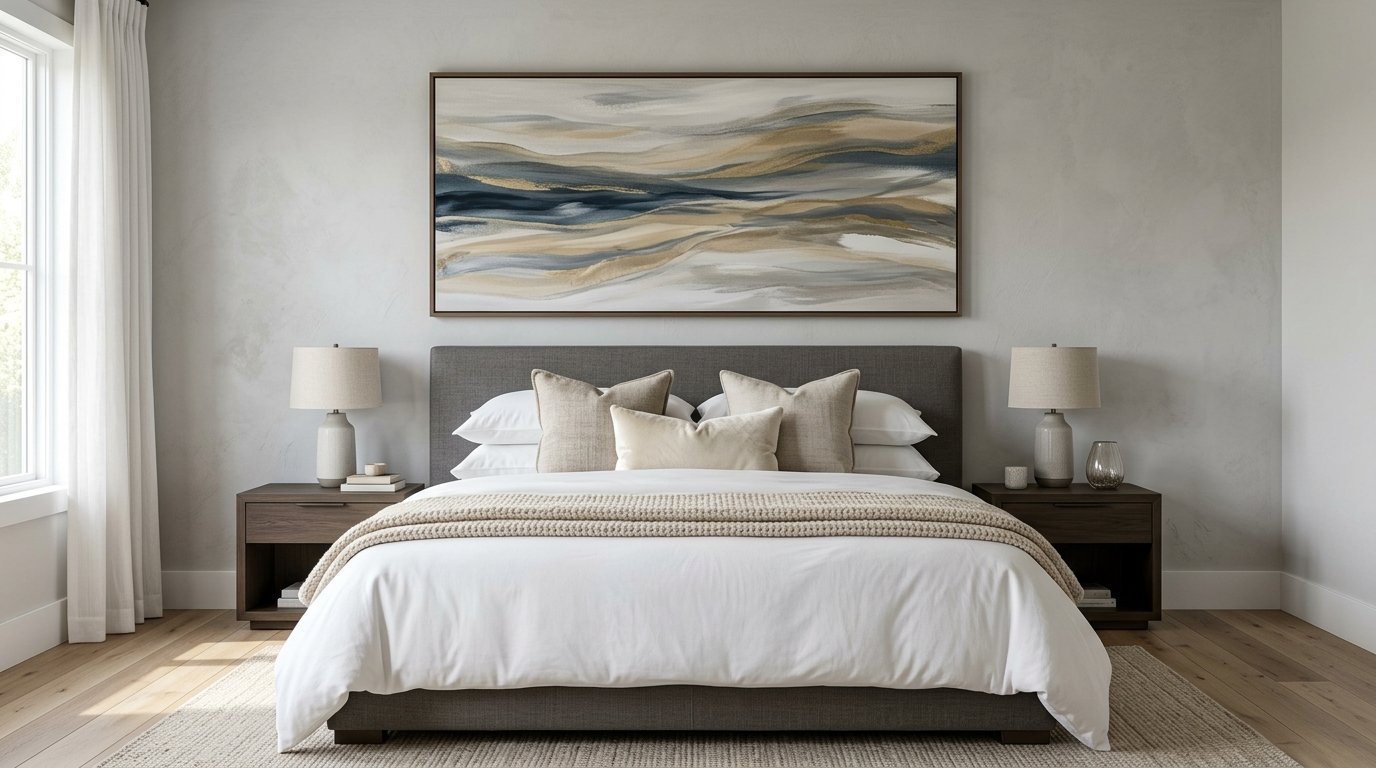
The size of your mattress changes how you select your artwork. You must scale the pieces correctly. Here is a breakdown of exactly what works for each mattress size.
For a Twin mattress, the space is narrow. You have thirty eight inches of width. Choose a single piece of art that is twenty four inches wide. This leaves plenty of empty space on the sides.
For a Full mattress, you have fifty four inches of width. A thirty six inch wide canvas looks perfect here. You could also do two eighteen inch frames side by side.
For a Queen mattress, you have sixty inches of width. A forty inch wide canvas works beautifully. This gives you ten inches of empty space on each side. The proportions feel exactly right.
For a King mattress, you have massive width. Seventy six inches requires large art. You need a piece that is fifty inches wide. You can also use a grid of three twenty inch frames.
For a California King mattress, the width is slightly narrower at seventy two inches. Use a forty eight inch wide canvas. A pair of twenty four inch frames also works perfectly.
How to Balance Wall Sconces with Artwork
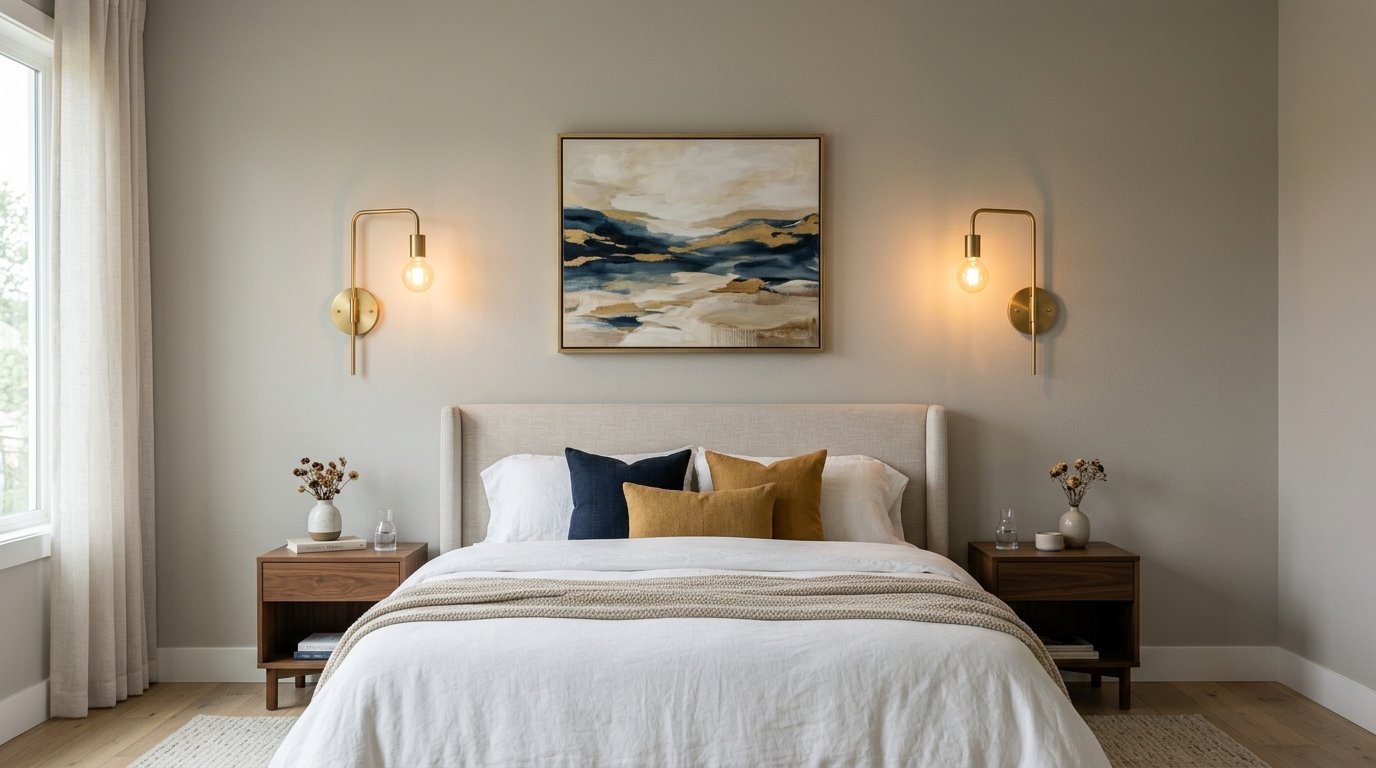
Many modern sleeping spaces feature wired wall sconces. These lights sit on either side of the mattress. You must center your art perfectly between these fixtures.
First, measure the exact distance between the left sconce and the right sconce. Find the exact center point. Mark this center point with a pencil. Your artwork must center on this mark.
Make sure the sconces sit far enough away from the frame edges. You want at least six inches of empty drywall between the light fixture and the frame. If the frame touches the light fixture, the space feels cramped. The light will cast harsh shadows across your glass. Keep everything properly spaced out.
The Rules for Hanging Mirrors Above the Mattress
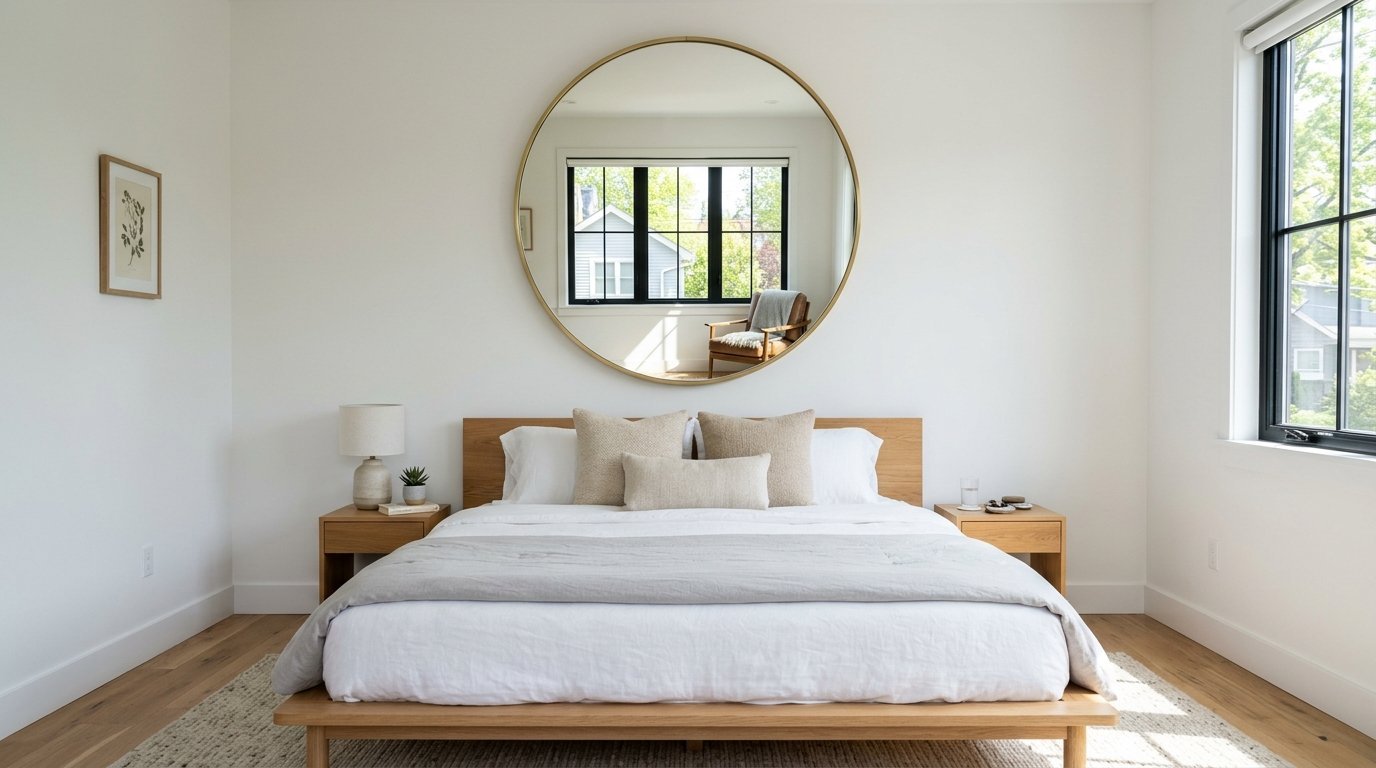
Mirrors bounce light around a dark room. They make a small space feel twice as large. Hanging a heavy mirror requires extra care.
You must locate a wooden wall stud. Use an electronic stud finder. Mark the edges of the wood with a pencil. Your mounting hardware must go directly into that solid wood. Do not trust plastic anchors for heavy glass hanging over where you sleep.
I love using round mirrors in these spaces. The soft curves break up the harsh square lines of the furniture. Use the same height rules. The bottom curve of the round mirror must sit eight inches above the headboard. Keep it clean with a microfiber cloth to avoid water spots.
Choosing the Right Frame Materials
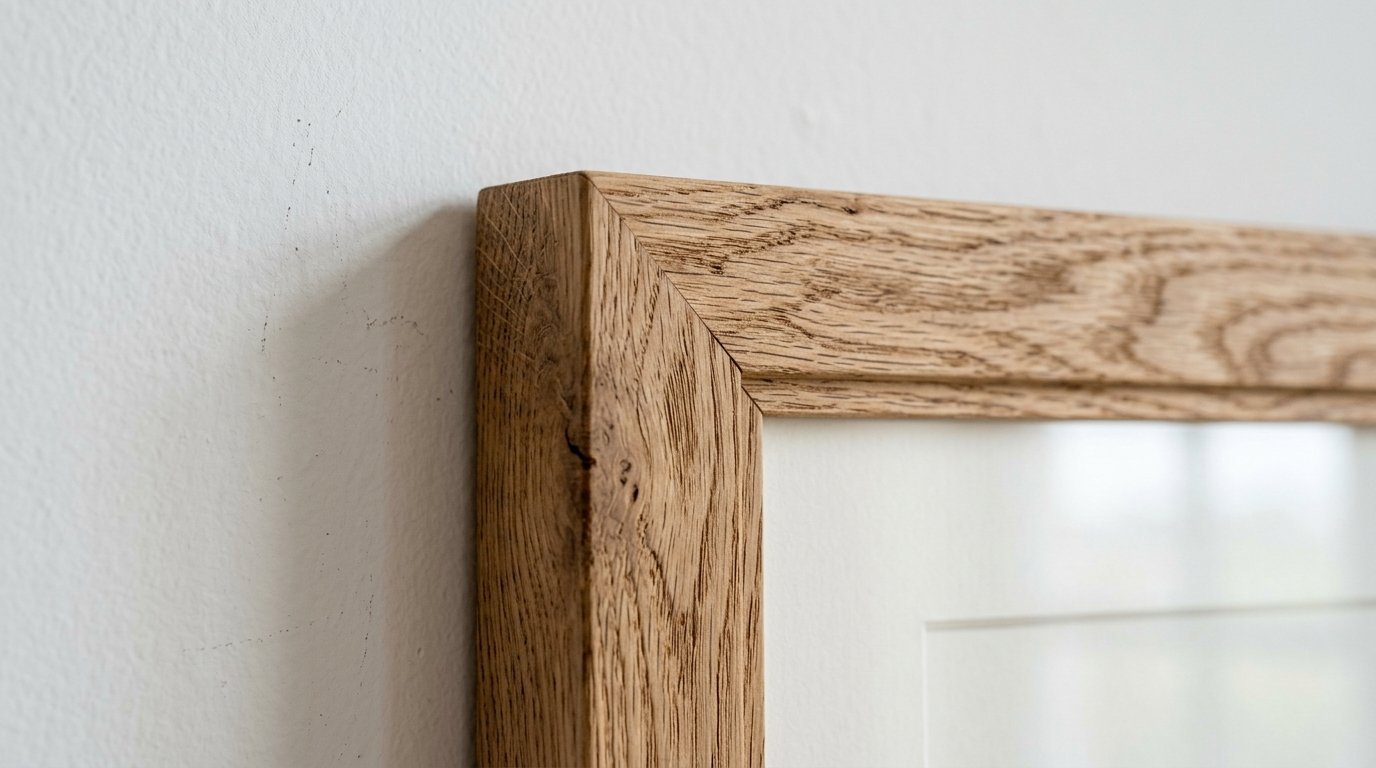
The material of your frame sets the entire mood of the room. You want pieces that match your home aesthetic. A relaxing bedroom requires natural materials and soft tones.
Natural oak wood frames feel very warm. They fit perfectly into a boho or modern aesthetic. Black metal frames feel very sharp and clean. They work well for modern layouts.
Avoid cheap plastic frames. They warp over time. They look cheap under artificial light. Authentic Vida De Luxo styling requires solid materials. Choose solid wood or real metal. If you want a farmhouse look, find true vintage wood. Do not buy faux distressed pine. It looks fake from across the room. Invest in quality materials that will last decades.
Frequently Asked Questions
Should art be wider than the mattress?
No. Your artwork should cover about two thirds of the total width. A piece wider than the mattress looks completely out of proportion. It makes the room feel top heavy.
Can I hang heavy mirrors above where I sleep?
You can, but you must find a wall stud. Never use drywall anchors for heavy glass over your head. Find the wood stud. Use heavy duty hardware.
What if my wall has wood paneling?
Treat wood paneling like standard drywall. Find the studs. Use the same height rules. The eight inch gap remains exactly the same.
Do these rules apply to guest bedrooms?
Yes. Every room follows the exact same measurement rules. Consistency creates a calm feeling throughout the entire house.
How do I handle a sloping ceiling?
Ignore the slope entirely. Focus only on the furniture. Center the piece over the mattress. Keep the bottom edge eight to ten inches up.
Can I hang multiple mismatched frames?
Yes. This creates a bohemian look. You still need to treat the grouping as a single unit. Keep the lowest frames eight inches above the furniture.
What is the best way to clean the glass once hung?
Spray Method glass cleaner onto a microfiber cloth. Do not spray the glass directly. Spraying directly causes liquid to run behind the frame. Wipe in a zig zag motion.
Is it okay to rest art directly on the headboard?
Many designers love this look. It feels very casual. You just lean the piece against the drywall. You must secure the top edge with a small command strip so it stays put.
Should the artwork match the bedding?
Matching everything looks dated. Choose complementary colors instead. A neutral bedroom looks beautiful with dark contrast pieces.
What if I have a window over my sleeping area?
Do not try to hang art over a window. Let the window be the focal point. Hang your pieces on the side walls instead.
How do I measure if my headboard is curved?
Find the highest point of the curve. Measure your eight inches from that peak. Do not measure from the lower sides of the curve.
Can I hang an empty vintage frame?
Yes. This fits perfectly with a farmhouse aesthetic. Make sure the wood is clean. Follow the exact same height and width rules.
Does lighting change where I hang things?
Yes. If you have wall sconces, you must center the art between them. Make sure the sconces do not cast strange shadows on the glass.
What is the best tape measure to use?
A standard Stanley metal tape measure works best. Do not use a soft sewing tape measure. The soft tapes stretch and give you false numbers.
How do I hide the hanging wire?
Pull the wire tight across the back of the frame. Move the D rings lower on the frame edges if the wire peeks out over the top.
Can I use a picture ledge shelf?
Yes. Hang the shelf exactly eight inches above the furniture. Then you can simply lean your pieces on the shelf and switch them out easily.
Does paint finish matter when hanging art?
Flat paint hides nail holes very easily. Glossy paint shows every single mistake. Be very careful measuring if you have high gloss walls.
How do I handle a massive brick wall?
You need a masonry drill bit and concrete anchors for brick. The eight inch measurement rule remains exactly the same for exposed brick walls.
Final Thoughts on Nailing Your Bedroom Inspo
You now have the exact numbers to fix your space. You know exactly where to place your first nail. Grab your tape measure and fix that floating canvas right now. I predict people will move away from massive gallery walls soon. We will see more single large canvases in the next five years. They feel much cleaner. What piece of art are you hanging this weekend? Tell me about your next weekend project.

Anya Castellan is the Founder and Editor-in-Chief of Home Wall Trends. An art history graduate of the Rhode Island School of Design with twelve years of experience writing for leading American design publications, she specializes in composition, gallery wall theory, and the quiet architecture of domestic space. A former contributing editor at Architectural Digest and guest lecturer at Parsons School of Design, Anya personally reads and signs off on every piece before it is published.