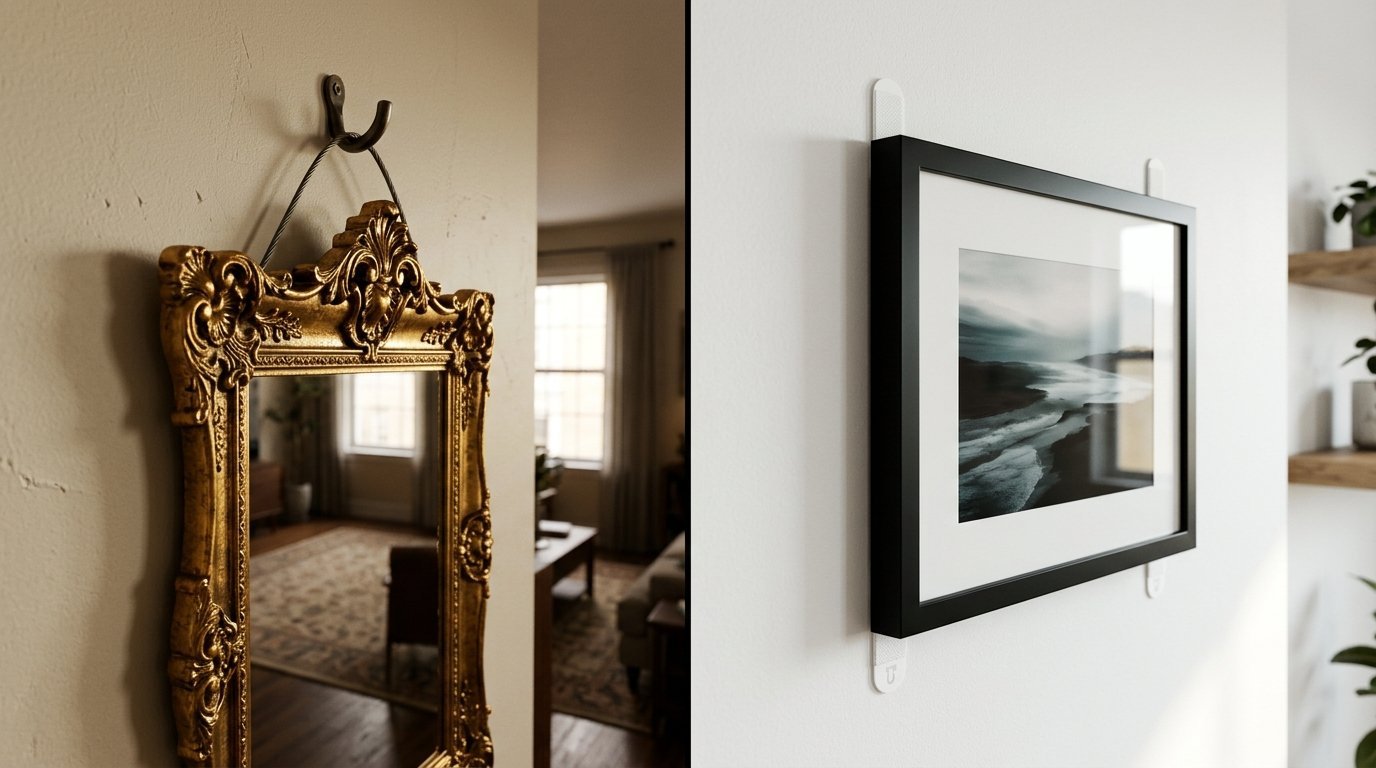
Have you ever watched your favorite photo frame crash to the floor? I have. It shatters the glass. It shatters your confidence in your wall decor. Hanging art in an apartment feels risky. You want a beautiful interior design. You do not want to forfeit your security deposit. You face a common choice today. You must choose between adhesive strips and metal hooks. Both promise safe hanging. Only one truly holds heavier items securely. This guide answers your questions directly. We look at exact weight limits. We compare sticky strips to metal pins. I share my own wall prep tactics. You will read exactly what works. You will see what fails. You can confidently hang everything from lightweight posters to heavy mirrors. Your walls will stay pristine.
You want a direct answer right now. Removable metal pin hooks hold much more weight than adhesive strips. Metal hooks use the drywall itself for leverage. They can hold up to fifty pounds safely. Adhesive strips max out around sixteen pounds. Adhesive strips work perfectly for flat frames. They fail miserably for heavy items that jut out from the wall. You will need high purity isopropyl alcohol for wall prep. You will need a digital scale to weigh your items. Do not guess the weight of your diy home decor. A simple mistake costs you your artwork. We cover exact holding capacities below. We look at humidity limits. We look at apartment rules. Read the exact limits before you hang anything else in your home.
The Real Weight Limits of Command Strips
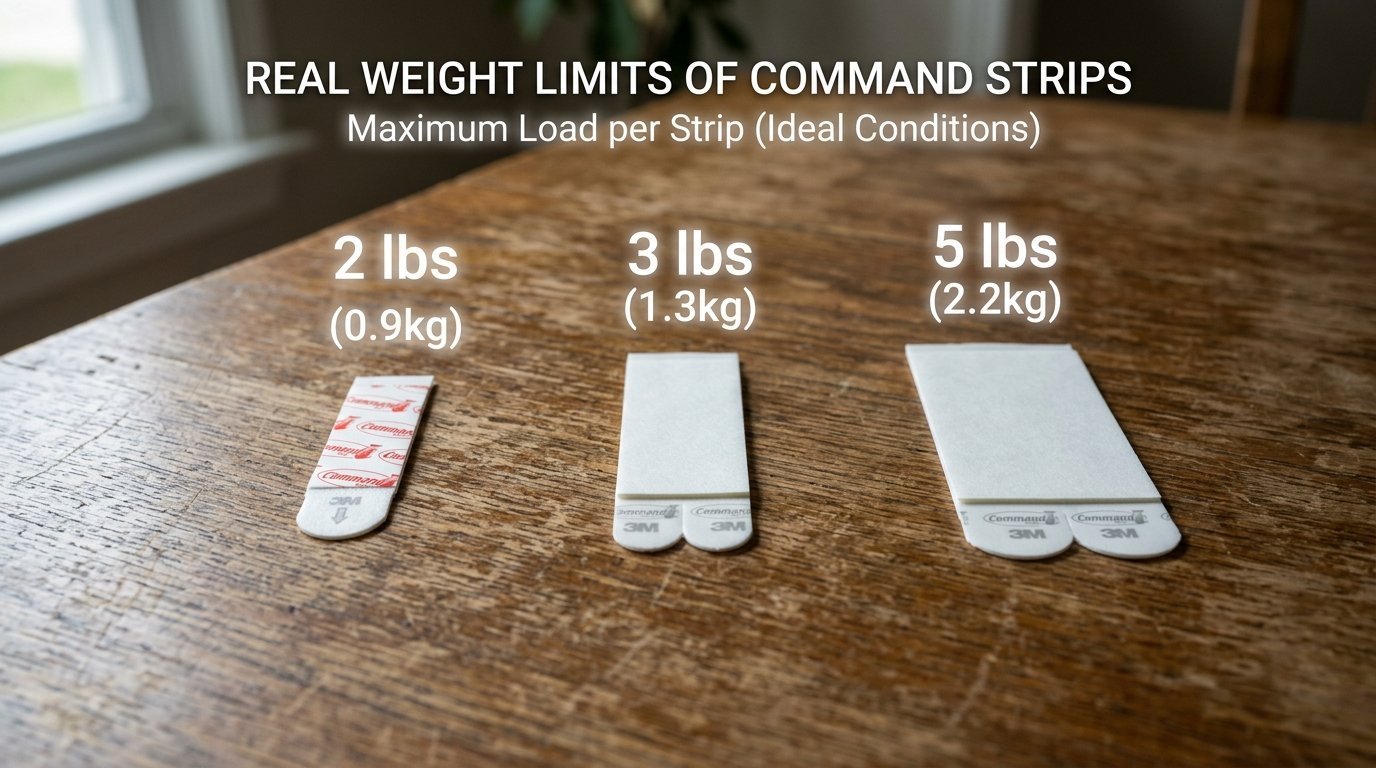
Adhesive strips dominate the retail market. They use a stretchy compound to grip the wall. This compound releases when you pull the tab straight down.
Standard Picture Hanging Strips
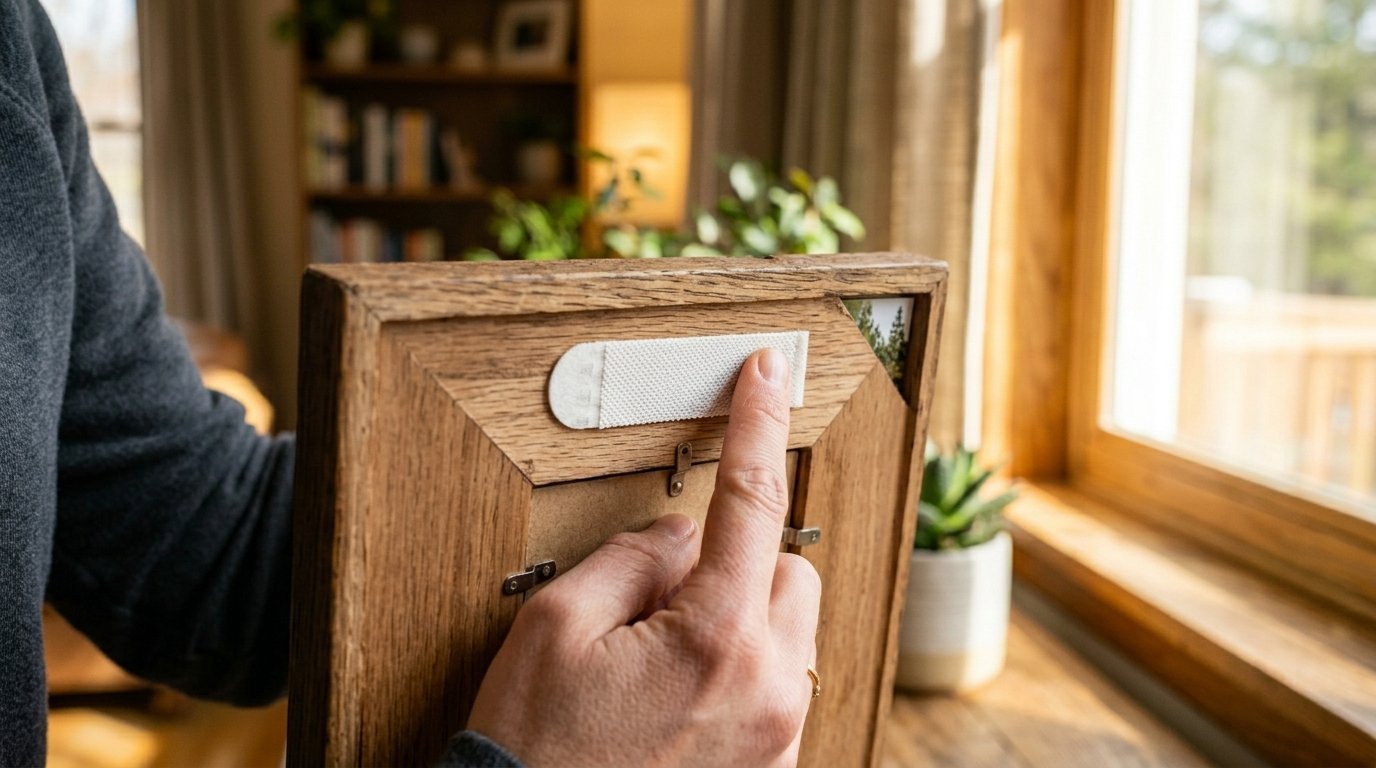
Standard strips work like hook and loop fasteners. You stick one piece to your photo frame. You stick the mating piece to the wall. Small strips hold a maximum of four pounds. Medium strips hold up to twelve pounds. Large strips hold up to sixteen pounds. You must use four sets of strips for maximum holding power. You place one strip in each corner of the frame. This distributes the weight evenly across the entire surface. If you use only two strips you cut the weight capacity in half. You must press the plastic teeth together until they click loudly.
Heavy Duty Command Options
Heavy duty options exist for larger pieces. Jumbo hooks hold up to seven pounds per hook. The heavyweight picture strips hold up to twenty pounds. I often use these heavyweight options for large wooden pieces. You must apply intense pressure to activate the adhesive. Press your thumbs against the plastic for thirty full seconds. The warmth from your hands helps the sticky compound bond with the paint. You must wait exactly one hour before hanging your object. This waiting period cures the glue.
The Mechanics of Adhesive Failure
Weight is not the only factor that ruins adhesive. Texture ruins the bond immediately. Adhesive strips fail on heavily textured apartment walls. The sticky back needs a flat surface. Moisture also causes complete failure. The adhesive softens in humid rooms. I saw this destroy a beautiful piece in my hallway three years ago. The damp air got behind the frame. It caused black spots on the silver backing. The adhesive stripped right off the wall. The mirror shattered into a dozen pieces. You must keep adhesive strips in dry climate controlled spaces.
The Real Weight Limits of Removable Hooks
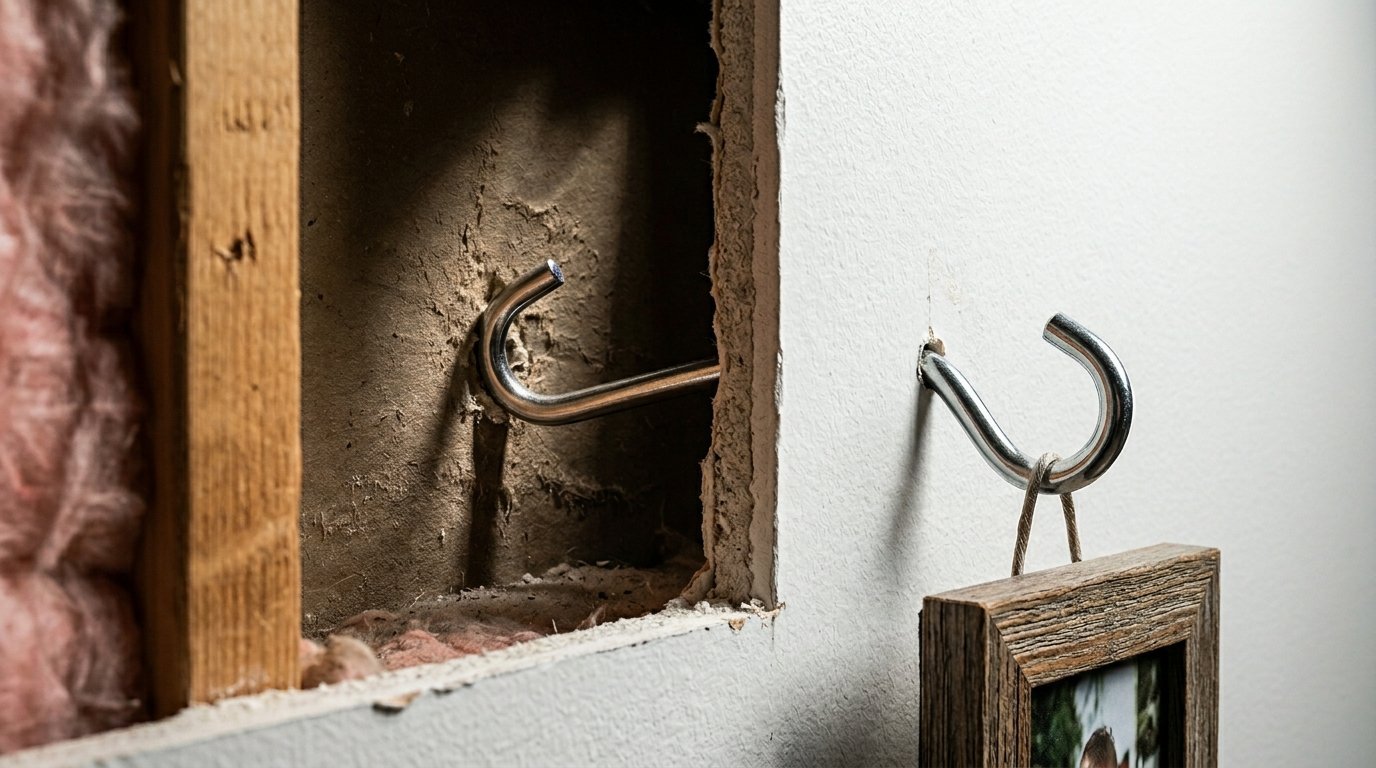
Removable hooks offer a different mechanical advantage. They rely on the physical hook shape to bear the downward force. They use the drywall as a brace.
Adhesive Metal Hooks
Some removable hooks use a sticky backing. These handle much less weight. Small sticky hooks hold a mere half pound. Large sticky hooks max out around five pounds. The metal hook protrudes from the wall. This creates a lever action. The weight pulls the adhesive away from the wall instead of down. Never hang heavy winter coats on adhesive hooks. The outward pull will rip the paint off your drywall. You must only hang flat items on sticky hooks.
Pin Based Removable Hooks
Pin based hooks puncture the drywall slightly. They do not use sticky compound. Monkey hooks or gorilla hooks push straight through the wall. The curved metal braces against the back of the drywall. These hooks handle massive weight. Standard monkey hooks hold up to thirty pounds. Heavy duty versions hold up to fifty pounds. They leave a tiny hole. You can push them through the wall with your bare thumb. You do not need a drill or a hammer.
When Mechanical Hooks Fail
Pin hooks fail if you hit a wooden stud. You cannot push the hook through solid wood. They also fail on older plaster walls. Plaster crumbles around the tiny hole. The hook eventually sags and falls out. You must check your wall type before using pin hooks. Tap the wall with your knuckles. A hollow sound means drywall. A solid dull thud means plaster or a wooden stud. Always aim for hollow drywall cavities when using metal push pins.
Command Strips vs Removable Hooks for Photo Frame Walls
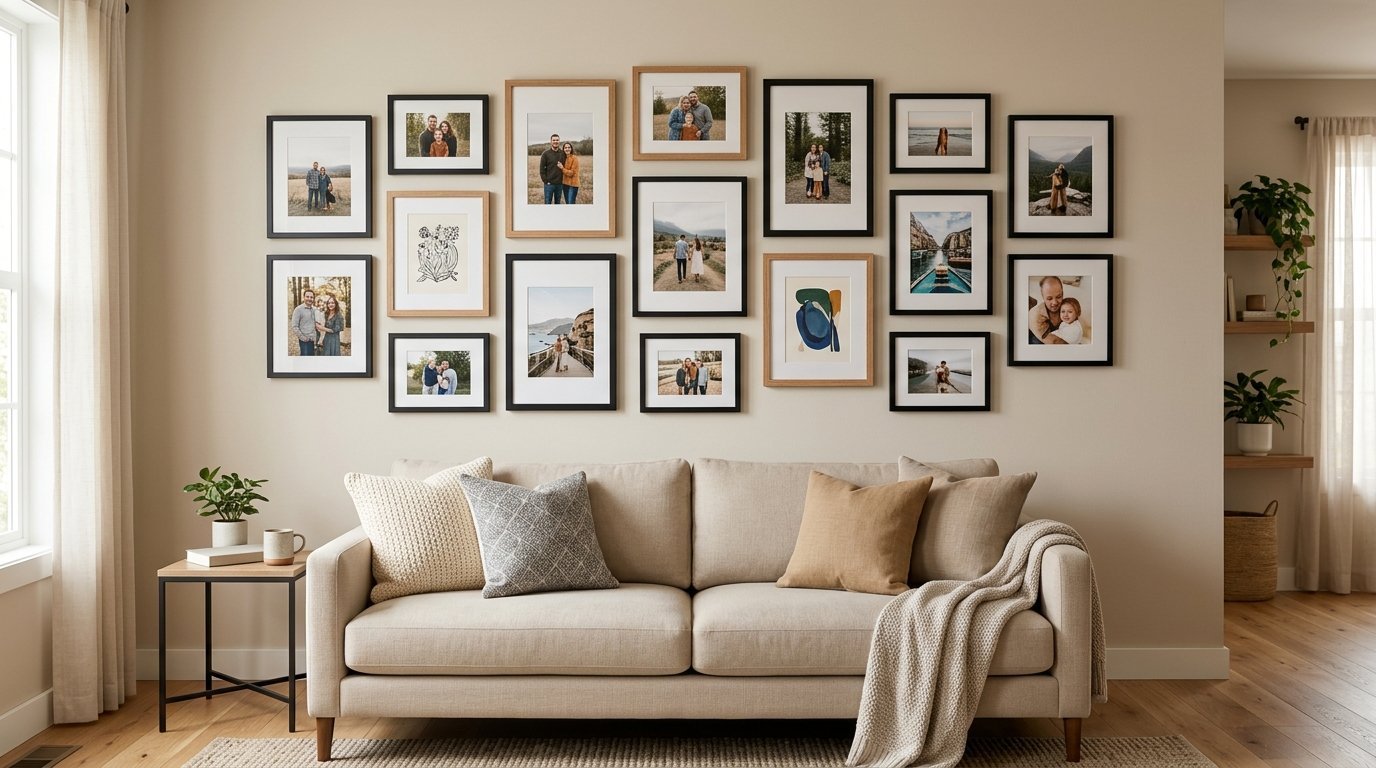
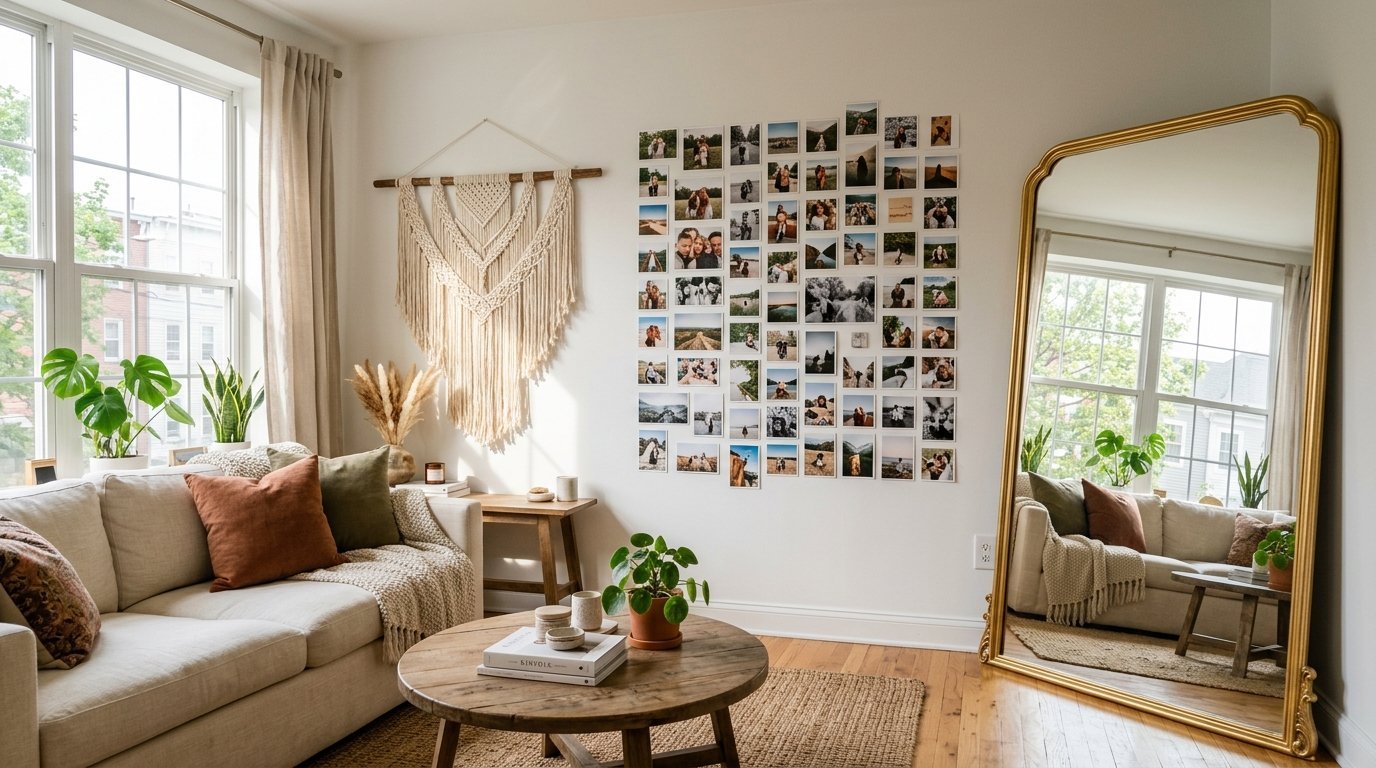
Gallery walls require absolute precision. You must align multiple frames perfectly. Small measurement errors ruin the entire layout.
Planning a Gallery Wall
Adhesive strips excel for gallery walls. You get a completely flush mount. Removable hooks leave the frame tilting forward. I always pick standard picture strips for a flush look. You can adjust the frame slightly before pressing it tight.
- Lay your frames on the floor first.
- Cut out paper templates matching your frames.
- Tape the paper templates to your wall.
- Mark the exact corners with a pencil.
- Apply the adhesive strips directly over your pencil marks.
Protecting Your Frame Backing
Paper backed frames present a specific problem. Adhesive strips will rip the paper right off the back. You must cut away the paper backing with a craft knife. Stick the adhesive directly to the solid wooden frame. Removable hooks catch the metal wire on the back of the frame. This avoids the paper entirely. If you rent vintage frames you must use hooks. You do not want to destroy antique backing paper with sticky compound.
Hanging Heavy DIY Home Decor Safely
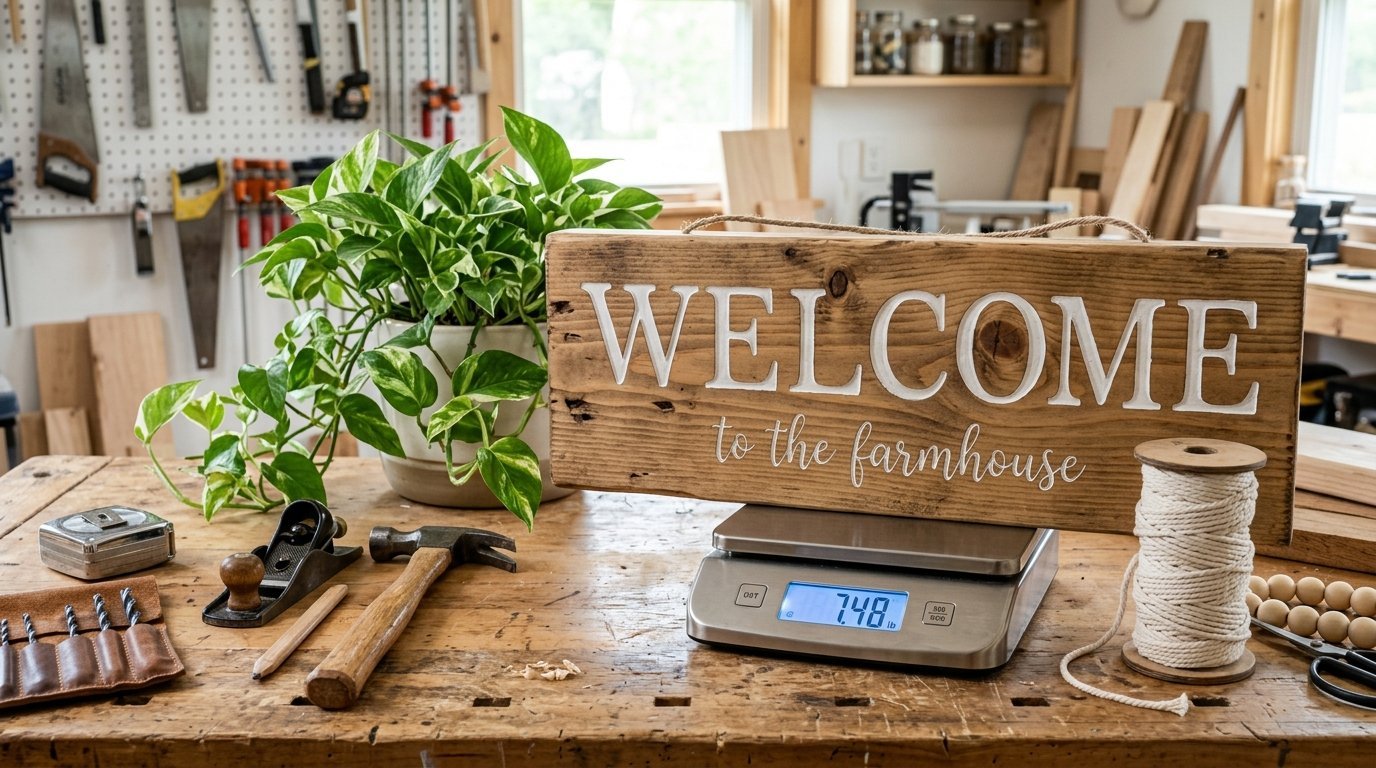
Handmade projects weigh much more than hollow store bought items. Solid wood gets heavy incredibly fast. You must prepare for this weight.
Wooden Signs and Macrame
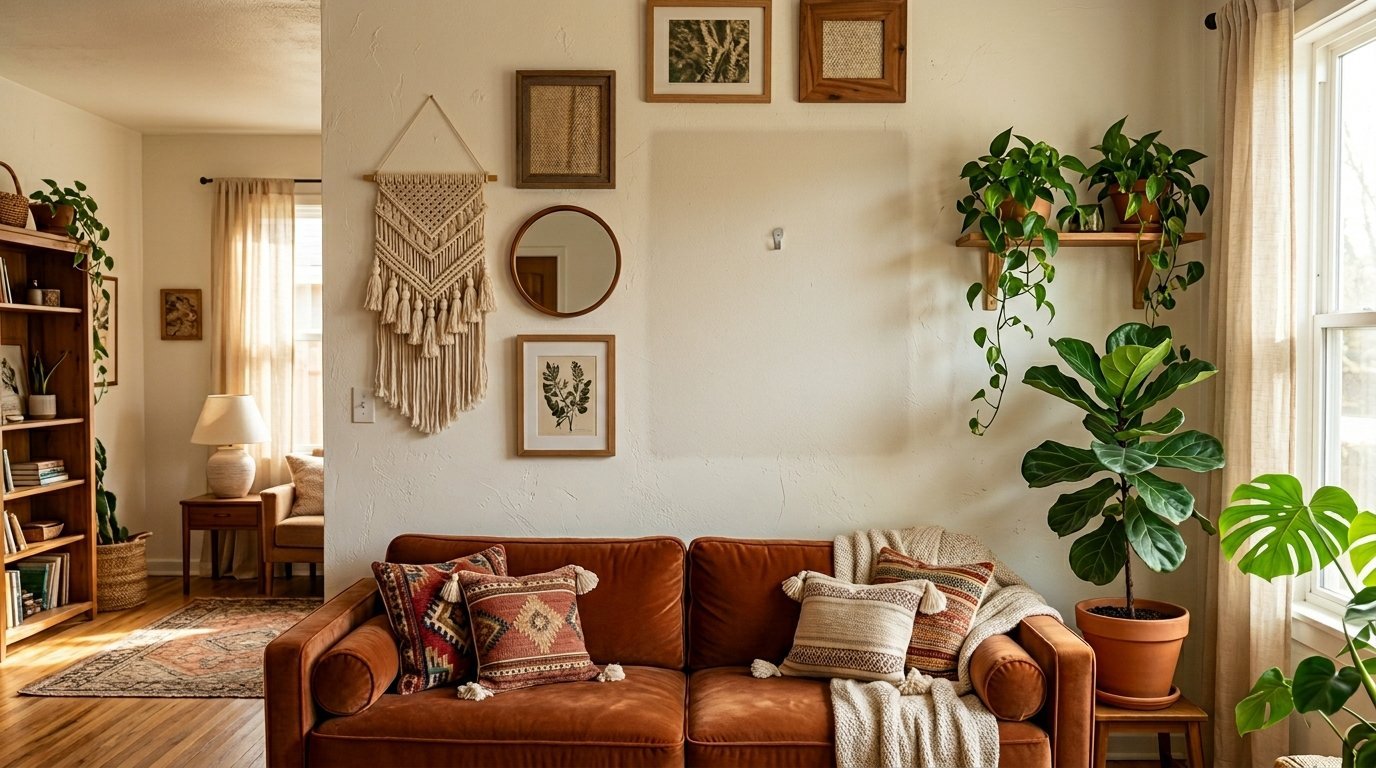
I craft my own wall decor constantly. Three months ago I threw a fresh piece of pine right into the trash. I tried to craft a farmhouse welcome sign. It got far too heavy for a simple adhesive mount. I misjudged the hanging hardware completely. A massive pine board requires mechanical hooks. Adhesive strips cannot handle thick solid pine. Macrame hangs beautifully on standard removable hooks. The wooden dowel rod drops perfectly into the curved metal hook.
Anchoring Farmhouse Style Pieces
Farmhouse interior design uses dense materials. Iron brackets and reclaimed wood look great. They demand sturdy wall hardware. You must weigh your piece on a digital scale. Never guess the weight based on how it feels in your hands. Pick a pin based removable hook for anything over fifteen pounds. If your piece hits thirty pounds you must find a wall stud. You cannot rely on drywall alone for massive iron pieces. Drill a pilot hole and use a thick steel screw for anything over fifty pounds.
Wall Prep for Maximum Adhesive Hold
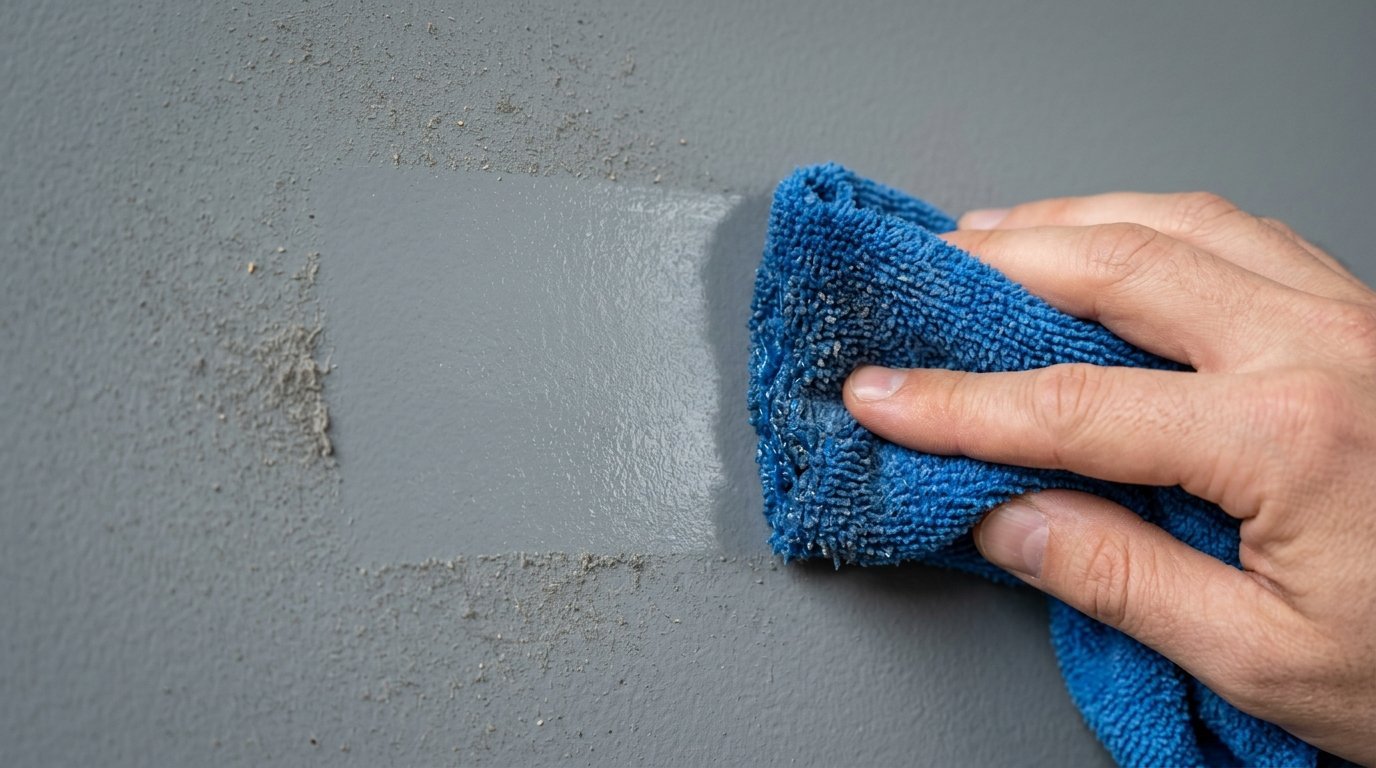
Most adhesive failures happen because of dirty walls. You must clean the surface properly before sticking anything to it. Dust destroys the sticky compound instantly.
Cleaning with Isopropyl Alcohol
Never use standard household cleaners. They leave a slippery chemical residue behind. You must use high purity isopropyl alcohol. I wipe down every inch of the wall before hanging anything. The alcohol strips away natural oils and fine dust. It evaporates in exactly five seconds. It leaves the paint perfectly dry and ready for adhesion. Keep a small bottle in your tool kit always.
Using Specific Microfiber Cloths
I rely on specific tools for a spotless surface. Paper towels leave tiny lint fibers behind. These fibers block the glue from gripping the paint.
- I always use a Norwex or 3M microfiber cloth.
- I dampen the cloth directly with the rubbing alcohol.
- I wipe the wall firmly in a tight circular motion.
- I wait exactly five minutes before applying any adhesive.
This simple habit stops frames from falling in the middle of the night. Do not skip this step.
Apartment Living and Damage Free Decorating
Renters must protect their walls at all times. Landlords charge steep fees for drywall repairs. You need ways to decorate safely.
Protecting Cheap Builder Grade Paint
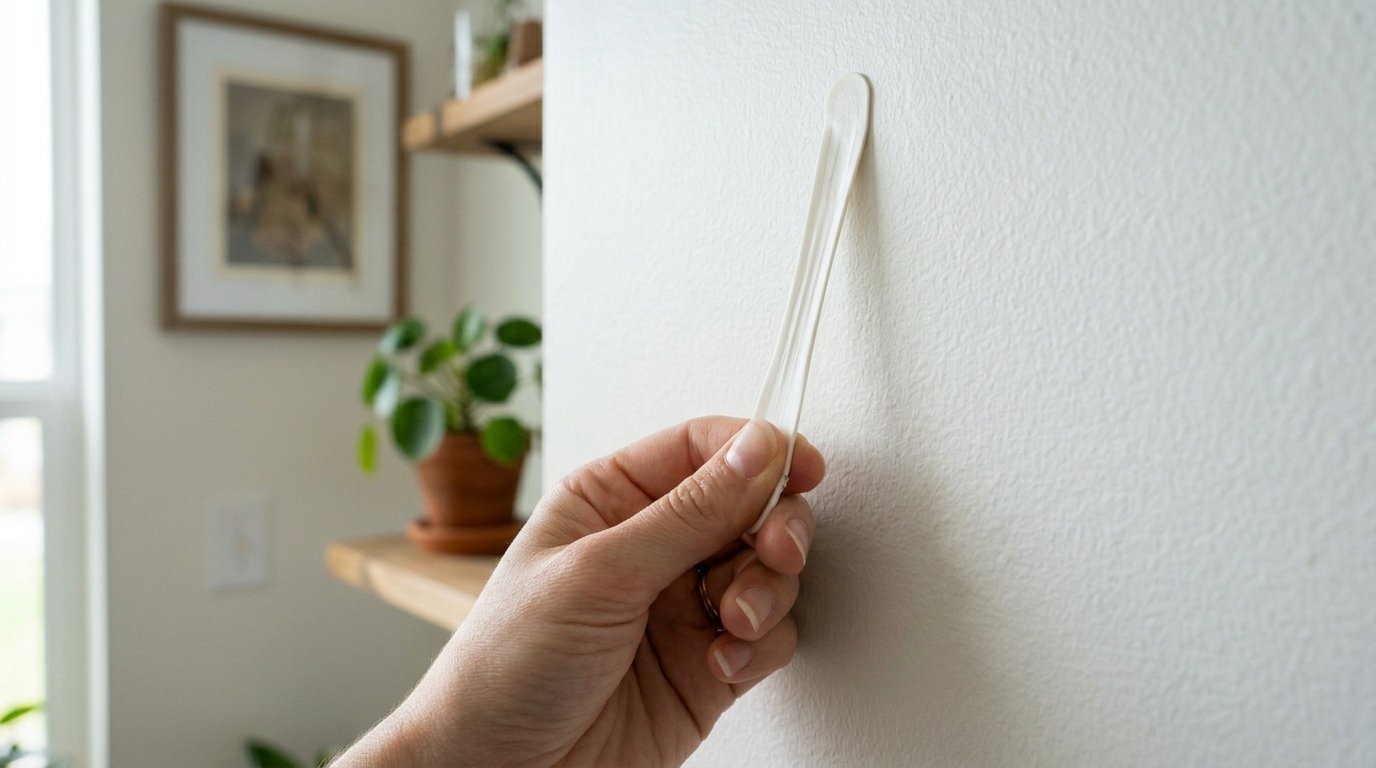
Apartment walls often feature cheap builder grade flat paint. This paint chips and flakes very easily. Adhesive strips peel cheap paint if removed incorrectly. You must pull the removal tab straight down along the wall. Never pull the tab out toward your body. Pulling outward snaps the plastic and rips the paint off the wall. Stretch the tab slowly. Let the compound release its grip naturally. Keep your hand touching the wall as you pull.
Removing Adhesive Without Peeling Paint
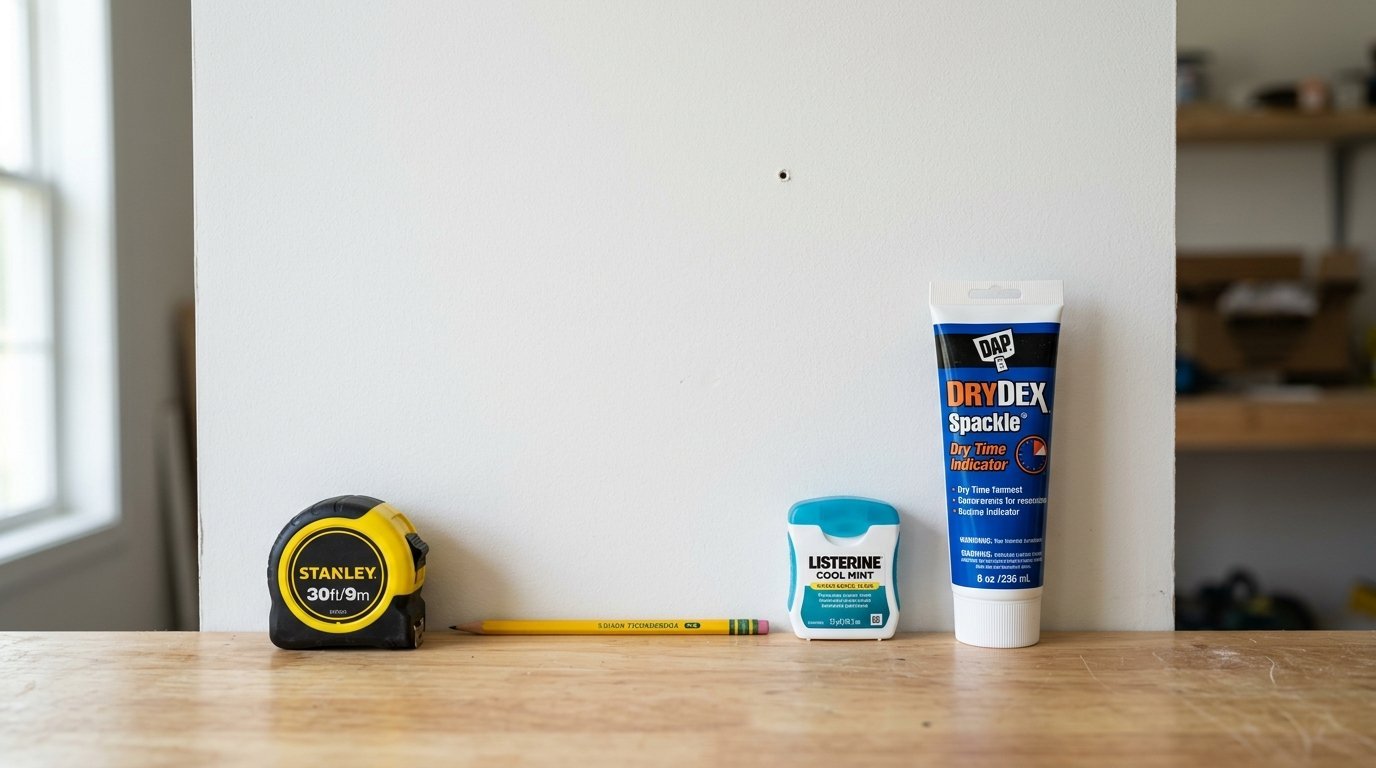
Sometimes the pull tab breaks off completely. You panic. Do not grab a metal scraper. Grab a piece of waxed dental floss.
- Wrap the floss around your index fingers.
- Slide the floss tightly behind the plastic strip.
- Saw the floss back and forth smoothly.
- The floss cuts right through the sticky compound.
You can then rub the remaining sticky residue away with your warm thumb. The heat from your finger rolls the glue right off the wall.
Choosing the Right Hanger for Interior Design Projects
Different rooms require completely different hanging strategies. Temperature changes everything. Humidity ruins adhesive overnight.
Bathrooms and High Moisture Areas
Bathrooms destroy regular adhesive strips quickly. Hot steam melts the sticky compound. I noticed this issue with a gold frame in my classy bedroom last summer. Every time I wiped the glass water gathered at the absolute bottom curve. The trapped moisture loosened the adhesive strips over time. You must use water resistant strips for humid spaces. Or switch to a metal pin hook. I prepare a specific mirror background for a mirror selfie often. I always wash my mirrors with distilled water. Distilled water leaves zero spots. It keeps moisture from pooling near the adhesive edges.
Kitchens and Canning Storage
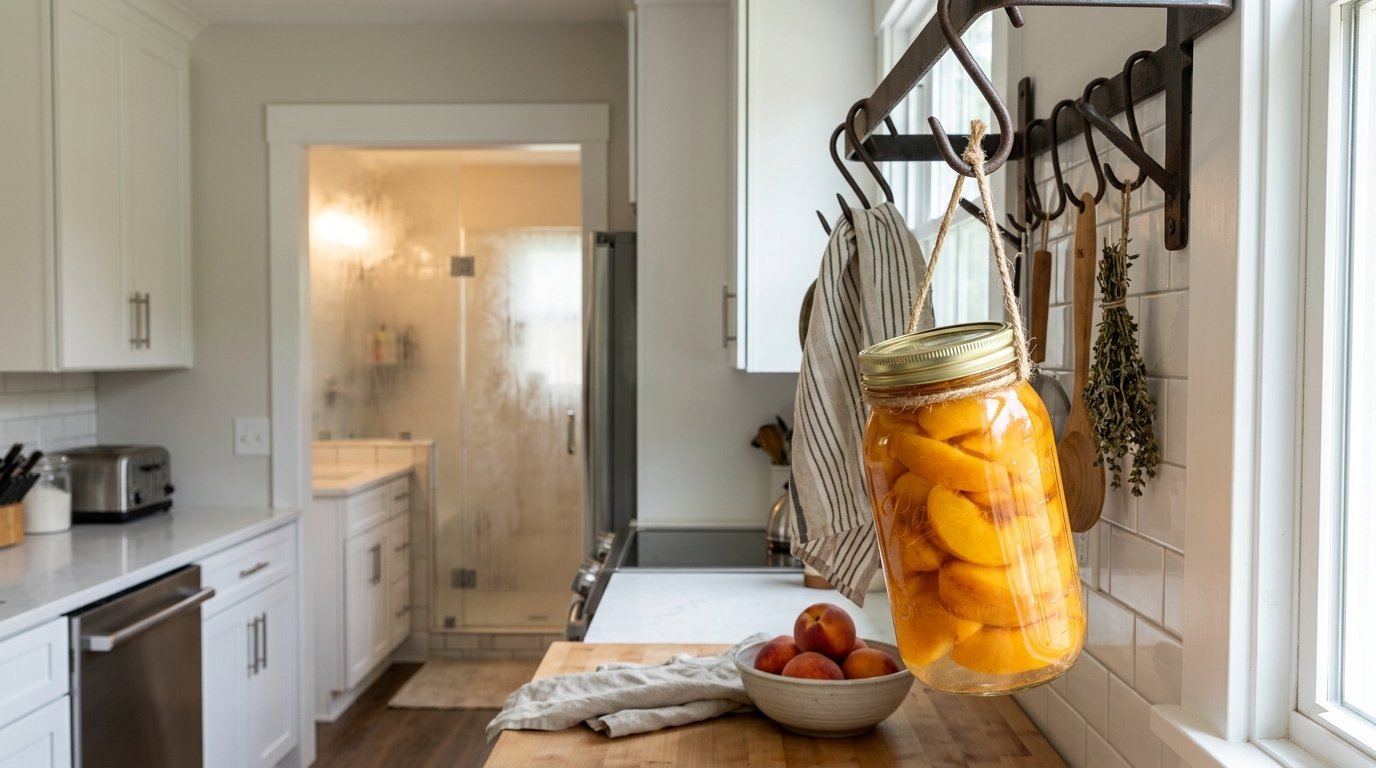
Kitchen walls get incredibly greasy. Airborne cooking oil coats the paint over time. Adhesive strips struggle to bond here. If you hang decorative canning jars you need extreme hardware. Filled canning jars weigh several pounds each. Use metal drywall anchors for anything related to kitchen storage. A falling canning rack destroys glass jars instantly. Rely entirely on mechanical fasteners in the kitchen. Keep the adhesive in your dry living room.
Comparing Costs of Command Strips and Removable Hooks
Decorating a full apartment gets expensive quickly. You must budget for hanging hardware.
The Ongoing Cost of Adhesive Strips
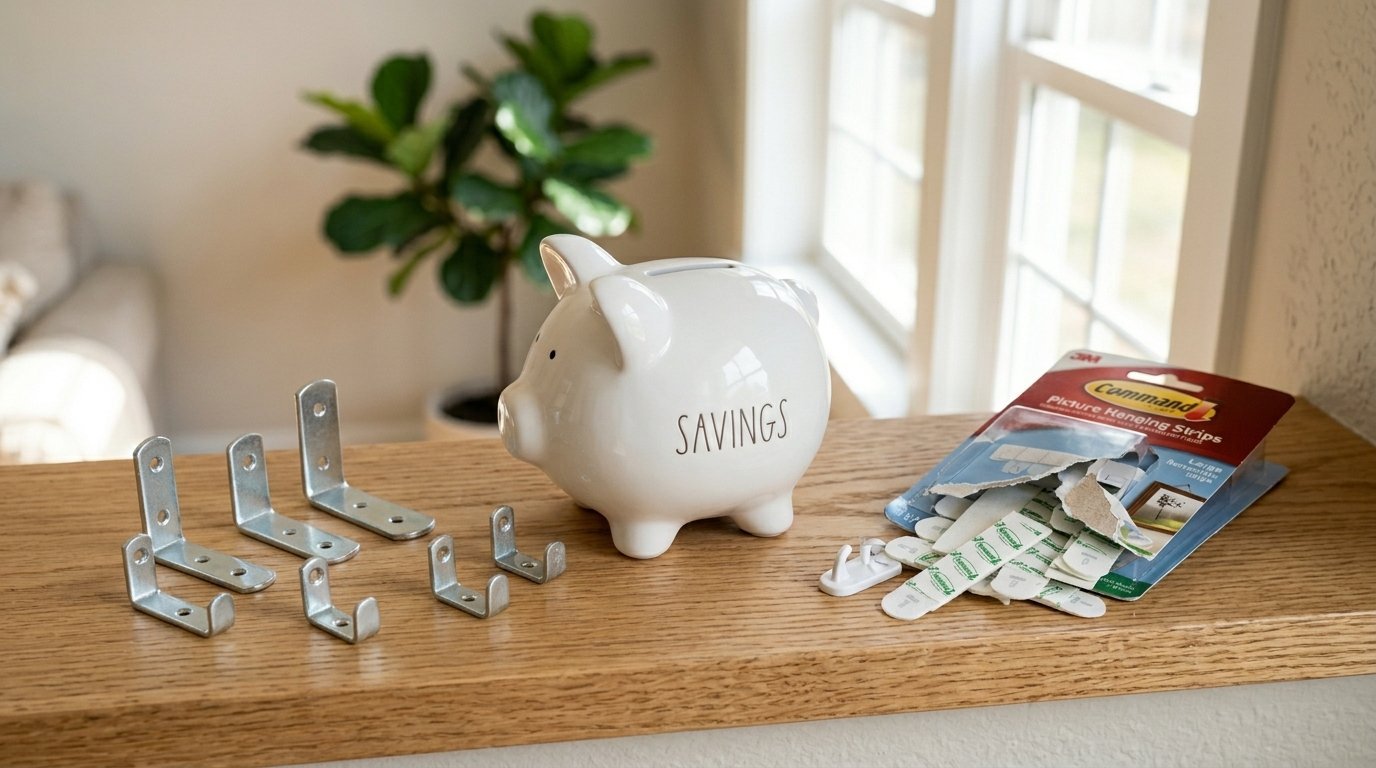
Adhesive strips cost a premium. A standard pack of twelve pairs costs around ten dollars. This hangs exactly three large frames. You cannot reuse the sticky back once you remove it. You must buy refill packs constantly if you redecorate often. The cost piles up fast for a large gallery wall. Twenty frames require eighty individual strips. That hardware alone costs over thirty dollars. You pay for the convenience of zero wall damage.
The Value of Metal Pin Hooks
Metal pin hooks offer a cheaper long term option. A pack of twenty monkey hooks costs around eight dollars. You can reuse these hooks endlessly. You pull them out of the wall and push them into a new spot. You do not need to buy sticky refills. The initial investment covers years of decorating. A tiny dab of spackle to fill the hole costs pennies. If you change your layout frequently pin hooks save you money. They let you experiment without extra trips to the hardware store.
Dealing with Plaster Walls and Brick Surfaces
Not all apartments have modern drywall. Older buildings feature lath and plaster or exposed brick. These surfaces require completely different tactics.
Hanging on Historic Plaster Walls
Plaster walls crack easily. You cannot push a metal pin hook through thick plaster. The hook will hit the wooden lath behind the plaster and stop. You must drill a pilot hole with a masonry bit. You must insert a plastic wall anchor. Adhesive strips work very well on flat plaster. Historic plaster often has waves and bumps. The sticky compound struggles to grip wavy surfaces. You must find the flattest section of the wall for the strips.
Decorating on Exposed Brick
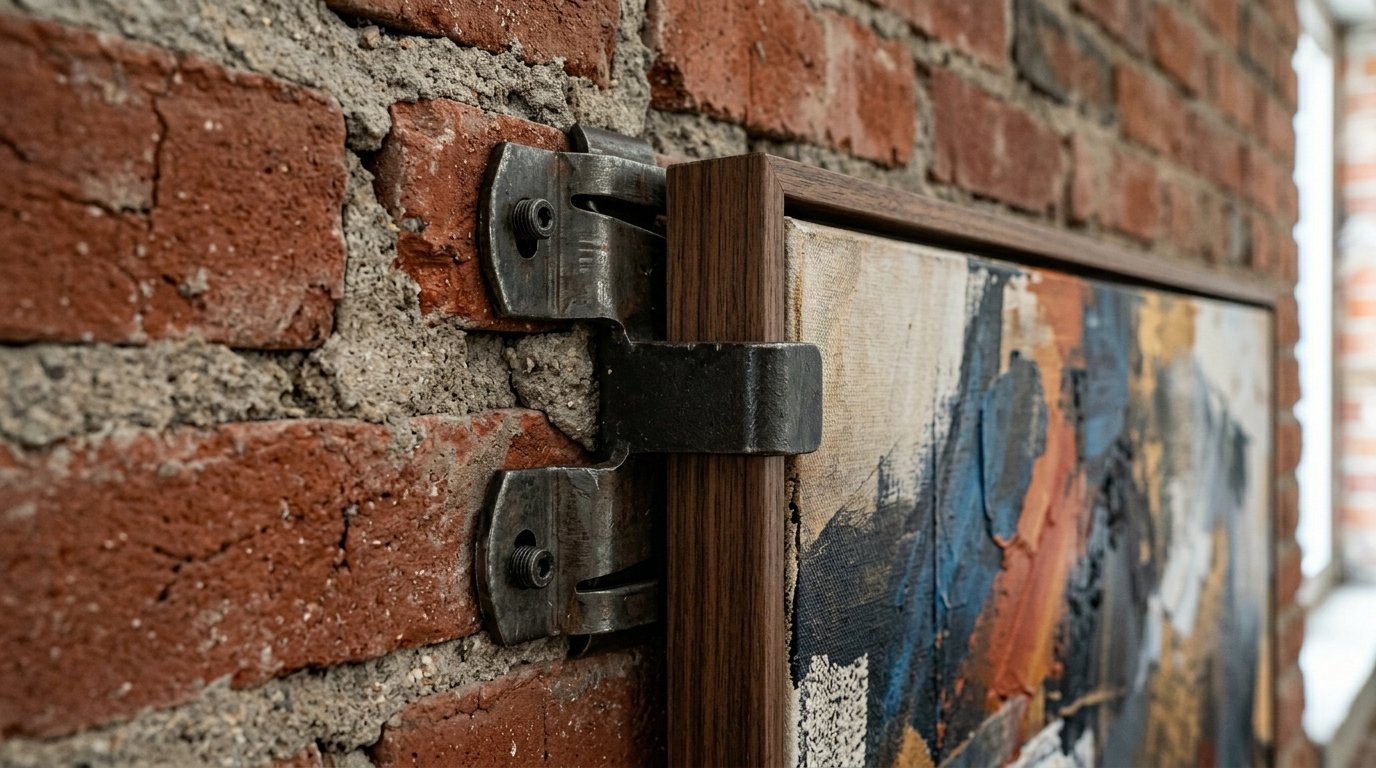
Exposed brick looks amazing in a loft apartment. Brick completely destroys standard hanging hardware. You cannot use regular adhesive strips on porous brick. The glue will not bond with rough clay. You cannot push a pin hook into solid brick. You must buy specific brick clip hangers. These clips grab the mortar line between the bricks. They hold tightly without drilling. They hold up to twenty pounds securely. You squeeze them with pliers and clip them tight.
Specialized Hanging for Canvas Art
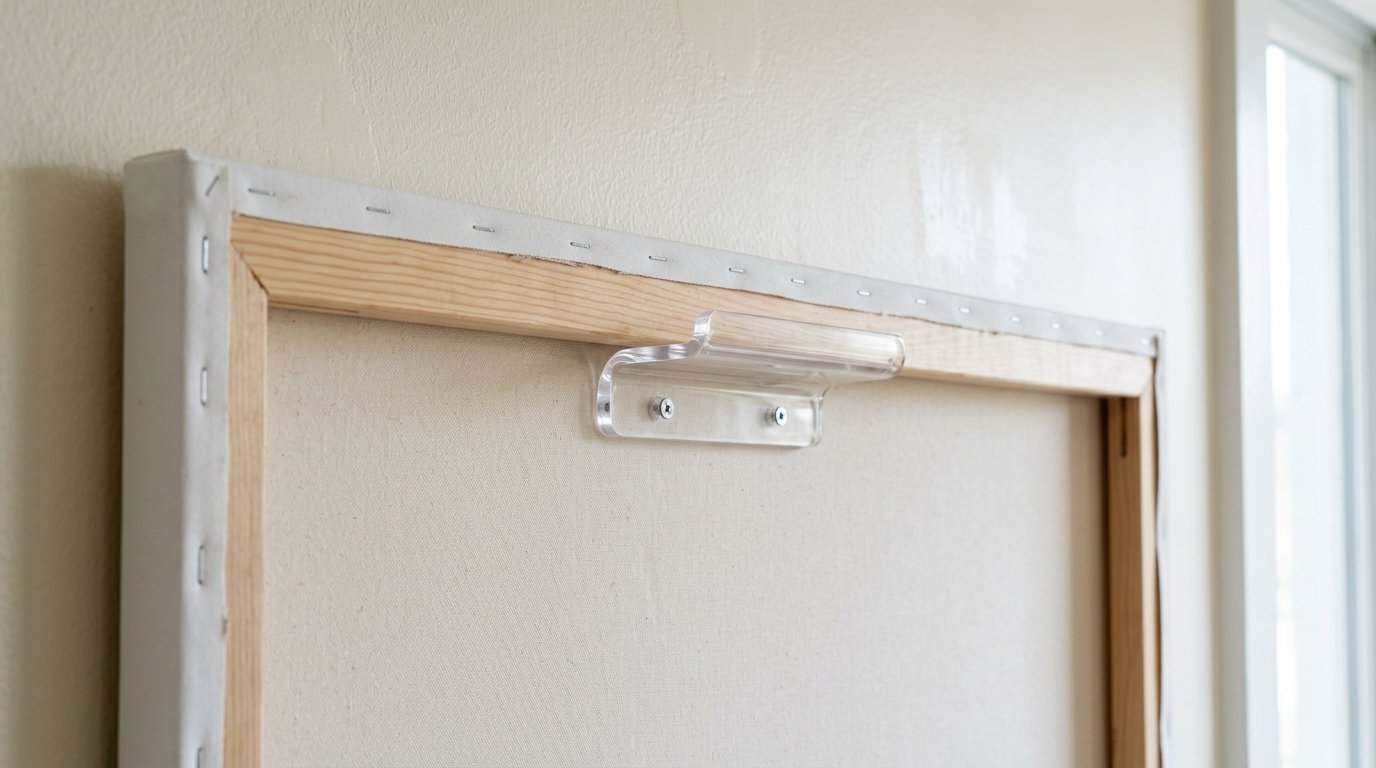
Canvas art weighs much less than glass photo frames. The wooden stretcher bars require specific placement.
Finding the Balance Point
Canvases do not sit flush against the wall naturally. The thick wooden frame pushes the canvas out. You can use standard sticky strips on the side bars. You must place the strips near the top corners. If you place the strips at the bottom the top will lean forward. Press the canvas firmly against the wall for sixty seconds. The rough wood takes longer to bond with the glue.
Using Canvas Specific Hooks
Some companies make specific canvas hangers. These sticky hooks grab the wooden crossbar inside the canvas. You stick the hook to the wall. You drop the canvas onto the plastic ledge. This keeps the canvas perfectly straight. I use these for large unframed paintings. They hold the lightweight fabric and wood frame perfectly. They keep the canvas slightly off the wall. This lets air circulate behind the fabric.
Organizing Jewelry and Accessories on Walls
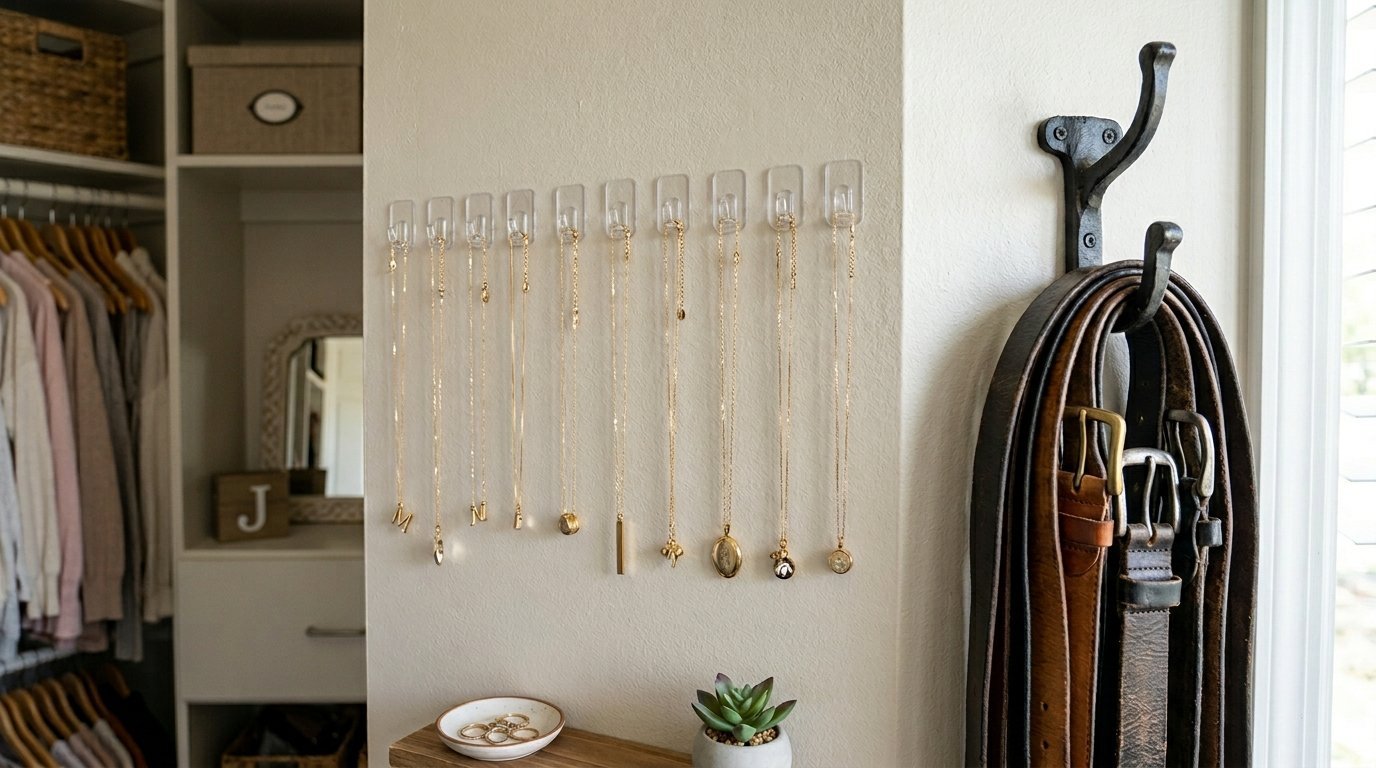
Wall space provides great storage for small items. You can organize your daily accessories beautifully.
Hanging Necklaces and Hats
Small sticky hooks work perfectly for jewelry. You can line up ten small hooks inside your closet door. Necklaces weigh almost nothing. The adhesive holds them forever. Hats look great on a bedroom wall. You can use standard plastic sticky hooks for baseball caps. Wide brimmed hats look better on protruding metal hooks. The metal keeps the brim from crushing against the drywall.
Creating a Belt Storage Zone
Belts get heavy when grouped together. A row of leather belts pulls hard on a single hook. You must use a heavy duty hook for belt storage. A metal pin hook drilled into a stud works best. If you use adhesive for belts use a jumbo hook. Press it firmly into the paint. Let the glue cure for twenty four hours before hanging heavy leather items. The curing time stops the hooks from snapping off on day one.
Frequently Asked Questions
Do adhesive strips hold up mirrors
I never do this. Mirrors weigh too much. A falling mirror shatters completely. Use metal pin hooks for safety.
Will sticky hooks tear drywall paper
They tear paper if you pull them wrong. You must pull the tab straight down. Never pull away from the wall.
Can I hang things on textured walls
Sticky strips fail on heavy texture. The glue needs flat contact. Use metal pin hooks for textured surfaces.
How do I remove broken pull tabs
Use waxed dental floss. Slide the floss behind the plastic. Saw it back and forth to cut the glue.
Do monkey hooks hit electrical wires
They can hit wires inside walls. Push them slowly by hand. Stop pushing if you feel hard resistance.
Can I reuse the plastic hooks
You can reuse the plastic hook part. You must buy fresh sticky refill strips. The glue only works once.
How much does a wooden sign weigh
Solid pine weighs several pounds per square foot. Weigh your exact piece on a scale. Never guess.
Will humidity ruin my gallery wall
High humidity melts standard glue. Use water resistant sticky strips in bathrooms. Keep the room well ventilated.
Do I need anchors for plaster walls
Plaster shatters easily. You must drill a pilot hole. You must use a specific plaster wall anchor.
Can I use rubbing alcohol on flat paint
Yes you can. Do a small test spot first. Rub lightly to avoid removing the paint finish.
What happens if I skip cleaning the wall
Your frame will fall down. Dust blocks the glue from touching the paint. Always clean the wall first.
How many strips do I need for a large frame
Use four sets for a large frame. Place one set in every corner. Press them firmly together.
Will metal push pins hold a heavy winter coat
Push pins hold heavy coats well. The metal uses the drywall for leverage. Sticky hooks fail with coats.
Can I hang floating shelves with adhesive
Never hang floating shelves with glue. Shelves protrude from the wall. The outward weight rips the glue off.
How do I hide pin holes in drywall
Use a tiny dab of white toothpaste. You can also use standard white wall spackle. Wipe it flat.
Final Thoughts on Wall Decor Hanging Hardware

Your choice depends entirely on the physical object. Adhesive strips work perfectly for tight gallery walls. They hold lightweight canvases securely in place. They keep flat frames perfectly flush against the paint. Removable metal pin hooks win for sheer holding strength. They handle heavy mirrors with ease. They hold thick wooden signs securely. Always weigh your diy home decor on a proper scale. Always clean your wall with high purity rubbing alcohol. Use a Norwex or 3M microfiber cloth for a lint free surface. Treat humid rooms with caution. Use mechanical pins in your kitchen and bathroom. Your beautiful interior design will stay exactly where you put it. Your security deposit will remain totally safe. You now possess the exact knowledge required for safe decorating.

Anya Castellan is the Founder and Editor-in-Chief of Home Wall Trends. An art history graduate of the Rhode Island School of Design with twelve years of experience writing for leading American design publications, she specializes in composition, gallery wall theory, and the quiet architecture of domestic space. A former contributing editor at Architectural Digest and guest lecturer at Parsons School of Design, Anya personally reads and signs off on every piece before it is published.