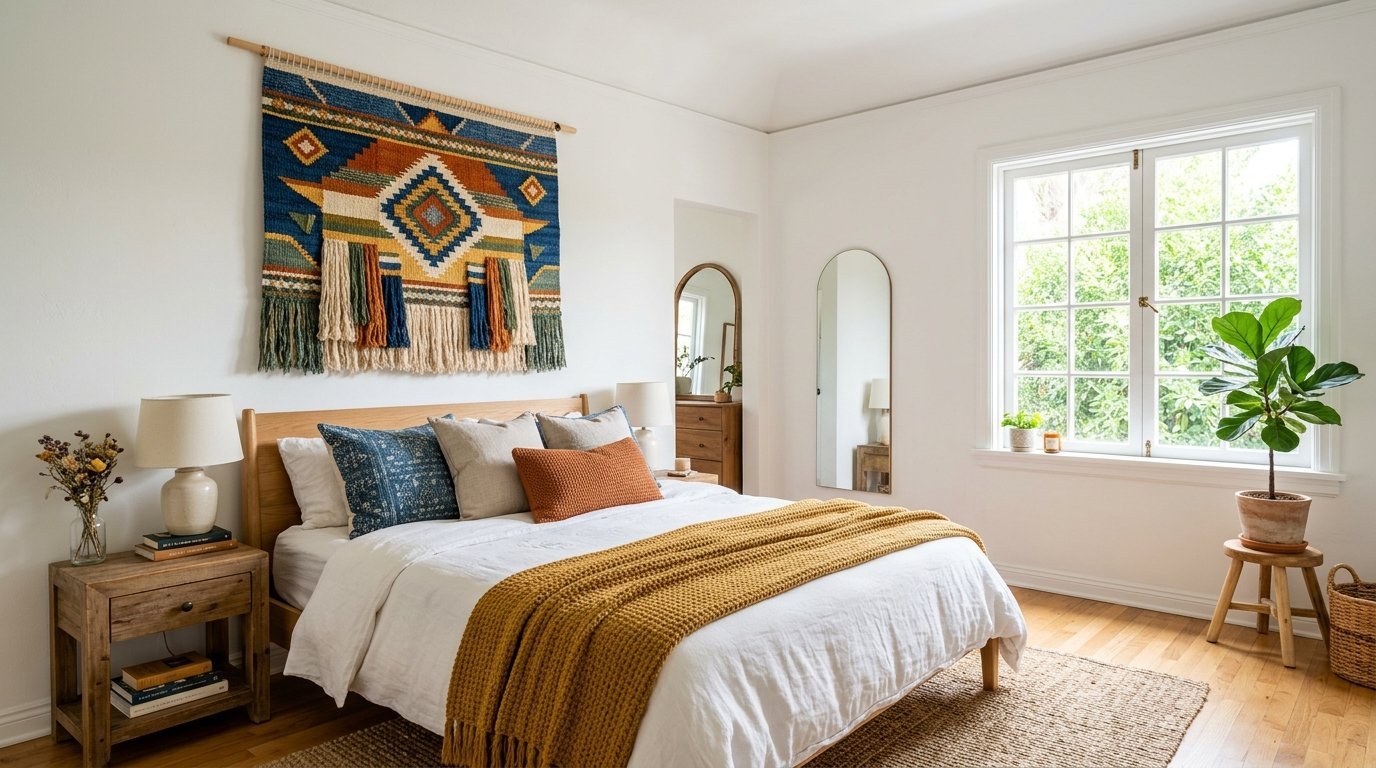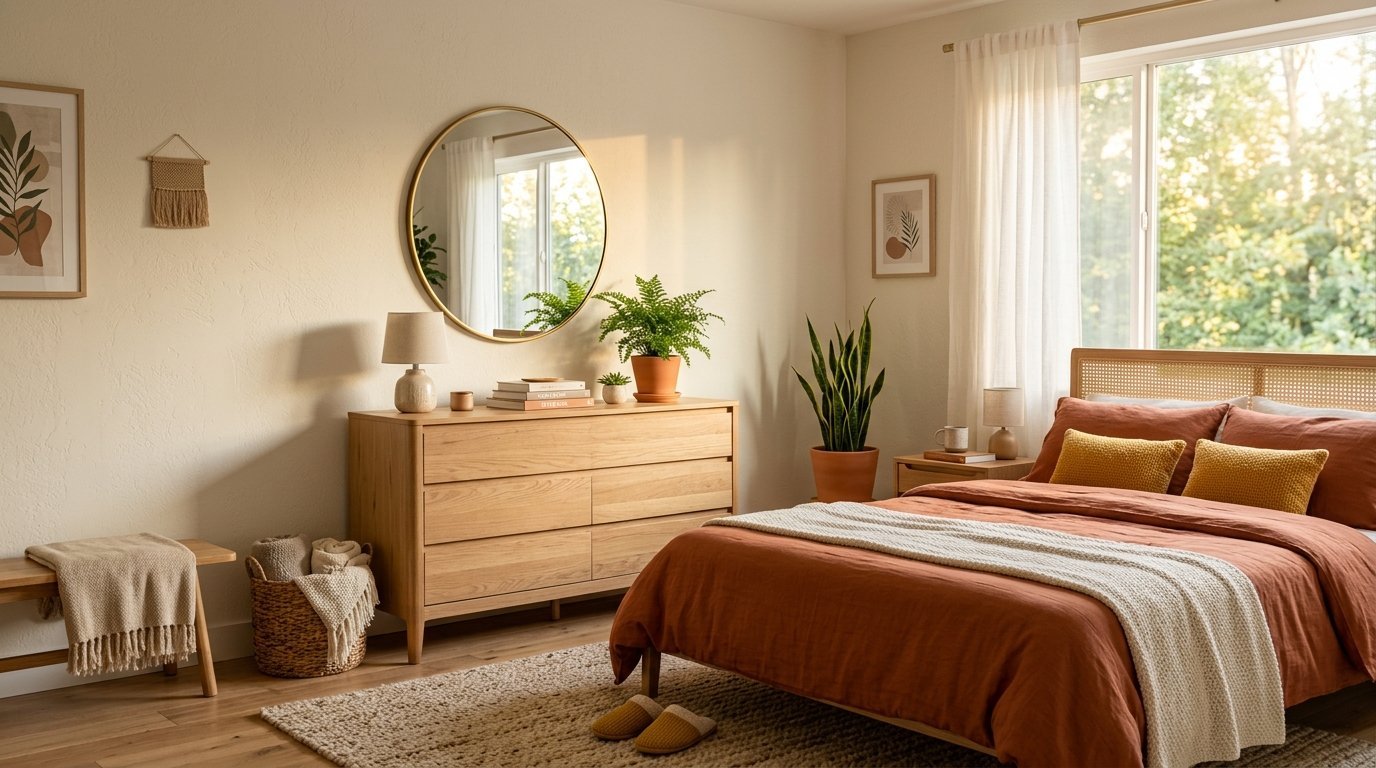
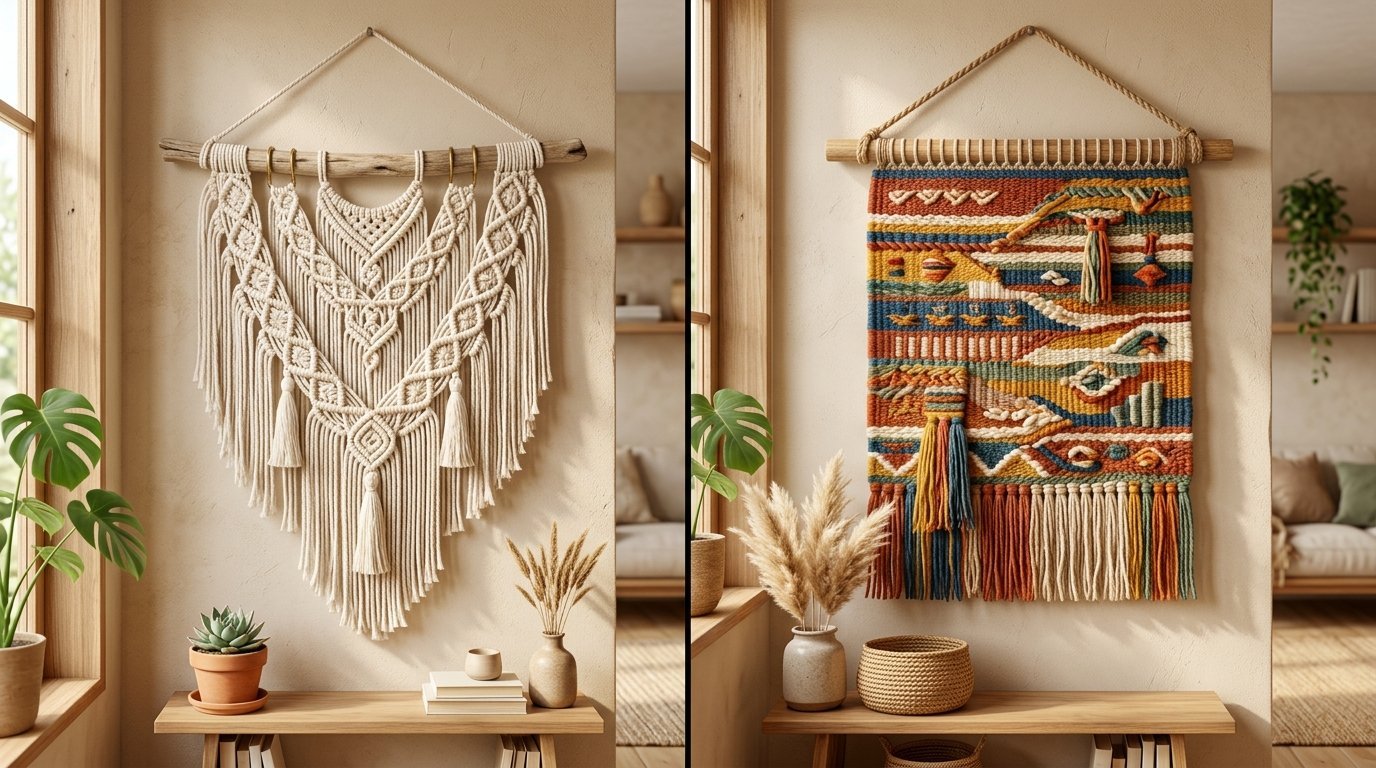
You stare at a blank white wall in your room. The paint feels cold and you crave warmth. A flat printed canvas falls short of your vision. You want real texture and depth in your space. Textile art gives a room an immediate heartbeat. Two choices dominate the boho interior design space today. You can pick a knotted piece or a woven piece. Both styles give your walls an organic feel. You must pick the one that fits your daily life. Macrame vs Woven Wall Hangings is a choice about mood. One gives you heavy shadows and thick ropes. The other gives you tight grids and dyed yarn. This guide gives you the exact details to choose correctly.
You will know exactly how these two art forms differ by the end. You will see specific costs and time commitments for each style. I share my exact mirror and art cleaning routines. You get real stories from actual room makeovers I completed. You read about specific yarn brands and rope makers. You get a complete breakdown of hanging hardware options. You see exactly how to match textile art to your specific room. Your walls will finally reflect your true personal taste. You save time and money by choosing the right materials first. You avoid the common mistakes most beginners make with fiber art.
What Defines The True Boho Aesthetic For Your Walls?
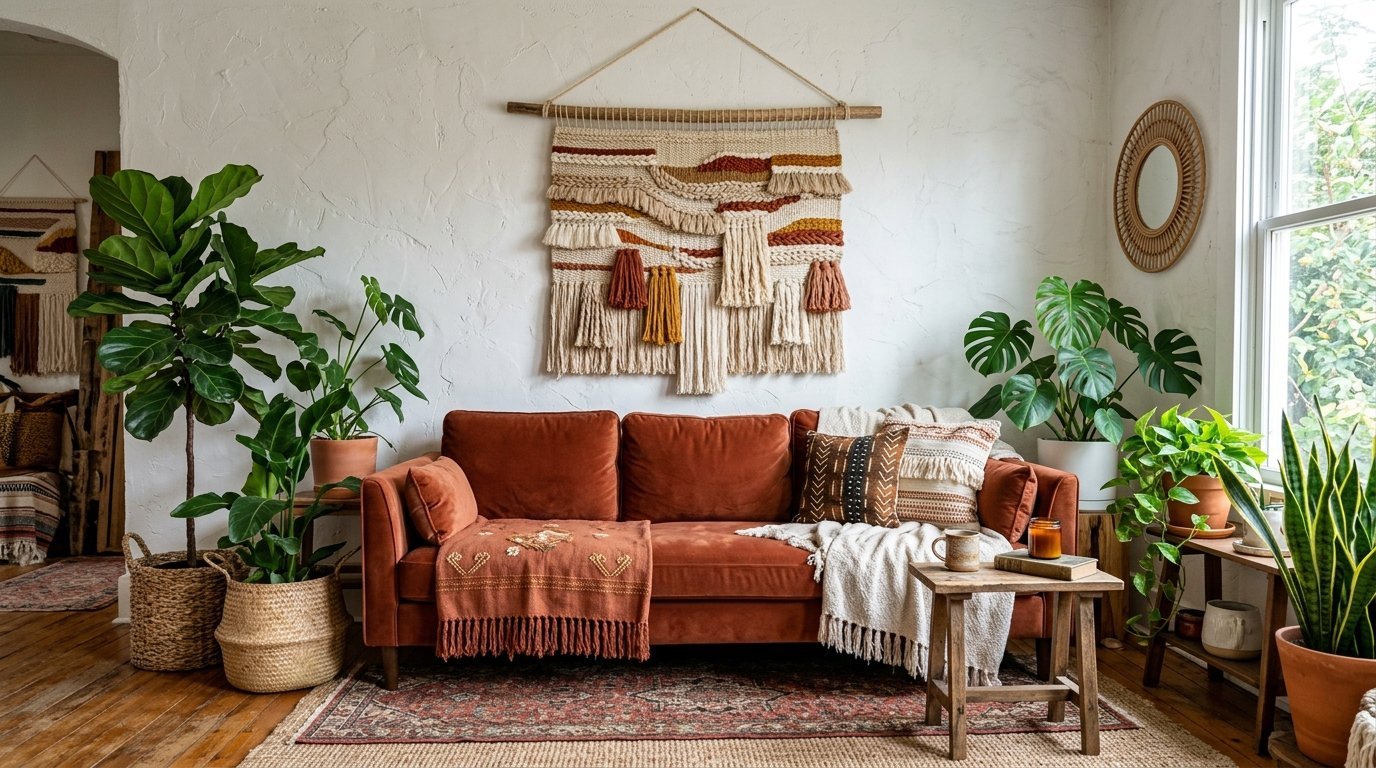
Boho style relies heavily on layers and natural materials. You see lots of plants and raw wood in these rooms. The walls need to reflect that same organic feeling. A framed poster looks too rigid for this relaxed vibe. Textile art breaks up straight lines and sharp corners. It catches the afternoon light and casts soft shadows.
- You want materials like raw cotton and unspun wool.
- You need colors pulled from nature like rust and sage.
- You look for asymmetrical shapes and frayed edges.
- You combine different textures in a single room.
Your wall art acts as an anchor for the whole room. A large piece over a sofa draws the eye immediately. It sets a calm mood for anyone entering the space.
The Role Of Texture In Room Design
Flat walls make a room feel empty and echoey. Texture fixes this problem instantly and beautifully. A macrame piece has thick knots that stick out. A woven piece has fluffy sections of wool. Both options make the wall feel warm and inviting. You feel the urge to touch the art.
Matching Colors To Your Furniture
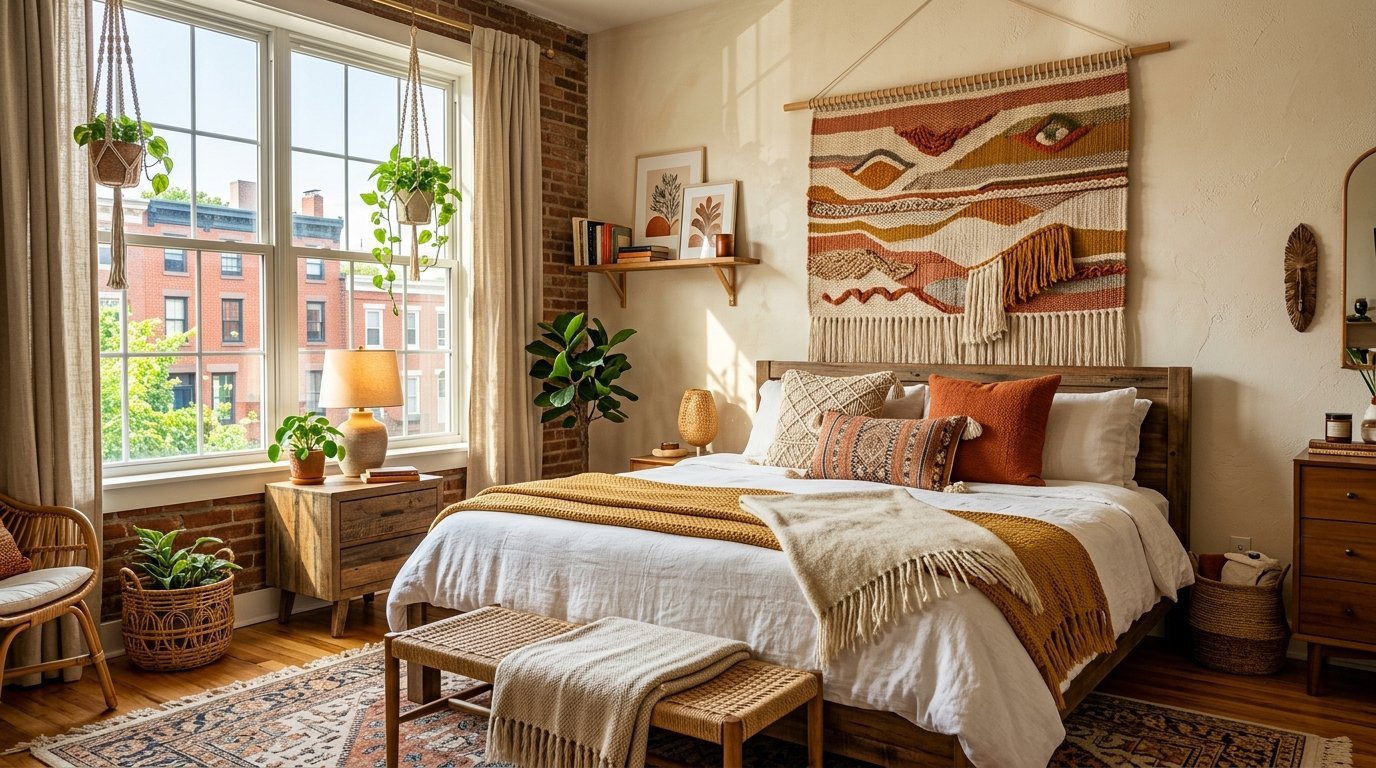
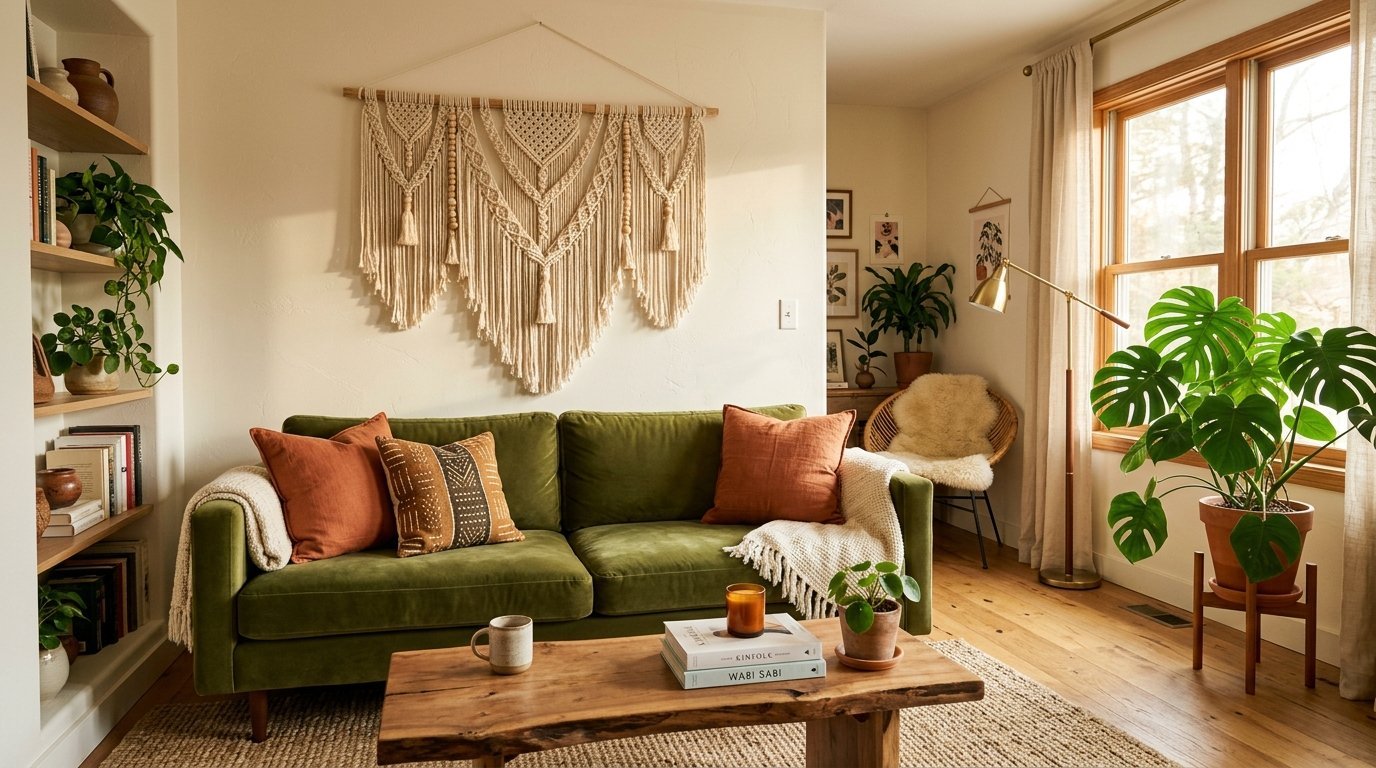
Your couch and rug dictate your wall art colors. A gray couch needs warm tones on the wall above it. You might choose a woven piece with mustard yellow yarn. A bright velvet couch needs neutral wall decor. A cream macrame piece balances a loud piece of furniture perfectly.
Mixing Vintage And Modern Items
Boho style thrives on mixing old and new things. You might hang a modern woven piece above an antique table. You could frame a vintage crochet top for a beach house vibe. The mix of eras gives the room a collected feel. Your space should look like it grew naturally over time.
How Do Macrame And Weaving Actually Differ In Creation?
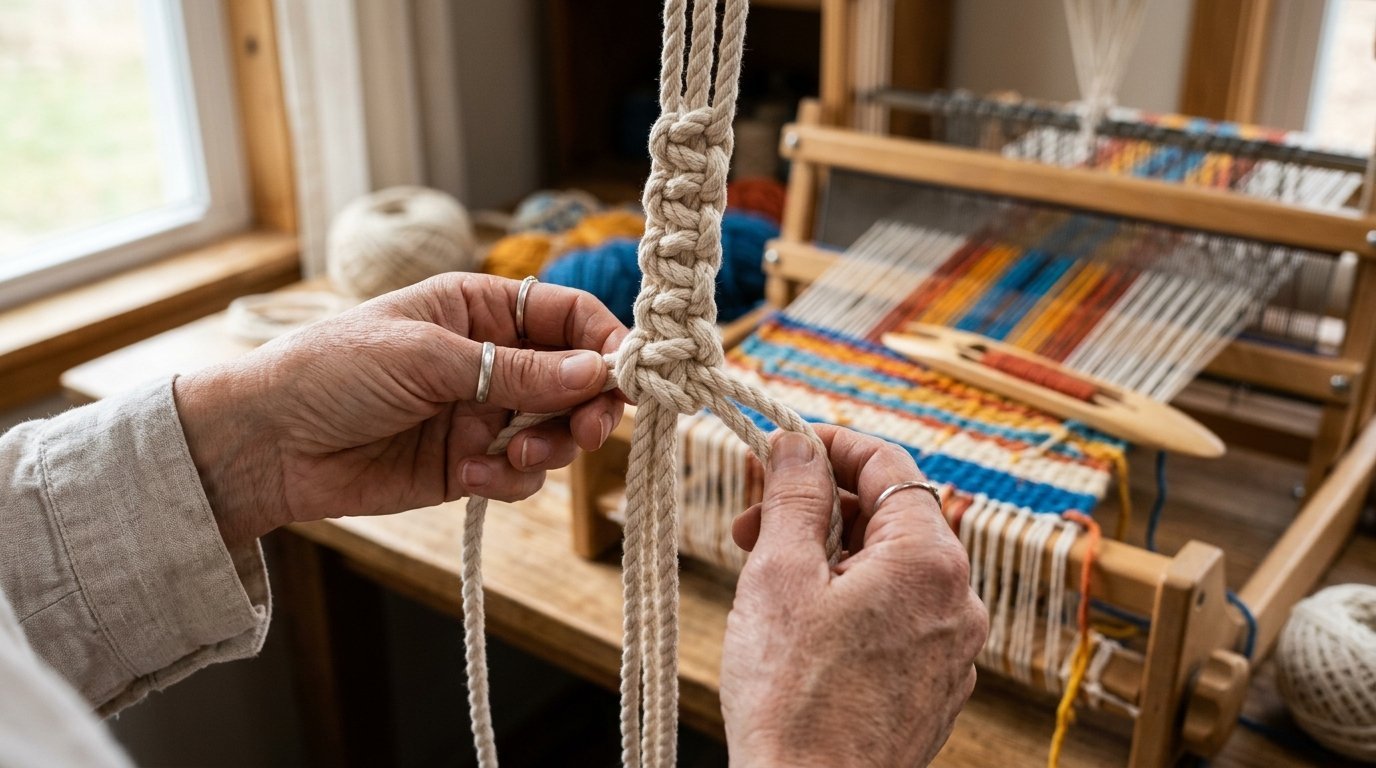
These two art forms use completely different tools and motions. Macrame requires zero tools to create the actual fabric. You only need your bare hands and some rope. Weaving requires a rigid frame to hold the strings tight. You need a needle and a comb to make a woven piece.
- Macrame uses varying series of tight knots.
- Weaving uses intersecting threads passing over and under.
- Macrame pulls downward from a single hanging point.
- Weaving builds upward from the bottom of a frame.
The physical act of making them feels very different. Tying thick rope gives you sore fingers and blisters. Passing thin yarn through a loom feels gentle and rhythmic.
The Basics Of The Knotting Process
You start by attaching cords to a wooden dowel. You use a larks head knot to secure them. You then take four cords and tie a square knot. You repeat this motion hundreds of times. The pattern emerges from the empty spaces between the knots.
The Basics Of The Loom Setup
You wrap strong cotton thread around a wooden frame. These vertical strings are your warp threads. You take a needle threaded with colored yarn. You pass it over and under the vertical strings. You push the yarn down tightly with a plastic comb.
Time Commitments For Beginners
A large knotted piece takes about ten hours to finish. You can make a small plant hanger in twenty minutes. A medium woven piece takes about fifteen hours. Setting up the loom takes an entire hour by itself. You must have patience for either craft.
Which Texture Fits A Classy Bedroom Design?
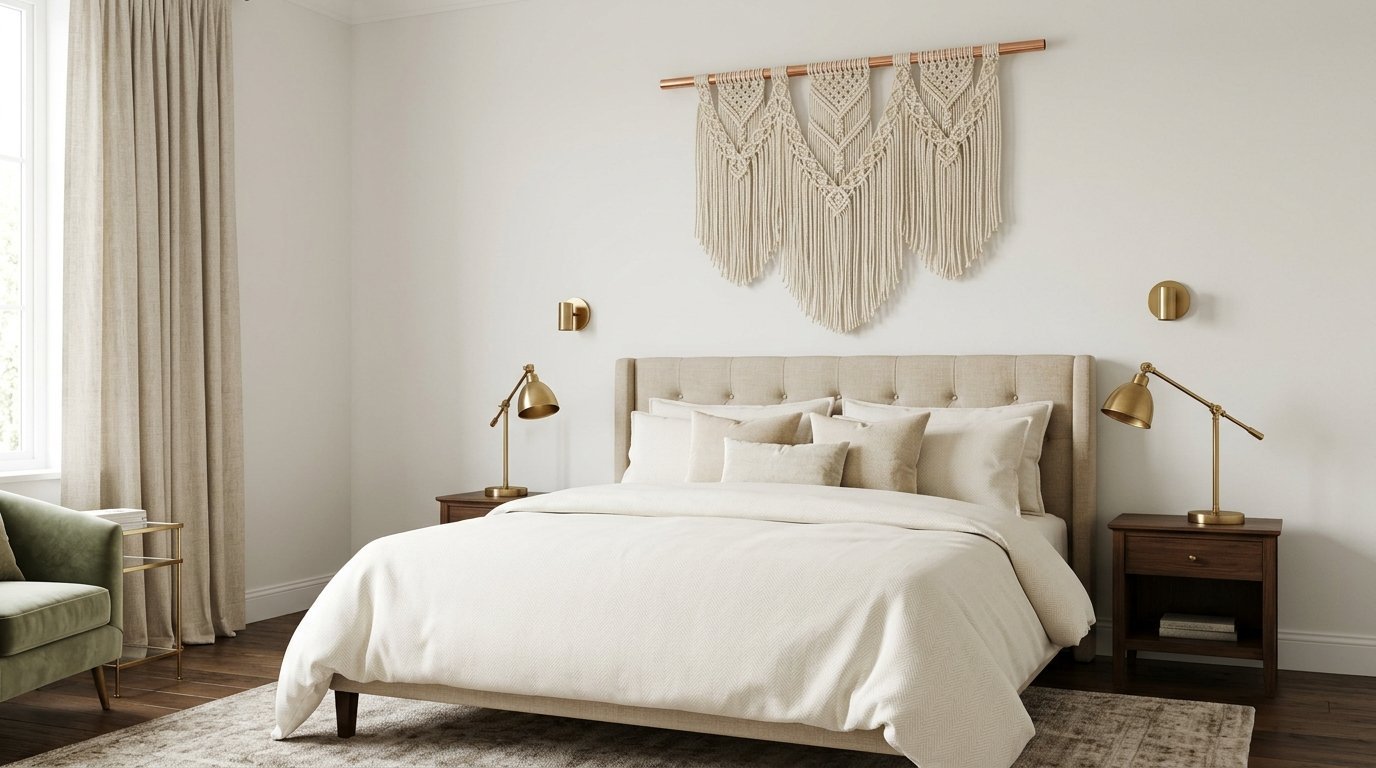
A classy bedroom requires symmetry and clean lines. You want the space to feel luxurious and calm. I keep my own space looking like a true Vida De Luxo home. I choose my wall pieces with extreme care. A messy wall hanging ruins a sophisticated room.
- Choose pieces with straight bottom fringes.
- Stick to monochromatic color palettes like pure white or ivory.
- Avoid neon colors and chaotic patterns.
- Hang the piece from a polished brass or copper pipe.
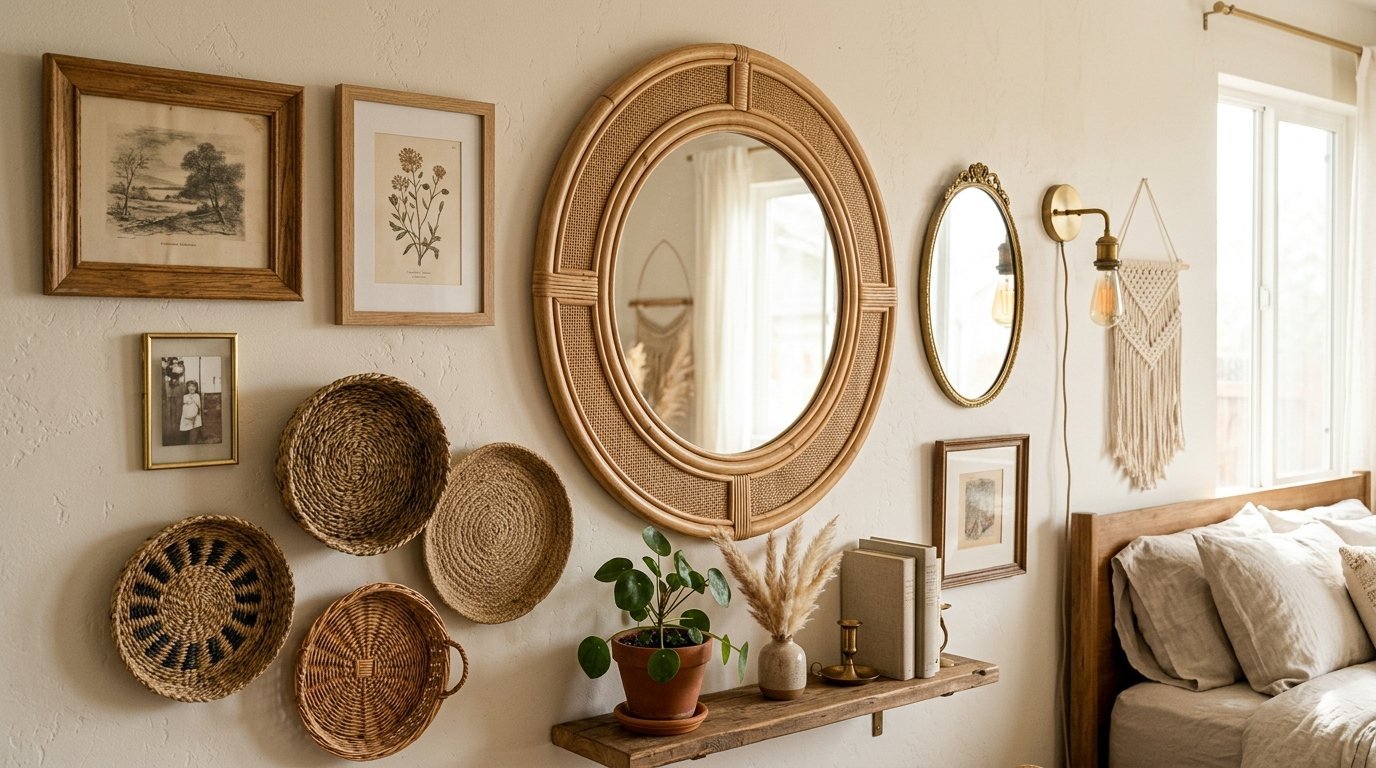
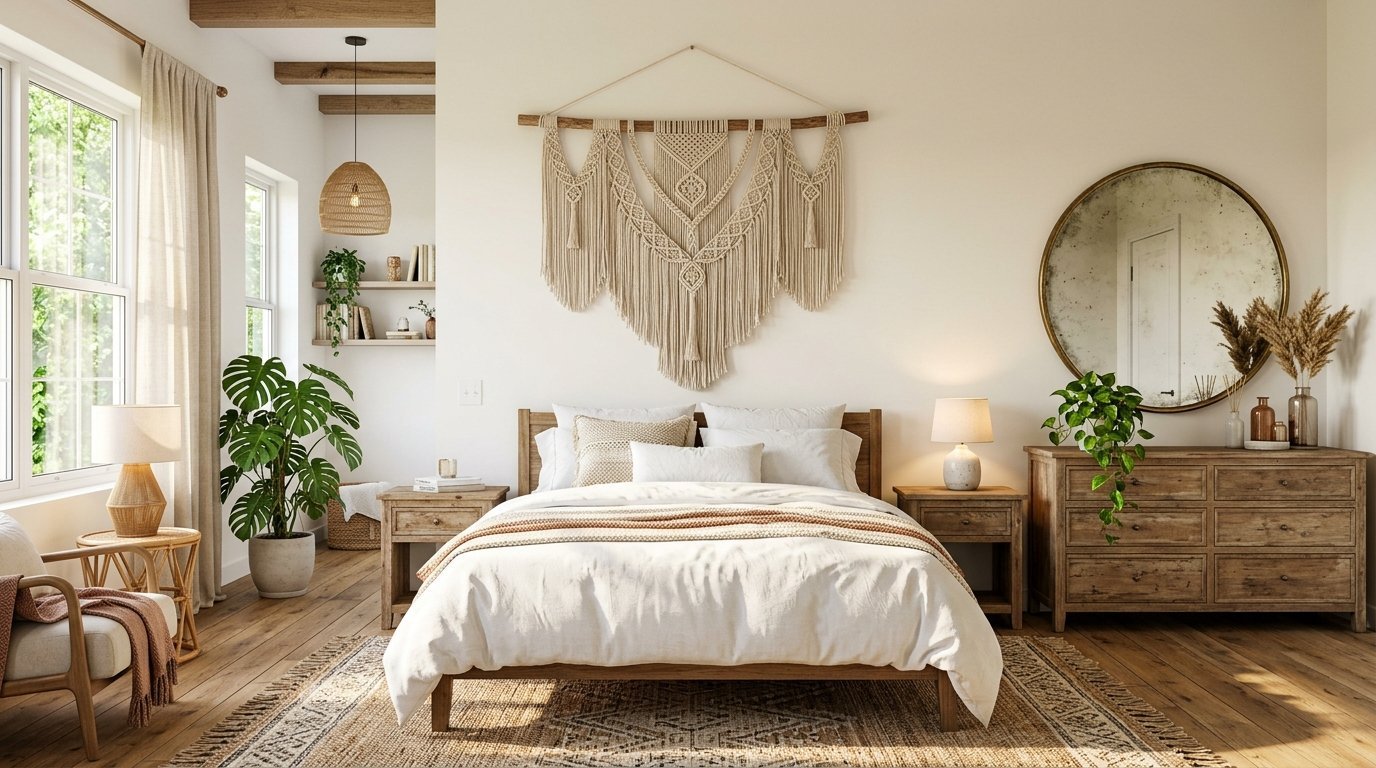
I hang a large symmetrical macrame piece above my bed. I keep a large antique mirror on the adjacent wall. The mirror reflects the art piece beautifully.
My Exact Mirror Cleaning Routine
The reflection must be perfect in a classy bedroom. I clean my antique mirror every single Sunday. I use a mix of distilled water and isopropyl alcohol. I spray it lightly to avoid silver rot on the edges. I wipe in straight lines with a Norwex cloth. The glass stays completely streak free all week.
Balancing Heavy And Light Elements
A large bed with thick blankets looks very heavy. You need a lighter piece of art above it. A woven hanging with fine silk threads looks delicate. It balances the visual weight of the heavy mattress. A thick rope piece might make the wall feel crowded.
Incorporating Gold And Brass Accents
Luxury bedrooms often feature gold hardware and lamps. You can incorporate these metals into your wall art. You can weave thin gold threads into a wall piece. You can hang a macrame piece from a solid brass rod. These small details elevate the entire room.
How Does A Macrame Wall Hanging Change Room Acoustics?
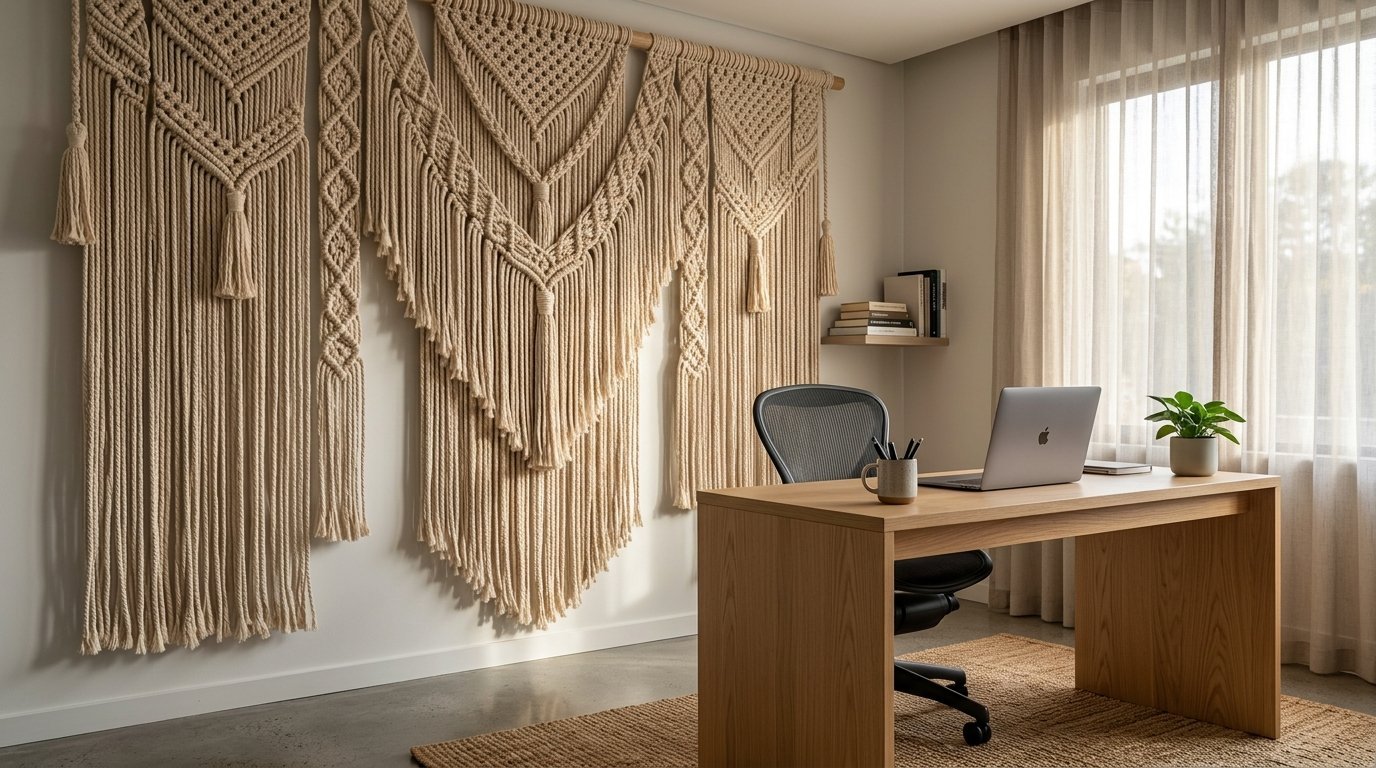
Empty rooms with hard floors have a terrible echo. Sound bounces off flat drywall and glass windows. Fiber art absorbs these sound waves brilliantly. A thick piece of textile art acts like an acoustic panel.
- The thick cotton rope catches high pitched noises.
- A large piece dampens conversations in a busy living room.
- The empty spaces between knots trap sound waves.
- Adding a backing fabric increases the sound dampening effect.
I helped my friend Mark decorate his home office. His voice echoed terribly on his video calls. We hung a giant knotted piece behind his desk. The echo disappeared completely the next day.
Placement For Sound Absorption
You must place the art near the source of the noise. Hang it directly behind your desk chair. Place it on the wall opposite your television speakers. The sound waves hit the soft cotton and stop immediately.
Thickness Matters For Echo Reduction
A thin piece of flat weaving does very little for sound. You need thick three ply rope for acoustic changes. The physical mass of the cotton does the heavy lifting. A piece weighing five pounds works better than a one pound piece.
Case Study Of A Loud Apartment
Sarah lived in an apartment with thin walls. She heard her neighbors talking every single night. She bought a massive thick rope piece for her bedroom wall. The art covered half the wall surface. The neighbor noise dropped to a quiet whisper. She finally slept well.
What Materials Make The Best Woven Wall Art?
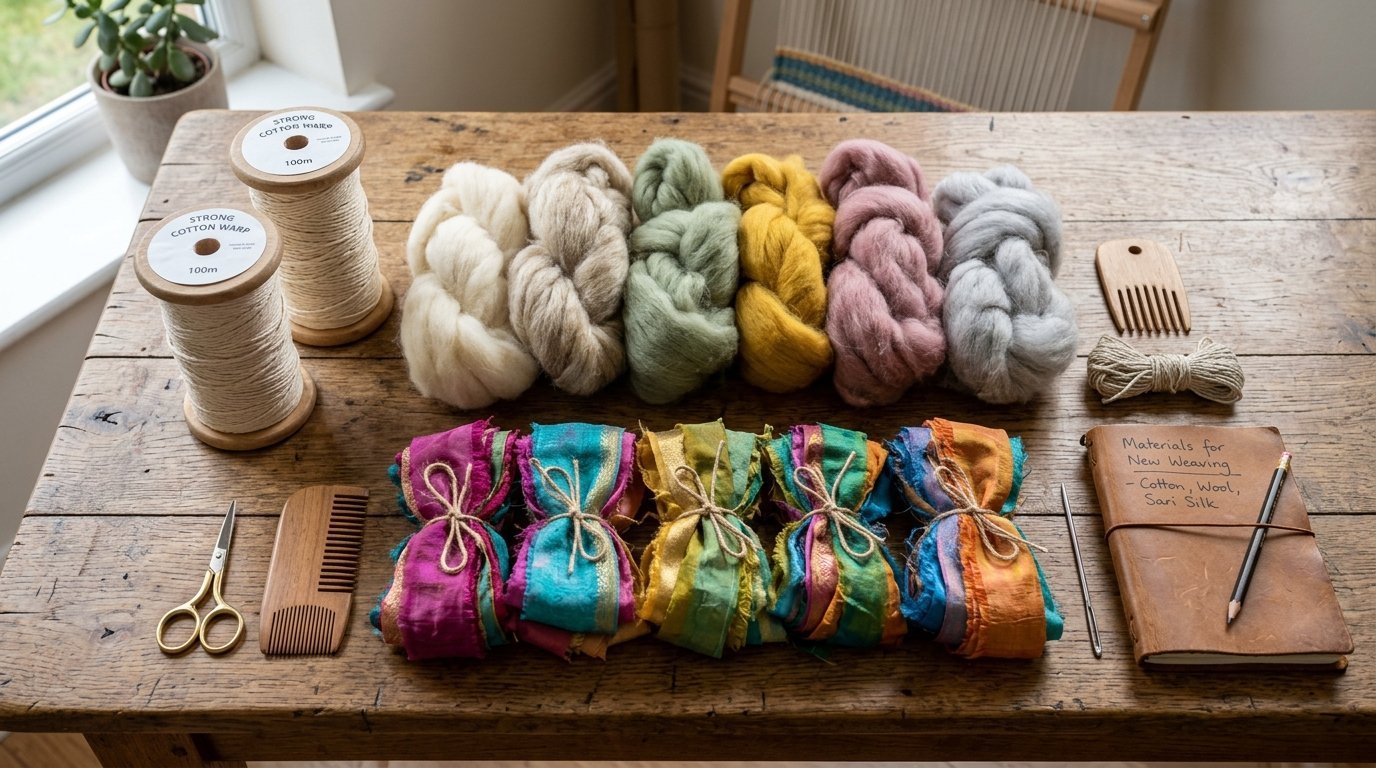
Weavers use a massive variety of fibers in their work. You can weave almost anything that comes in a long string. The materials you choose dictate the final look completely.
- Cotton warp thread holds the entire piece together safely.
- Merino wool roving adds massive fluffy clouds of texture.
- Thin silk yarn adds a shiny and delicate detail.
- Recycled sari silk ribbon adds bright flashes of color.
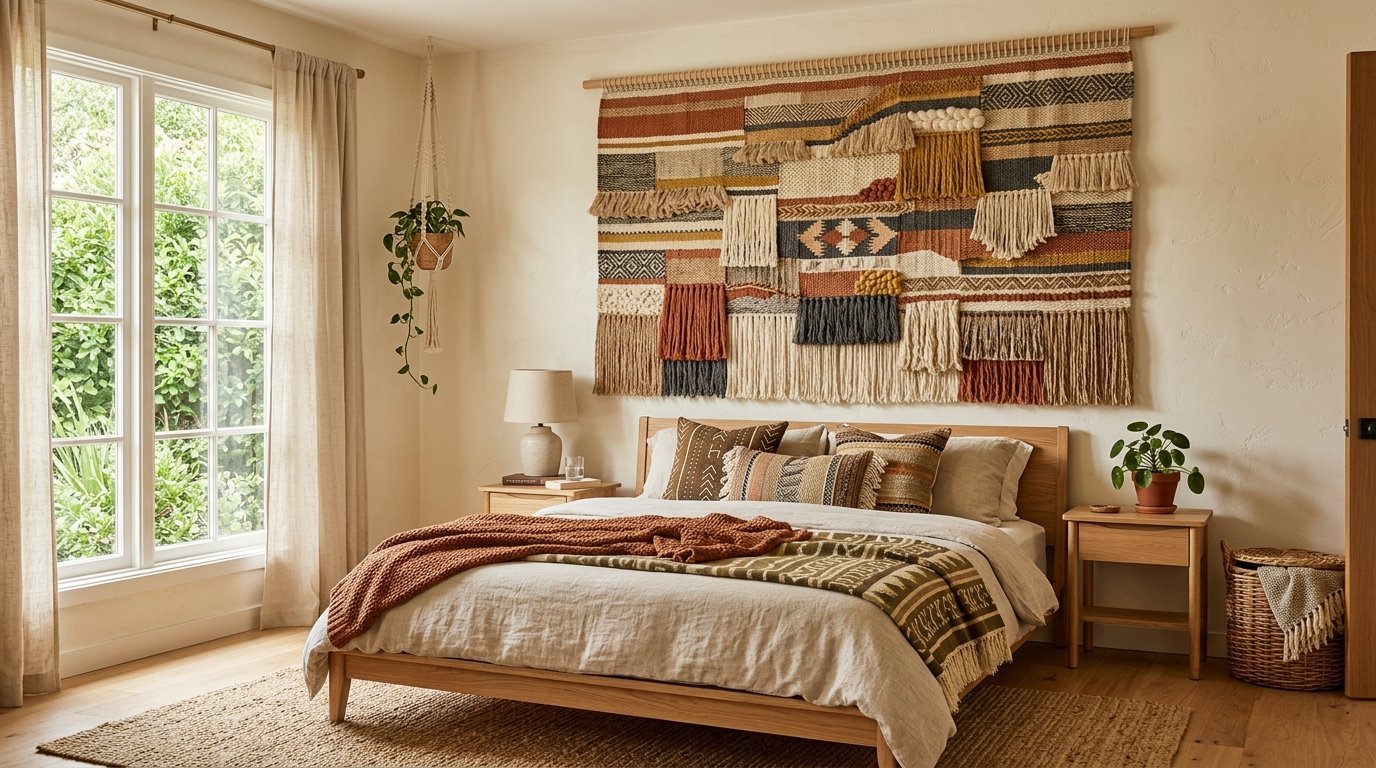
You must mix thick and thin yarns for the best look. A piece made of only thin yarn looks like a flat rug. A piece made of only thick wool loses its shape over time.
The Strength Of The Warp Thread
The vertical warp strings carry the tension of the whole piece. You must never use stretchy yarn for the warp. A strong cotton string is the only good choice. If the warp breaks the entire art piece falls apart.
Working With Wool Roving
Roving is unspun wool straight from the sheep. It is incredibly soft and thick. You pull it apart gently with your hands. You weave it in big bubbly loops. It creates a three dimensional effect on the wall.
Adding Natural Elements Like Wood
Many weavers insert raw nature into their pieces. You can weave small pieces of driftwood into the middle. You can add dried flowers to the fringes. These elements bring the outside world indoors. They make the piece feel earthy and grounded.
How Do You Choose Between Thick Ropes And Fine Yarns?
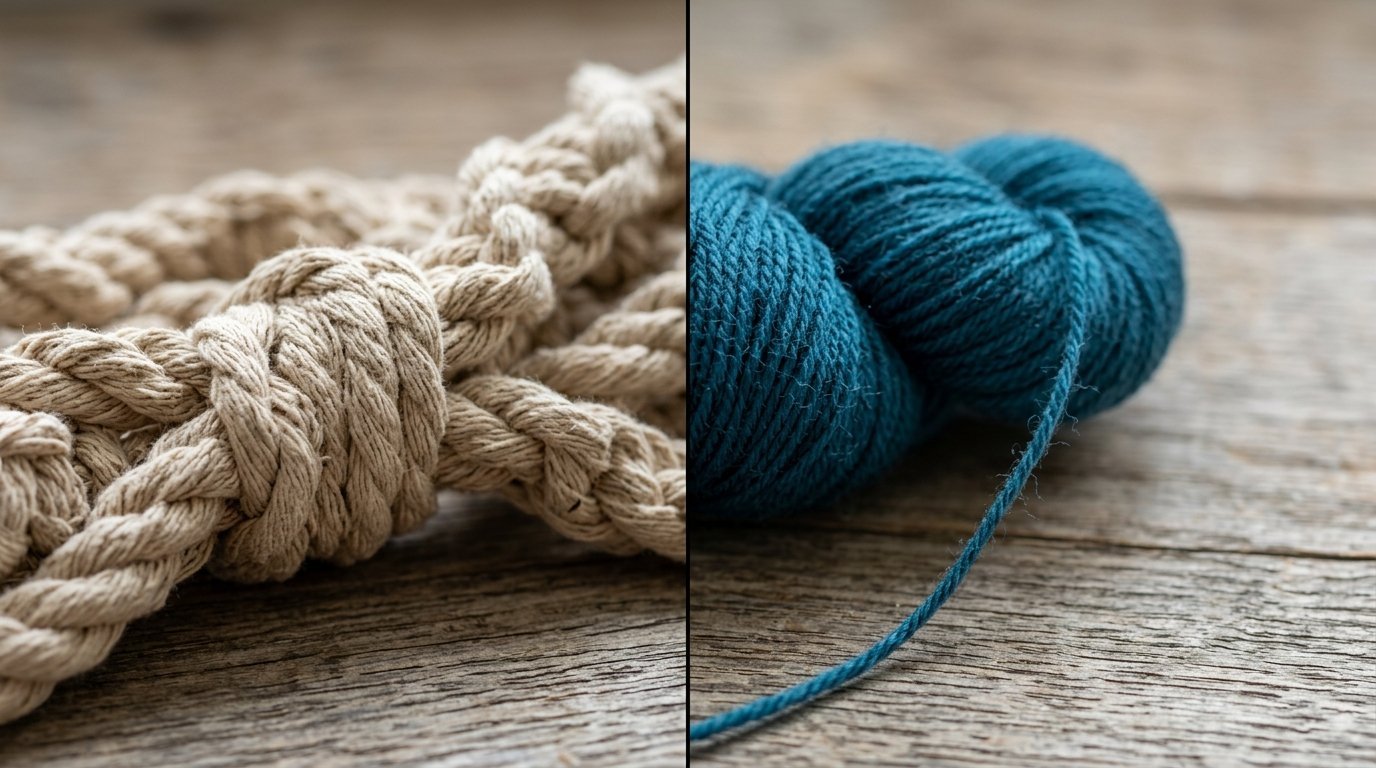
Your choice of string thickness changes everything about the project. Thick ropes finish quickly but hurt your hands. Fine yarns take weeks but allow for tiny details.
- Three millimeter rope makes delicate plant hangers.
- Five millimeter rope makes massive dramatic wall pieces.
- Fine worsted weight yarn creates detailed scenic pictures.
- Super bulky yarn covers a loom quickly.
You must look at the size of your empty wall. A tiny piece looks silly on a massive empty wall. A massive piece overwhelms a tiny bathroom wall.
When To Use Single Strand Cotton
Single strand cotton feels like a cloud. You can brush the ends out with a pet comb. It makes a beautiful fluffy fringe. It is very soft on your hands while you tie knots.
When To Use Braided Cord
Braided cord looks very modern and sleek. It never frays or untwists on the ends. It holds its shape perfectly in high traffic areas. It feels stiff and rough on your fingers.
Mixing Rope And Yarn Together
You do not have to choose just one material. You can tie a large macrame base with thick rope. You can then weave fine colorful yarn through the knots. This gives you the speed of rope and the color of yarn.
Can You Mix Macrame With Unexpected Elements Like A Crochet Top?
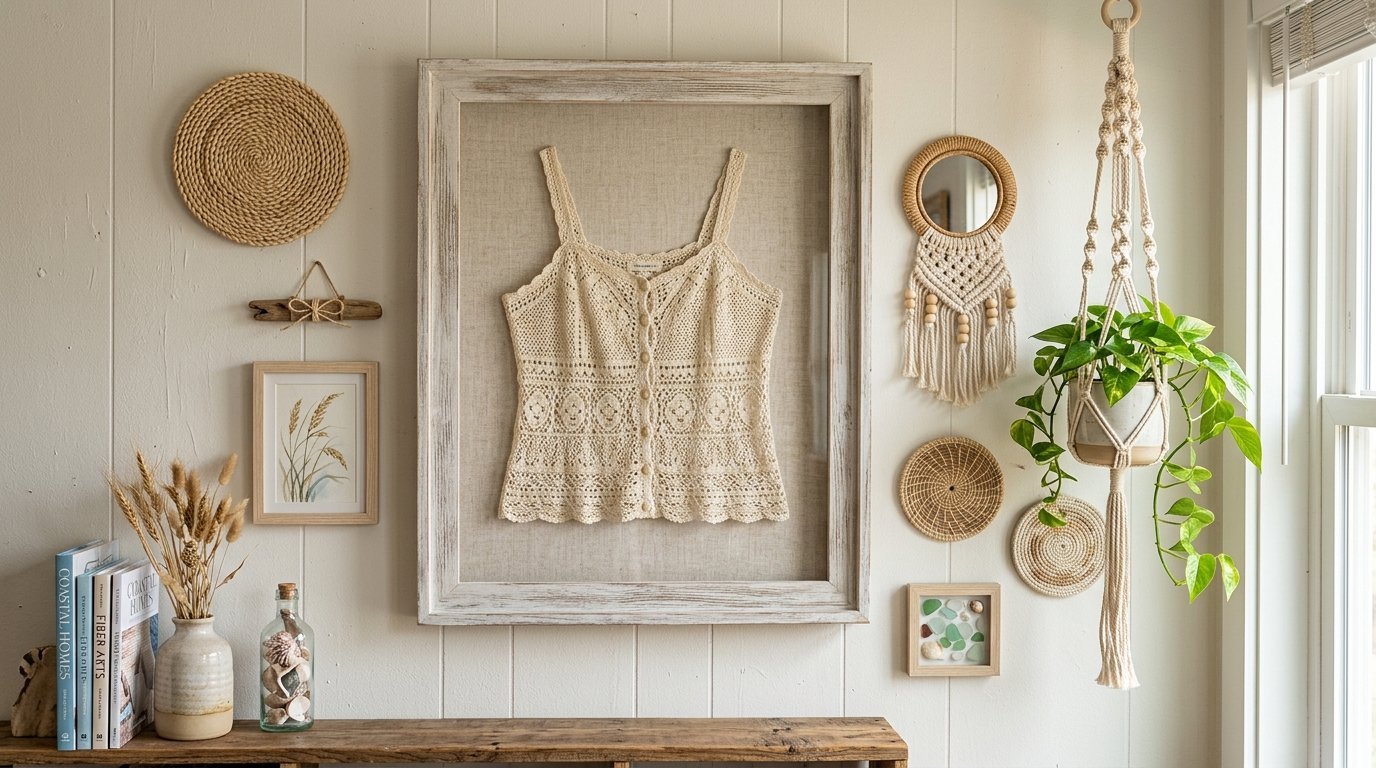
Boho design welcomes strange and beautiful combinations. You can mix different fiber arts on the same wall. A gallery wall of textiles looks incredible in a hallway.
- Frame a vintage crochet top in a deep shadow box.
- Hang a small woven piece next to the shadow box.
- Add a long knotted plant hanger in the corner.
- Mount a handmade crochet bikini in a glass frame for a beach house.
These items tell a story about your life. They show you care about handmade goods. They make your walls look like an art museum.
Framing Handmade Clothing
Vintage handmade clothing is pure art. A delicate lace top belongs on display. You use sewing pins to secure it inside a shadow box frame. The glass protects the old fabric from dust. It looks striking next to a thick rope wall hanging.
Creating A Beach House Vibe
A beach house needs relaxed decor. You hang a large knotted piece above a rattan sofa. You add a framed crochet bikini piece in the guest bathroom. The textures remind guests of fishing nets and swimwear. The whole house feels cohesive and fun.
Balancing A Gallery Wall
A gallery wall needs different sizes to look right. You hang one massive focal piece in the center. You surround it with smaller framed items and tiny woven circles. You leave three inches of blank wall space between every item.
Why Do Wall Patterns Matter In Small Spaces?
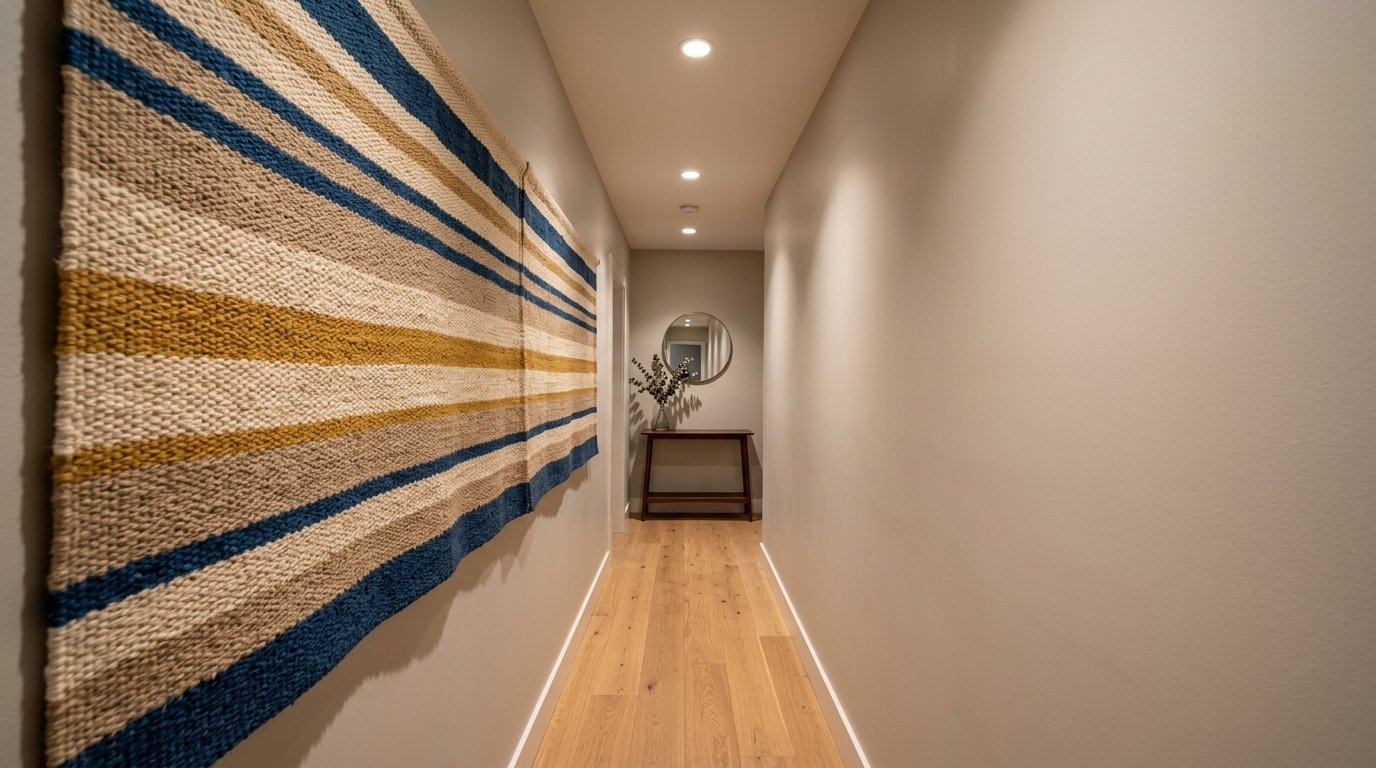
Small rooms feel claustrophobic very easily. The things you put on the walls can fix this. You use wall patterns to trick the human eye.
- Vertical lines make a low ceiling look much taller.
- Horizontal lines make a narrow hallway look wider.
- A tight grid pattern makes a messy room look organized.
- A chaotic knot pattern makes a sterile room feel cozy.
You must choose your textile art based on the room size. Woven art creates very tight geometric wall patterns. Knotted art creates loose flowing shapes.
Elongating A Low Ceiling
My basement has very low ceilings. I made a custom piece of art for the wall. I used very long vertical cords hanging straight down. The piece draws the eye from the floor to the ceiling. The room feels a foot taller now.
Widening A Narrow Hallway
I have a dark and narrow hallway upstairs. I hung a woven piece with horizontal stripes of color. The horizontal lines pull your eyes from left to right. The hallway feels much wider and less cramped.
Keeping Small Rooms Uncluttered
A tiny bedroom needs simple decor. A chaotic piece of art makes the room feel messy. I choose simple woven squares for small rooms. The clean edges and straight lines keep the room looking tidy.
How Hard Is A Macrame Wall Hanging Tutorial For Beginners?
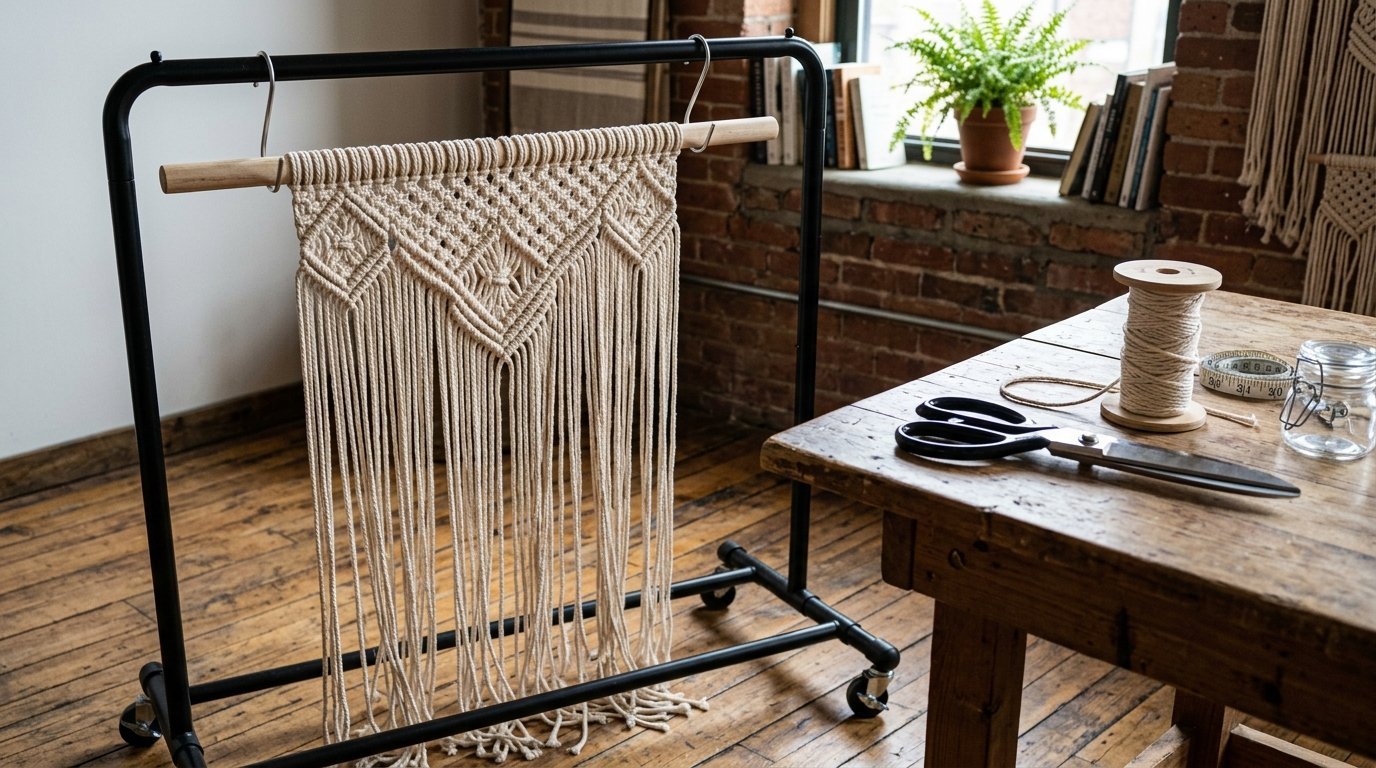
Many people want to make their own art. They open a video online and feel completely overwhelmed. A macrame wall hanging tutorial looks confusing at first glance. You see fingers flying and ropes twisting everywhere.
- You only need to memorize three basic knots.
- You must measure your rope very carefully before cutting.
- You will undo your work many times.
- You need a place to hang the piece while you work.
I wrote a guide called Bedroom Wall Decor for Beginners. I always tell people to start with a very small project. A keychain or a coaster is the perfect first step.
Setting Up Your Workspace
You cannot knot a wall piece on your lap. You need gravity to pull the ropes down. I use a cheap rolling clothing rack from the store. I attach S hooks to the top bar. I rest my wooden dowel on the hooks.
The Frustration Of Measuring Cord
Cutting the rope is the hardest part for beginners. You must calculate the length properly. A knot eats up a massive amount of rope. A string must be four times longer than the final piece. I learned this by running out of rope on my first piece.
The Joy Of The Finished Edge
Cutting the fringe at the end is very satisfying. You lay the piece flat on a table. You put masking tape across the fringe in a straight line. You take sharp Fiskars scissors and cut along the tape. The perfectly straight edge looks incredibly professional.
Does Your Wall Decor Match Elements Like A Crochet Bikini In Summer Themes?
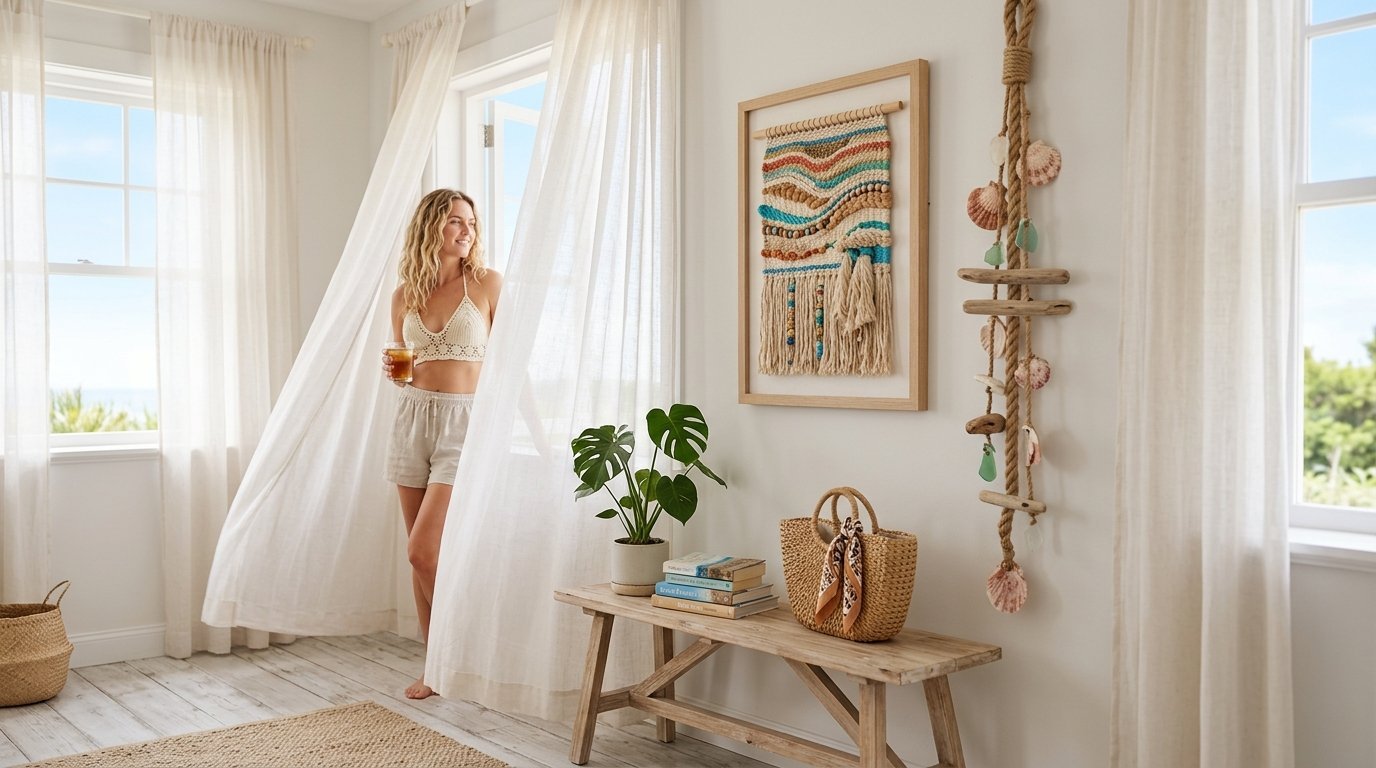
Seasonal decor changes the mood of your home completely. Summer themes require light colors and breezy textures. You put away the heavy wool blankets. You change your wall art to match the season.
- Swap dark winter weaves for white knotted cotton.
- Add pieces featuring seashells or sea glass.
- Display light summer textiles in frames.
- Hang sheer curtains next to your fiber art.
You want the room to feel like a warm July afternoon. The fibers should look like they belong near the ocean.
Rotating Art For The Seasons
I keep a plastic bin in my closet for seasonal art. In October I hang a thick wool woven piece in burnt orange. In May I take it down. I hang a bright white cotton knotted piece. The room instantly feels ready for summer weather.
Incorporating Beach Elements
You can tie large white seashells into your cotton ropes. You wrap fine twine around a piece of sea glass. You tie the glass directly into the center of the art. The piece becomes a genuine reflection of the beach.
Managing Humidity With Cotton
Summer brings high humidity to many homes. Cotton absorbs moisture from the air very quickly. A piece might look slightly longer on a humid day. I run a dehumidifier to keep my cotton pieces crisp. Moisture ruins the straight cut of a bottom fringe.
What Are The Real Costs Of Quality Wall Hangings?
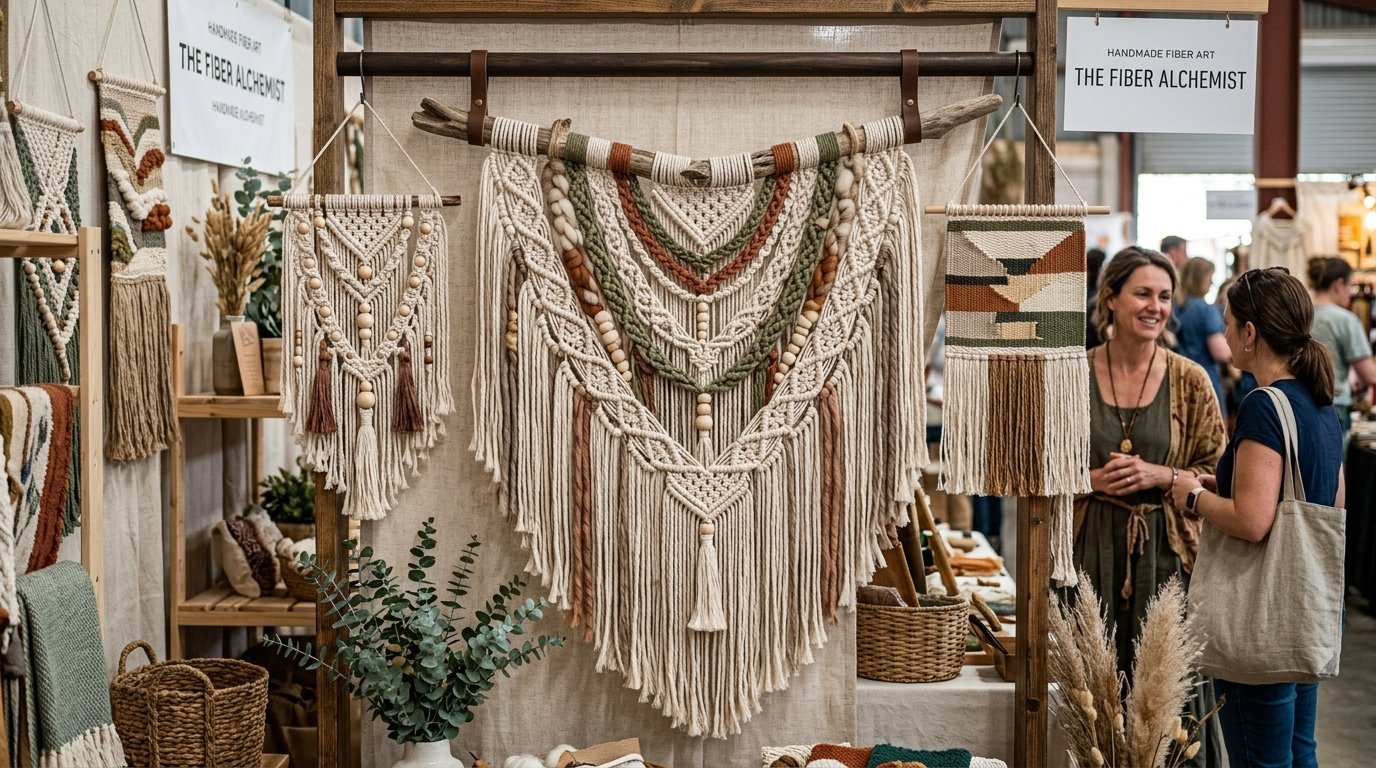
Buying large textile art costs a surprisingly high amount. People often suffer sticker shock when they see the prices. You must look at the raw materials and the time involved.
- A small factory made piece costs twenty dollars.
- A handmade artisan piece costs three hundred dollars.
- Making it yourself costs about eighty dollars in supplies.
- Custom dyed wool adds massive expense to a project.
You pay for the hours of human labor. A machine cannot tie a square knot. Every macrame piece you buy was tied by human hands.
The Cost Of Raw Materials
Quality rope is not cheap. I buy high quality Bobbiny cord for my projects. A single roll costs twenty dollars. A large wall piece requires five rolls. I spend one hundred dollars before I tie a single knot.
The Price Of Human Time
A skilled artist charges for their time. A large piece takes twenty hours of standing and knotting. If they charge twenty dollars an hour the labor is four hundred dollars. You must respect the physical toll this art takes on the body.
Buying Cheap Vs Buying Quality
Cheap pieces use synthetic polyester ropes. They look shiny and feel plasticky. The fringe looks tangled and messy. A quality piece uses pure recycled cotton. The fibers look matte and feel soft. You get exactly what you pay for in textile art.
How Do You Maintain And Clean Textile Wall Art?
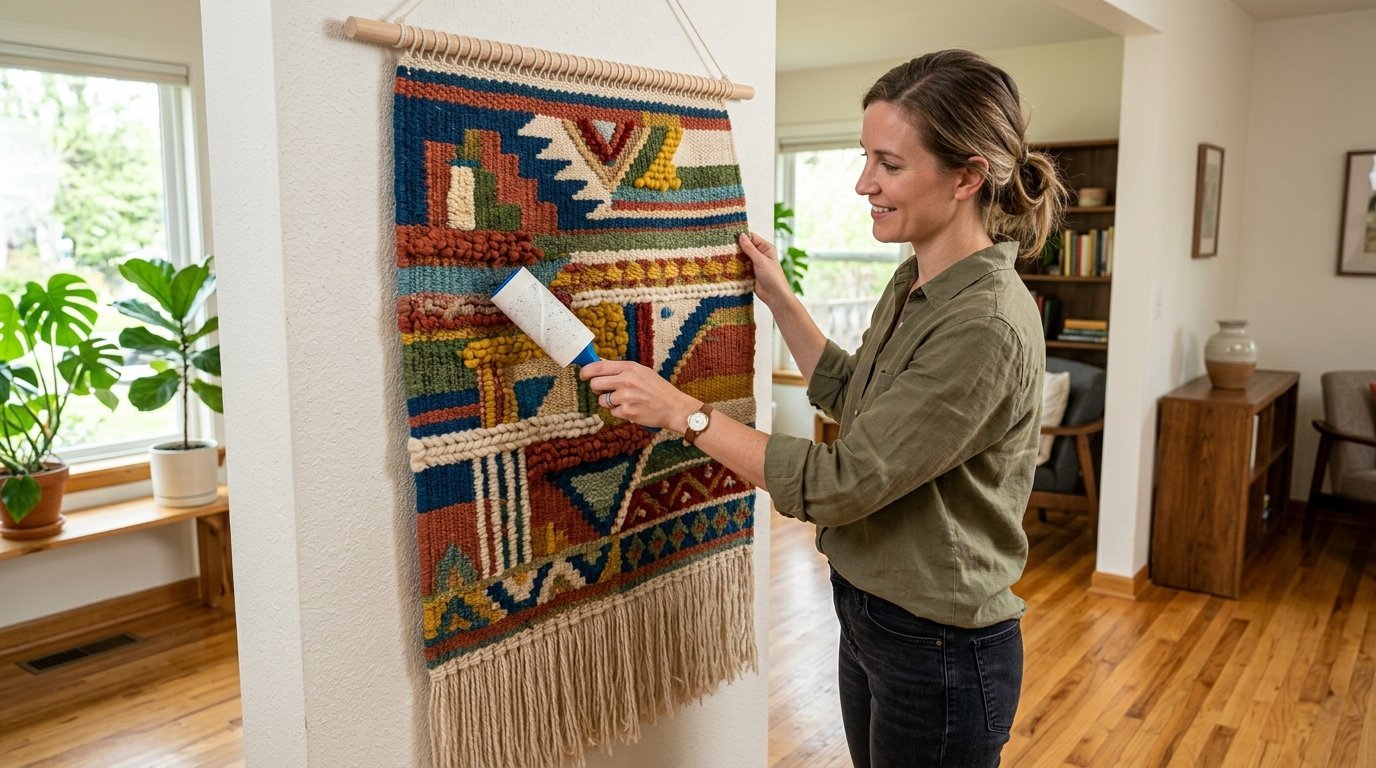
Dust is the enemy of all fiber art. It settles into the tiny grooves of the yarn. It turns a bright white piece into a dull gray piece. You must maintain these items just like your carpets.
- Take the piece outside every three months.
- Give it a very gentle shake to release loose dust.
- Use a sticky lint roller on the flat woven sections.
- Spot clean stains with a damp white cloth.
You must never put these items in a washing machine. The machine destroys the knots and tangles the fringe permanently.
The Danger Of Vacuum Cleaners
People try to vacuum their wall art. This is a massive mistake. The suction pulls the delicate wool roving apart. It sucks the fringe into the brush roll. It ruins a two hundred dollar piece in three seconds.
Dealing With Frayed Fringes
A brushed cotton fringe gets messy over time. Humidity and gravity cause the threads to clump together. I keep a fine tooth pet comb in my drawer. I gently comb the fringe straight down once a month. I trim any wild pieces with small scissors.
Protecting Art From Sunlight
Direct afternoon sunlight destroys colored yarn. The ultraviolet rays bleach the dye out of the fabric. A bright blue woven piece turns pale white in one year. You must hang colored pieces on shaded walls. I use UV blocking film on my windows to protect my art.
Frequently Asked Questions

People ask many questions before buying their first piece of fiber art. You need facts before you put holes in your drywall.
Do wall hangings attract spiders and bugs?
Fiber art does not attract insects any more than curtains do. Spiders like undisturbed dark corners. If you dust your art regularly bugs stay away completely. I check the back of my pieces once a month.
Can I hang these in a bathroom with a shower?
A full bathroom gets very steamy daily. The cotton absorbs the steam and stays damp. Damp cotton grows mold very quickly. You should only hang fiber art in half bathrooms without showers.
How do I hang a heavy wooden dowel securely?
You cannot use a simple thumbtack for a heavy dowel. You must use a drywall anchor and a thick metal screw. Some people use two Command Hooks for a damage free option. The hooks must be rated for at least ten pounds.
Will a cat destroy my wall hanging?
Cats absolutely love dangling strings and fluffy wool. A cat climbs a low hanging piece like a ladder. You must hang the piece high above the back of your sofa. Keep the bottom fringe completely out of their jumping reach.
What is the difference between warp and weft?
The warp is the tight vertical string attached to the loom. The weft is the colored yarn you weave back and forth. The warp gives the piece strength. The weft gives the piece color and texture.
Can I dye a piece I already own?
You can dye a piece made of pure natural cotton. You fill a plastic tub with hot water and RIT Dye. You dip the bottom half of the art into the water. This creates a beautiful faded dip dye effect. Synthetic ropes do not absorb dye at all.
The Final Verdict On Boho Wall Art
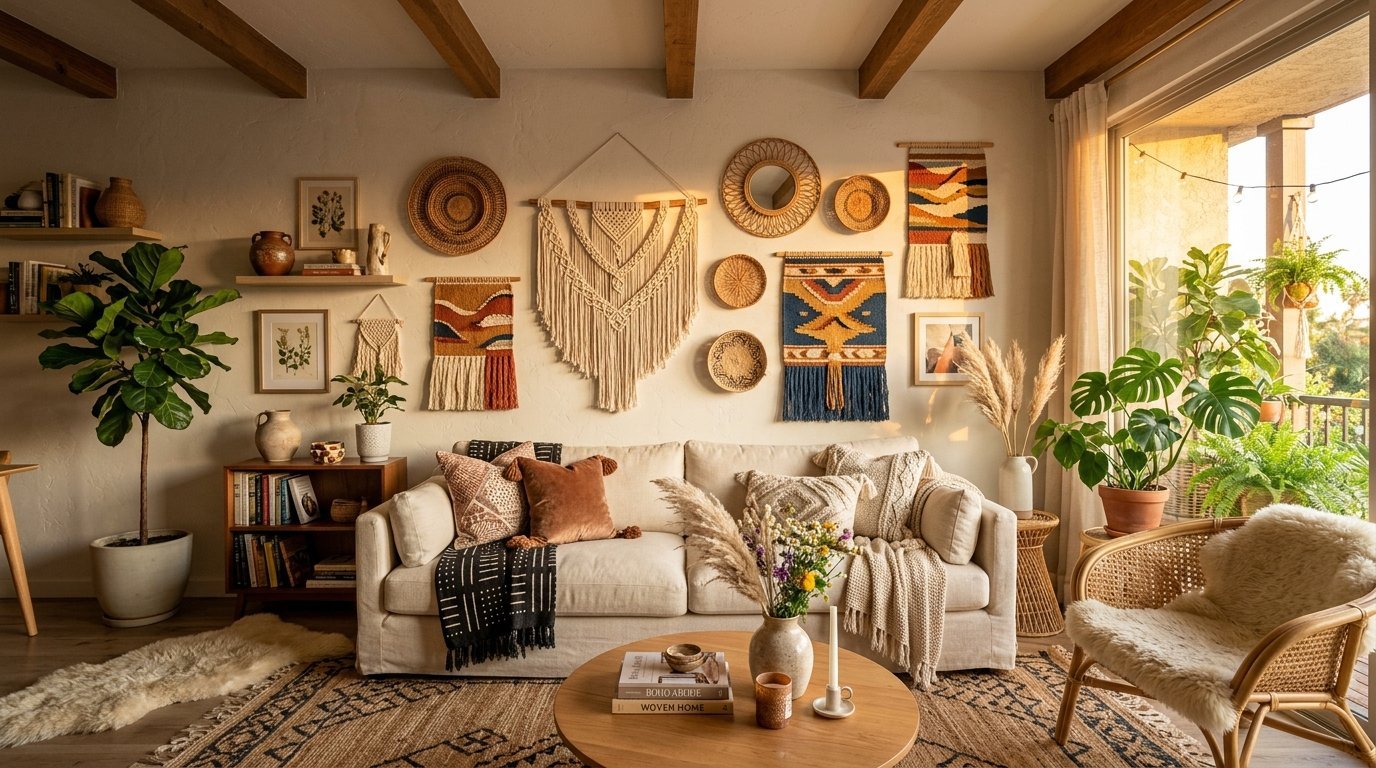
You now know the exact differences between knotted and woven art. You understand the materials and the time required for both. Macrame gives you raw physical texture and gorgeous shadows. Woven art gives you tight patterns and unlimited color options.
Your choice comes down to the specific needs of your room. A classy Vida De Luxo bedroom benefits from clean white cotton knots. A busy living room handles the bright colors of a woven piece. You can even mix them together on a gallery wall.
Look at the blank wall you want to cover right now. Measure the space with a tape measure. Look at the colors of your furniture. Choose the piece that makes you feel calm and happy.

Anya Castellan is the Founder and Editor-in-Chief of Home Wall Trends. An art history graduate of the Rhode Island School of Design with twelve years of experience writing for leading American design publications, she specializes in composition, gallery wall theory, and the quiet architecture of domestic space. A former contributing editor at Architectural Digest and guest lecturer at Parsons School of Design, Anya personally reads and signs off on every piece before it is published.