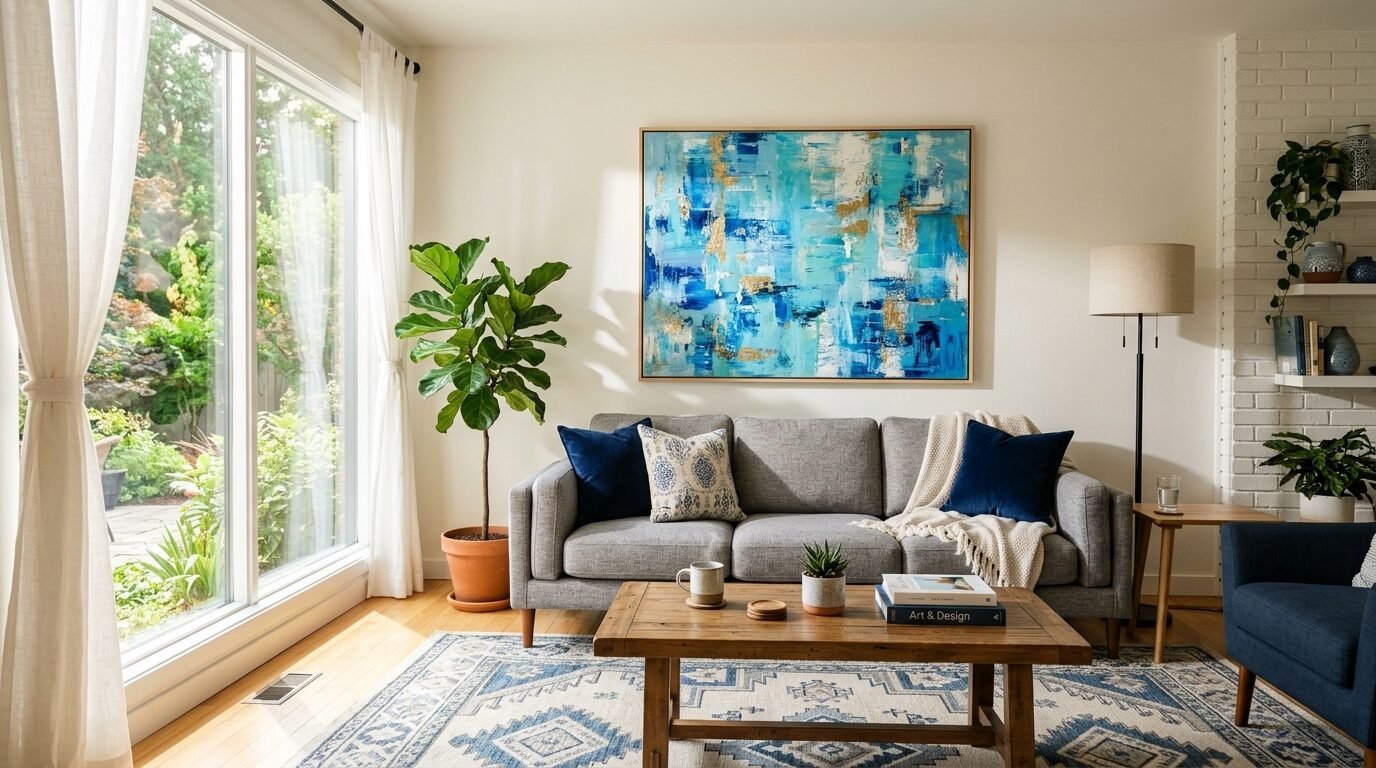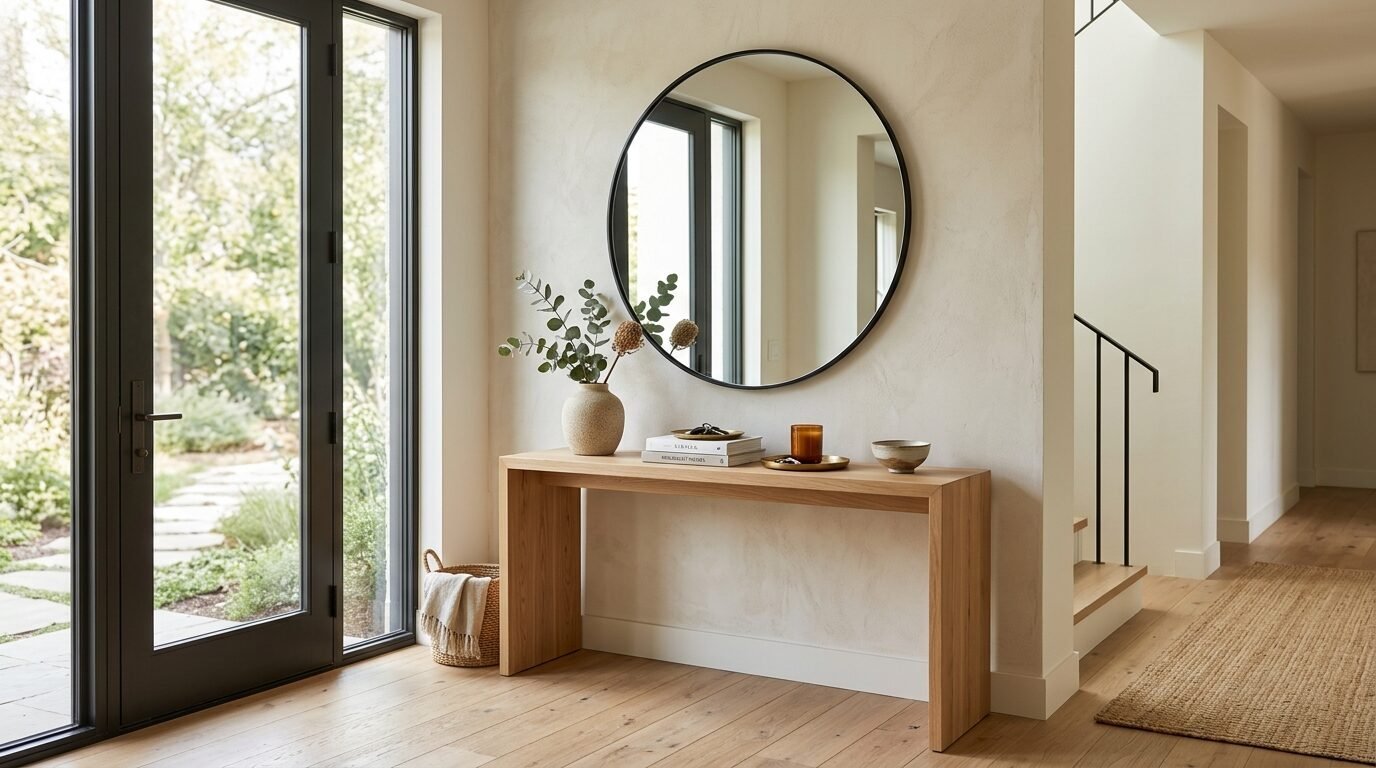
Most people think a balanced room must look like a mirror. They place two identical lamps on two identical tables. They buy matching chairs to flank a fireplace. While that works, it often feels stiff and dated. I once helped a friend in Austin who had a beautiful, long living room. She was frustrated because her furniture did not match. She had a heavy leather sofa and one slim velvet chair. The room felt like it was tipping over to one side. We did not buy new furniture. Instead, we used asymmetrical balance to fix the visual weight. This approach creates a space that feels lived-in and professional. It is one of the most important design basics you can master. You can make a room feel perfectly level without ever buying a matching set.
1. Understand Visual Weight in Furniture Placement
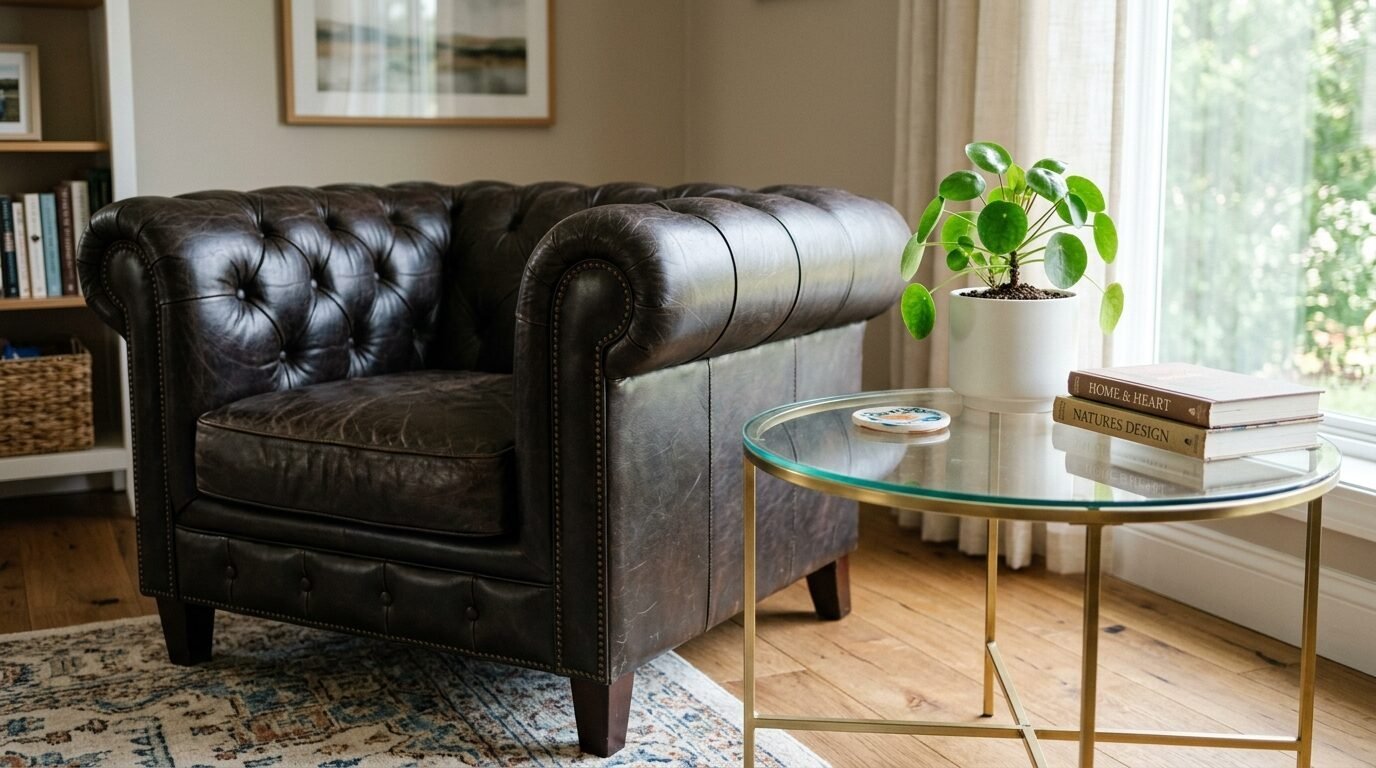
Furniture placement is about more than where a chair fits. It is about how heavy an object looks to your eye. A dark navy sofa looks heavier than a light gray one of the same size. A solid wood coffee table feels heavier than a glass one. When you work with asymmetric furniture, you are playing a game of seesaws. In my experience, the biggest mistake is grouping all heavy items on one side. I saw this in a Seattle loft last year. The owner put a massive sectional and a dark bookshelf on the left wall. The right wall only had a thin floor lamp. It felt empty. To fix it, we moved a large potted plant to the light side. The height and texture of the leaves balanced the bulk of the sofa.
Visual weight comes from color, texture, and size. A small chair with a busy pattern can balance a large plain sofa. I have seen this work wonders in minimal living room design. You keep the lines clean but use one bold piece to anchor the space. Think about the “feel” of your items. Metal feels light. Stone feels heavy. Velvet feels dense. Linen feels airy. When you place a heavy oak cabinet on one end of a wall, you do not need another cabinet on the other end. You might just need three framed photos and a medium lamp.
2. Design a Gallery Wall Living Room for Off-Center Layouts
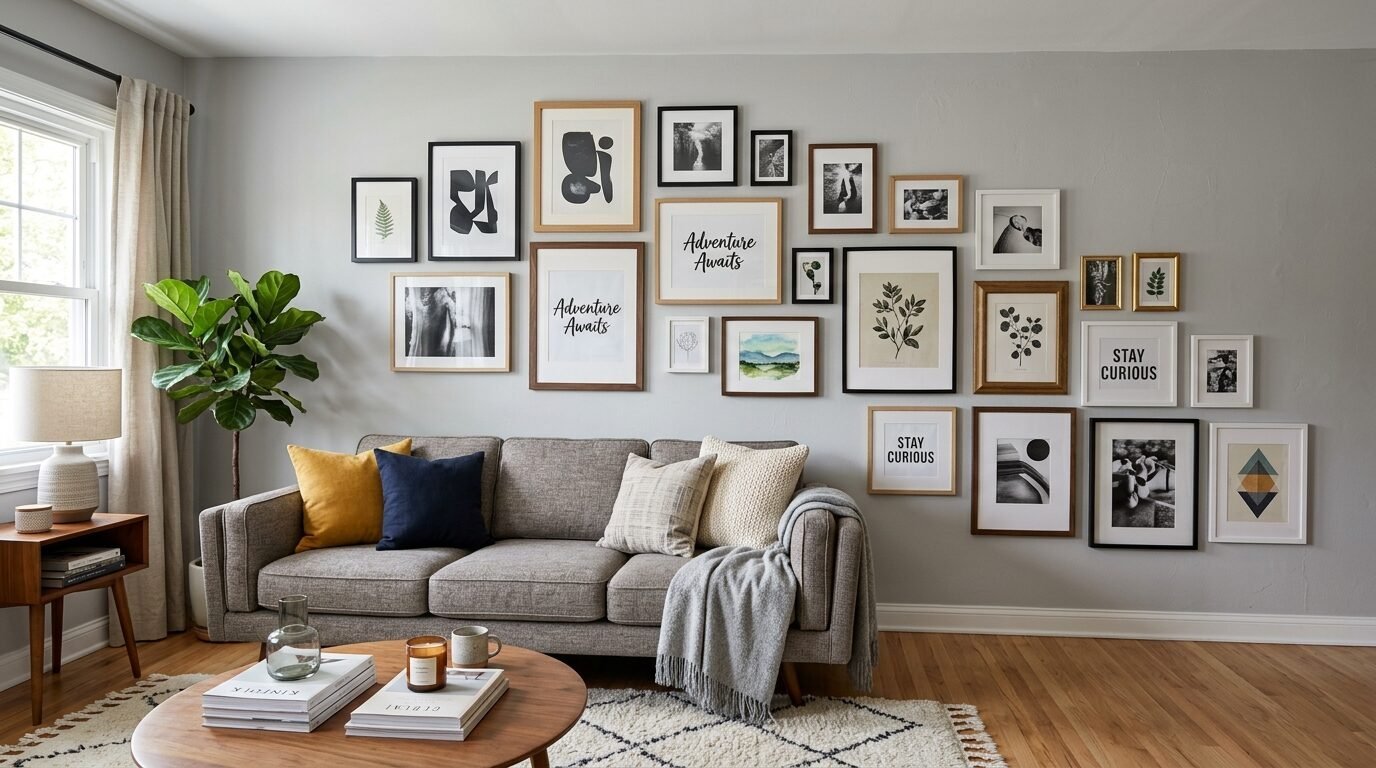
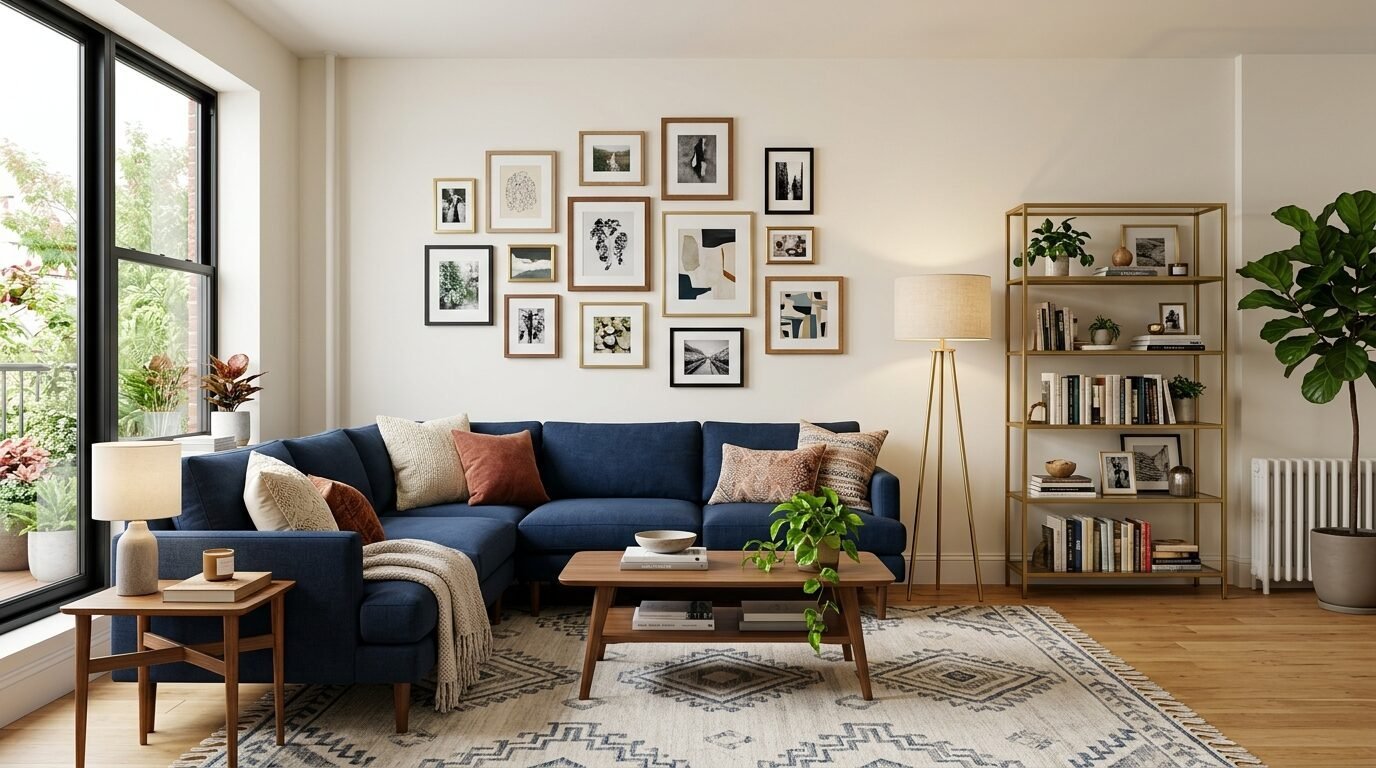
A gallery wall living room is your best tool for fixing a lopsided wall. If your sofa is pushed to the left because of a doorway, the wall above it feels weird. Most people try to center the art over the sofa. This leaves a massive gap on the right. I tried a different way in a recent project. We extended the art past the sofa. We used a mix of large and small frames. This created a “visual bridge” to the empty part of the room. It pulled the eye across the entire wall.
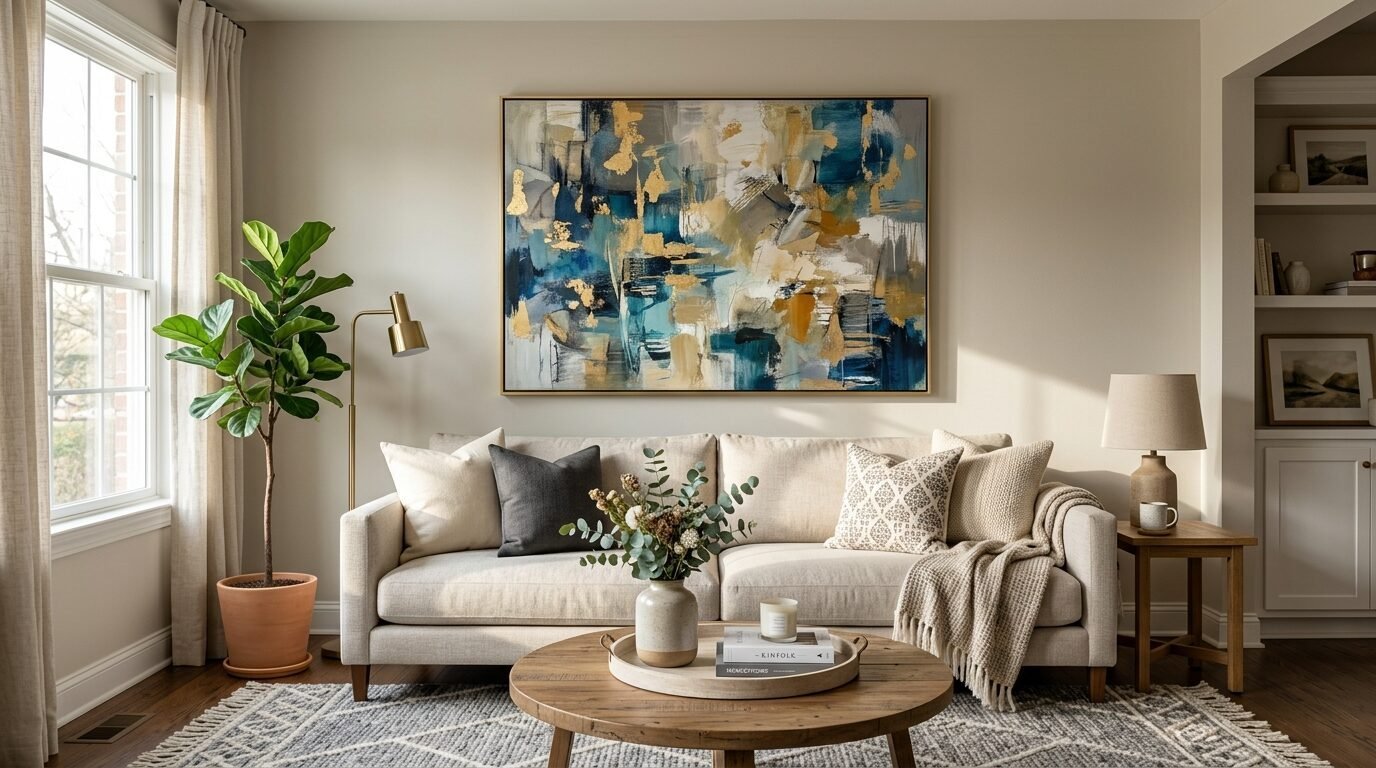
When building an asymmetric gallery, start with your largest piece. Do not put it in the middle. Place it slightly off-center toward the “light” side of the room. Fill the rest of the space with smaller items like sketches or mirrors. I recommend using brands like Framebridge for high-quality frames that look custom. In my experience, mixing frame materials helps too. Use a few black frames to add weight and some light wood ones to soften the look. This prevents the wall from feeling like a heavy block. It makes the asymmetry look intentional rather than accidental.
3. Leverage Accent Walls In Living Room Design
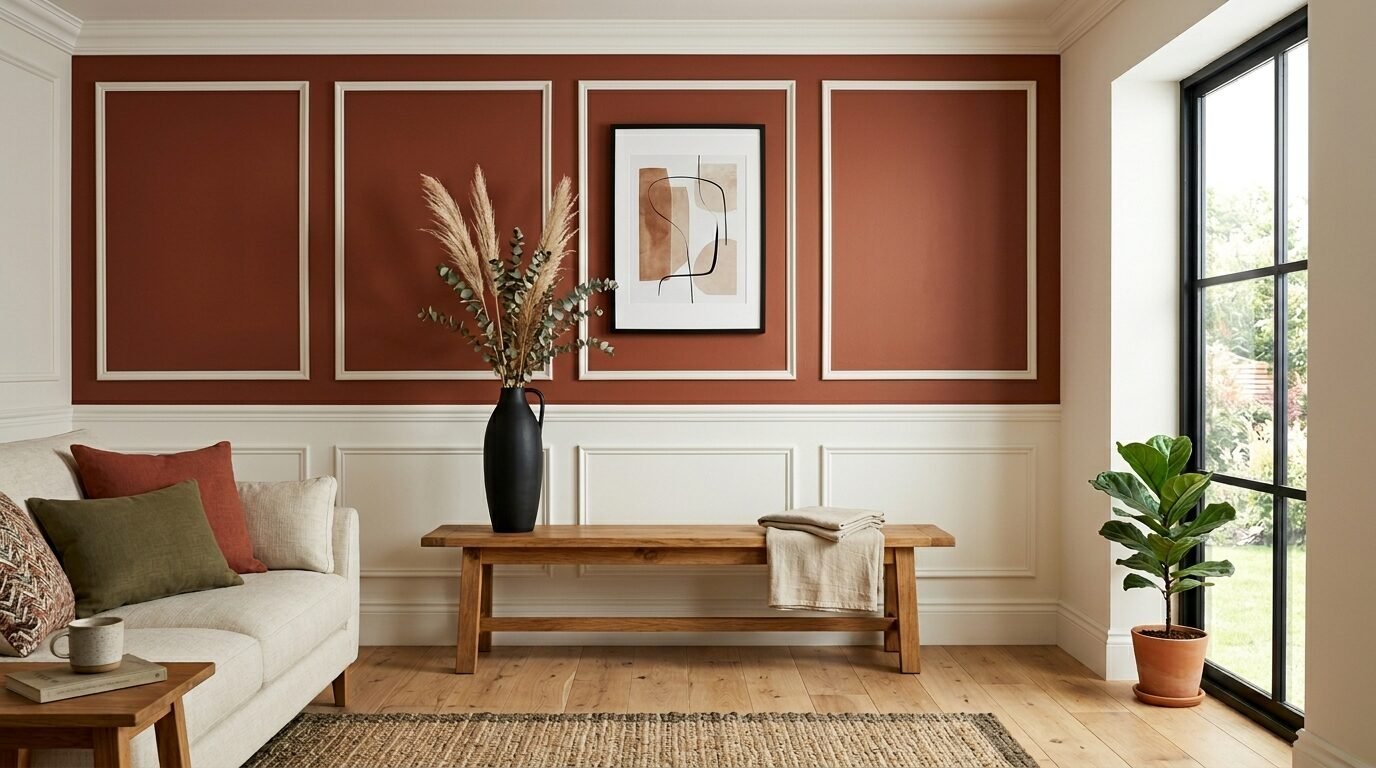
Accent walls in living room setups act as a massive weight on the visual scale. If you have a room where one side feels too busy, use paint on the opposite wall. A dark charcoal or a deep forest green wall creates “recessed weight.” It pulls the eye in. I worked on a long living room where the fireplace was stuck in a corner. The rest of the wall was just white drywall. It looked unfinished. We painted the fireplace wall a deep terracotta. This instantly balanced the room.
You can also use texture for your accent wall. Wall molding or wood slats add physical depth. I noticed that vertical slats make a ceiling feel higher. Horizontal slats make a wall feel wider. If your asymmetric furniture is low to the ground, use vertical elements on the wall to balance the height. Do not just think about color. Think about how light hits the surface. A matte finish absorbs light and feels heavier. A glossy finish reflects light and feels lighter. This is a pro secret for balancing rooms with odd window placements.
4. Master the Layout of a Long Living Room
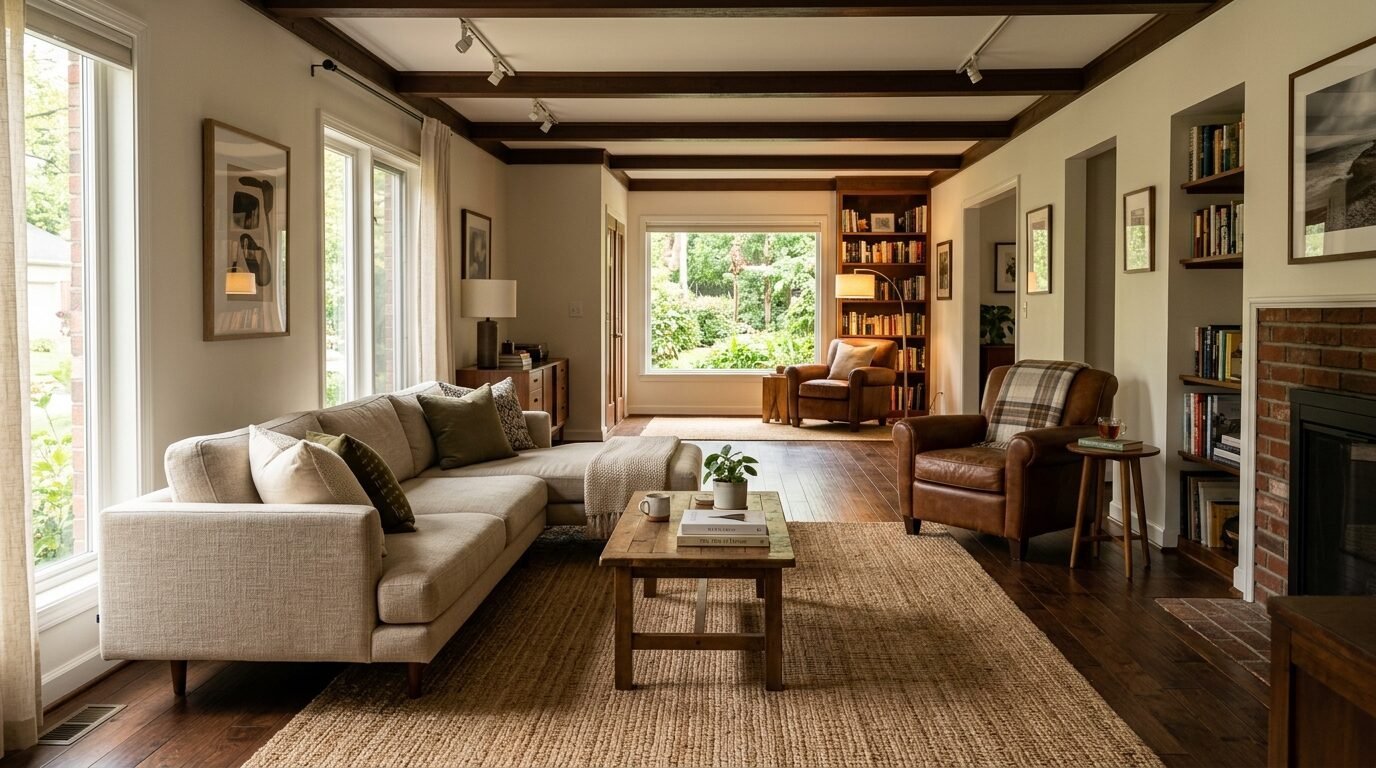
A long living room is a common challenge for many homeowners. These rooms often end up looking like bowling alleys. People line all the furniture against the longest wall. This makes the room feel narrow and unbalanced. I suggest breaking the room into zones. Use a rug to define the main seating area. Then, use the asymmetric furniture to create a secondary zone like a reading nook.
In my experience, placing a chair at a 45-degree angle helps break the long lines. I did this for a client who had a twenty-foot-long wall. We put the sofa in the middle. Then we put a tall bookshelf on one end and a low bench with art above it on the other. This created a zig-zag path for the eye. It made the room feel wider. You must avoid the “train car” effect. Do not put every piece of furniture in a straight row. Pull some pieces away from the wall. This creates depth and helps the asymmetrical balance feel more natural.
5. Use a Warm Colour Palette to Create Balance
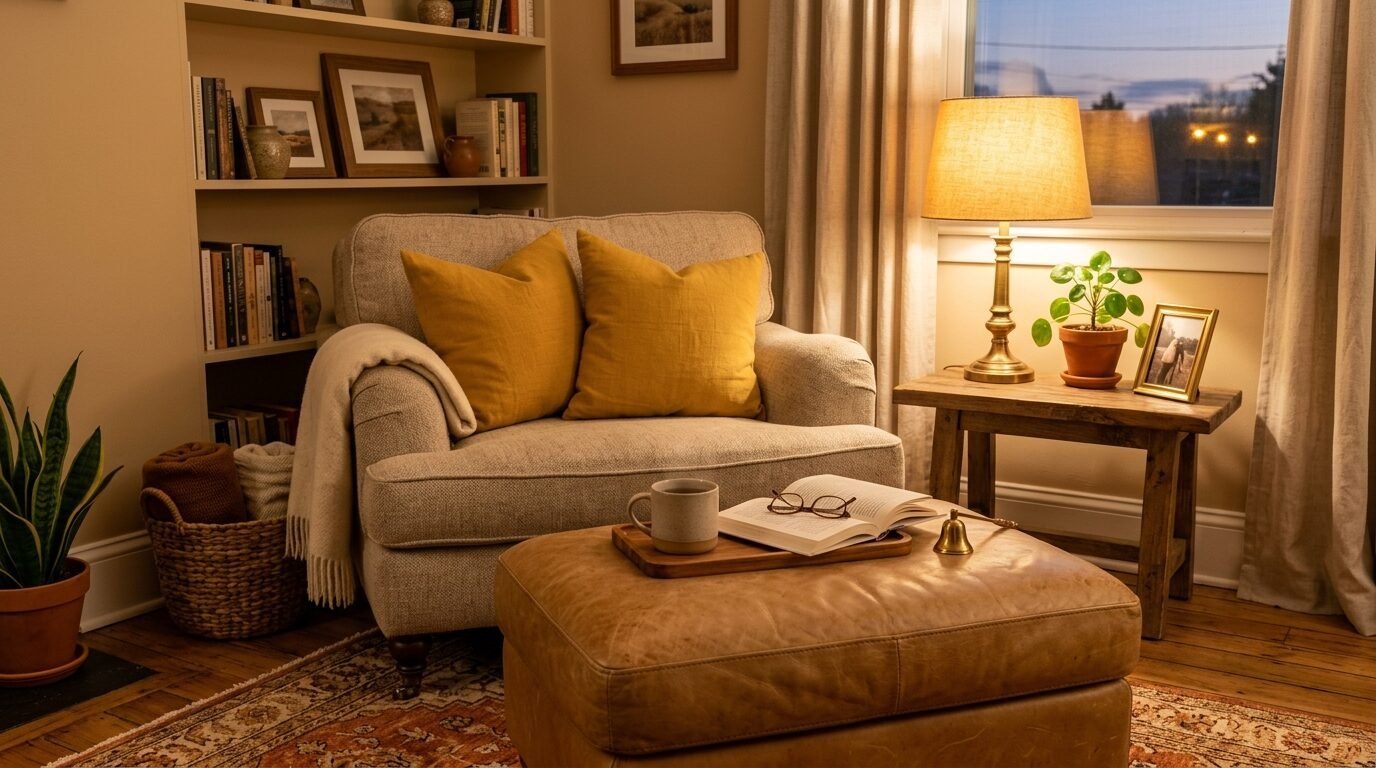
Color is a silent partner in furniture placement. A warm colour palette can make a large, empty space feel full. Think about shades like mustard yellow, burnt orange, and soft tan. These colors “advance,” meaning they look like they are coming toward you. Cool colors like blue and gray “recede.” If one side of your room feels too far away or empty, use a warm color there.
I saw a great example of this in a desert-style home. The living room had a massive window on one side and a blank wall on the other. The window side felt “busy” because of the view. We painted the blank wall a warm sand color and added a leather chair. The warmth of the leather and the paint balanced the visual noise of the window. You do not need to paint the whole room. Just a few pillows or a throw blanket in a warm tone can act as a counterweight. I like using Sherwin-Williams “Oatmilk” or “Terra Cotta” for these types of fixes.
6. Apply Minimal Living Room Design Principles
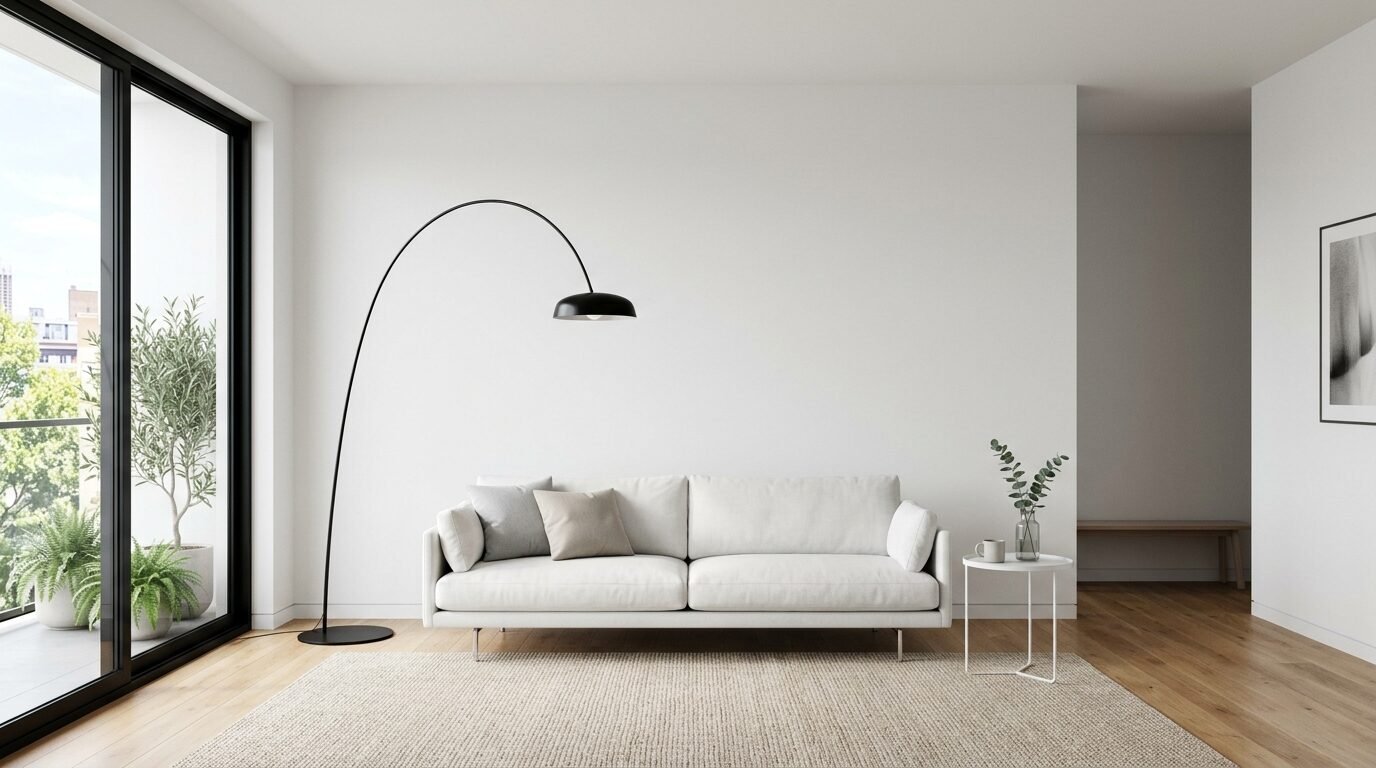
In minimal living room design, every piece of furniture must work hard. You cannot hide mistakes behind clutter. Asymmetrical balance is actually easier in minimal spaces. You focus on the silhouette of the furniture. A sleek, black floor lamp can balance a bulky white armchair. The height of the lamp offsets the width of the chair.
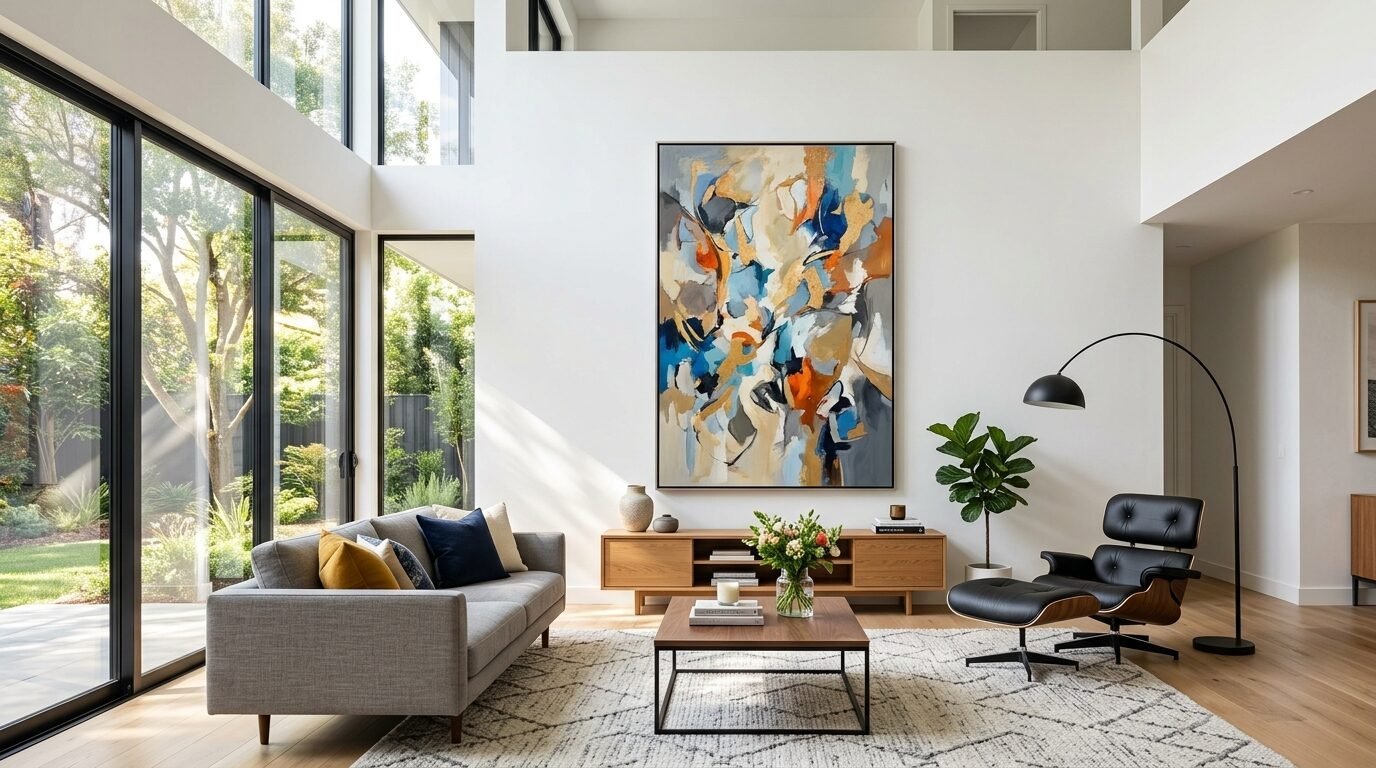
I’ve seen this work best when you use negative space as a design element. Negative space is the “empty” area around your furniture. In a minimal room, the empty space on the wall is just as important as the art. If you have a low sofa on one side, leave the wall above it mostly empty. Then, put a tall, thin cabinet on the other side. This creates a diagonal balance that feels very modern. It feels like a gallery. I’ve tried this in my own apartment. I have one large plant on the left and a small stack of books on a low table on the right. It feels calm and balanced.
7. Scale and Proportion in Asymmetrical Balance
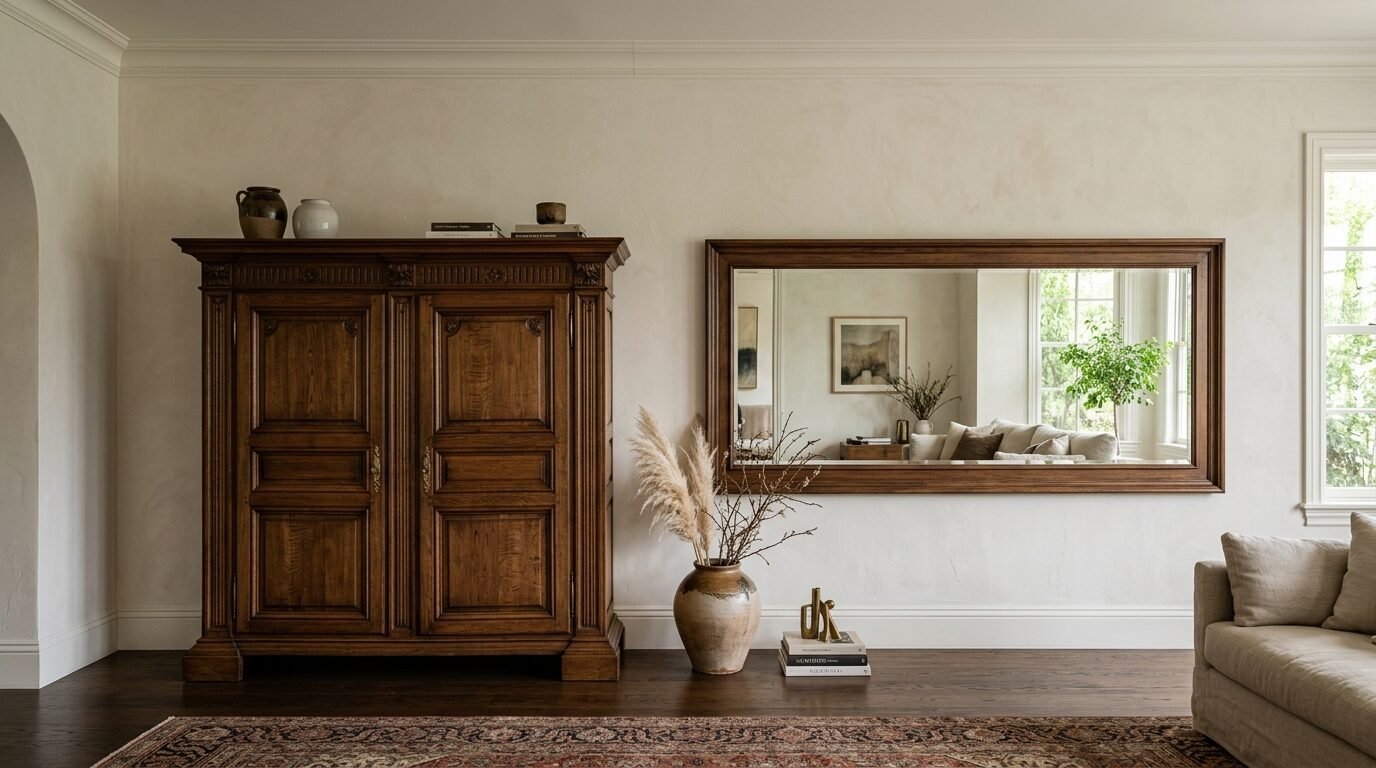
Scale is how big an item is compared to the room. Proportion is how big an item is compared to the other furniture. When you use asymmetric pieces, scale is your best friend. A common failure is using furniture that is too small for the wall. I see this often with “apartment-sized” furniture in large homes. The furniture looks like dollhouse pieces.
To balance a large wall, you need at least one “anchor” piece. This could be your sofa or a large cabinet. Once the anchor is set, look at the remaining wall space. If you have five feet of empty wall, do not put a one-foot wide picture there. Use a three-foot wide mirror or a group of items that total three feet. I’ve noticed that the “rule of thirds” works well here. If your wall is divided into three sections, give two sections to the furniture and art. Leave the third section for “breathing room.” This keeps the asymmetry from feeling cluttered.
8. Lighting as a Tool for Asymmetry
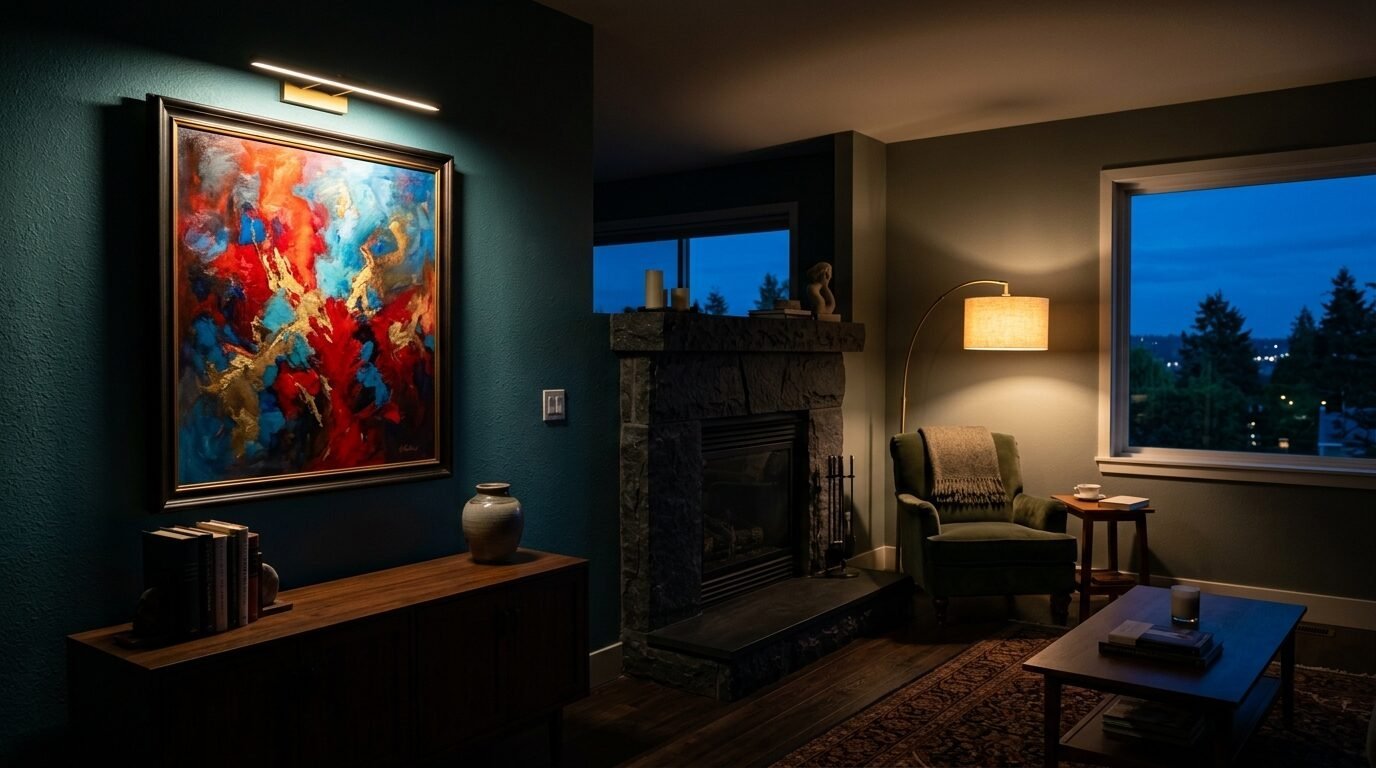
Lighting is the most underrated way to balance a room. A bright light attracts the eye. A dark corner disappears. If you have a heavy cluster of furniture on one side, put a bright floor lamp on the opposite side. The light will act as a visual weight. I recommend using smart bulbs like Philips Hue. You can adjust the brightness to find the perfect balance.
During my time working on a historic home, we had a room with a fireplace that was not centered. It drove the owners crazy. We put a bright picture light over a painting on the far side of the wall. At night, the glowing art balanced the dark fireplace opening. It was a simple fix that cost less than fifty dollars. Use different heights for your lamps too. A tall floor lamp, a medium table lamp, and a low candle create a triangle of light. This triangle helps ground the asymmetric furniture and makes the room feel cozy.
9. Case Study: The 1970s Ranch Remodel
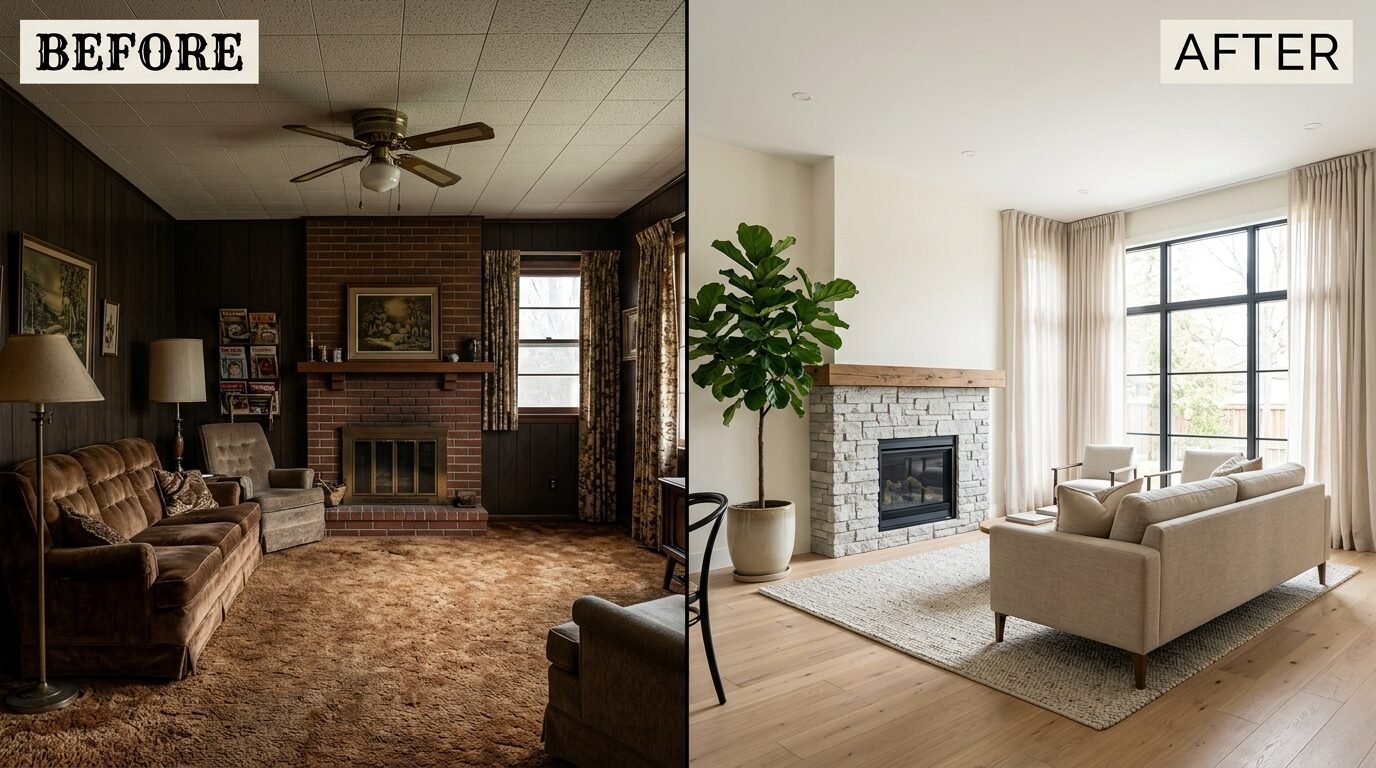
A client bought a 1970s ranch with a very long living room. The main wall had a sliding glass door on the far left. This meant the sofa had to sit on the right side. The room felt completely lopsided. We couldn’t move the door, and we couldn’t center the sofa.
Here is what we did:
- We installed floor-to-ceiling curtains across the entire left side. This gave the door more visual “mass.”
- We used a warm colour palette of sage green and terracotta to make the large room feel smaller.
- We added a gallery wall living room on the right side, but we kept the art low to the ground.
- We placed a large olive tree in a heavy ceramic pot near the sliding door.
The result was a room that felt perfectly level. The weight of the curtains and the tree balanced the heavy sofa. The client was shocked that we didn’t need to buy a second sofa to fill the space. We just used what we had in a smarter way.
10. Recommended Tools for Planning Your Layout
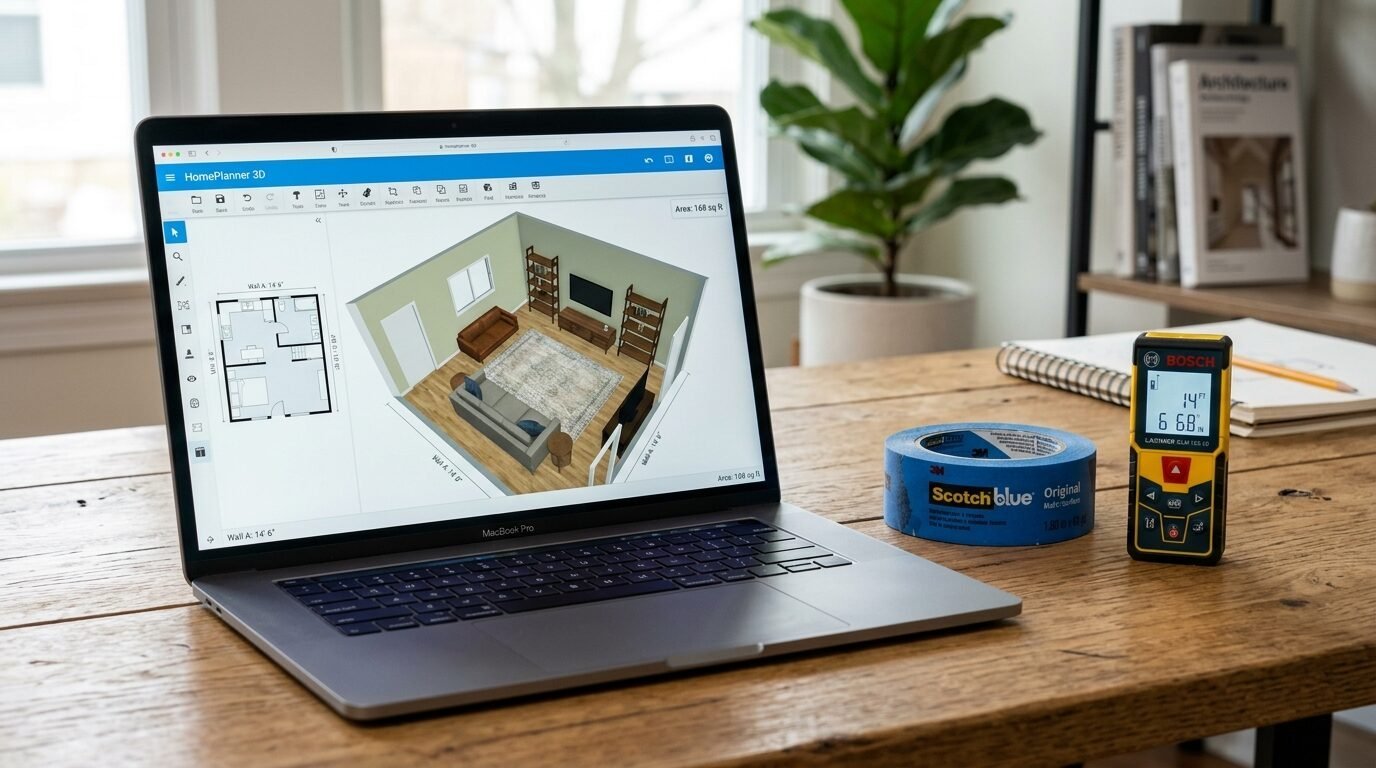
You do not have to move heavy furniture five times to see if it works. Use digital tools to plan first. I have used these three for years:
- SketchUp: This is great for seeing the 3D volume of your furniture. It helps you see how height affects balance.
- Floorplanner: This is a simple 2D tool. It is perfect for getting the measurements of a long living room right.
- Magicplan: You can scan your room with your phone. It creates a floor plan in minutes.
In my experience, blue painters tape is the best physical tool. Tape out the size of a new cabinet or rug on your floor. Leave it there for a day. Walk around it. See if the room feels “heavy” in that spot. This prevents you from buying a piece of furniture that ruins your asymmetrical balance. I also recommend a laser measure. It is much faster than a tape measure for checking wall distances.
11. Common Mistakes to Avoid in Asymmetric Rooms
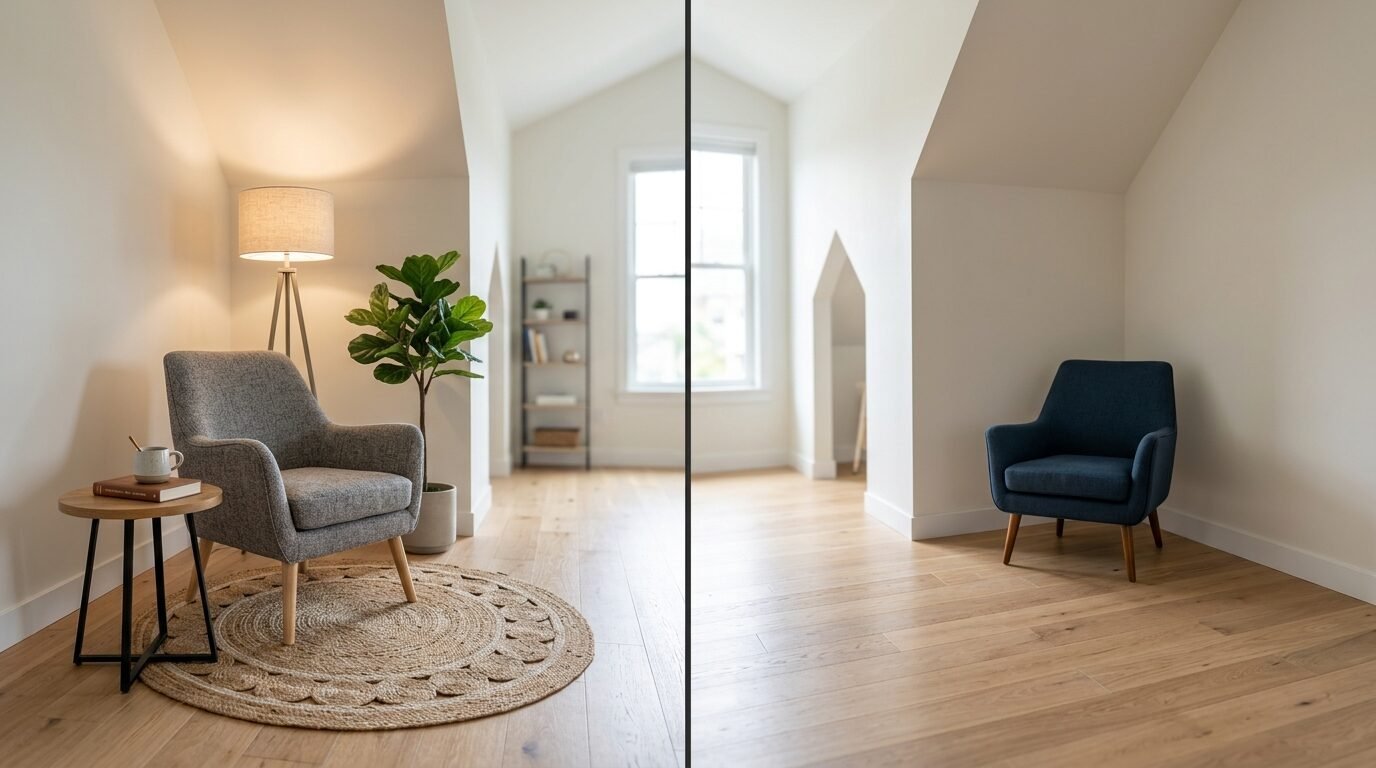
I have seen many people try asymmetry and fail. Usually, it is because they went too far. Asymmetry still needs a sense of order. One common mistake is “the floating furniture” problem. This happens when you have a chair or table sitting in the middle of nowhere. Every piece must relate to something else. If you have a chair off to the side, give it a small rug or a side table. This makes it a “zone” rather than a stray piece of furniture.
Another mistake is ignoring the floor. If all your “weight” is on the walls or the furniture, the floor feels like a vast empty sea. Use rugs to anchor your asymmetric groups. A rug under a sofa and a different, smaller rug under a reading chair creates two balanced islands. I’ve seen people try to use one tiny rug for a huge room. It never works. Your rug should be large enough that all furniture legs sit on it. This ties the whole asymmetric look together.
12. Using Plants and Decor as Counterweights
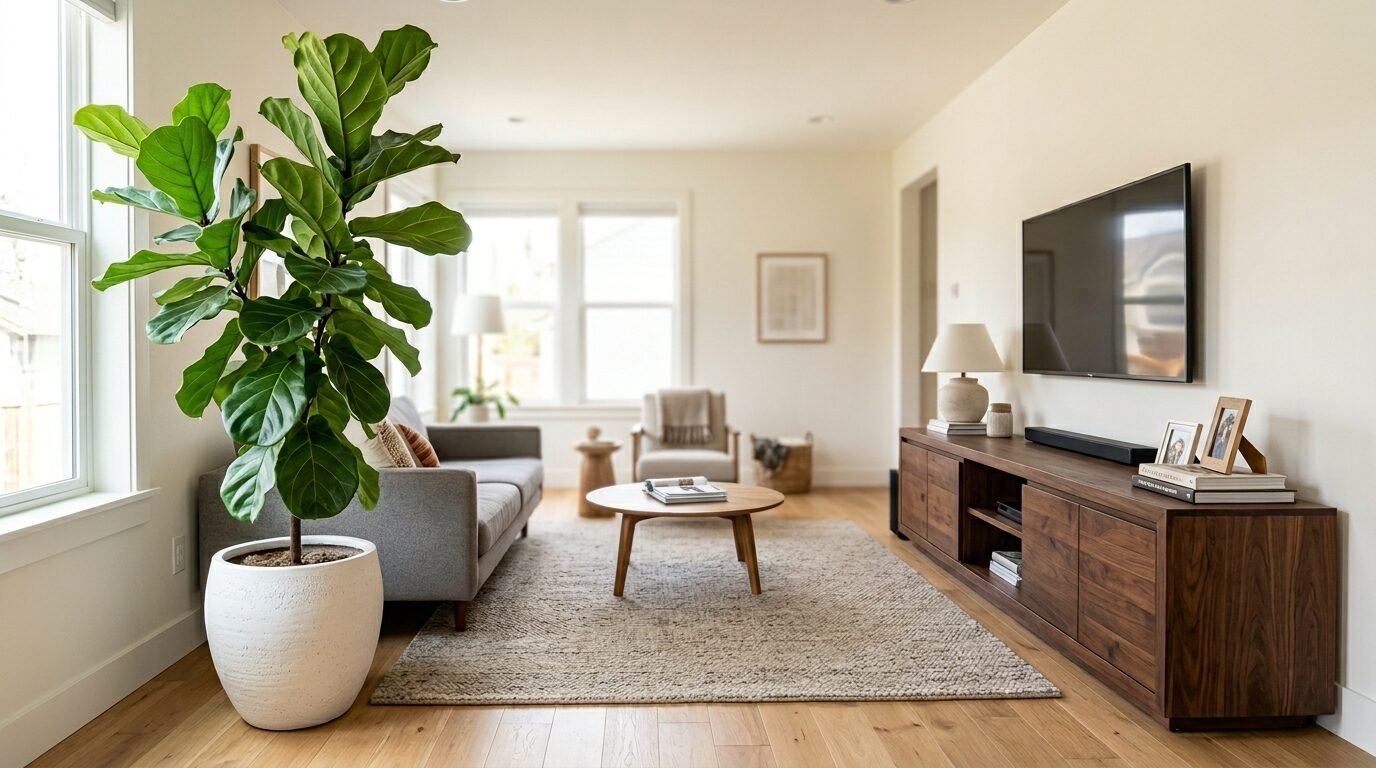
Plants are the “secret sauce” of interior design. They have a unique visual weight because they are organic and irregular. A tall fiddle leaf fig has a lot of height but doesn’t feel as heavy as a wooden cabinet. This makes it perfect for balancing a room without making it feel crowded. I’ve used large plants to fill empty corners in many minimal living room design projects.
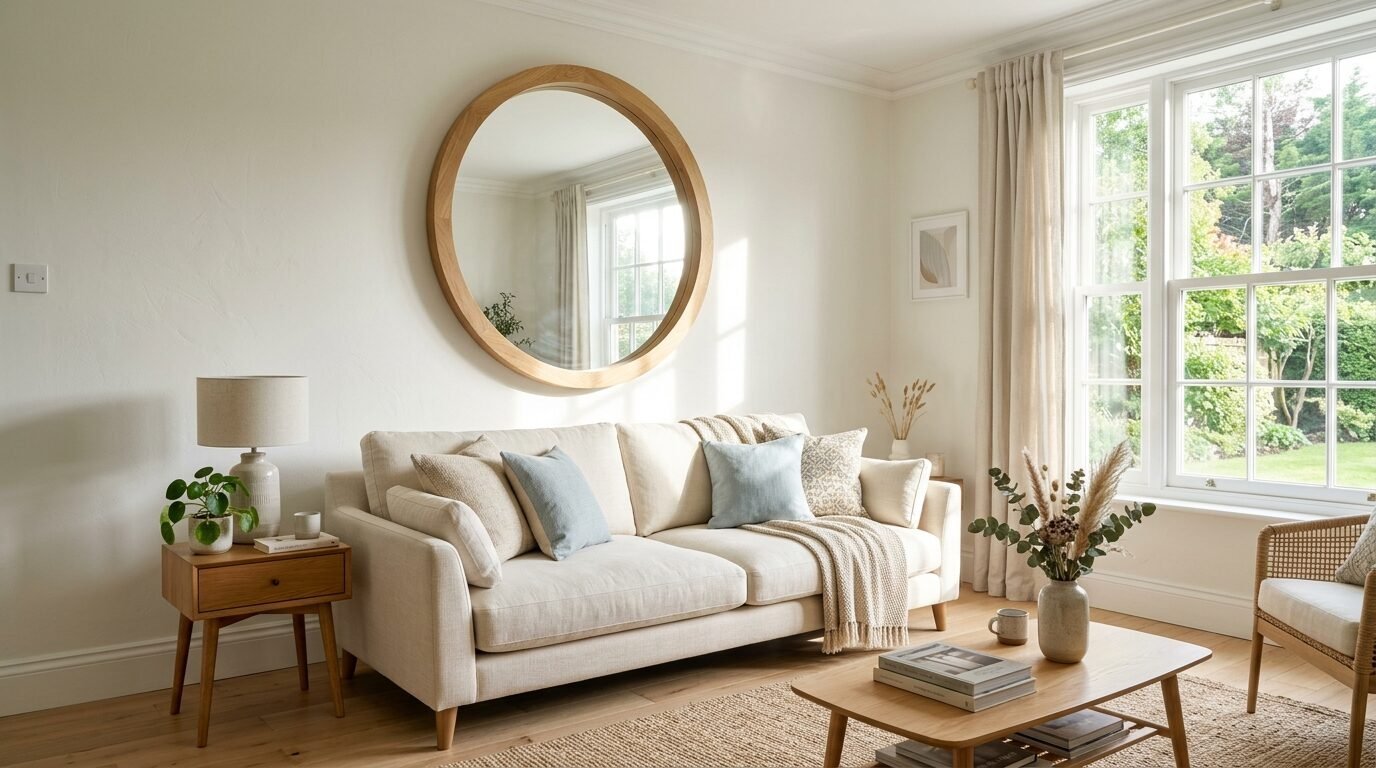
Don’t forget about mirrors. A large mirror can balance a heavy piece of furniture by reflecting the rest of the room. It adds “virtual space.” If you have a dark, heavy bookshelf on one wall, put a large mirror on the opposite wall. It will reflect light and prevent the room from feeling closed in. I’ve seen this work especially well in apartments with limited light. Use brands like West Elm or IKEA for stylish mirrors that don’t break the bank.
13. Frequently Asked Questions
What is the difference between symmetrical and asymmetrical balance?
Symmetrical balance is like a mirror. If you cut the room in half, both sides look the same. Asymmetrical balance uses different objects that have the same “visual weight.” One side might have a sofa, while the other side has two chairs and a tall lamp. It feels balanced but not identical. In my experience, asymmetry feels more relaxed and modern.
How do I know if my room is unbalanced?
Stand in the doorway and squint your eyes. Does one side of the room look much “darker” or “busier” than the other? Does it feel like the room is leaning? If your eye immediately jumps to one heavy spot and stays there, you need to add weight to the other side. A balanced room allows the eye to move smoothly around the whole space.
Can I use asymmetrical balance in a small room?
Yes. It is actually better for small rooms. Matching sets can make a small room feel cramped. Using one larger piece and a few smaller ones creates a sense of flow. It makes the room feel bigger because you aren’t blocking everything with bulky pairs of furniture.
What colors are best for a warm colour palette?
Look for colors with yellow, red, or orange undertones. Terracotta, sand, amber, and olive green are great choices. These colors add a sense of comfort and “fullness” to a room. I noticed that these tones also make a room feel better in the evening under artificial light.
How do I balance a wall with a TV?
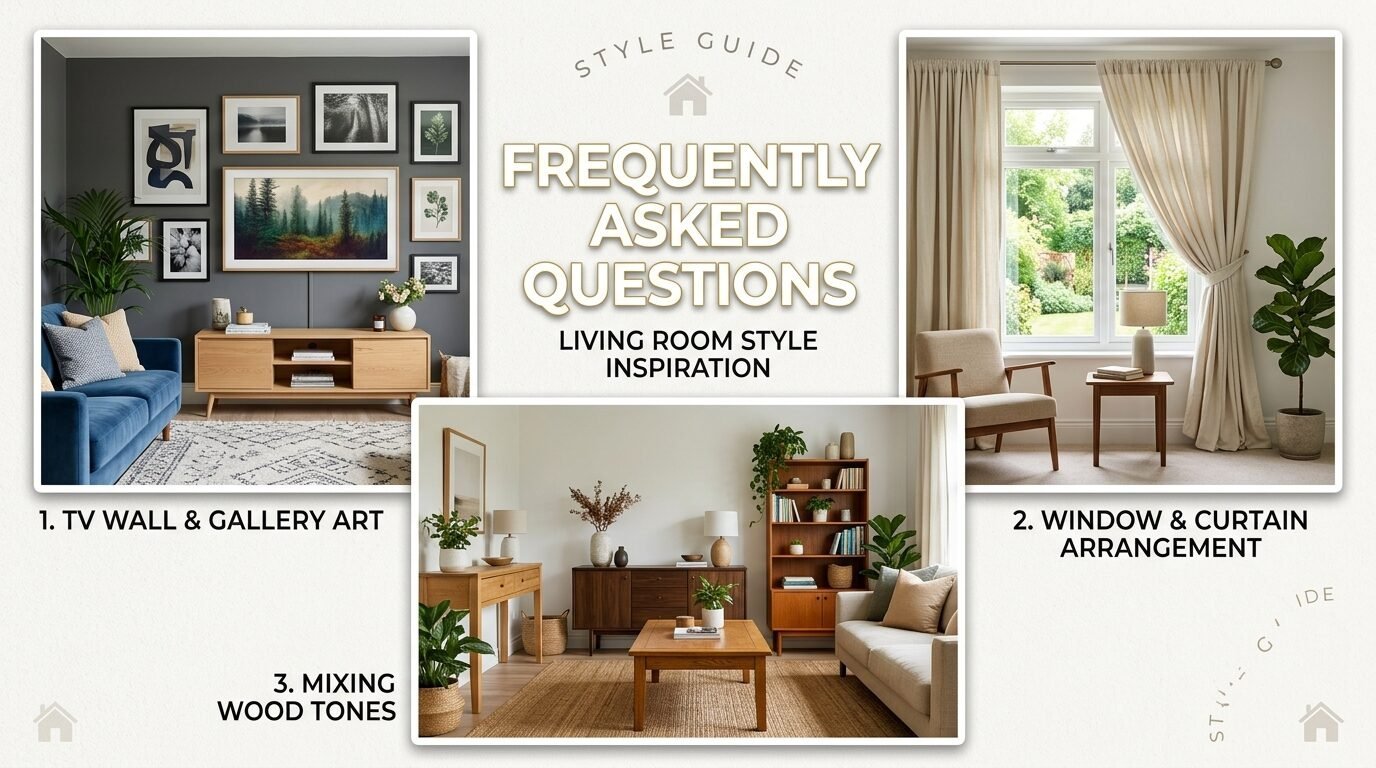
A TV is a giant black rectangle. It has a lot of visual weight. To balance it, you need to surround it with other items. A gallery wall living room around the TV is a popular choice. You can also put a tall plant or a bookshelf on the opposite side of the wall to counter the black “hole” of the TV screen.
Do I need to use the same wood tones for all my furniture?
No. Mixing wood tones actually helps with asymmetrical balance. A dark walnut table can balance a larger, lighter oak cabinet. In my experience, keeping the “undertone” the same helps. If all your woods are “warm,” they will look good together even if some are dark and some are light.
How many pieces of furniture do I need for a balanced wall?
There is no set number. It depends on the size of the pieces. I’ve seen a wall balanced with just two items: a long low credenza and one tall piece of art. I’ve also seen it done with ten small items. The key is to look at the total “mass” on each side.
What is the best rug for a long living room?
Look for a rug that defines the main seating area. For a long room, you might need an 8×10 or a 9×12 rug. Do not get a “runner” for the middle of the room. It will make the room look like a hallway. A large rectangular rug helps square off the space.
How do I fix a room with an off-center window?
Use curtains to your advantage. You can hang a curtain rod that is much wider than the window. This allows you to pull the curtains to one side and “fake” a centered look. You can also put a tall piece of furniture on the side without the window to balance the light.
Should I follow a specific design style?
Asymmetrical balance works in any style. Whether you like minimal living room design or a cozy farmhouse look, the rules of visual weight are the same. Focus on the basics first. Once the room feels balanced, you can add your personal style on top.
14. Final Thoughts on Asymmetrical Balance
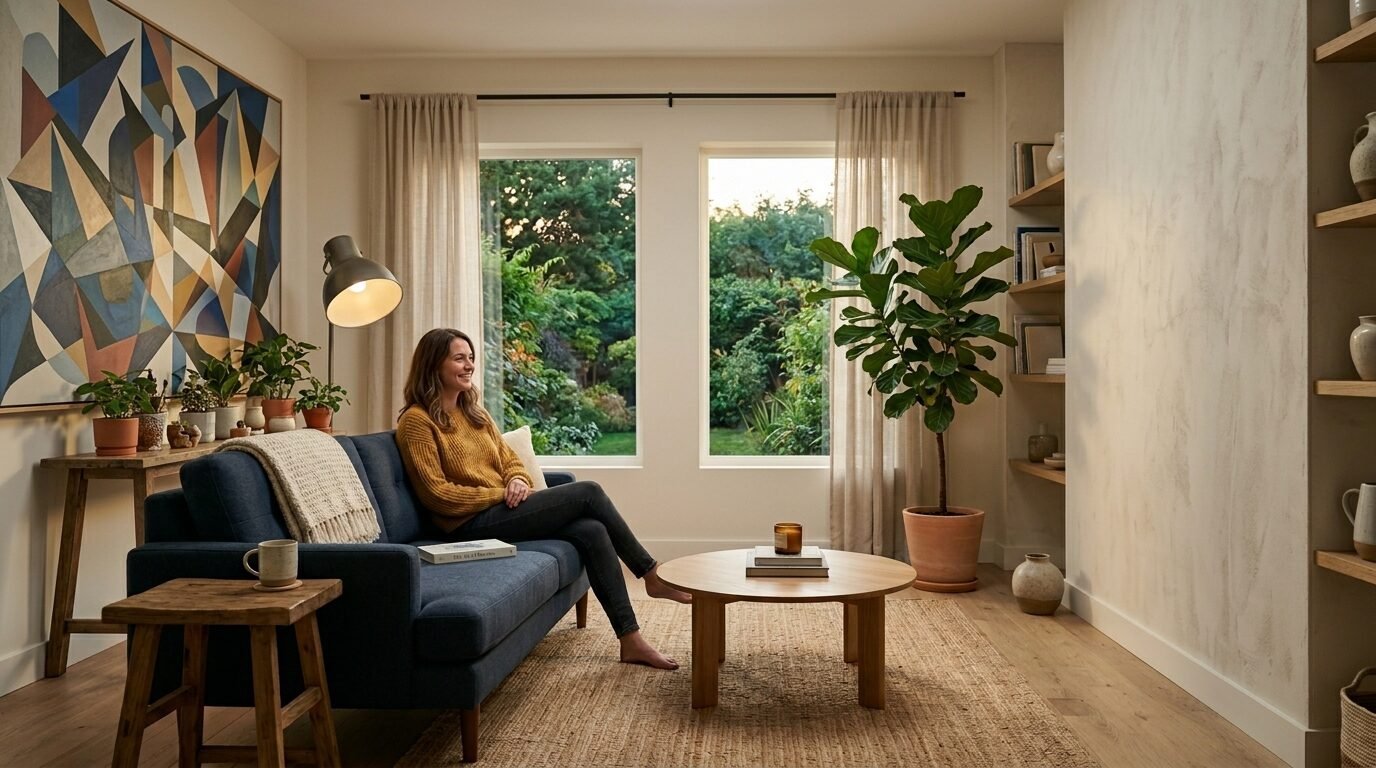
Mastering the balance of a room takes practice. Do not feel bad if it doesn’t look perfect on the first try. I have spent hours moving a single vase two inches to the left just to see how it felt. The most important thing is to trust your gut. If a corner feels “lonely,” give it some company. If a wall feels “loud,” soften it with a neutral color.
In my experience, the best rooms are the ones that evolve over time. You might find a vintage chair at a flea market that perfectly balances your modern sofa. That is the beauty of asymmetrical design. It allows your home to grow with you. It doesn’t require a matching set from a showroom. It only requires a good eye and a little bit of patience. Keep experimenting with your furniture placement. Soon, you will be able to walk into any room and know exactly how to fix the balance.

Anya Castellan is the Founder and Editor-in-Chief of Home Wall Trends. An art history graduate of the Rhode Island School of Design with twelve years of experience writing for leading American design publications, she specializes in composition, gallery wall theory, and the quiet architecture of domestic space. A former contributing editor at Architectural Digest and guest lecturer at Parsons School of Design, Anya personally reads and signs off on every piece before it is published.