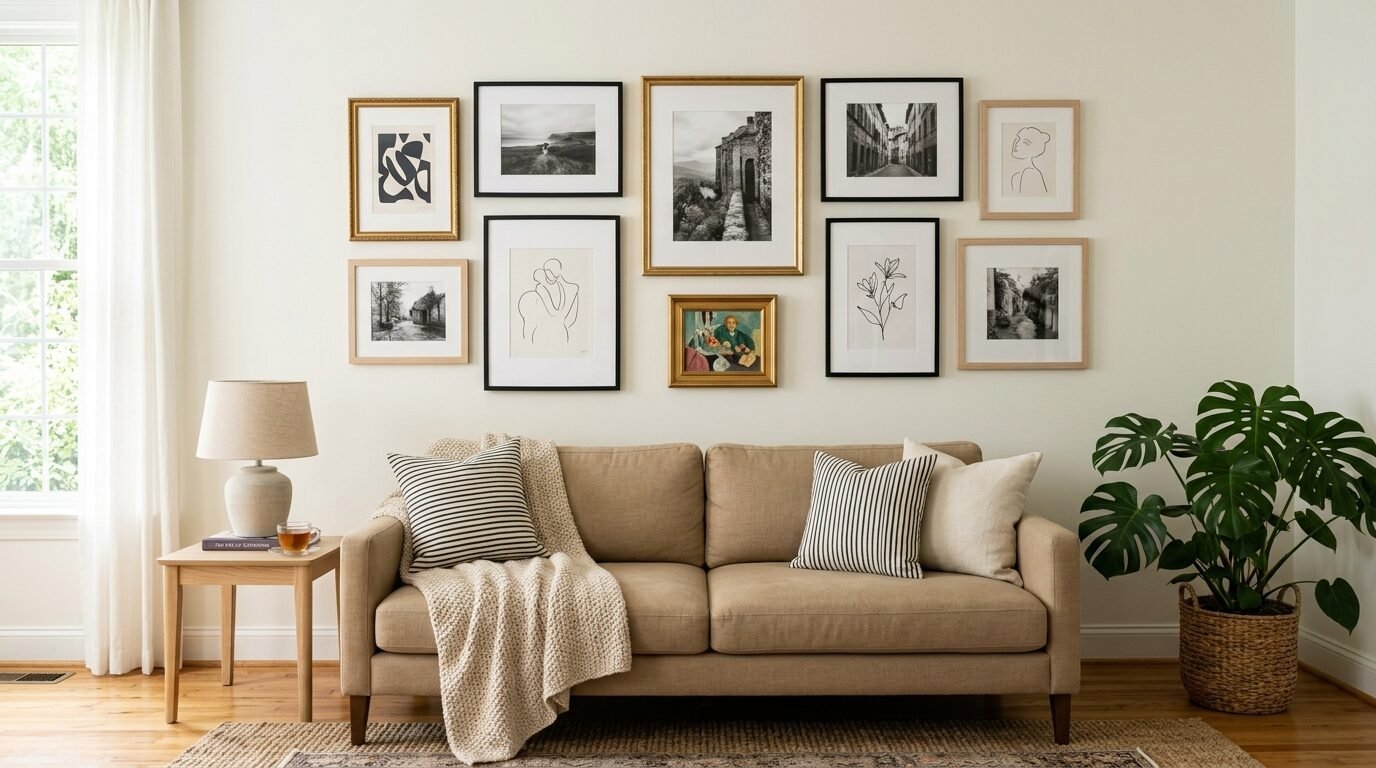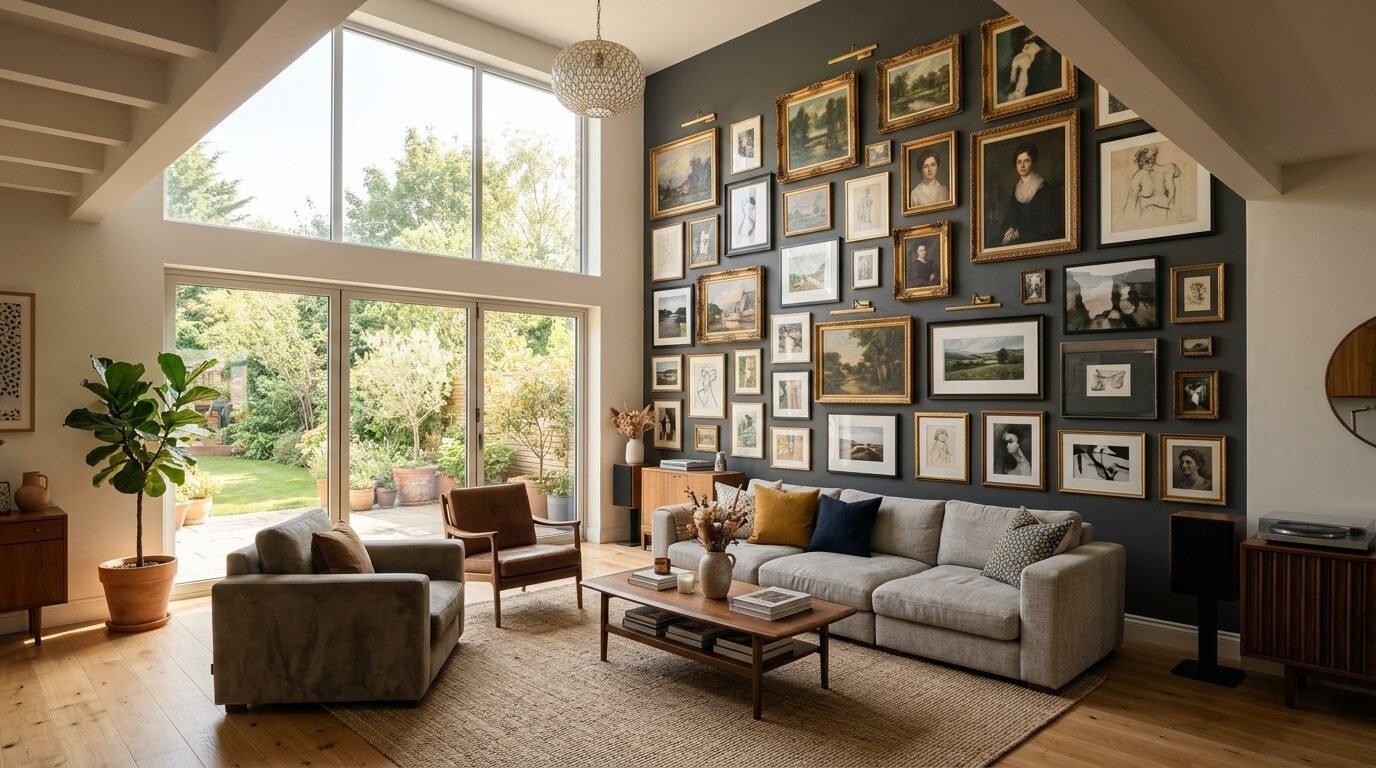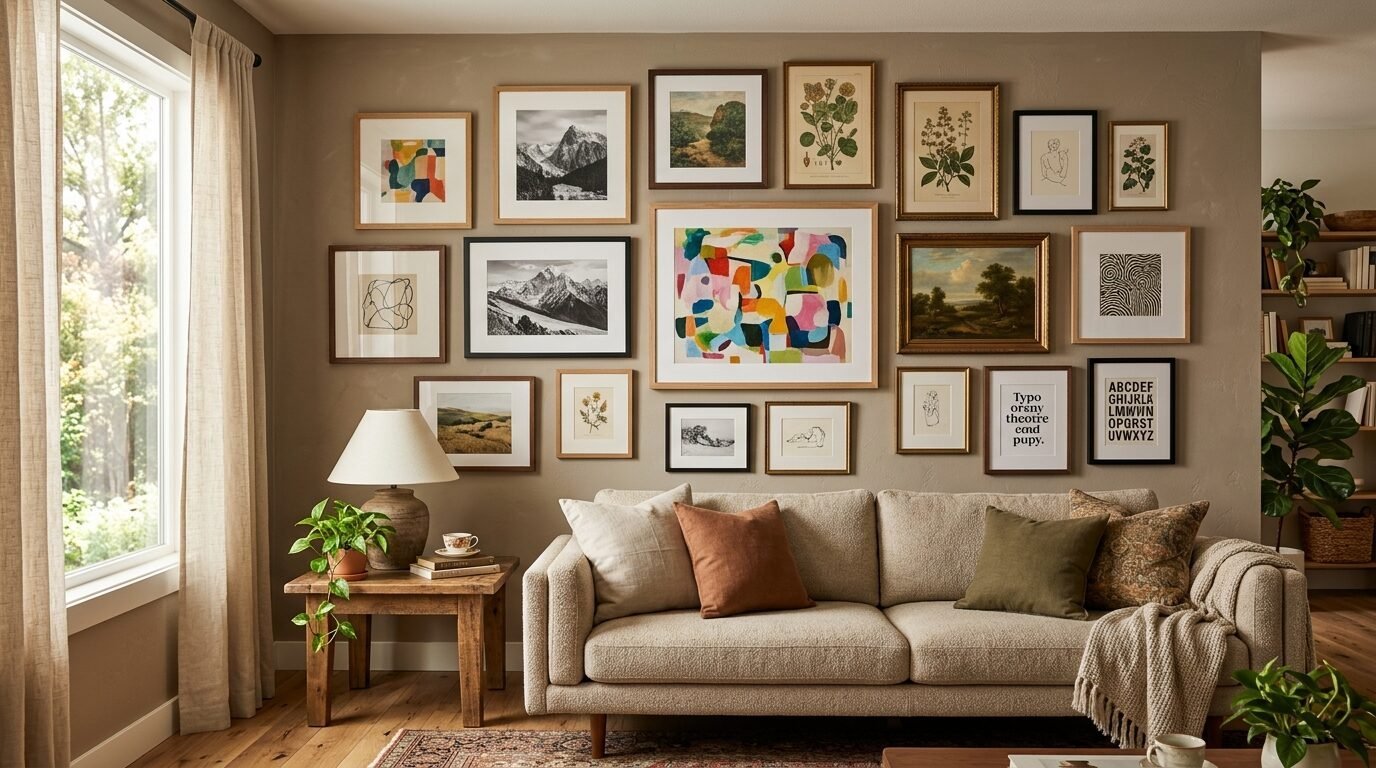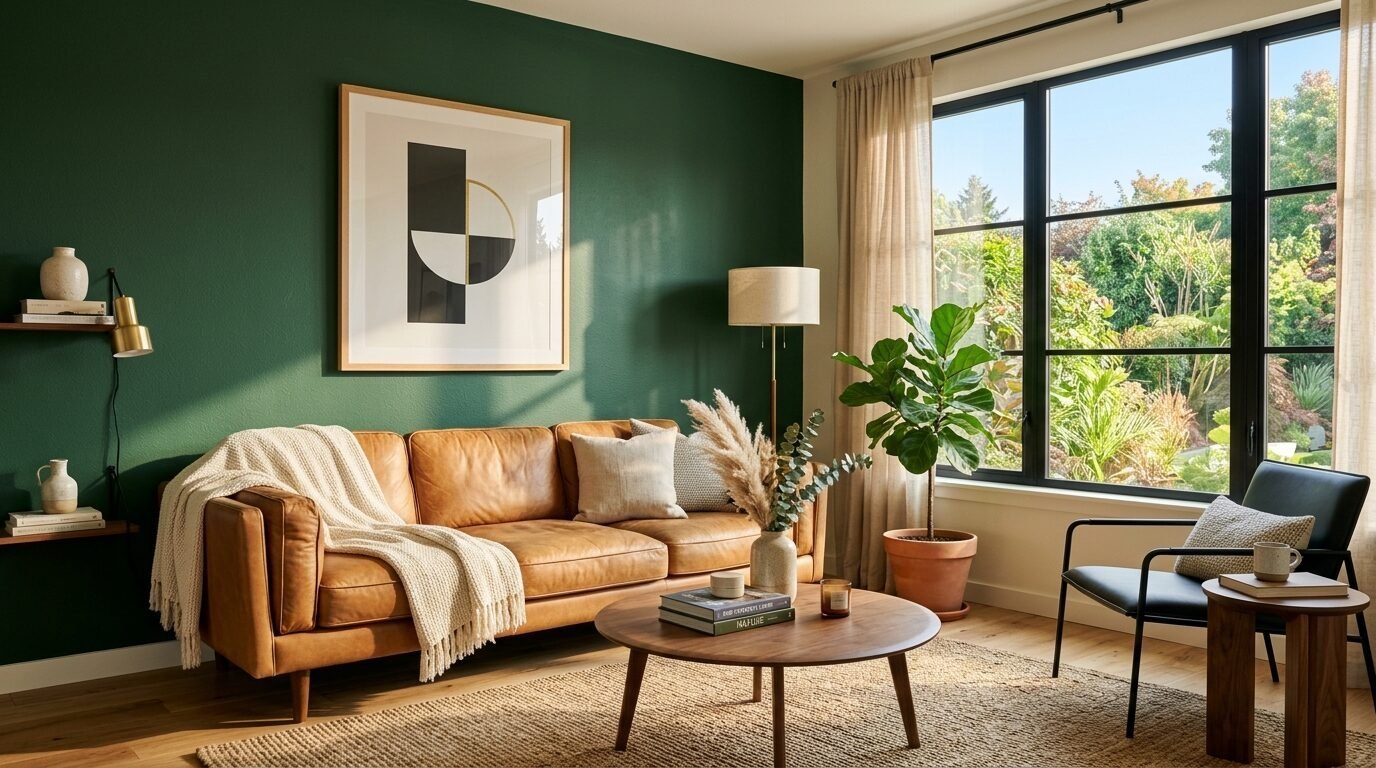
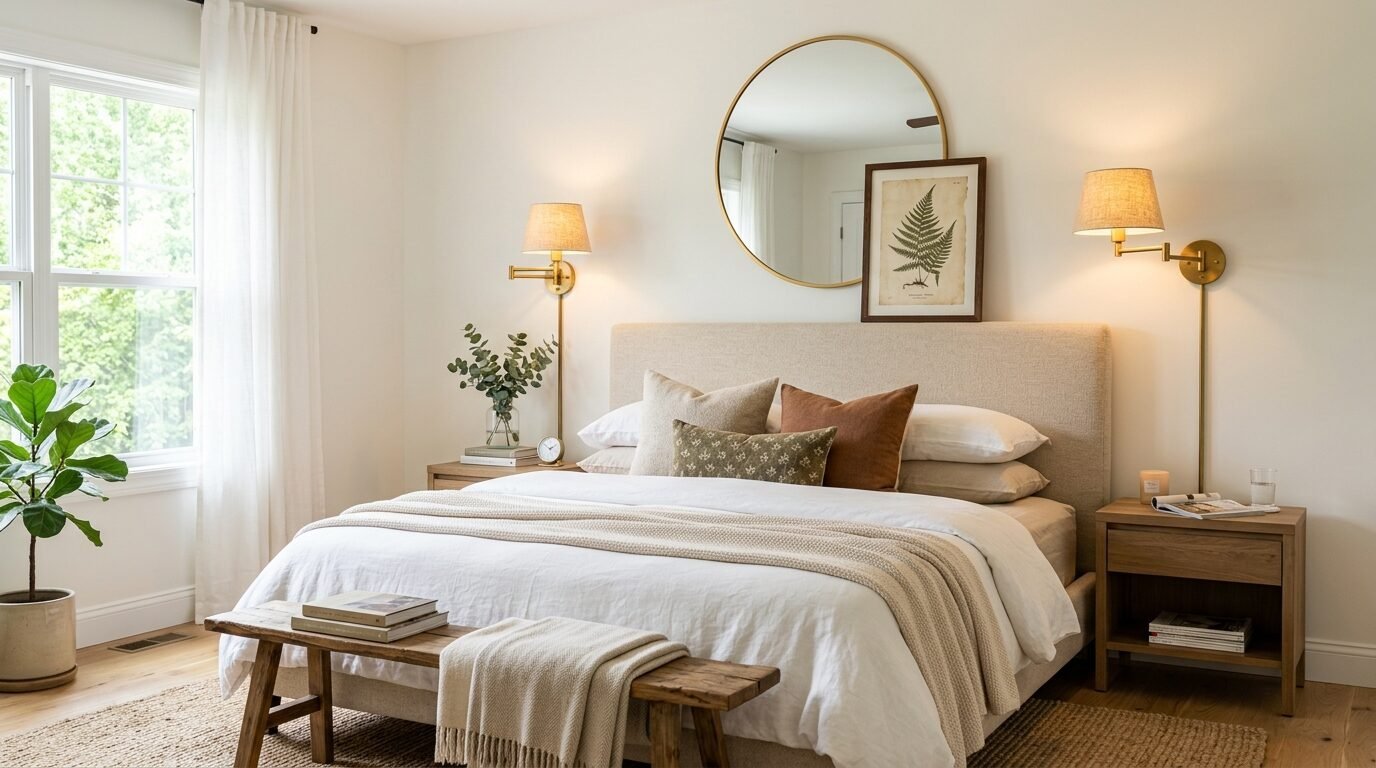
Your bedroom wall is likely the first thing you see when you wake up and the last thing you see before you sleep. Most people leave a blank white rectangle above their headboard because they fear making a mistake. I see this often. A single small frame looks lonely. A huge canvas feels heavy. The secret isn’t just picking one thing. The secret is layering.
Layering adds depth and personality. It makes a room feel finished rather than just furnished. I once spent three hours moving a single mirror. I realized that the height was right but the texture was wrong. In this guide, I will show you how to combine art, mirrors, and lighting. You will learn the exact measurements pros use. We will focus on creating a space that feels calm and curated.
Executive Summary
You can turn a boring wall into a designer focal point in one afternoon. This guide breaks down the science of layering above bed wall decor. We will look at why scale matters more than style. You will learn to mix hard frames with soft textiles. I will share my personal rules for spacing. We cover everything from choosing a center piece to adding the final touch with lighting. You will see how neutral bedroom decor can be bold through texture. I also include a list of the best tools for the job. Expect to find a clear path to a bedroom that looks like a Pinterest dream. You will gain the confidence to hang items without making ten extra holes in your drywall.
1. What Does Layering Bedroom Wall Decor Actually Mean?
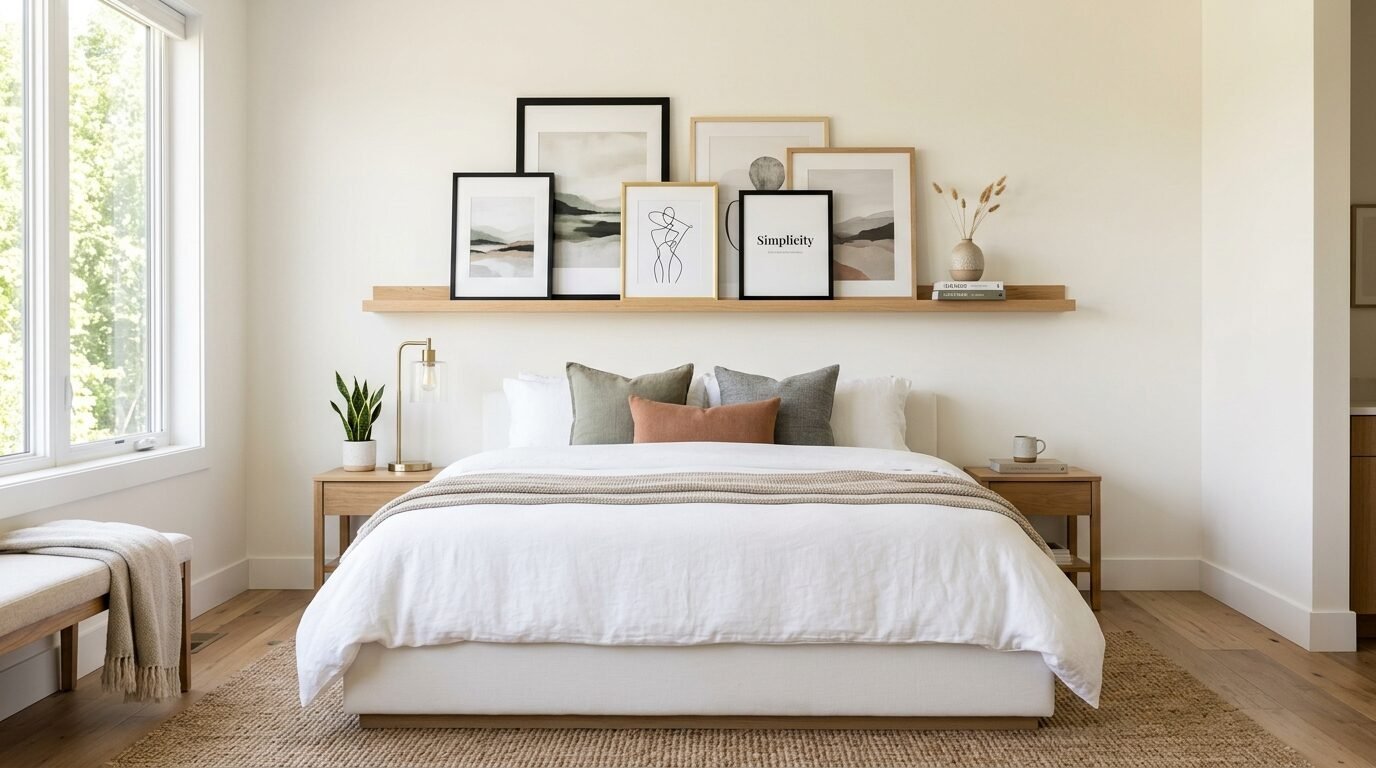
Layering is about building a story on your wall. It is not just hanging items side by side. Think of it like dressing for winter. You have a base layer, a middle layer, and an outer shell. On a wall, your base is the paint or wallpaper. Your middle layer is the large furniture like the headboard. The top layer is your decor.
In my experience, people stop at the middle layer. They buy a nice bed and stop. To layer correctly, you need to overlap elements. This might mean leaning a small photo against a large mirror on a shelf. It could mean hanging a textile behind a framed print.
I’ve seen this work best when you think in three dimensions. Do not just think about height and width. Think about how far an item sticks out from the wall. A flat canvas has no depth. A woven basket has plenty. When you mix these, the wall comes alive. It stops being a flat surface and starts being an experience.
2. Choosing Your Focal Point Above The Bed
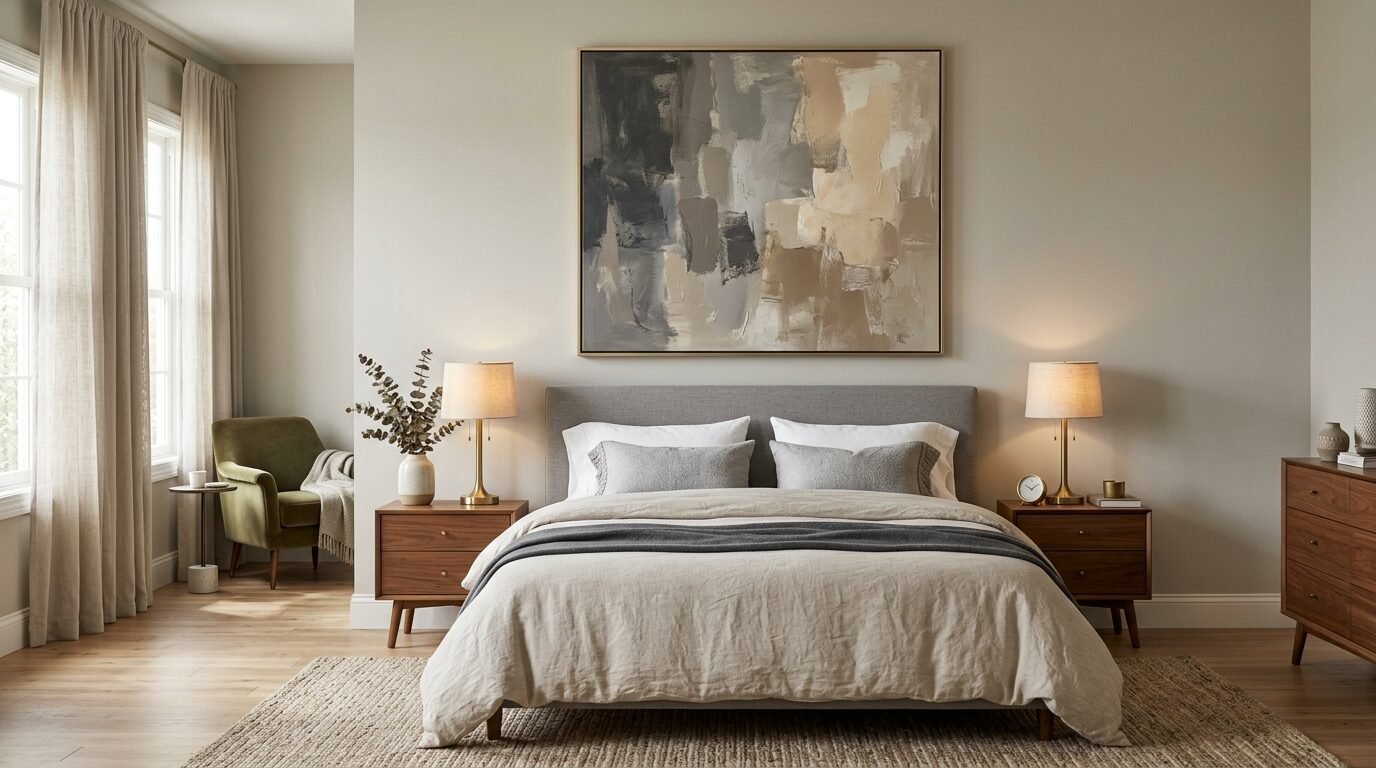
Every great wall starts with one “hero” piece. This is the item your eyes hit first. For most people, this is a large piece of art or a statement mirror. I recommend that this piece should be about two-thirds the width of your headboard.
If your bed is 60 inches wide, your main decor should be around 40 inches wide. Anything smaller looks like a postage stamp. Anything larger feels like it is crushing the bed. I once tried a massive 70-inch map over a queen bed. It felt like the wall was falling on me. I quickly swapped it for three medium frames. The room felt bigger instantly.
Your focal point sets the tone. If you want a cozy vibe, go for a soft canvas. If you want a modern look, choose a black framed mirror. This piece acts as the anchor for everything else we will add later.
3. The Secret to Perfect Spacing for Above Bed Wall Decor
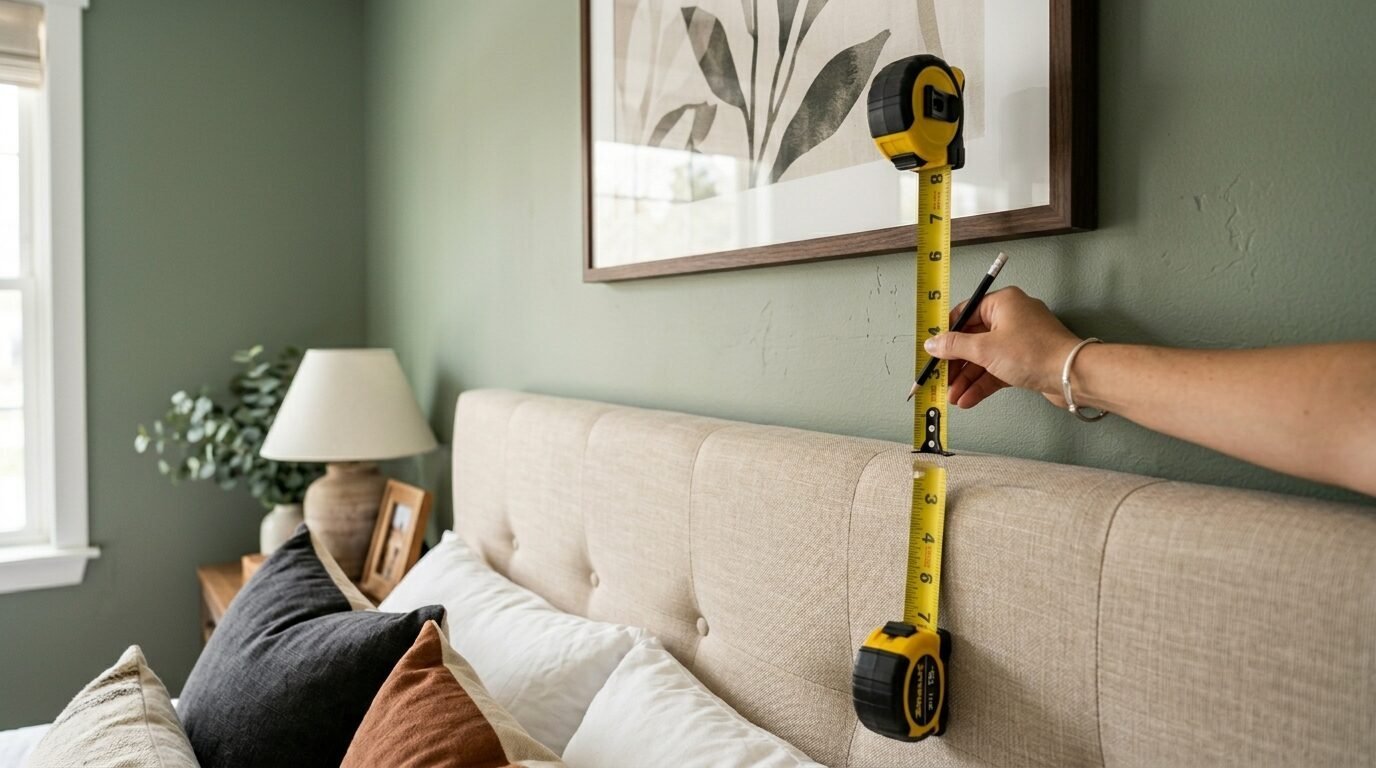
The biggest mistake I see is hanging art too high. It should relate to the bed, not the ceiling. I follow a strict 6 to 10 inch rule. The bottom of your decor should be no more than 10 inches above the top of the headboard.
If you hang it higher, you create a “dead zone” of empty wall. This breaks the visual connection between the bed and the art. It makes the ceiling feel lower. When you keep it close, the bed and the wall decor feel like one cohesive unit.
Also, consider the gap between items. If you are hanging a pair of frames, keep them 2 to 4 inches apart. This ensures they read as one large unit rather than two separate ones. I always use a laser level for this. I used to eye it, but I always ended up with crooked frames. A laser level is worth every penny for bed wall decor projects.
4. Mixing Textures: Why Frames Aren’t Enough
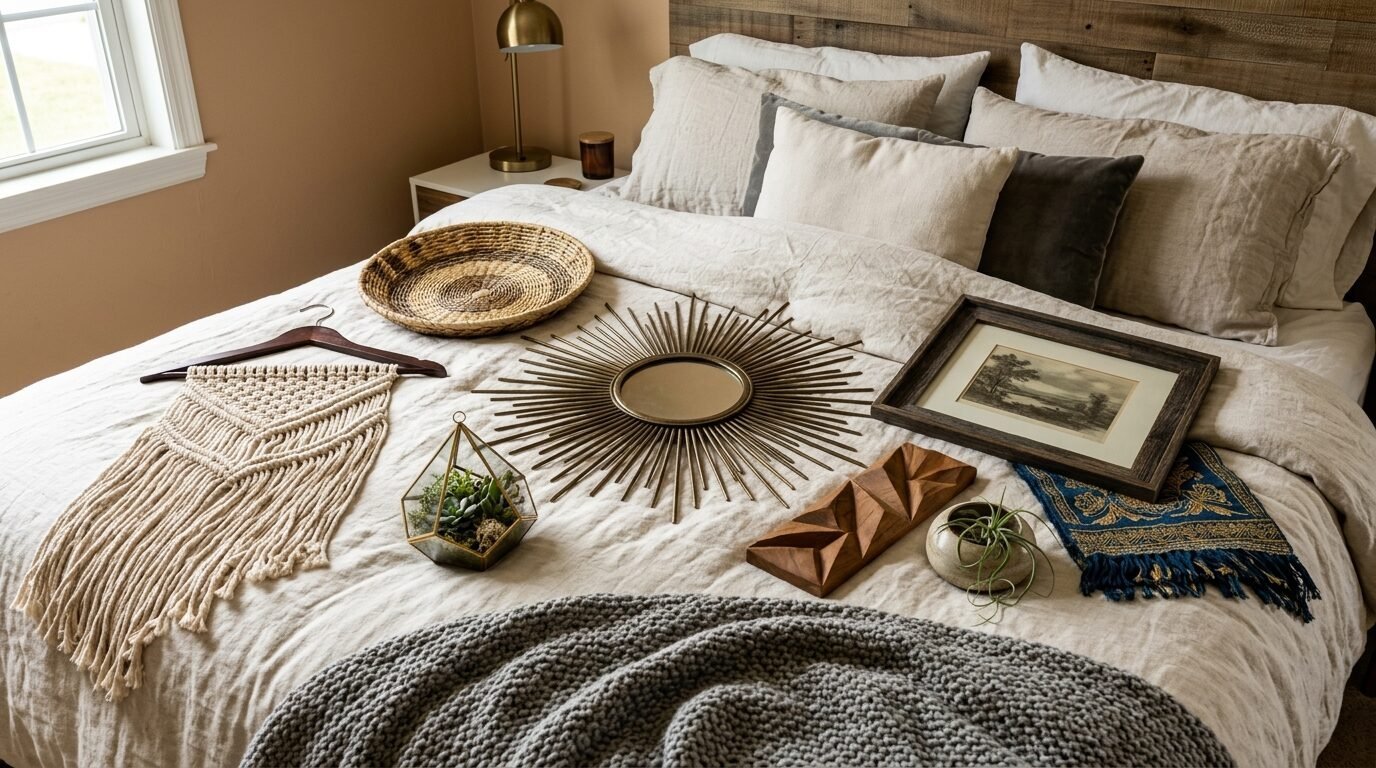
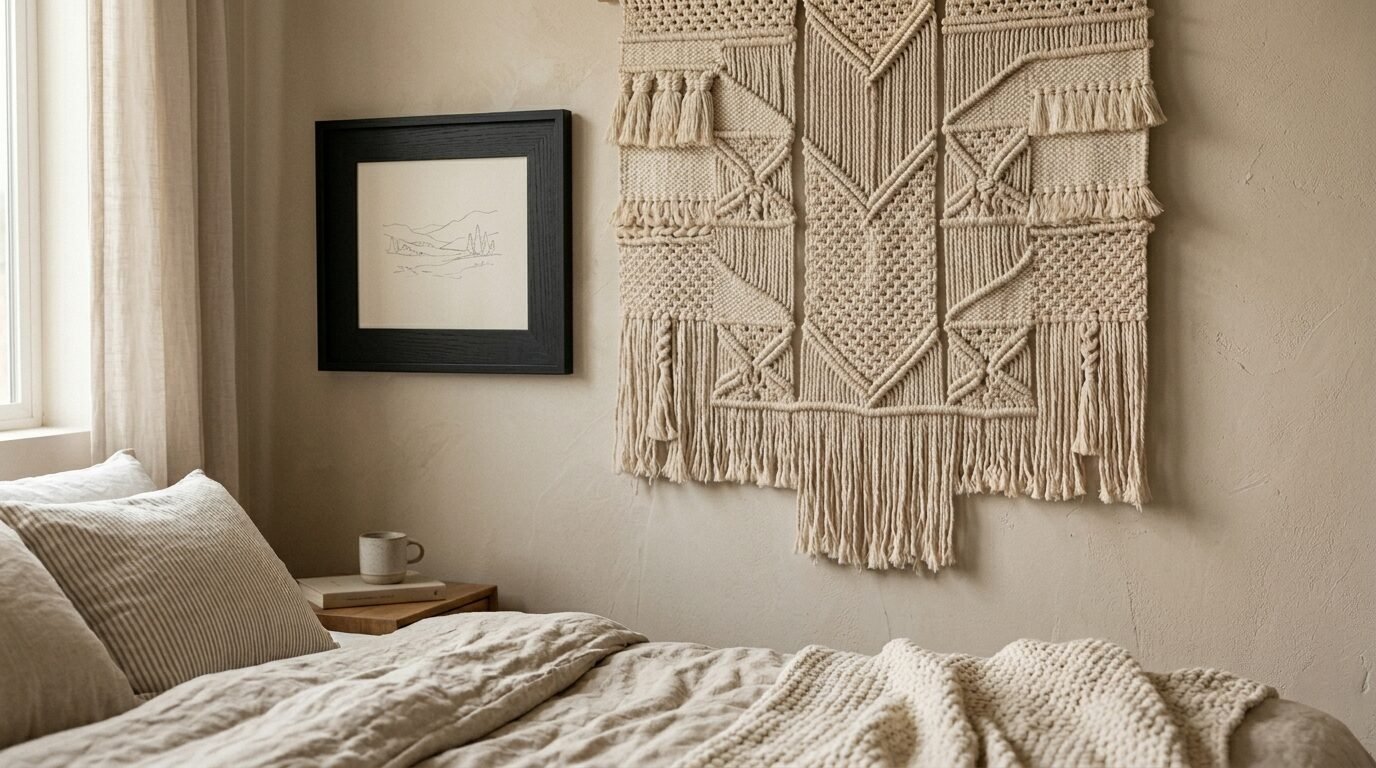
A wall full of glass and wood frames can feel cold. This is where many people fail. To get that high-end look, you must add soft textures. I love using woven wall hangings or vintage rugs.
In one master bedroom project, I layered a framed botanical print over a macrame hanging. The contrast between the sharp glass and the soft rope was stunning. It added a tactile quality that made the room feel warmer.
Consider these materials for your layers:
- Woven baskets or seagrass trays.
- Metal wall sculptures for a touch of shine.
- Velvet or linen wall panels.
- Natural wood ledges.
When you mix these, the wall feels curated over time. It doesn’t look like a “bed in a bag” set. It looks like you traveled the world and found unique pieces.
5. Lighting as a Layer: Sconces and Beyond
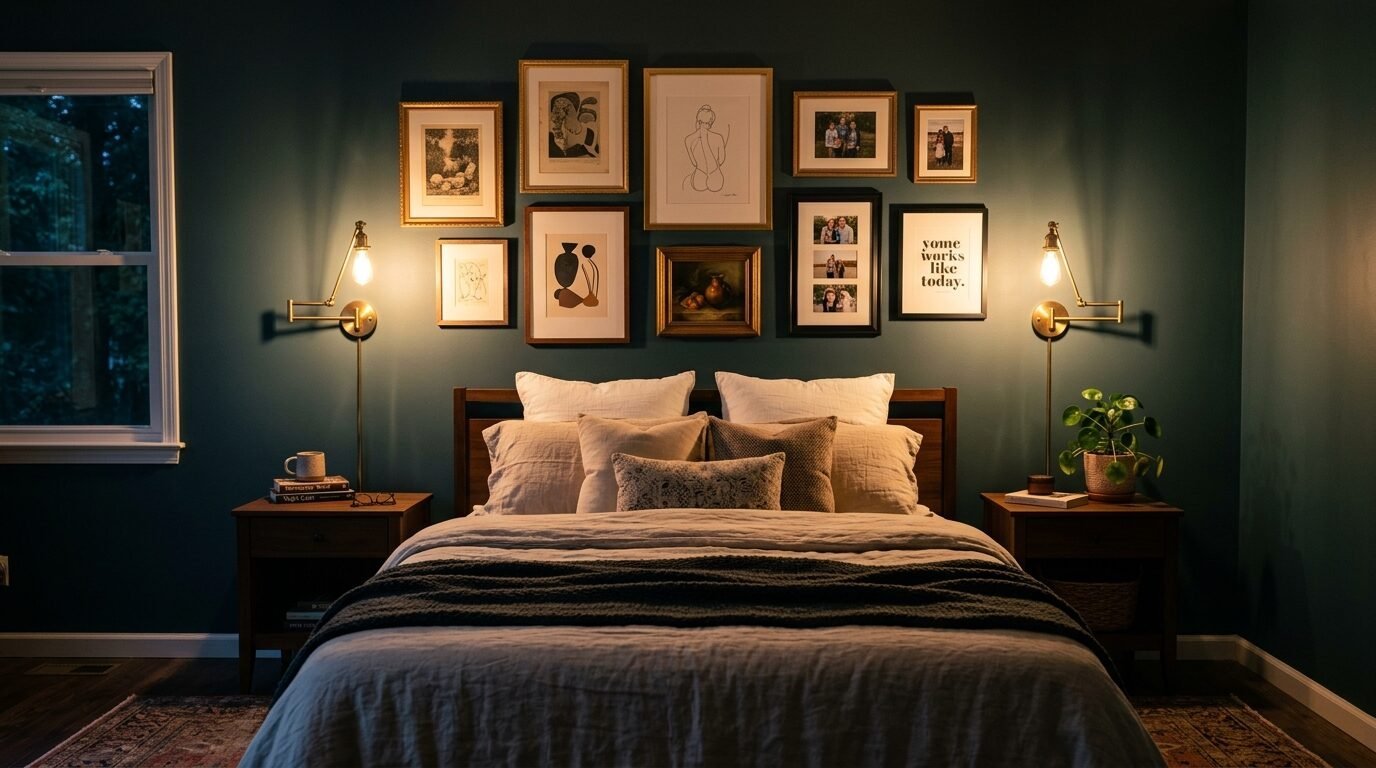
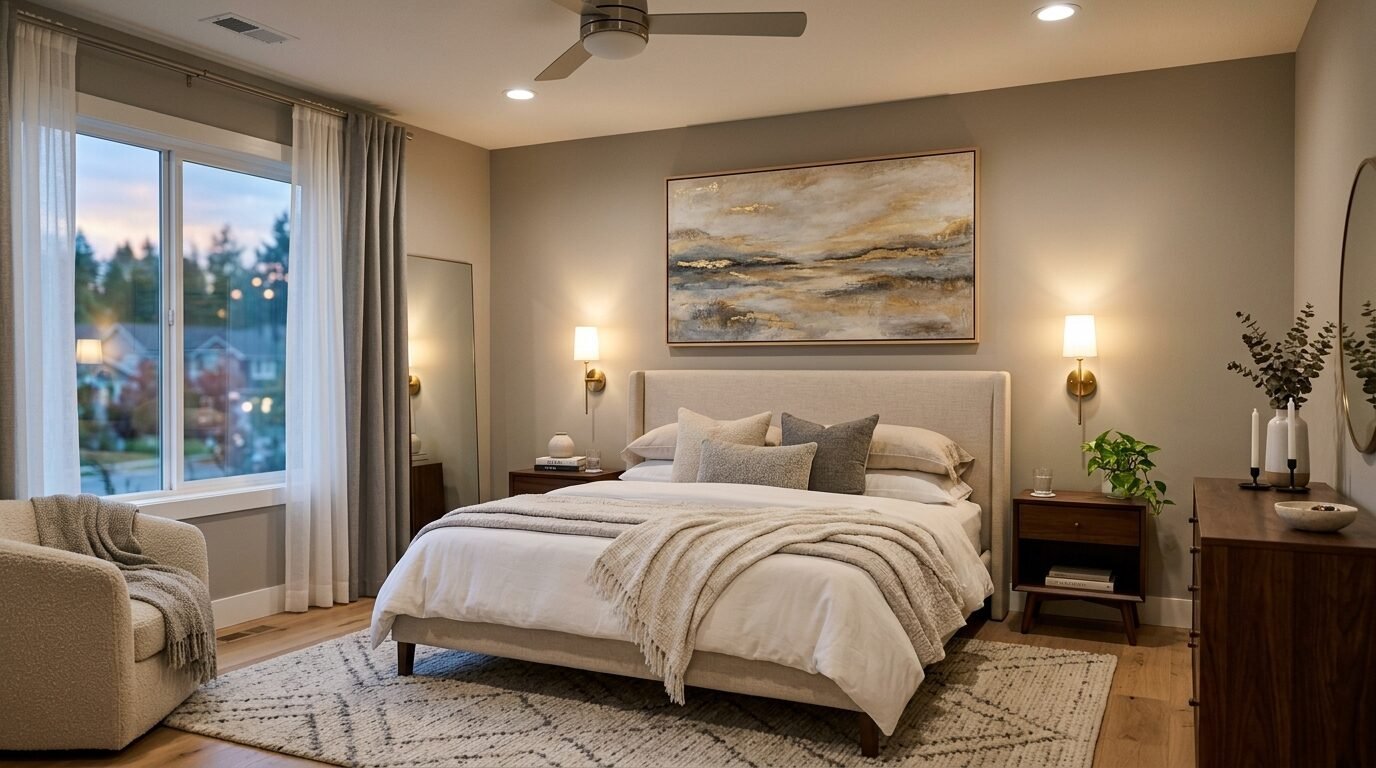
Lighting is the “jewelry” of the wall. It is the final layer that makes everything else shine. I highly suggest adding wall sconces on either side of your main art. This frame the decor and adds a luxury hotel feel.
You don’t even need to call an electrician. I’ve used battery-operated “puck” lights inside hardwired sconces many times. You just screw the sconce into the wall and pop the light in. It looks professional but costs very little.
Sconces do two things. They provide a warm glow for reading. They also cast shadows that highlight the textures of your layered decor. Without light, your layers look flat at night. With light, they have depth and drama. I prefer brass or matte black finishes to contrast with neutral bedroom decor.
6. Color Palettes: Mastering Neutral Bedroom Decor
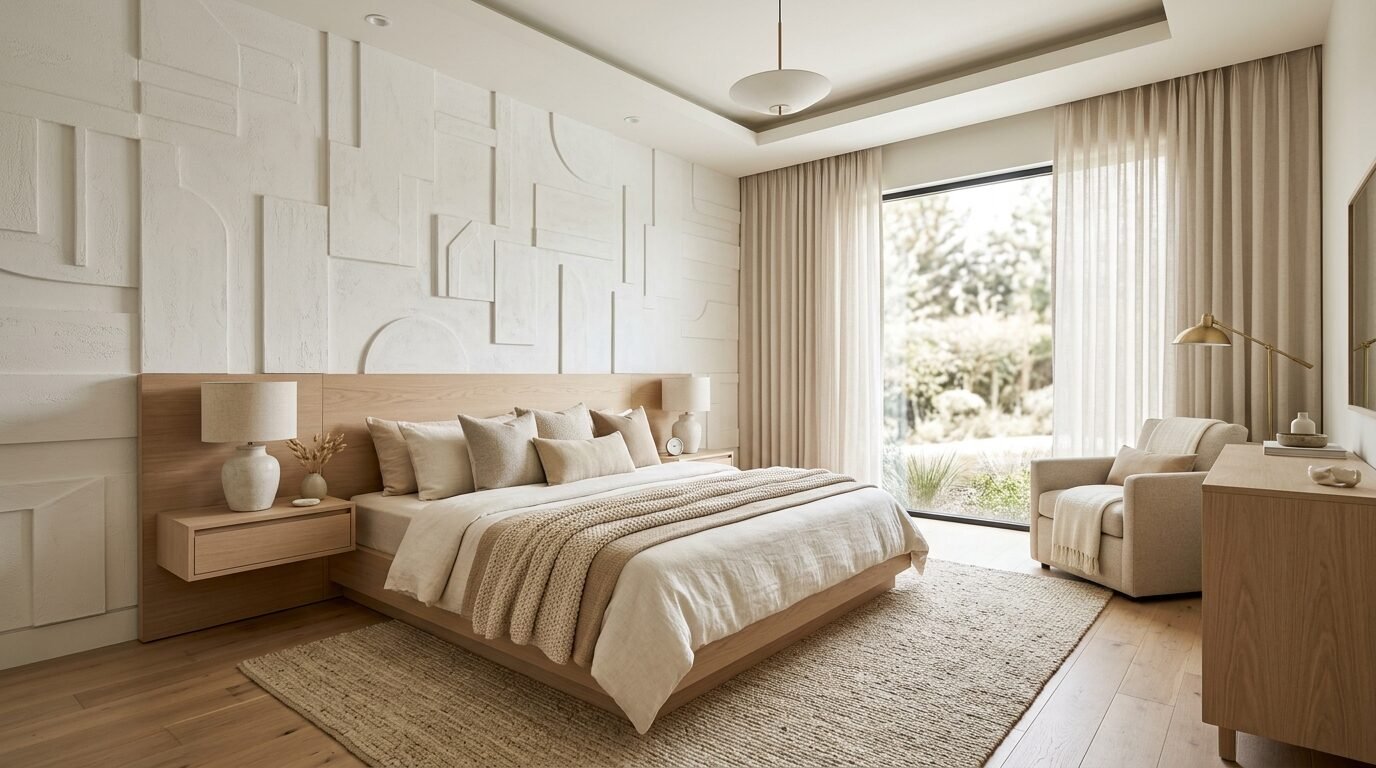
Many people think neutral means “all beige.” That is a myth. A great neutral palette uses different shades of the same color. Think cream, sand, taupe, and charcoal.
When layering above bed decor master styles, keep your colors tight. If your walls are white, try frames in light oak or soft gold. Use art with muted tones like sage green or dusty blue. This prevents the wall from feeling cluttered.
I once worked with a client who wanted a “zen” bedroom. We used only shades of white and grey. We layered a white plaster relief over a grey grasscloth wallpaper. It was nearly the same color, but the texture made it interesting. It felt expensive and calm. Neutrals rely on shadows to create visual interest.
7. Common Mistakes People Make with Bed Wall Decor
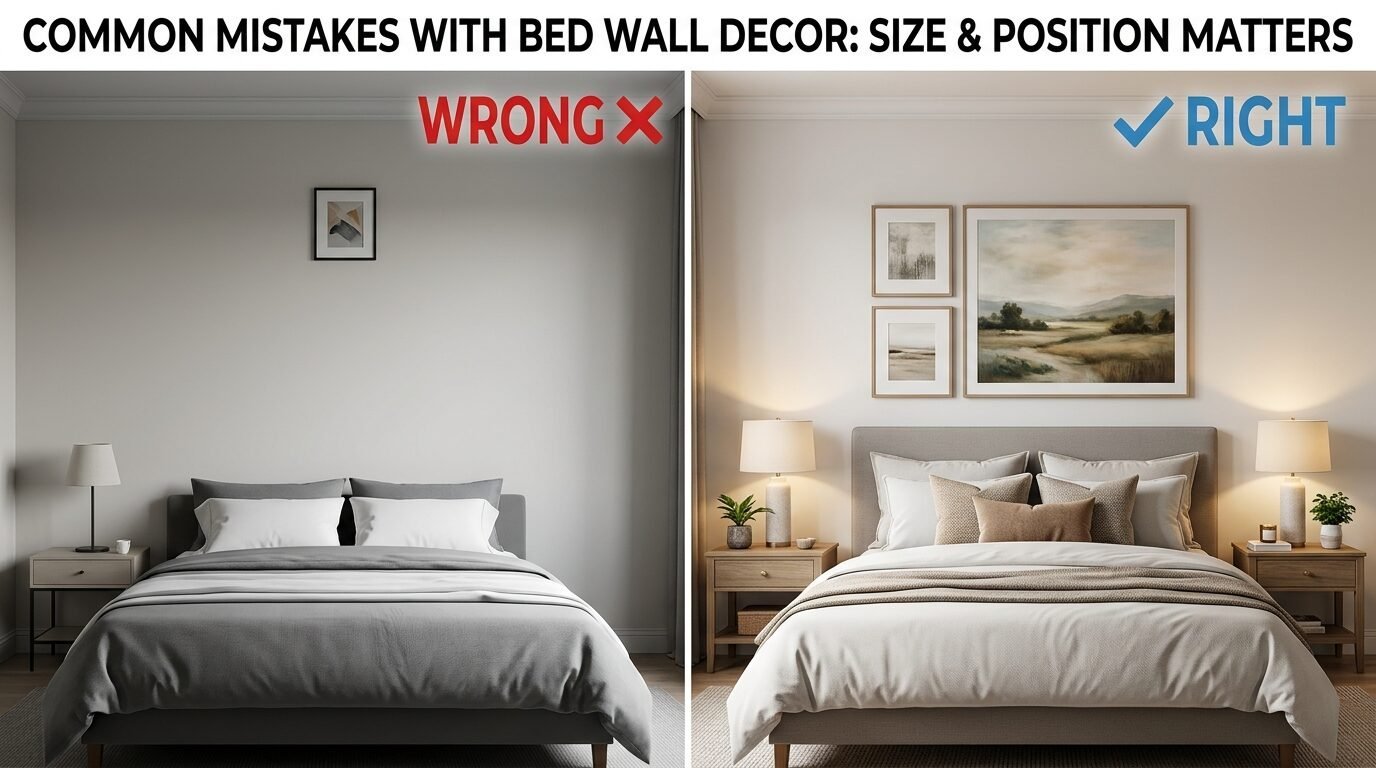
I have seen it all. The most common error is using too many small things. A “gallery wall” of ten tiny photos usually looks messy above a bed. It creates too much visual noise. You want your sleeping area to feel peaceful.
Another mistake is forgetting about safety. Never hang a heavy, glass-fronted frame with a thin nail. I always use French cleats for heavy mirrors. They are metal rails that lock together. This ensures nothing falls on your head during the night.
Finally, do not forget the “headroom.” If you like to sit up and read, make sure your decor isn’t so low that you lean against it. I’ve bumped my head on a low shelf more than once. Always test your sitting height before you hammer the first nail.
8. Top 10 Tools for Stress-Free Installation
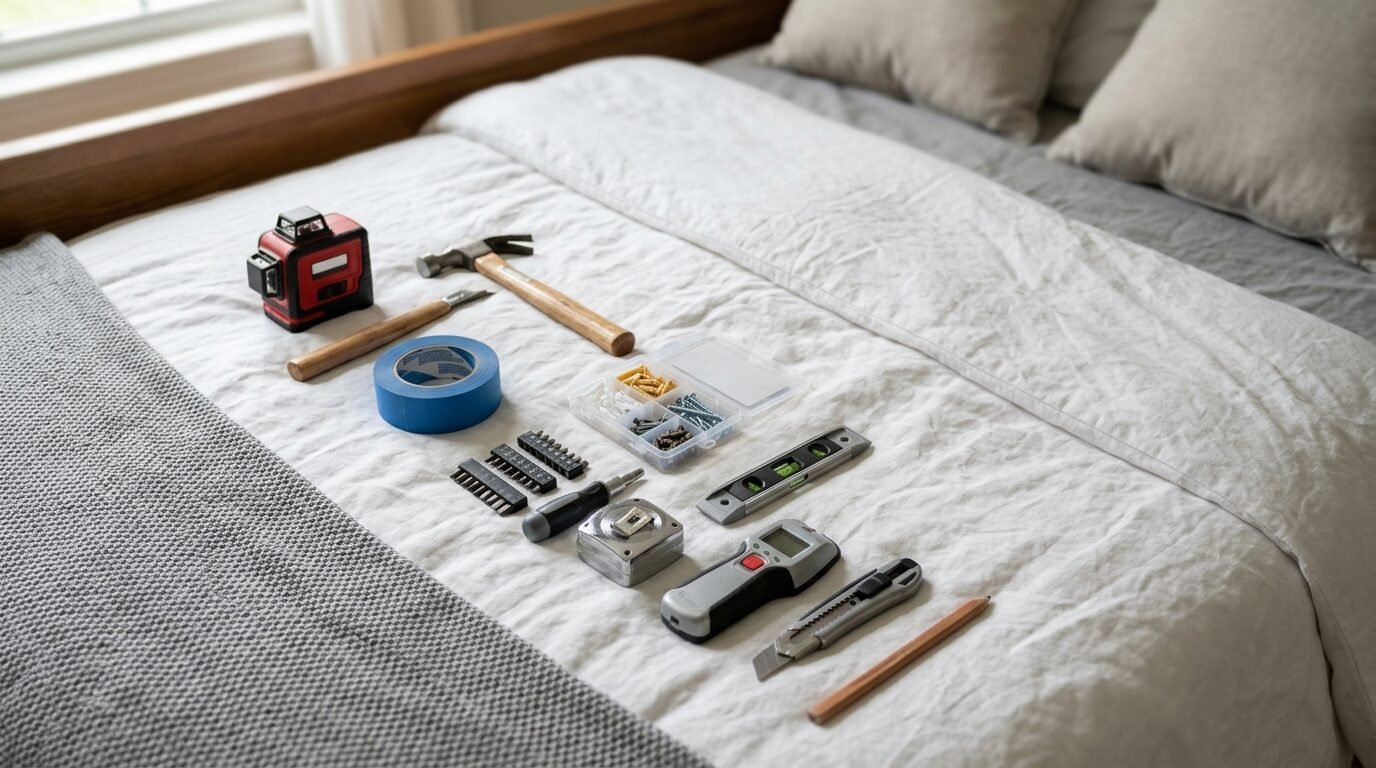
Having the right tools makes the difference between a fun project and a stressful one. I keep a dedicated “decorating kit” in my closet.
- Laser Level: To keep everything perfectly straight.
- Command Strips: Great for lightweight art if you rent.
- Painter’s Tape: Use this to map out your layout on the wall before hanging.
- French Cleats: For heavy mirrors or large canvases.
- Tape Measure: To ensure your two-thirds rule is met.
- Wall Anchors: Never trust a nail in drywall alone.
- Small Hammer: A heavy one is hard to control for small nails.
- Pencil: To mark your spots lightly.
- Blue Tack: To keep the bottom corners of frames from shifting.
- Stud Finder: Essential for finding the strongest part of the wall.
I’ve tried to skip the stud finder before. The result was a giant hole in my wall and a fallen picture. Don’t skip the basics.
9. Comparison: Symmetrical vs. Asymmetrical Layouts
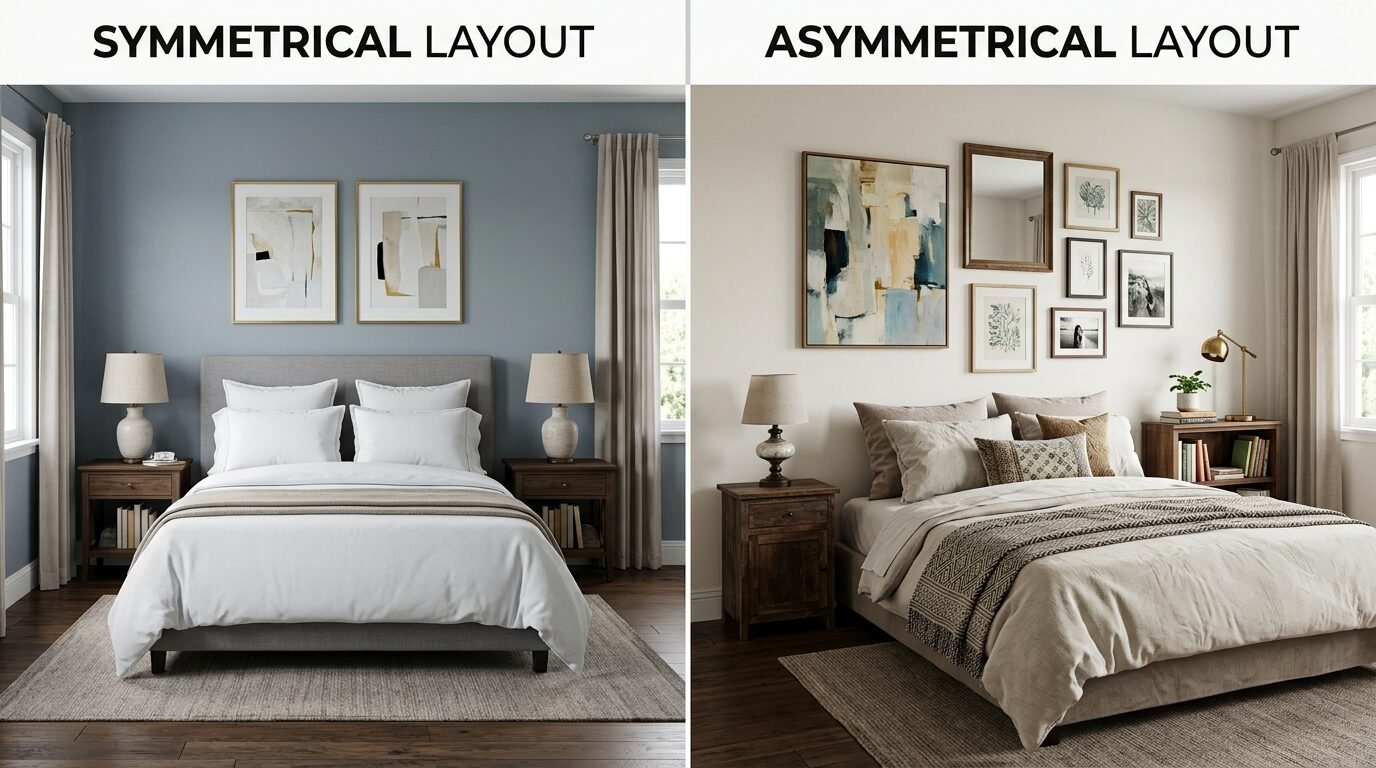
Should you go for a perfect balance or something a bit more random? Both work, but they feel very different.
| Layout Style | Best For | Vibe |
| Symmetrical | Traditional Bedrooms | Calm, Formal, Organized |
| Asymmetrical | Modern or Boho Spaces | Creative, Relaxed, Unique |
Symmetrical layouts use pairs. Two identical frames on either side of a center point. This is the safest bet for a master bedroom. It feels stable and balanced.
Asymmetrical layouts are harder to master. You might have one large piece on the left and a cluster of three smaller items on the right. In my experience, this works best when you keep the total “weight” the same on both sides. If the left side has a heavy black frame, the right side needs enough items to balance that visual weight.
10. Case Study: A Master Bedroom Transformation
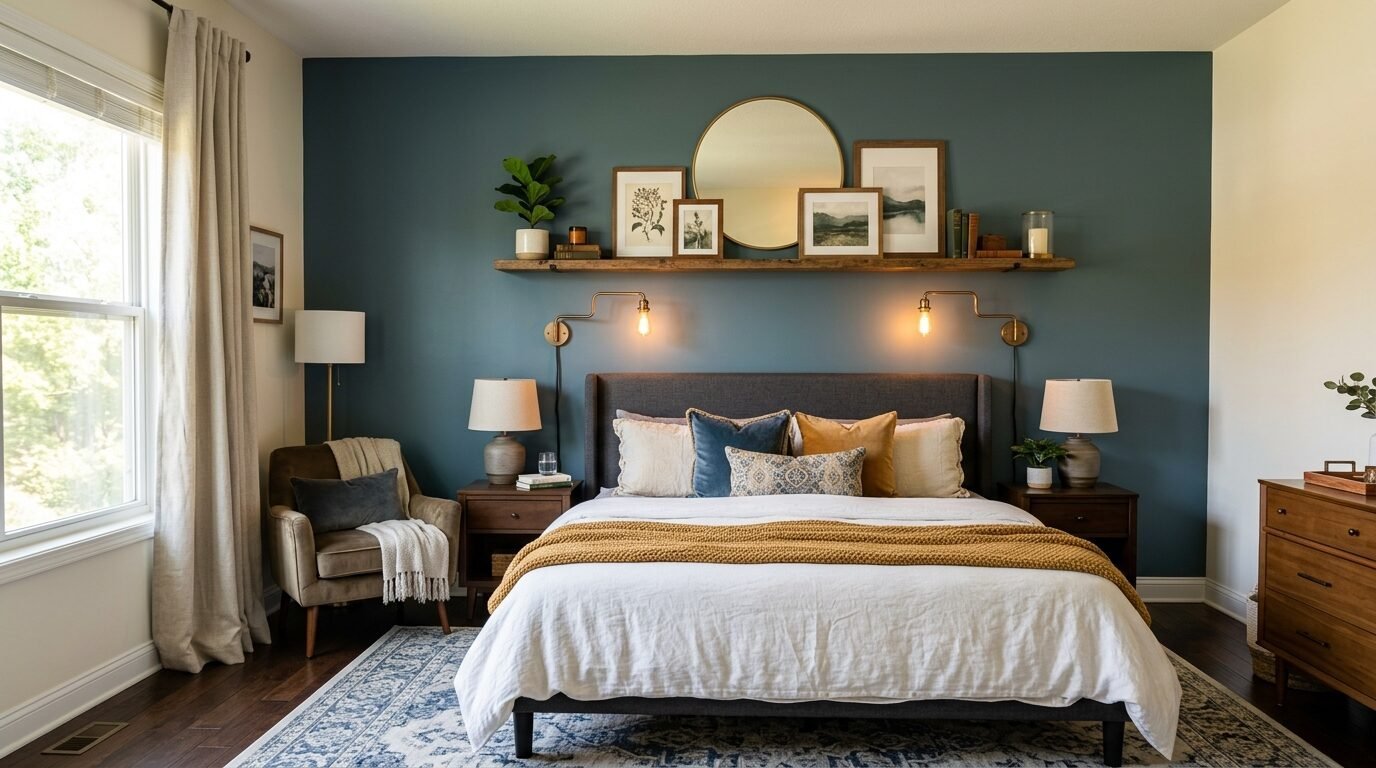
Let me tell you about Sarah. She had a beautiful king-sized bed but a totally empty wall. She felt the room was “cold.” We decided to use the layering method.
First, we chose a 48-inch round mirror as the focal point. This broke up the straight lines of her rectangular headboard. Next, we added a thin wooden picture ledge below the mirror. On that ledge, we layered three items: a small framed wedding photo, a tiny potted plant, and a ceramic bowl.
Finally, we added two matte black sconces. The result was a wall that looked like it belonged in a magazine. Sarah told me later that she finally felt like her house was a home. It wasn’t about spending thousands. We spent about $300 total. The impact came from the layers, not the price tag.
11. Frequently Asked Questions (FAQ)
How high should I hang art above my bed?
You should hang the bottom of the frame 6 to 10 inches above the headboard. This keeps the art connected to the furniture. If you go higher, the wall looks disconnected. I see people hang art near the ceiling all the time. It is a mistake that makes the room feel small.
Can I put a shelf above my bed?
Yes, a picture ledge is a great way to layer. It allows you to swap out decor without making new holes. Just make sure it is high enough so you don’t hit your head when sitting up. I recommend 12 inches of clearance from your head to the shelf.
Is it safe to hang a mirror over the bed?
It is safe if you use the right hardware. Do not use a single wire and a nail. Use a French cleat or heavy-duty wall anchors rated for the weight of the mirror. I always double-check the weight limit on the package.
How do I decorate a wall if I don’t have a headboard?
If you don’t have a headboard, your decor becomes the headboard. Use a large tapestry or a gallery wall to create a “block” of visual interest. Start the decor about 2 or 3 inches above the mattress top. This grounds the bed in the room.
What should I put on a wall if I like a minimalist style?
Minimalism doesn’t mean empty. Choose one oversized piece of art with a lot of “white space.” A simple line drawing or a large neutral textile works perfectly. It provides a focal point without creating clutter.
Should my wall decor match my bedding?
It should coordinate but doesn’t have to match perfectly. If your bedding has a specific accent color, like navy, try to find art that has a small hint of navy. This ties the whole room together. In my experience, an exact match feels a bit dated. Aim for a similar “mood” instead.
12. Final Thoughts on Bedroom Wall Styling
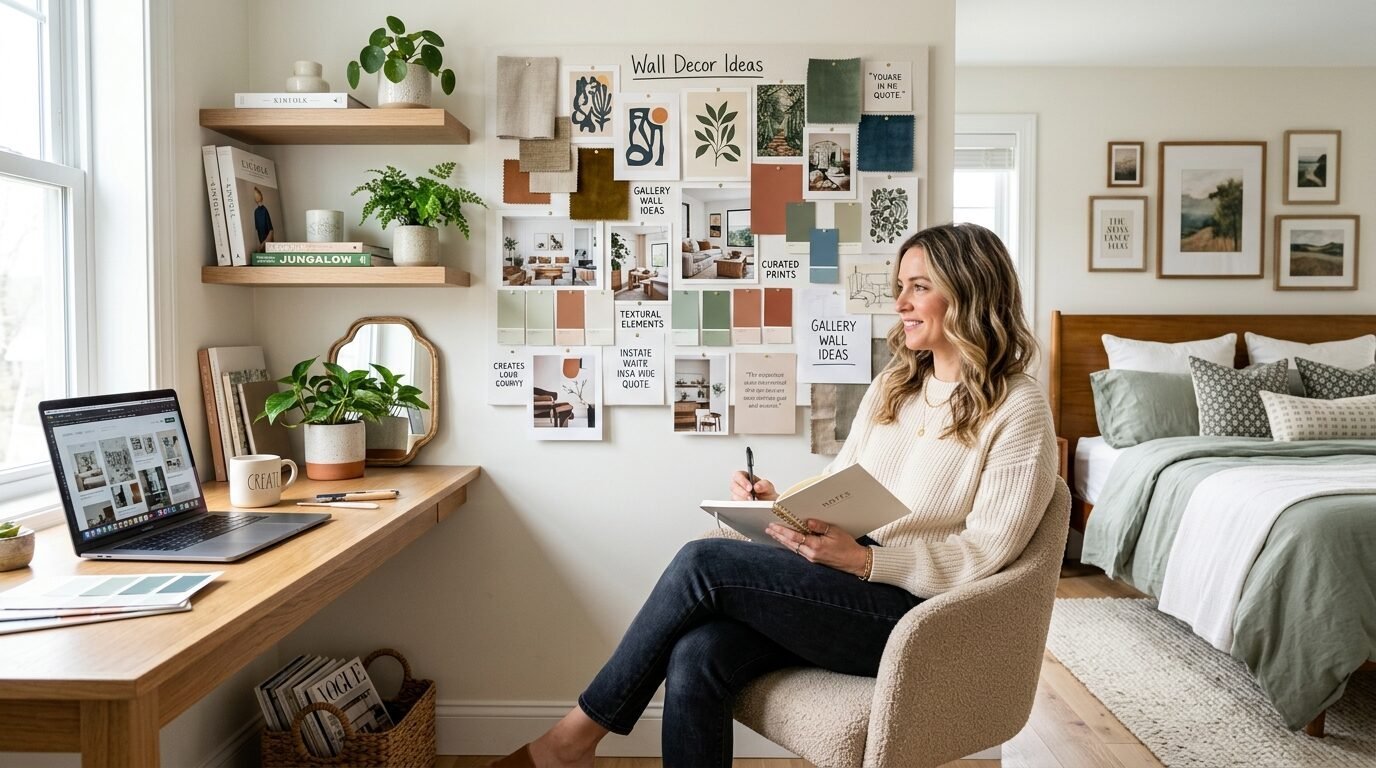
Decorating your bedroom wall should be fun. It is your private sanctuary. Do not feel pressured to follow every trend you see online. Start with one piece you truly love. Then, slowly add layers over time. Maybe it’s a photo from a trip or a gift from a friend.
The most beautiful rooms are the ones that feel personal. Use the rules of scale and height to guide you, but let your personality shine through the items you choose. I’ve found that the best walls are never finished. They evolve as you do.
Now, grab some painter’s tape and start mapping out your layout. What is the one piece you want to see every morning? Start there. You might be surprised at how much a few simple layers can change your entire mood.

Anya Castellan is the Founder and Editor-in-Chief of Home Wall Trends. An art history graduate of the Rhode Island School of Design with twelve years of experience writing for leading American design publications, she specializes in composition, gallery wall theory, and the quiet architecture of domestic space. A former contributing editor at Architectural Digest and guest lecturer at Parsons School of Design, Anya personally reads and signs off on every piece before it is published.