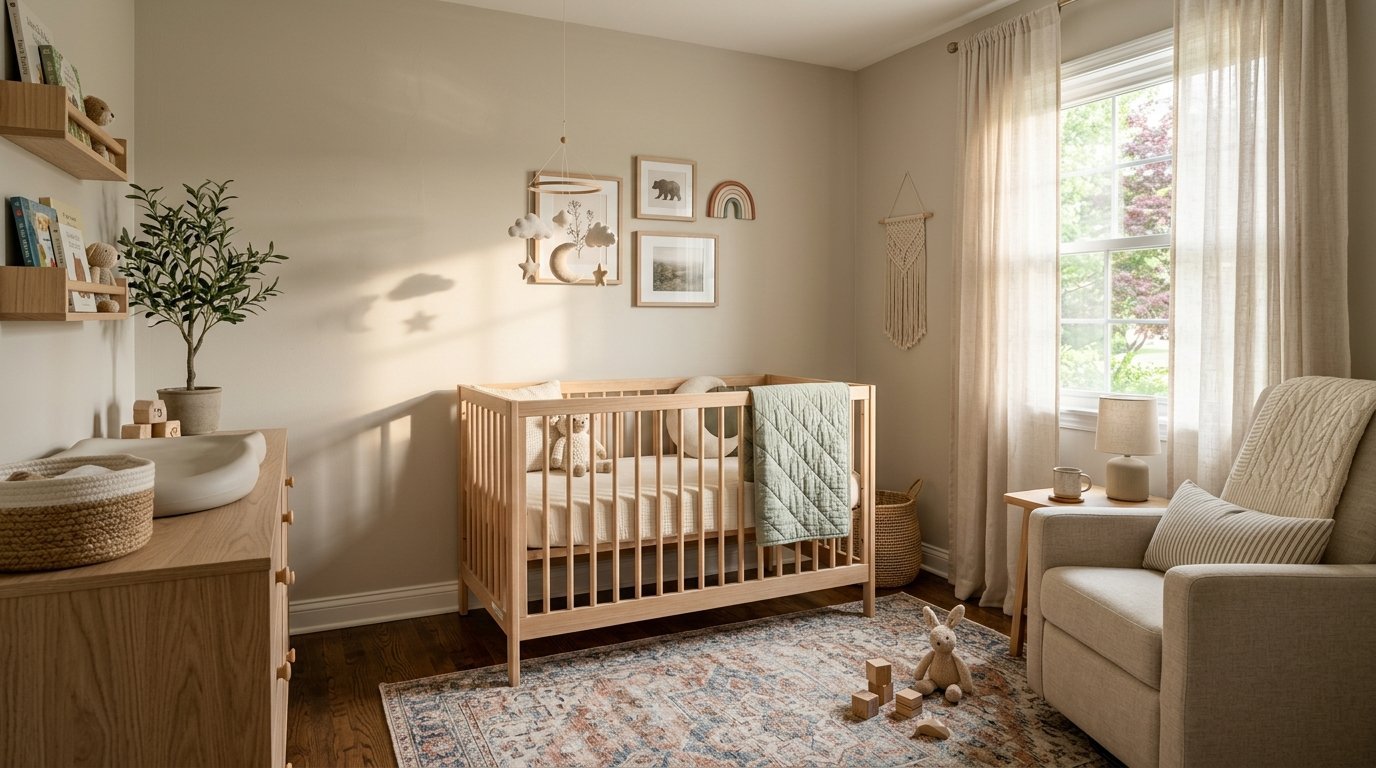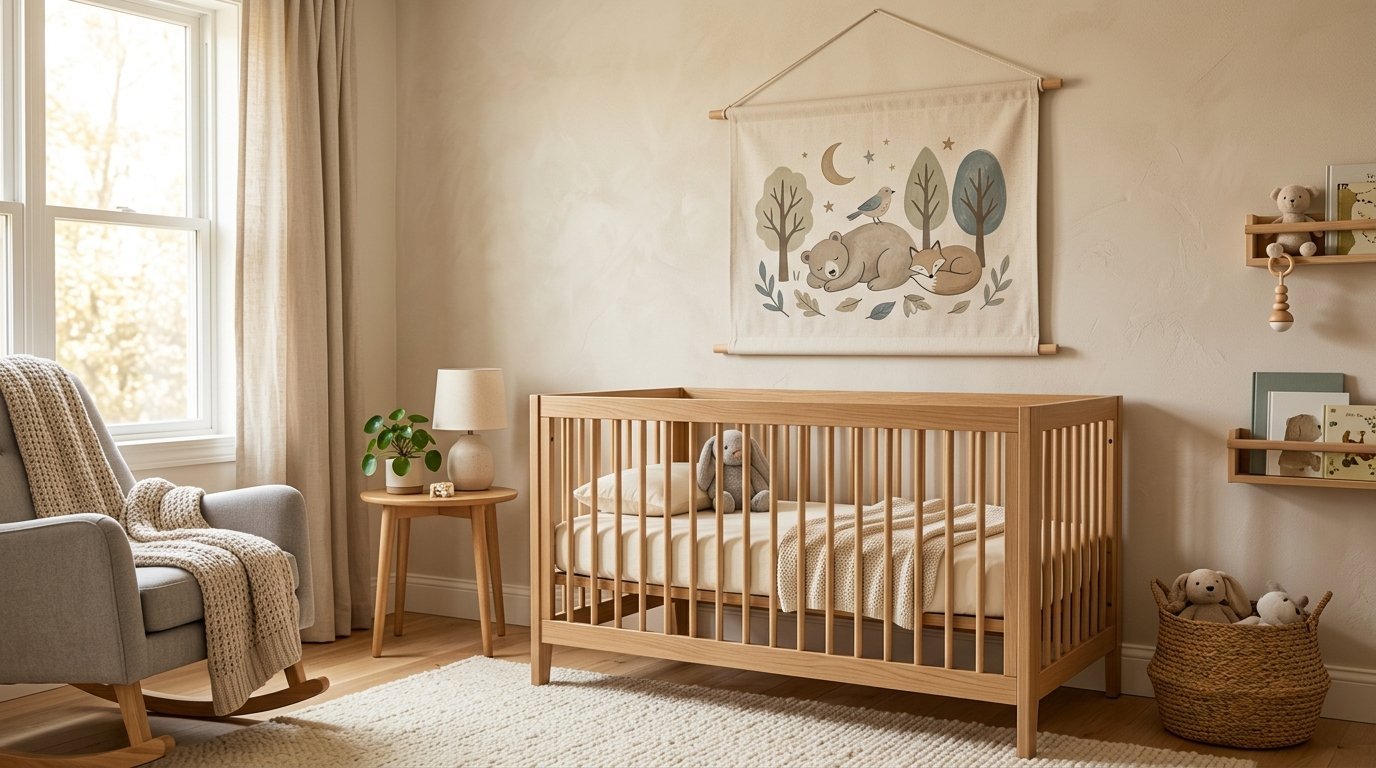
Three months ago, I tried crafting a farmhouse welcome sign from pine wood. The wood split entirely during the sanding phase. The dark walnut stain bled into the carved lettering. The entire piece ended up in the scrap pile. That failure taught me exactly what goes wrong when planning wall pieces for a home. Now, translating those lessons into a baby nursery requires even more precision. Parents spend thousands of dollars decorating these rooms. They buy expensive cribs. They hire professional painters. Then, they hang cheap, poorly planned wall art that ruins the entire room aesthetic. A nursery room design requires intentional choices. You need pieces that survive sticky fingers, shifting tastes, and daily wear. These choices must look beautiful while maintaining strict safety standards for a sleeping infant.
You will get exact costs, installation steps, and safety checks for 2026 wall styling. We cover everything from whimsical decor styling to selecting a gingham pattern wallpaper. You will see exact comparisons between vinyl and fabric decals. We evaluate the true cost of handmade macrame versus mass-produced alternatives. You will find out exactly how to fasten heavy mirrors without risking safety. This guide covers a gender neutral nursery setup, specific paint color codes, and realistic project timelines. The styling choices here work flawlessly for a boy or girl. We leave out fleeting fads and focus completely on pieces that last through the toddler years.
Why Are Mushrooms Dominating Nursery Room Design?
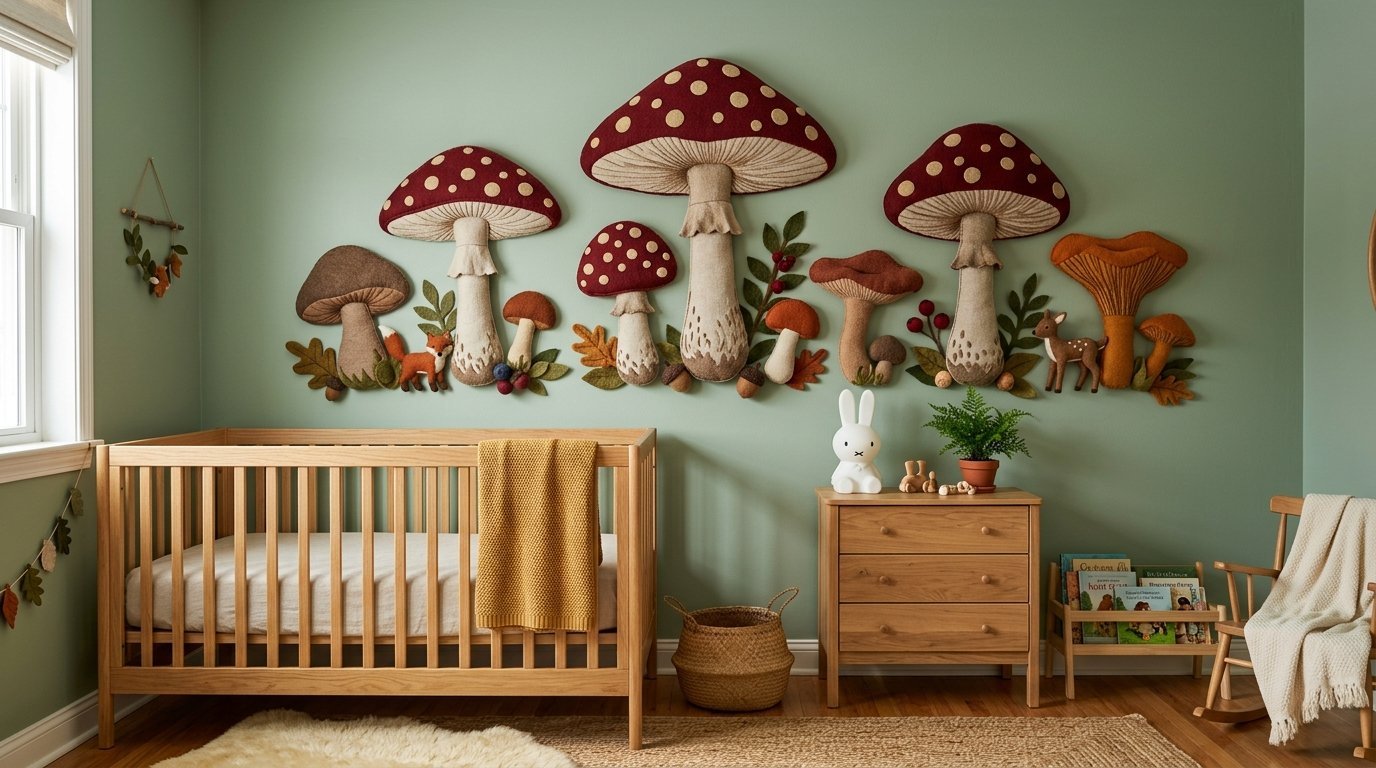
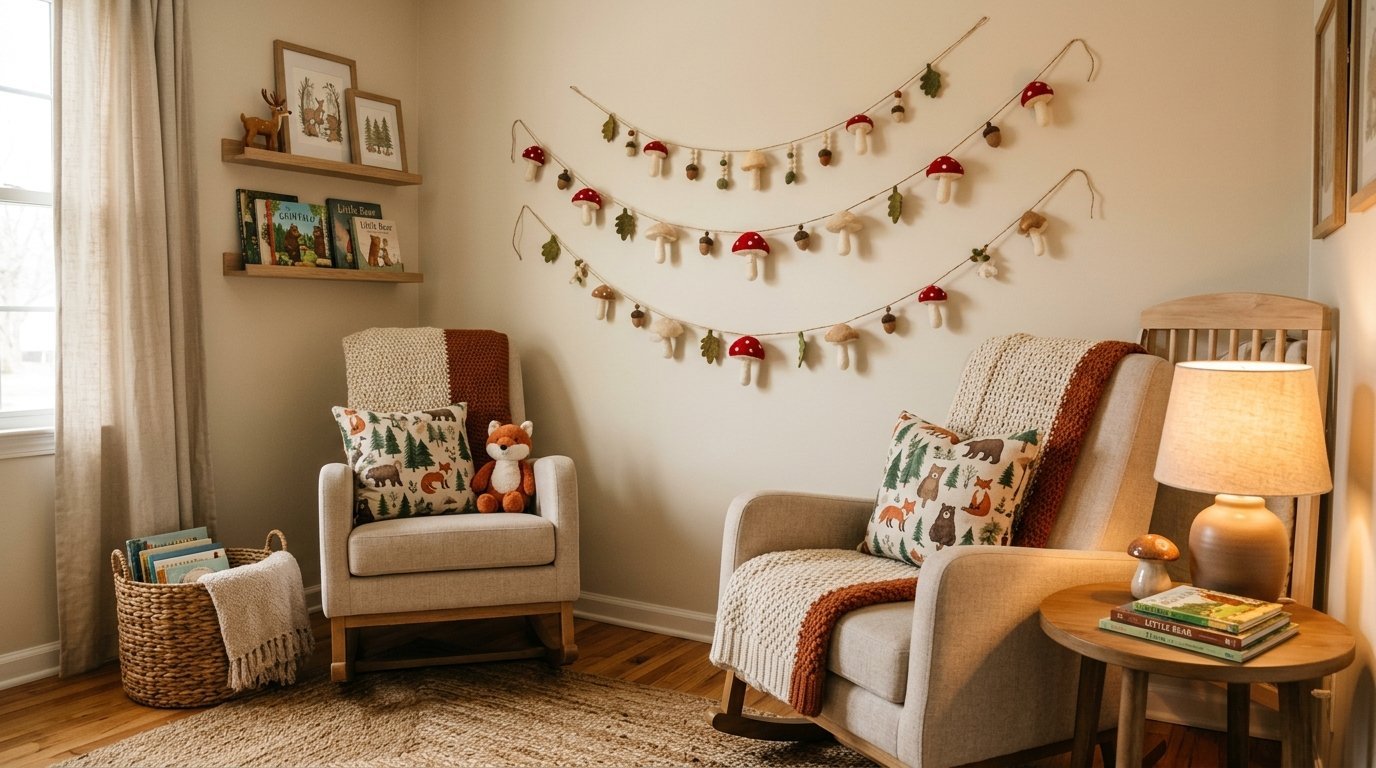
The woodland theme shifted entirely away from basic forest animals. Now, large-scale mushroom visuals dominate the walls. A green nursery looks complete with earth-toned fungi art. These shapes give rooms a grounded, calm feeling. They bring an organic softness to square rooms.
Parents choose felt mushroom garlands for deep texture. Etsy sellers offer handmade versions for forty dollars. Mass-produced plastic versions cost fifteen dollars at retail stores. I prefer the handmade felt pieces. They last longer and look completely custom. The cheap plastic ones break easily and look shiny under artificial light.
Peel-and-stick wallpaper featuring mushroom caps covers entire accent walls right now. Brands like Chasing Paper sell panels for forty-five dollars each. The matte finish hides drywall imperfections perfectly. You can wipe the paper clean with a damp cloth when it gets dusty.
Three-dimensional wooden shelves shaped like mushrooms hold small board books. You mount these wooden pieces directly into the wall studs. They hold up to ten pounds of weight. This functional art saves floor space in smaller rooms.
Whimsical decor relies heavily on these organic shapes. The rounded edges feel soft. The deep reds and earthy browns match most dark wood furniture. You get a room that feels like a quiet forest floor.
Felt garlands collect dust over time. You must vacuum them using a soft brush attachment every single month. Do not wash them in a washing machine. They will lose their shape and shrink immediately.
You can paint a giant mushroom mural if you have artistic skills. Premium paint costs sixty dollars per gallon. Painter tape costs eight dollars. A custom painted wall takes exactly one weekend to finish.
How Do Mountains Fit A Gender Neutral Nursery?
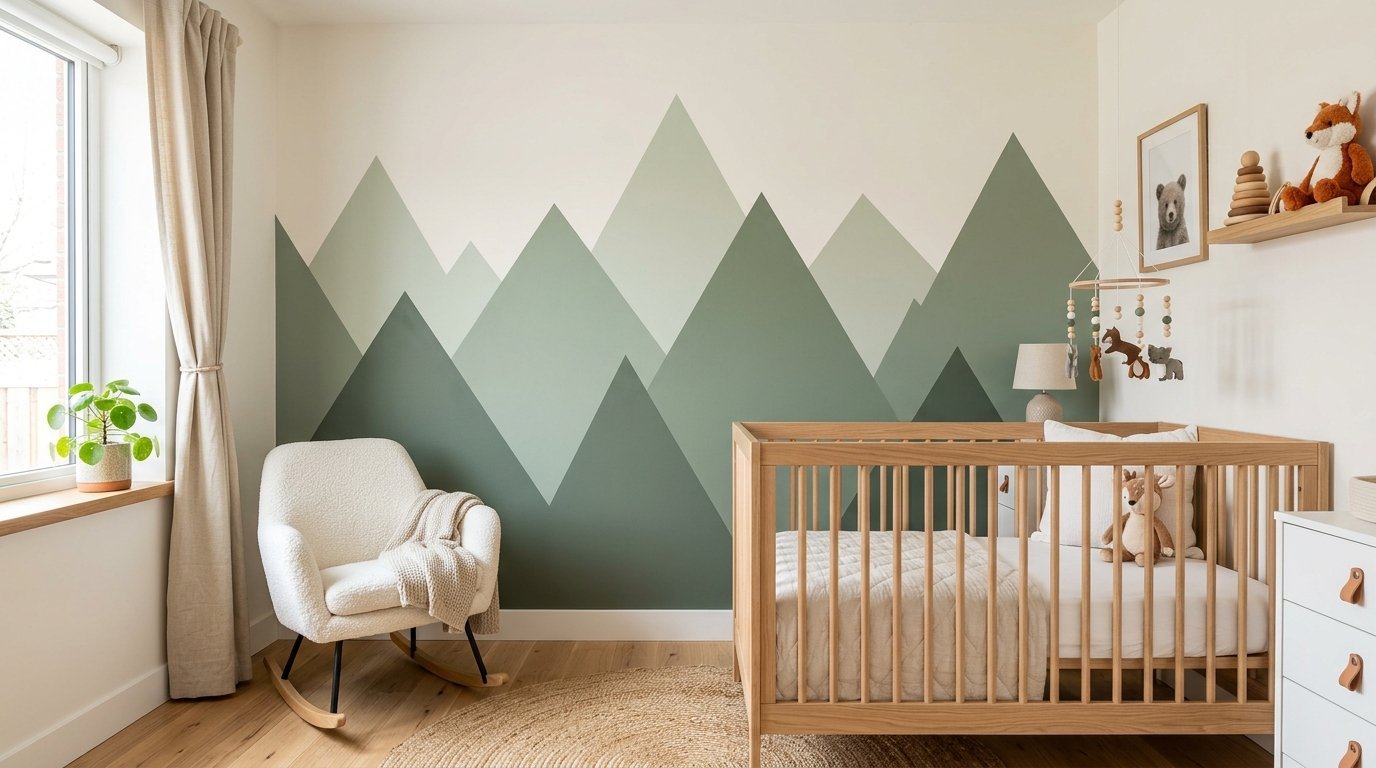
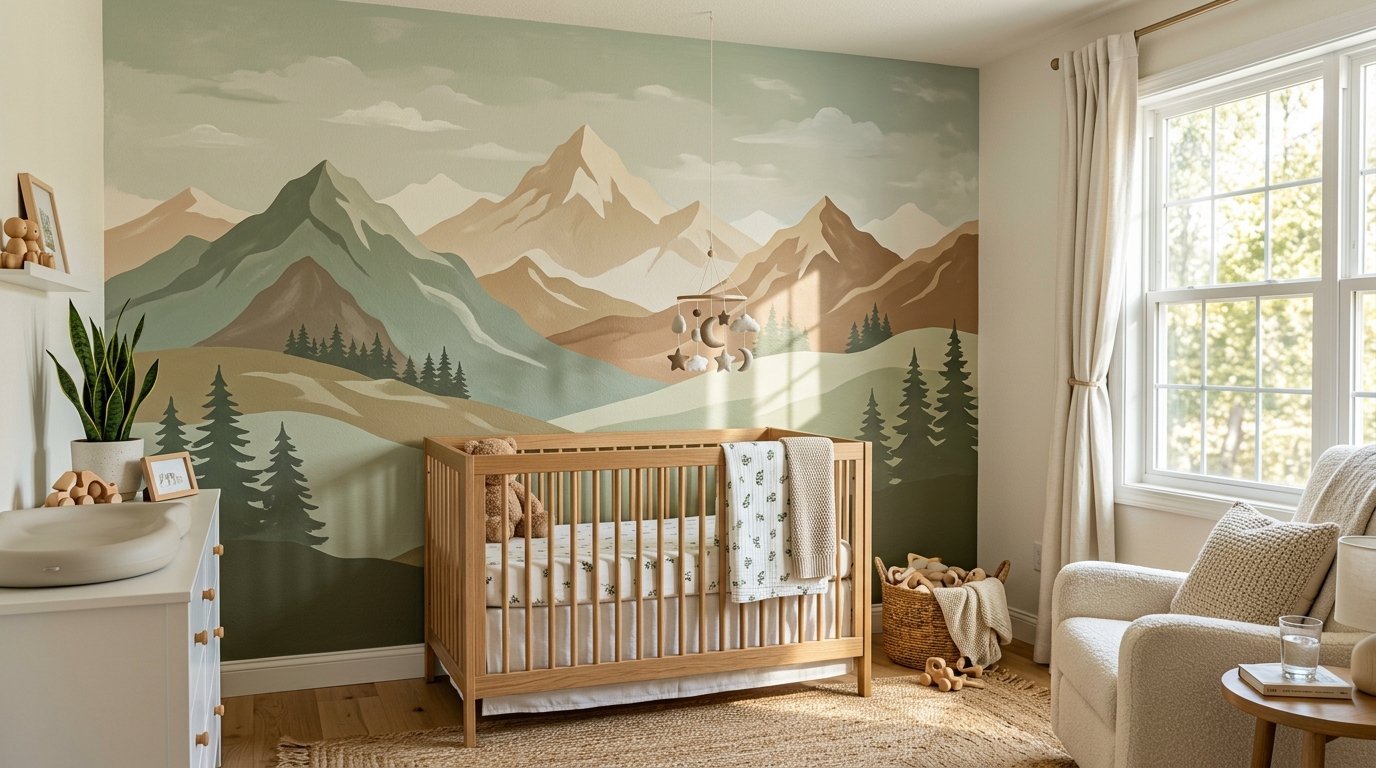
Mountains offer a timeless backdrop for any home. They work flawlessly for a boy or girl. You can paint them directly onto the drywall. This saves a massive amount of money compared to buying custom framed art.
A painted mountain range costs under one hundred dollars to execute. You need three distinct shades of paint. Sherwin Williams Evergreen Fog serves as an excellent base color. You buy a darker shade for the lower peaks. You buy a lighter shade for the highest peaks.
Tape the wall using high-quality painter tape. FrogTape works best for this specific job. It seals the edges and prevents paint bleeding. Press the tape down firmly with a plastic putty knife before opening the paint can.
Apply the lightest color first. Let it dry for exactly four hours. Then, tape the next layer of mountains. Apply the medium color. Wait four more hours. Tape the final layer and apply the darkest color. Remove the tape while the final coat remains slightly wet. This stops the dry paint from peeling off the wall.
Wooden mountain cutouts offer another stylish option. Independent sellers cut them from heavy birch plywood. They range from fifty to two hundred dollars based on the overall size. You fasten them with heavy-duty metal anchors.
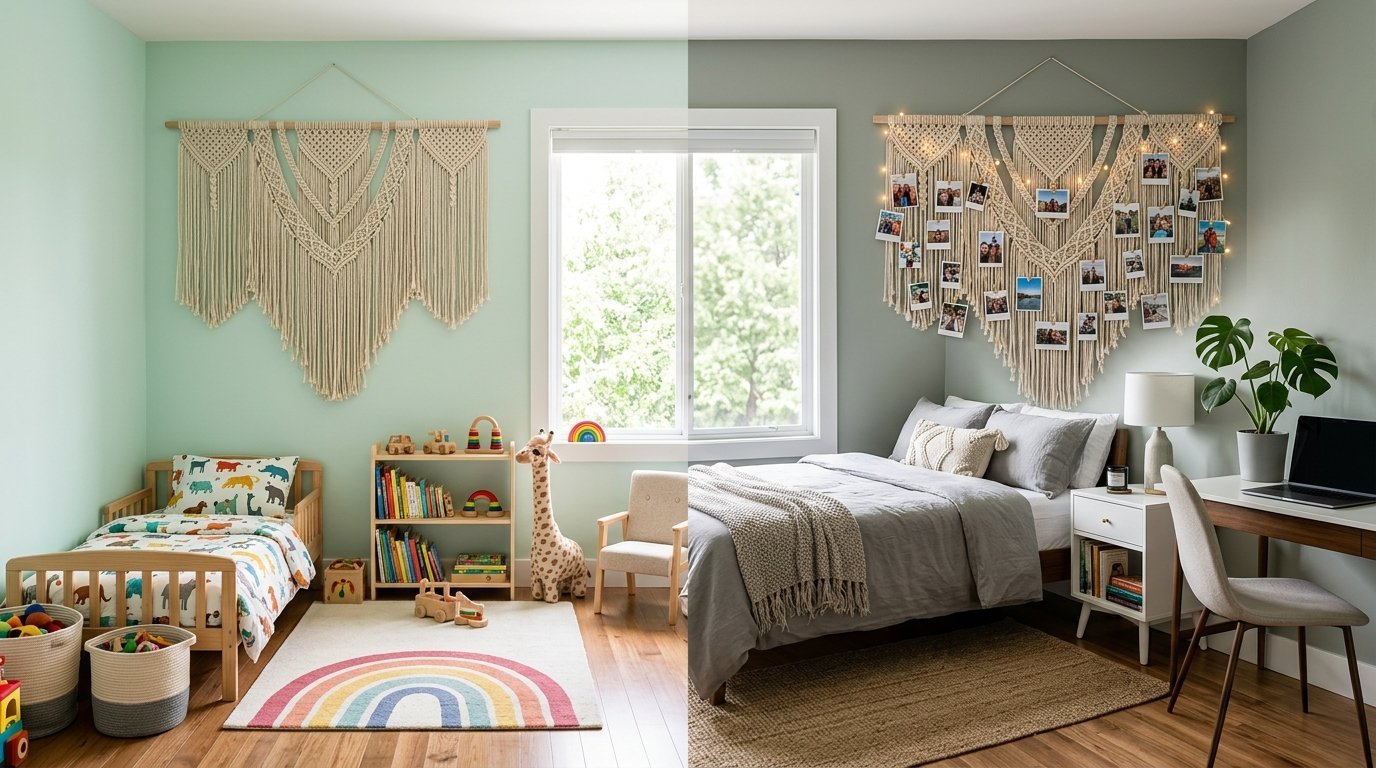
This styling choice outlasts the infant years completely. A mountain theme works perfectly for a toddler. It works brilliantly for a teenager. You do not have to redecorate every three years. This saves thousands of dollars over a decade.
A baby nursery with a mountain theme feels incredibly expansive. The horizontal lines make small rooms look much wider. The overlapping triangles create visual depth. You get a calm, natural environment for sleeping.
What Makes Gingham Pattern A Lasting Choice?
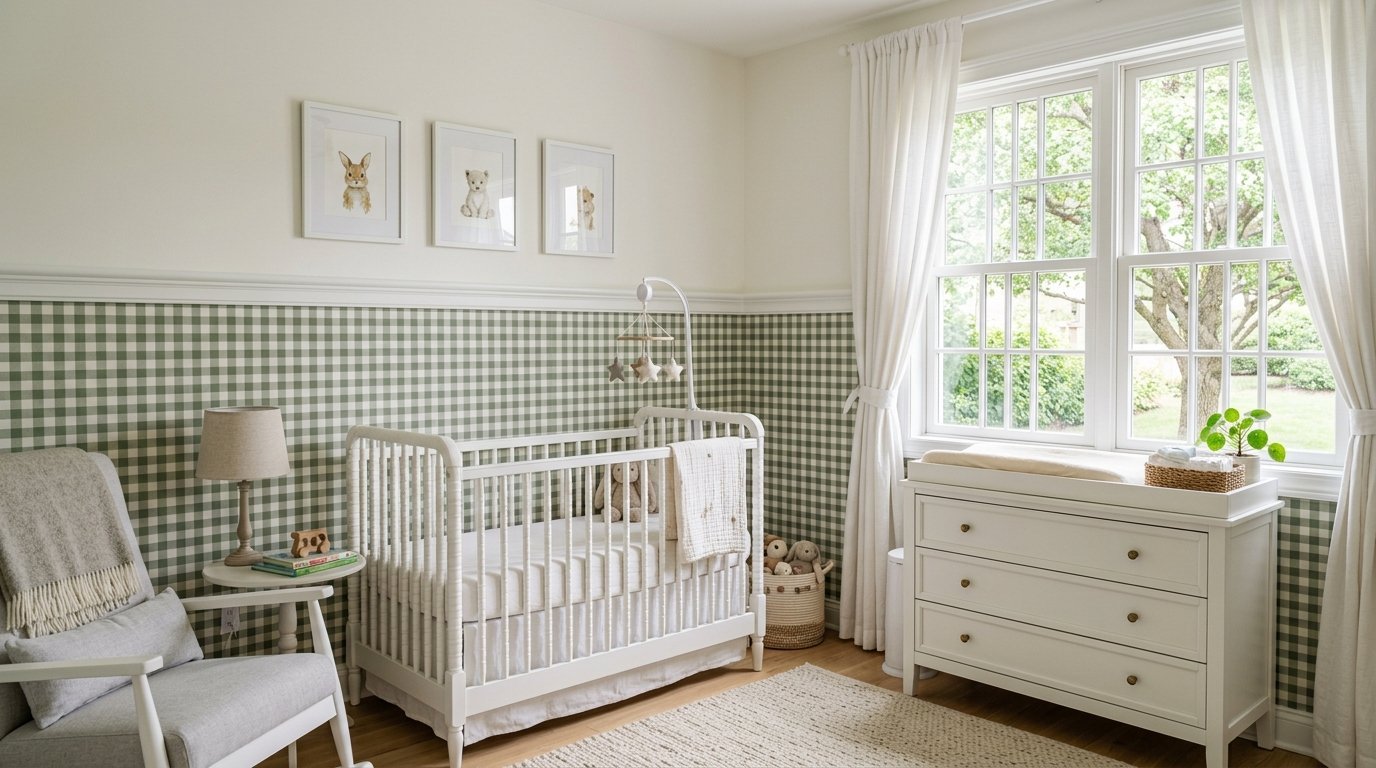
Gingham pattern wallpaper instantly grounds a chaotic room. The uniform squares create visual order. This ordered look balances messy toys and scattered books.
Spoonflower sells prepasted removable gingham wallpaper for ninety dollars a roll. You activate the paste with warm water. It goes up incredibly fast. You can slide it around on the wall to match the seams perfectly.
Peel-and-stick versions cost less money upfront. They run about forty dollars a panel. They are much harder to install. Once they touch the drywall, they stick permanently. You cannot slide them. You have to pull them completely off to fix a crooked seam.
A boy or girl room looks classic with gingham. Sage green gingham fits a green nursery beautifully. Mustard yellow gingham delivers deep warmth. Navy blue gingham looks remarkably sharp against white wooden furniture.
You can limit the pattern to the bottom half of the wall. Install a wooden chair rail at thirty-six inches high. Put the gingham wallpaper directly below the rail. Paint the top half a solid, calming color. This cuts your wallpaper budget entirely in half.
Framed gingham fabric gives you the pattern without the heavy wallpaper commitment. Buy one yard of high-quality cotton gingham for fifteen dollars. Stretch it tightly over a wooden canvas frame. Staple it firmly in the back. Hang it high above the crib.
Nursery room inspiration galleries heavily feature this classic pattern. It gives a vintage, highly tailored feel. It pairs flawlessly with solid colors. It pairs surprisingly well with floral prints. The uniform squares never go out of style.
Why Are DIY Wood Signs A Favorite For Walls?
Three months ago, I tried crafting a farmhouse welcome sign from pine wood. The wood split heavily during the sanding phase. The dark stain bled completely into the lettering. The entire piece ended up in the scrap pile.
I skipped the pre-stain wood conditioner. Pine is a highly porous wood material. It absorbs liquid stain very unevenly. You must apply a pre-stain wood conditioner first. It costs fifteen dollars a quart at the hardware store. It saves your entire woodworking project.
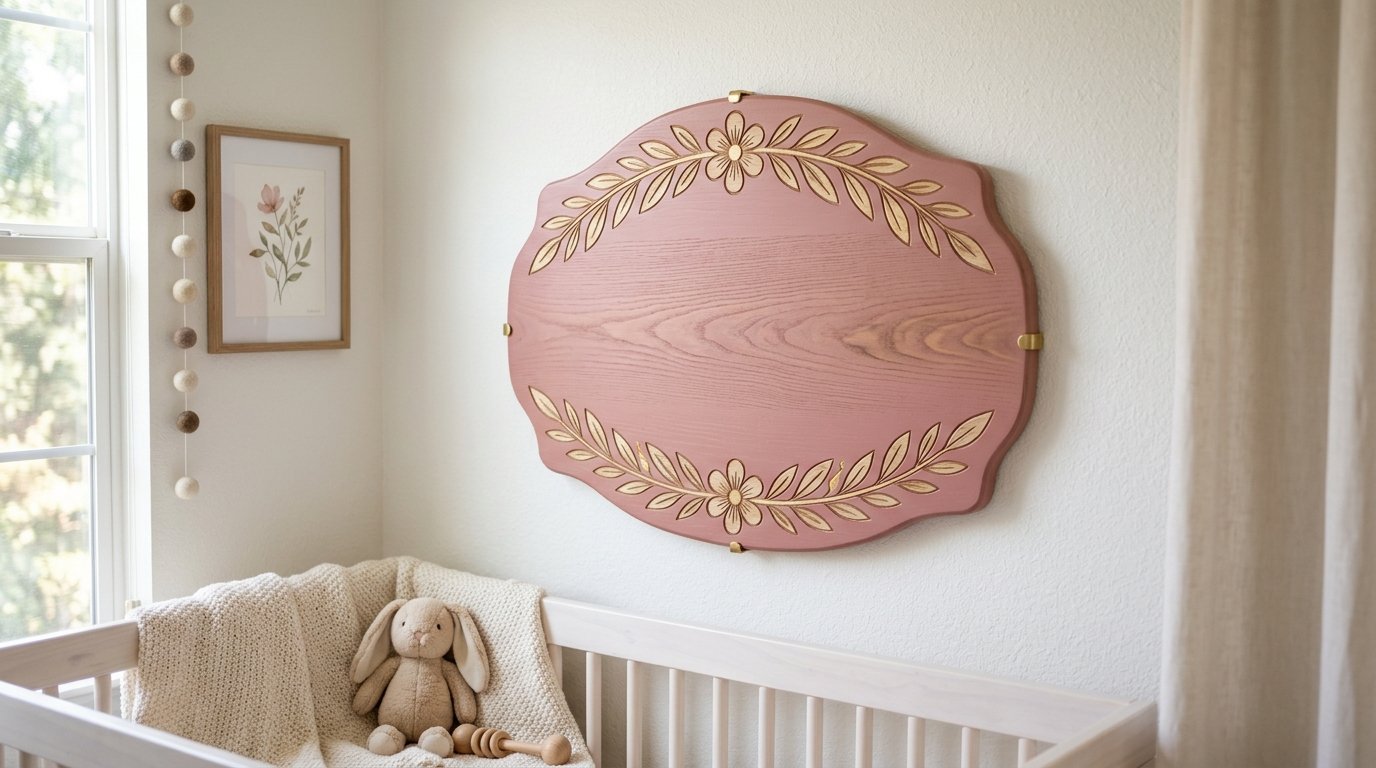
Custom wooden name signs dominate baby nursery walls today. You can buy them on Etsy for one hundred to three hundred dollars. You can make them yourself for about fifty dollars in raw materials.
You need a power jigsaw, an orbital sander, and a printed paper stencil. Trace the letters onto a half-inch MDF board. MDF cuts much cleaner than natural pine. Cut out the letters very slowly. Sand the rough edges until perfectly smooth.
Start with eighty-grit sandpaper. This removes the rough splinters quickly. Switch to one-hundred-twenty-grit sandpaper. This smooths the flat surface. Finish with two-hundred-twenty-grit sandpaper. This prepares the bare wood for liquid paint.
Paint the wooden letters with a high-density foam roller. A foam roller leaves zero brush marks behind. Apply three very light coats of paint. Let each distinct coat dry for two full hours.
Wooden signs provide a stunning focal point. They personalize the sleeping space. You can paint them to match any specific color palette. A natural wood finish fits whimsical decor. A painted white finish fits a clean, modern room.
Keep the heavy signs completely away from hands. A falling wooden letter poses a severe hazard to an infant. Mount them at least six feet above the carpeted floor. Never mount heavy solid wood directly above the crib mattress.
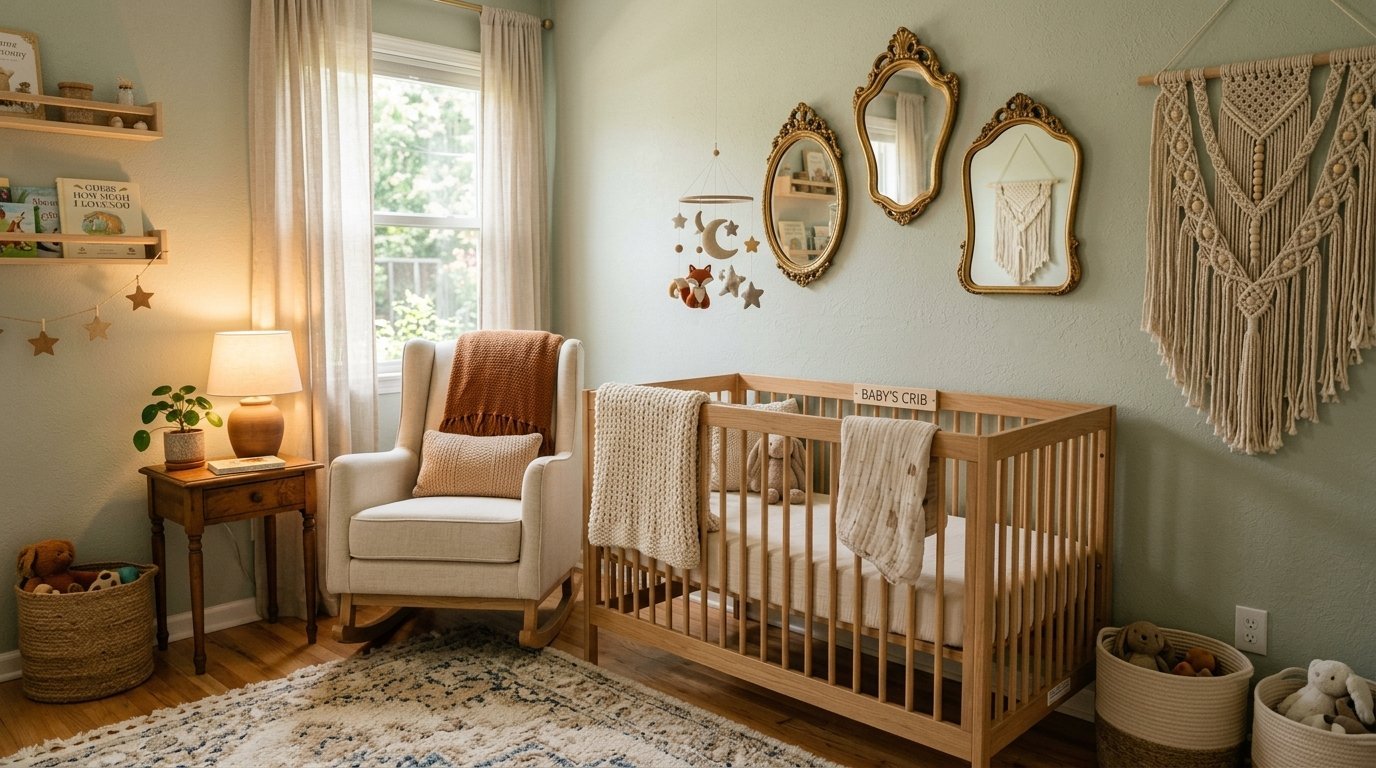
Are Vintage Mirrors Safe For A Baby Nursery?
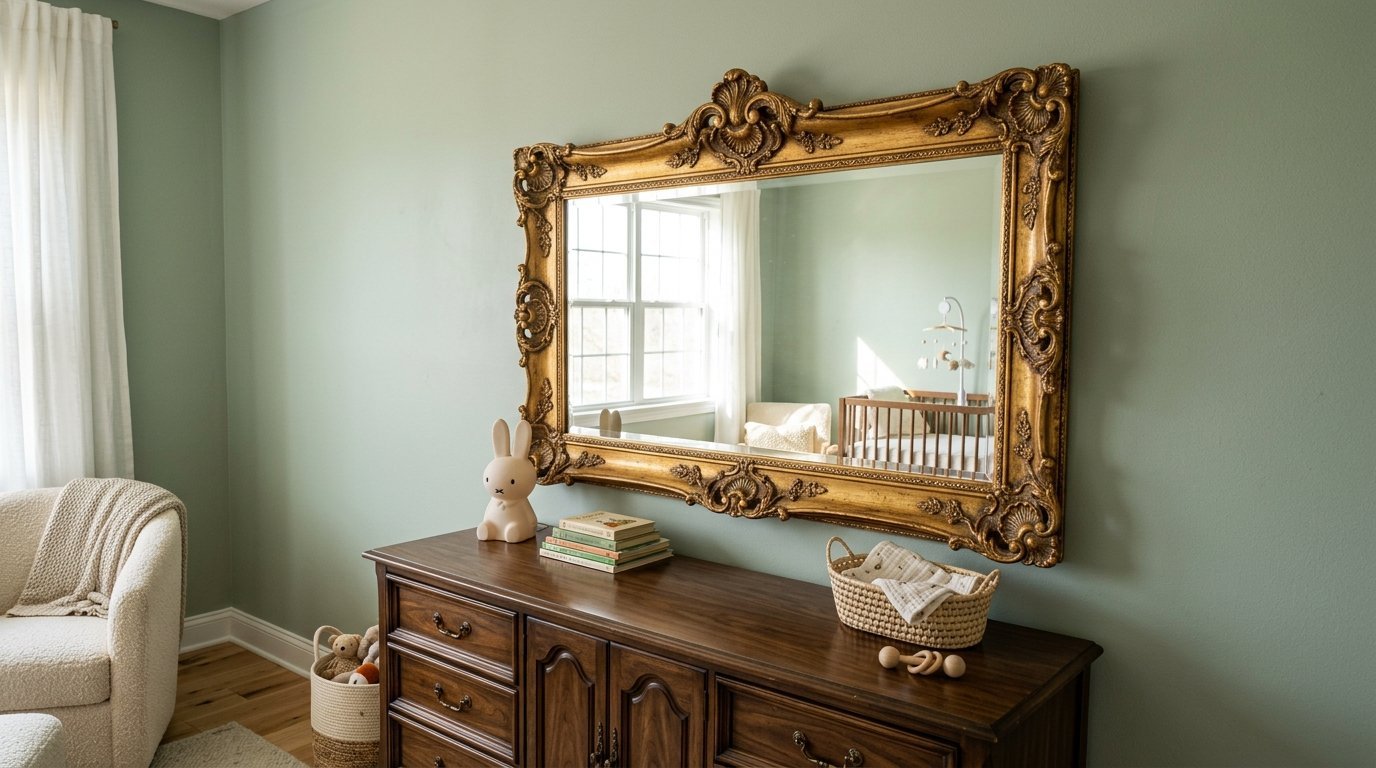
Three years ago, moisture destroyed a framed piece in my hallway. Damp air got behind the wooden frame and rotted the cardboard backing. Last summer, water gathered directly in the bottom crease of a gold-framed circle mirror in my bedroom during a routine cleaning.
I used cheap paper towels to wipe the glass. Those towels left deep scratches across the glass surface and thick lint residue stuck in the tight corners. You must use microfiber cloths and a dedicated glass cleaner. Spray the soft cloth, not the mirror itself. This stops liquid water from pooling inside the metal frame.
Mirrors reflect natural light. They make a tiny room feel twice as big. They reflect window light straight into dark corners. A vintage mirror provides deep character to an otherwise modern room.
Physical safety is the absolute priority here. Vintage mirrors weigh a massive amount. The old glass is incredibly thick and heavy. You cannot trust old hanging wire to hold that weight.
Replace the rusty wire with a modern French cleat system. A metal French cleat holds up to two hundred pounds easily. You screw one side tightly into the wooden wall studs. You screw the other side straight into the mirror frame. The metal pieces lock completely together. The mirror will never swing or fall.
Shatterproof acrylic mirrors offer a strictly safer alternative for low walls. You can mount them safely at floor level. Babies love looking at themselves during tummy time. Acrylic does not break. It scratches easily, so wipe it very gently.
A large vintage mirror anchors the entire room. It gives you a designated place to check your outfit while holding the baby. It fits the whimsical decor theme flawlessly with ornate gold detailing.
Why Does Macrame Deliver Boho Warmth To The Walls?
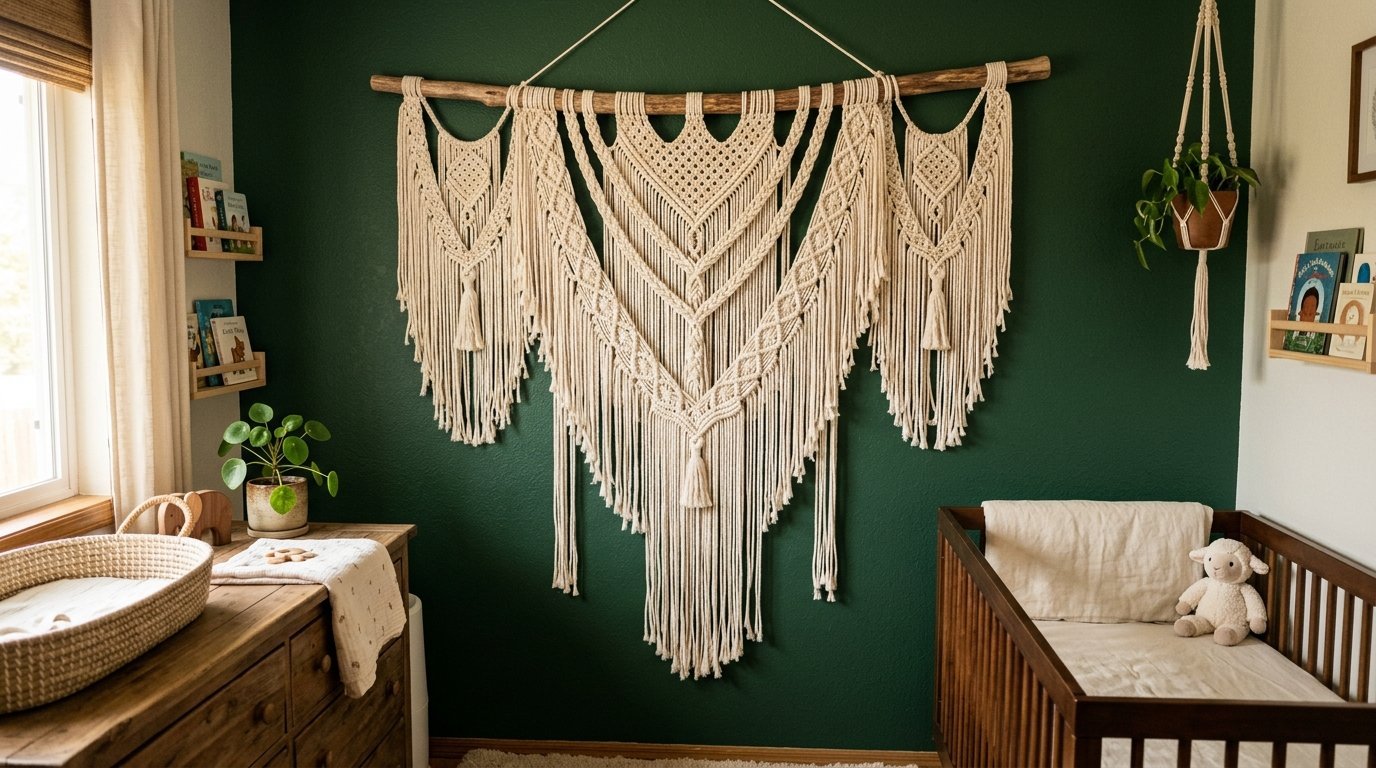
Macrame wall hangings give a room instant, touchable texture. The woven cotton cords look incredibly soft. They absorb ambient sound, which helps keep the room dead quiet during afternoon naps.
You can buy mass-produced macrame at big box stores for thirty dollars. They feel stiff to the touch. They use cheap synthetic fibers. Handmade macrame from independent artists costs between one hundred and four hundred dollars. They use one hundred percent natural cotton string.
I make custom macrame wall hangings frequently. A large piece takes fifteen uninterrupted hours of tying. You have to measure the raw cord exactly. You have to pull every single knot with the exact same physical tension.
The natural off-white color fits a gender neutral nursery perfectly. It blends smoothly into white walls for a highly subtle look. It stands out sharply against a dark green nursery wall.
Dusting thick macrame requires a sticky lint roller. Run a fresh lint roller over the cords every two weeks. This picks up the settling dust without pulling the tight knots apart.
Keep the long bottom fringe strictly away from hands. Babies will pull hard on the hanging strings. Mount the wooden dowel rod high on the drywall. Ensure the lowest hanging string stays at least two feet above the top crib rail.
You can dye thick macrame cord easily. You can dip-dye the bottom fringe directly in a colored liquid dye bath. A sage green dip-dye gives the piece a completely custom look. It ties the room colors together beautifully. It looks highly natural and earthy.
Which Wall Decal Materials Perform Best?
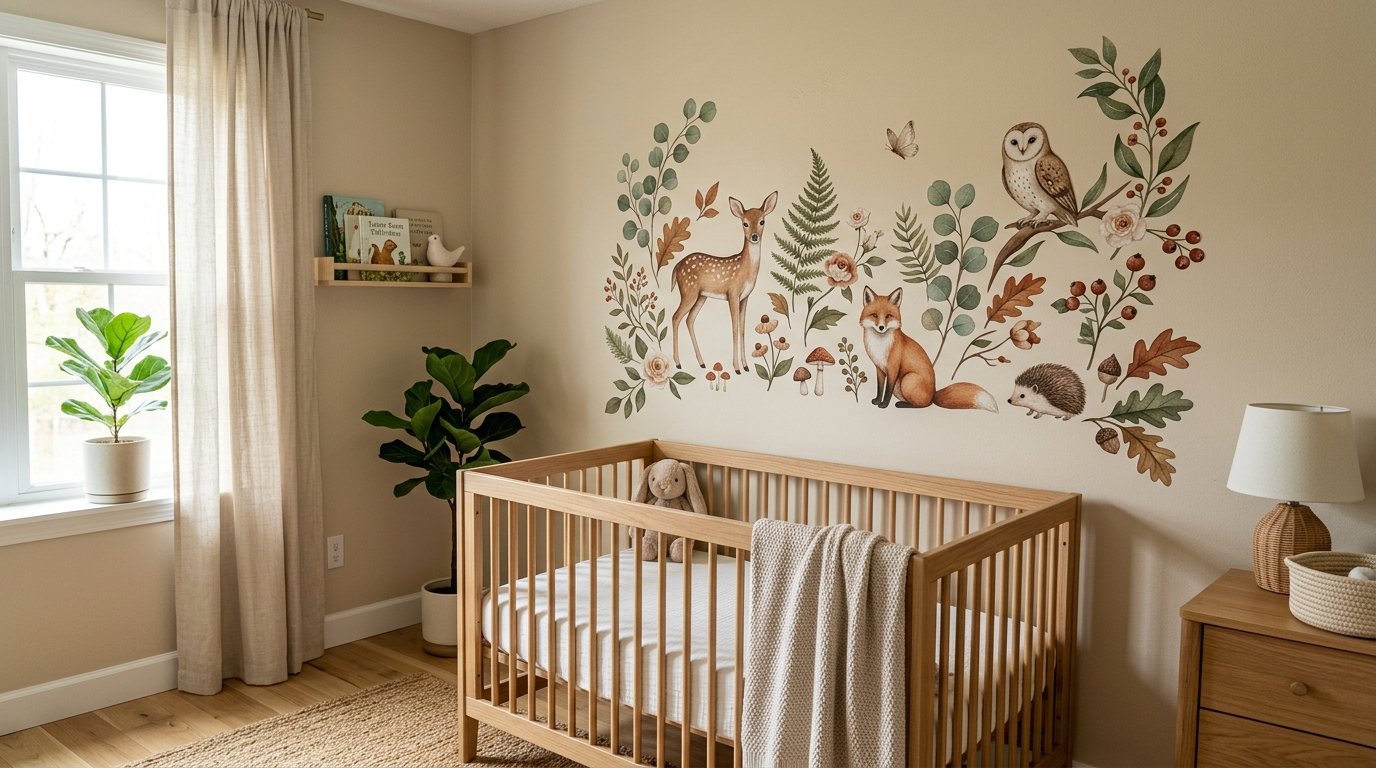
Wall decals offer a lightning-fast way to change a room visually. You peel them off the wax paper. You stick them directly to the wall. You can remove them cleanly when you eventually move out.
Material Comparison List
Vinyl Decals
- Cost: Fifteen dollars for a large pack
- Reusability: Zero
- Texture: Glossy plastic finish
- Wall Damage Risk: High on painted drywall
Fabric Decals
- Cost: Forty dollars for a large pack
- Reusability: Very high
- Texture: Matte canvas finish
- Wall Damage Risk: Extremely low
Vinyl decals lose their stickiness immediately if you move them. You have exactly one chance to get the placement right. Fabric decals are fully repositionable. You can peel them off and move them five different times without losing adhesion.
Urban Walls makes premium woven fabric decals. Their woodland animals look exactly like hand-painted art. Project Nursery sells excellent large-scale floral fabric decals.
Installation requires extreme patience. Clean the painted wall with a damp cloth first. Let it dry completely for an hour. Settled dust ruins the chemical adhesive. Start peeling slowly from the top edge.
Smooth the sticky decal down with a soft felt squeegee. A hard plastic squeegee will scratch the printed ink right off the surface.
Decals work perfectly for a flexible nursery room design. You can easily swap them out in three years. You get a massive visual upgrade for a very low time investment. They require zero power tools to install properly.
How To Execute A Green Nursery Theme?
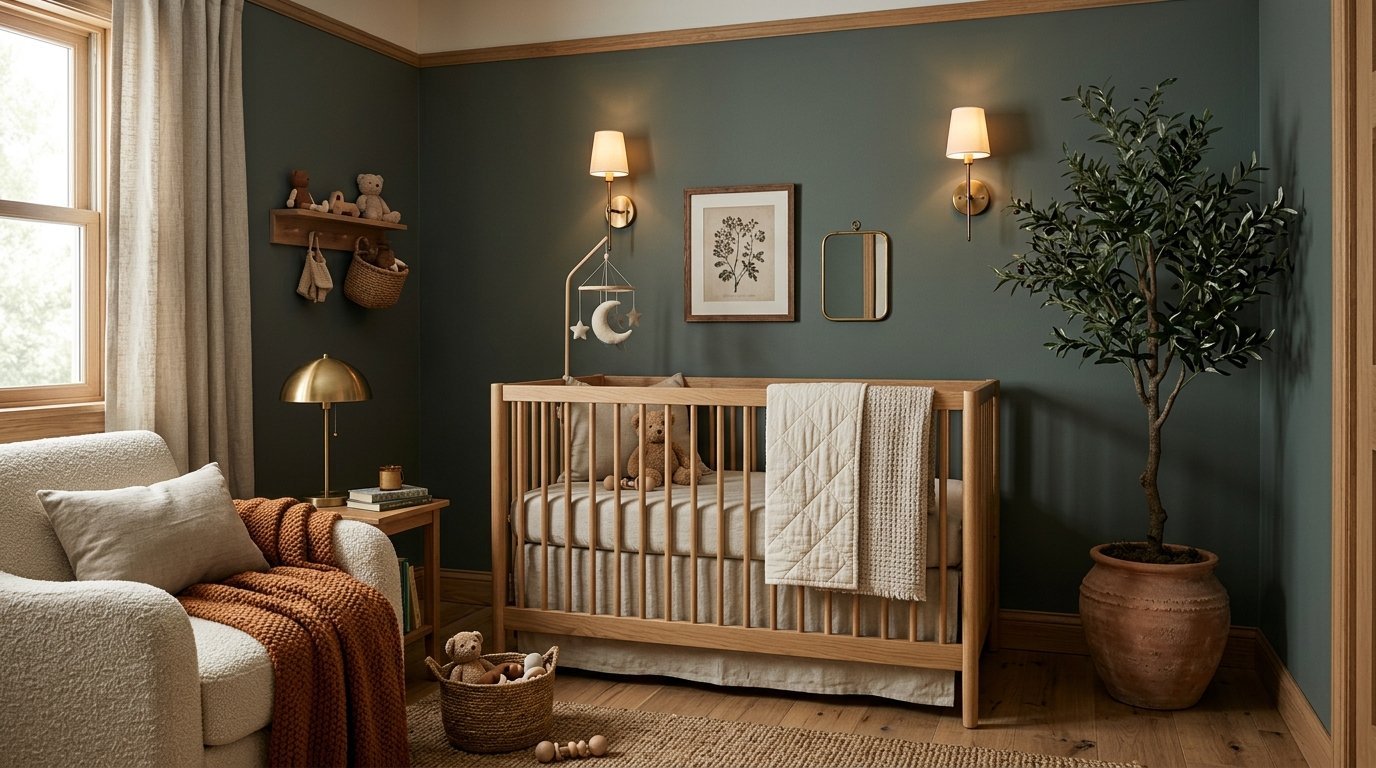
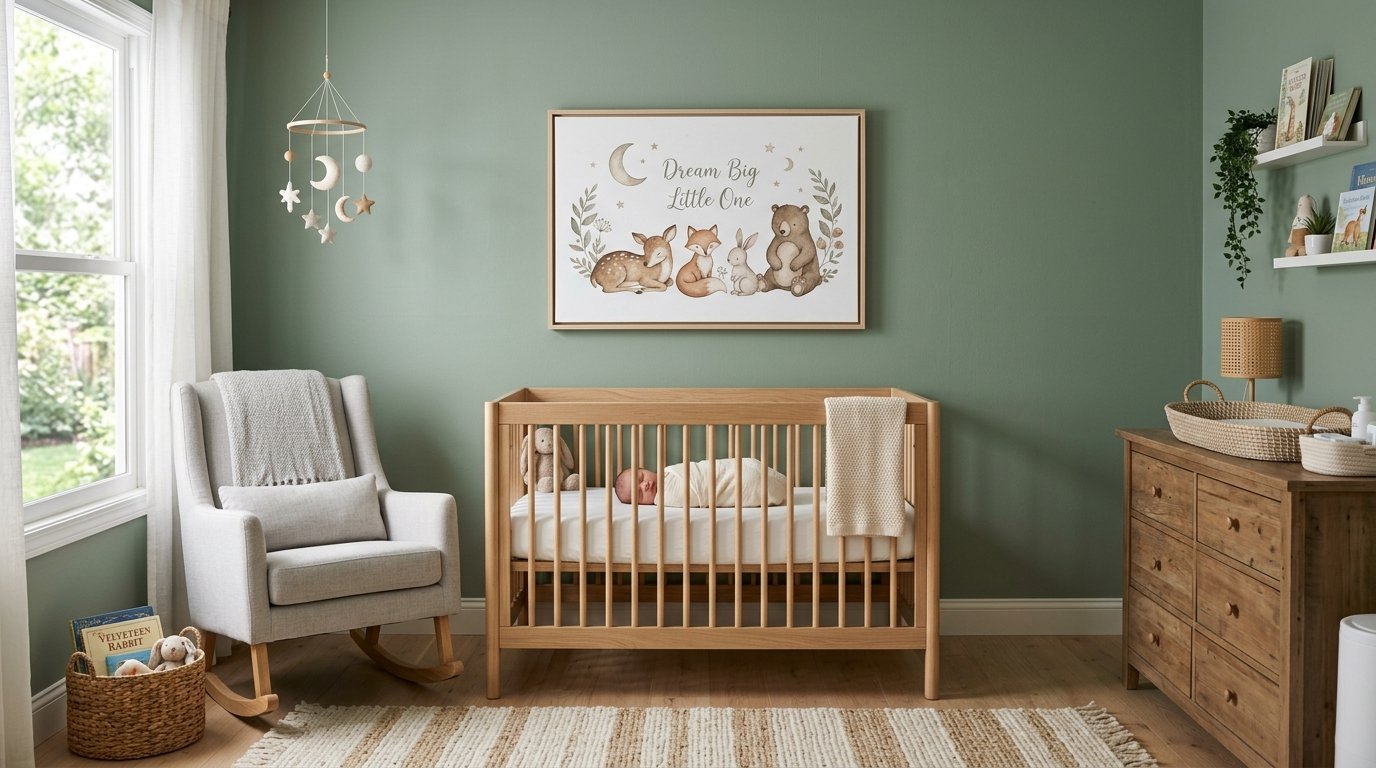
Green acts as a completely neutral color in a baby nursery. It mimics the deep woods. It calms the tired eyes of sleep-deprived parents.
Sherwin Williams Evergreen Fog is an incredibly popular choice right now. Benjamin Moore October Mist offers a much lighter alternative. Paint all four walls for a moody, highly cozy feel. Paint only one accent wall to keep the small room bright.
Live plants naturally clean the indoor air. They belong in a green nursery. You must pick highly safe plants. Spider plants are non-toxic to cats, dogs, and babies. Boston ferns are completely safe to keep indoors.
Avoid deeply toxic plants entirely. Pothos, snake plants, and philodendrons are highly toxic if eaten by an infant. Keep them entirely out of your house.
Fake plants give the exact same look without the poisoning risk. High-quality faux olive trees cost about one hundred dollars online. They need zero sunlight. They need zero tap water. You just wipe the plastic leaves with a damp microfiber cloth monthly.
Combine dark green paint with natural, warm wood tones. Solid oak cribs look stunning against dark green walls. Dark walnut dressers ground the bright space visually.
Use solid brass hardware to give the room warmth. A brass wall sconce next to a green wall looks incredibly expensive. It upgrades the entire nursery room design instantly. This specific color palette ages beautifully over time. It transitions seamlessly from an infant room directly to a toddler space.
What Are The Real Costs Of Premium Wall Art?
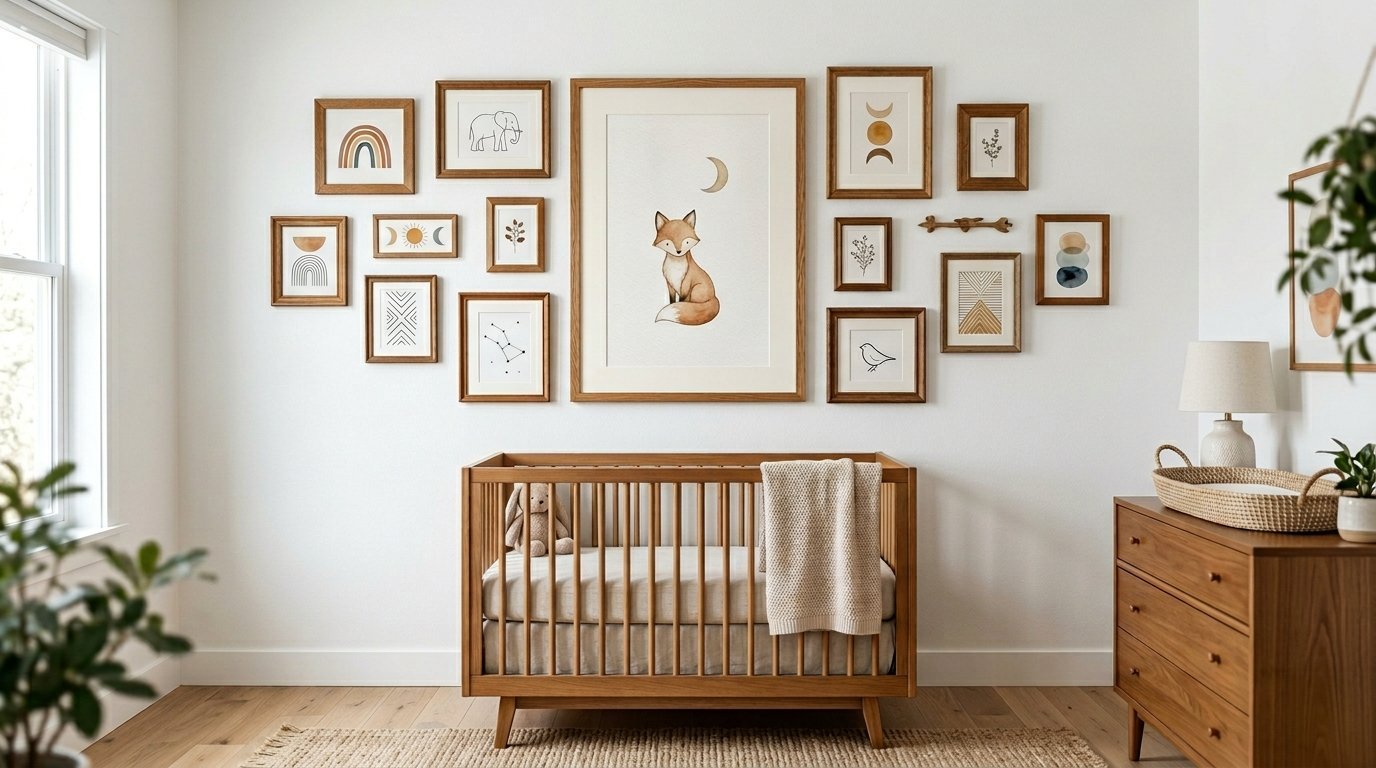
Budgeting for nursery art shocks most new parents. A single professionally framed print can easily cost three hundred dollars.
Original canvas oil paintings cost between five hundred and two thousand dollars. You pay directly for the artist’s time and the expensive raw materials.
Digital downloads save a massive amount of money. You buy a digital file on Etsy for six dollars. You print it at a local professional print shop for twenty dollars. You buy a solid frame at a thrift store for five dollars. You get massive wall art for exactly thirty-one dollars.
Thrift store frames require some manual labor. You have to remove the old, ugly art first. You might have to spray paint the scratched frame. A single can of matte black spray paint costs six dollars.
Custom professional framing is incredibly expensive. Framebridge charges one hundred and fifty dollars to frame a medium-sized paper print. Michael’s charges very similar high prices for custom work.
Gallery walls look terribly cheap if you use flimsy plastic frames. Buy solid wood frames exclusively. Buy frames with real glass, not cheap styrene plastic. Real glass always looks perfectly clear.
You can successfully mix high and low items together. Spend big money on one large, high-quality framed piece directly above the dresser. Surround it completely with inexpensive digital prints placed in thrifted frames. This balances the tight budget while maintaining a highly premium look.
Frequently Asked Questions
How high should art hang above a crib?
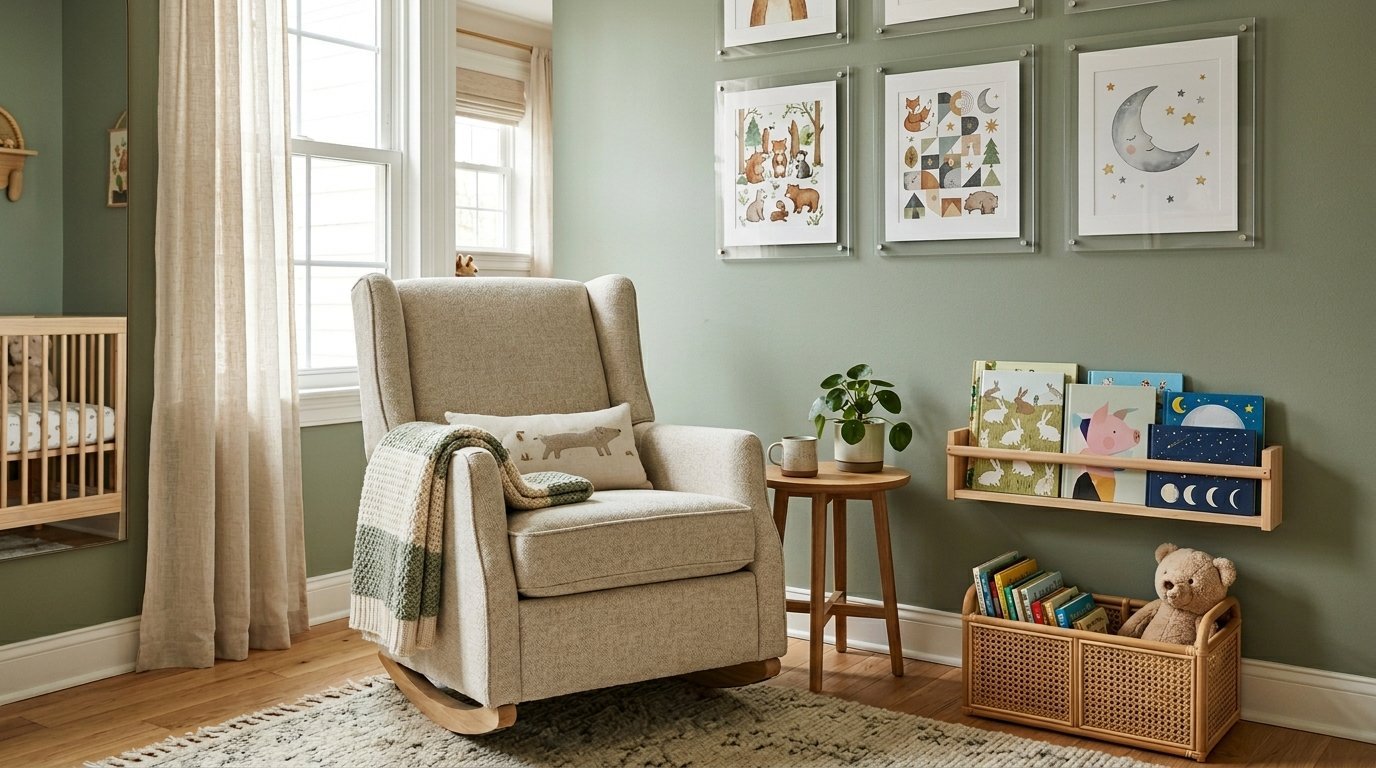
Hang framed art at least ten inches above the highest point of the wooden crib railing. If the baby stands up, they should not be able to touch the bottom edge of the frame. Use heavy hardware that locks straight into the wall studs for safety. Do not rely on standard plastic drywall anchors for heavy items near the sleeping area. You want the piece high enough to prevent grabbing, but low enough to remain visually connected to the floor furniture. Measure twice before drilling any holes.
Are acrylic frames safer than glass?
Yes. Thick acrylic does not shatter upon hard impact. If an acrylic frame falls from the painted wall, the front panel stays completely intact. Traditional glass shatters into dangerous sharp shards that scatter instantly across the carpeted floor. Acrylic weighs significantly less than traditional glass. This puts much less physical strain on your drywall anchors and metal hanging hardware. Acrylic scratches very easily, so clean it gently with a clean microfiber cloth. Do not use abrasive paper towels or harsh ammonia-based cleaners on the soft acrylic surface.
How do I remove decal residue from drywall?
Use a standard hair dryer on a low heat setting. Warm the sticky adhesive for thirty full seconds. Wipe the remaining residue with a soft microfiber cloth dipped strictly in warm soapy water. Do not use harsh chemical solvents like acetone or bleach. Solvents will strip your expensive wall paint instantly. Scrubbing too hard with a rough sponge will leave highly visible dull spots on your glossy paint finish.
Can I put wallpaper on textured walls?
No. Peel-and-stick wallpaper will definitely fall off heavily textured walls within weeks. The chemical adhesive needs a perfectly smooth, completely flat surface to grab onto. You must skim coat the bumpy wall with wet drywall mud first. Sand it perfectly smooth before hanging the paper. If you skip this preparation phase, air bubbles will form rapidly under the paper, and the heavy sheets will peel away from the top corners.
What is the safest paint finish for a baby nursery?
An eggshell finish is the absolute best choice for these rooms. It has a very slight sheen. You can wipe it completely clean with a damp household sponge. Flat paint absorbs dirty stains and black scuffs incredibly easily. Semi-gloss paint looks way too shiny and heavily magnifies every single drywall flaw in the room. Eggshell hides the flaws while giving you a scrubbable surface for future messes.
How long does a painted mural take to cure?
Standard latex paint feels dry to the touch in exactly two hours. It takes thirty full days to fully cure and harden. Do not scrub the painted wall or lean heavy furniture against it for one entire month. The soft paint will dent or peel rapidly if you touch it too early. Keep the room temperature stable during this thirty-day curing window to prevent the fresh paint from cracking.
Is a gingham pattern too busy for a small room?
Large-scale gingham patterns make a tiny room feel significantly larger. Small-scale, highly tight gingham patterns make a small room feel very cramped. Choose a printed wallpaper with colored squares that are at least four inches wide for a small space. The larger geometric scale forces the human eye to look upward, making the ceiling feel much taller than it actually is.
How do I clean a macrame wall hanging?
Take the entire piece outside and shake it very gently. Run a sticky lint roller over the flat knotted sections. For detailed spot cleaning, dab the dirty cord strictly with a damp white cloth and mild liquid dish soap. Never put a macrame piece in a mechanical washing machine. The heavy agitation will untie the intricate knots and ruin the fringe completely.
Will a gender neutral nursery look too beige?
It will look entirely beige if you only use beige furniture and paint. Mix in deep greens, warm terracottas, and bright mustard yellows. Use distinctly different physical textures like rough wood, soft cotton, and shiny metal. Deep texture stops a visually neutral room from looking totally flat or boring.
How heavy is a standard wooden name sign?
A three-foot-wide wooden name sign cut from half-inch MDF weighs about five pounds. A similar sign cut from solid oak weighs closer to twelve pounds. You must use heavy-duty metal wall anchors rated for fifty pounds to be completely safe. Never trust a small picture nail to hold a heavy piece of solid wood over a child.
Can I use Command strips for nursery art?
Command strips work very well for light paper items under three pounds. Do not use them for heavy glass mirrors or thick wooden signs. Rapid temperature changes and high summer humidity make the strip adhesive fail completely. The heavy art will fall off the drywall unexpectedly. Always use metal screws and plastic wall anchors for anything that weighs more than a few pounds.
How do I fix a peeling wall decal?
Warm the slowly peeling edge with a standard hair dryer for ten seconds. Apply a tiny dot of standard purple glue stick directly to the back of the vinyl decal. Press it firmly against the painted wall. Hold it strictly in place with a soft dry cloth for one full minute. The glue will dry clear and stop the decal from curling up again.
Does a nursery need a theme?
No. A highly specific theme like jungle animals or outer space strictly limits your future design choices. Pick a broad color palette and a general feeling instead. Whimsical decor works beautifully without a rigid visual theme. This makes the physical room infinitely easier to update later when the baby grows into a highly opinionated toddler.
What kind of wood is best for custom shelves?
Thick birch plywood offers the absolute highest strength-to-weight ratio available. It does not warp easily under heavy loads. Solid cheap pine is very prone to splitting when you drive screws into it. Solid oak looks absolutely beautiful but weighs an incredible amount and requires massive metal wall anchors to stay up.
How do I make a gallery wall look cohesive?
Use solid frames of the exact same color or identical material. Space the heavy frames exactly two inches apart on all sides. Layout all the frames on the carpeted floor first. Cut cheap paper to the exact size of each frame and tape the paper pieces to the drywall to check the visual layout before drilling any holes.
Final Thoughts On 2026 Nursery Wall Decor
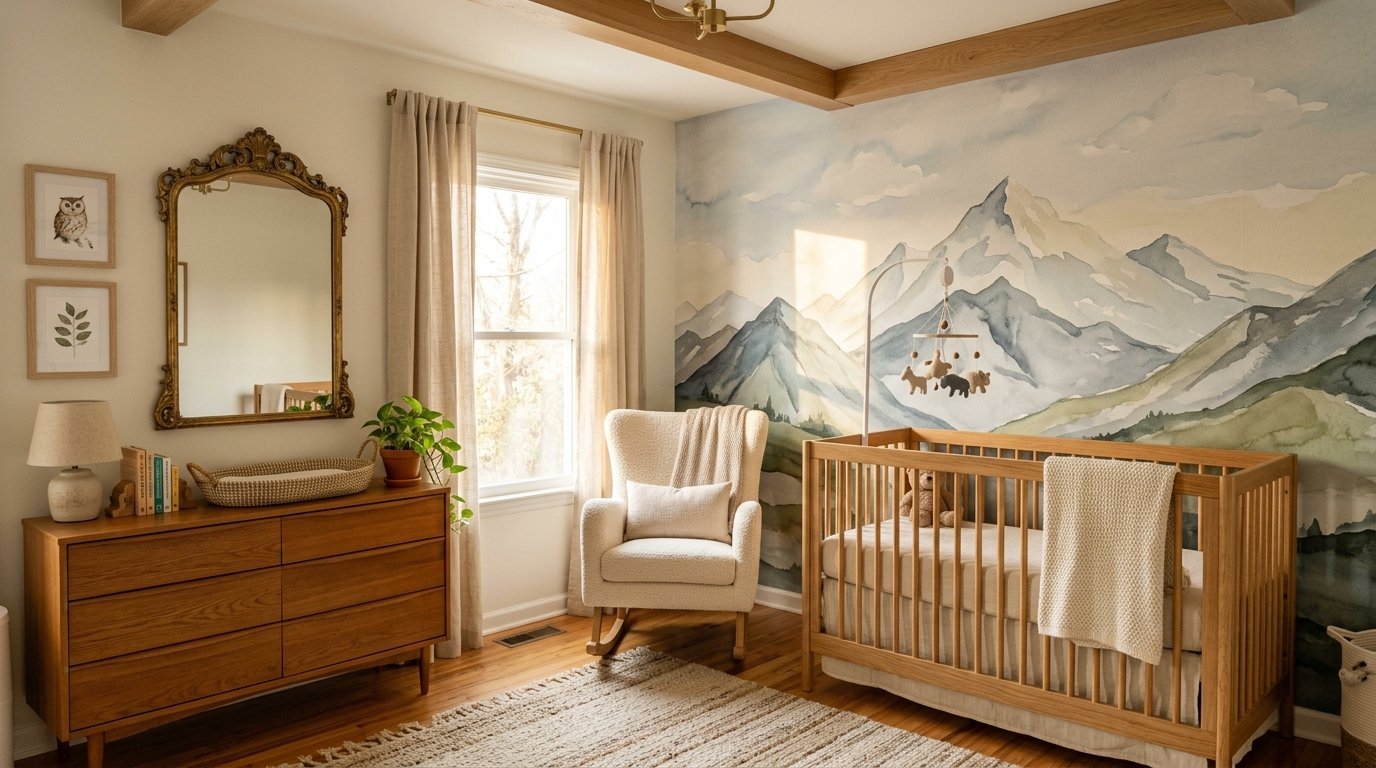
Decorating a baby nursery involves deeply balancing safety, cost, and long-term style. You now know exactly how to hang heavy vintage mirrors securely. You have the exact steps required to paint a mountain mural. You know why handmade felt mushrooms outlast cheap plastic alternatives.
Your walls set the tone for the entire sleeping room. Take the extra time to prep your drywall surfaces properly. Spend extra money on highly safe metal mounting hardware. Avoid quick adhesive fixes for heavy items that could fall.

Anya Castellan is the Founder and Editor-in-Chief of Home Wall Trends. An art history graduate of the Rhode Island School of Design with twelve years of experience writing for leading American design publications, she specializes in composition, gallery wall theory, and the quiet architecture of domestic space. A former contributing editor at Architectural Digest and guest lecturer at Parsons School of Design, Anya personally reads and signs off on every piece before it is published.