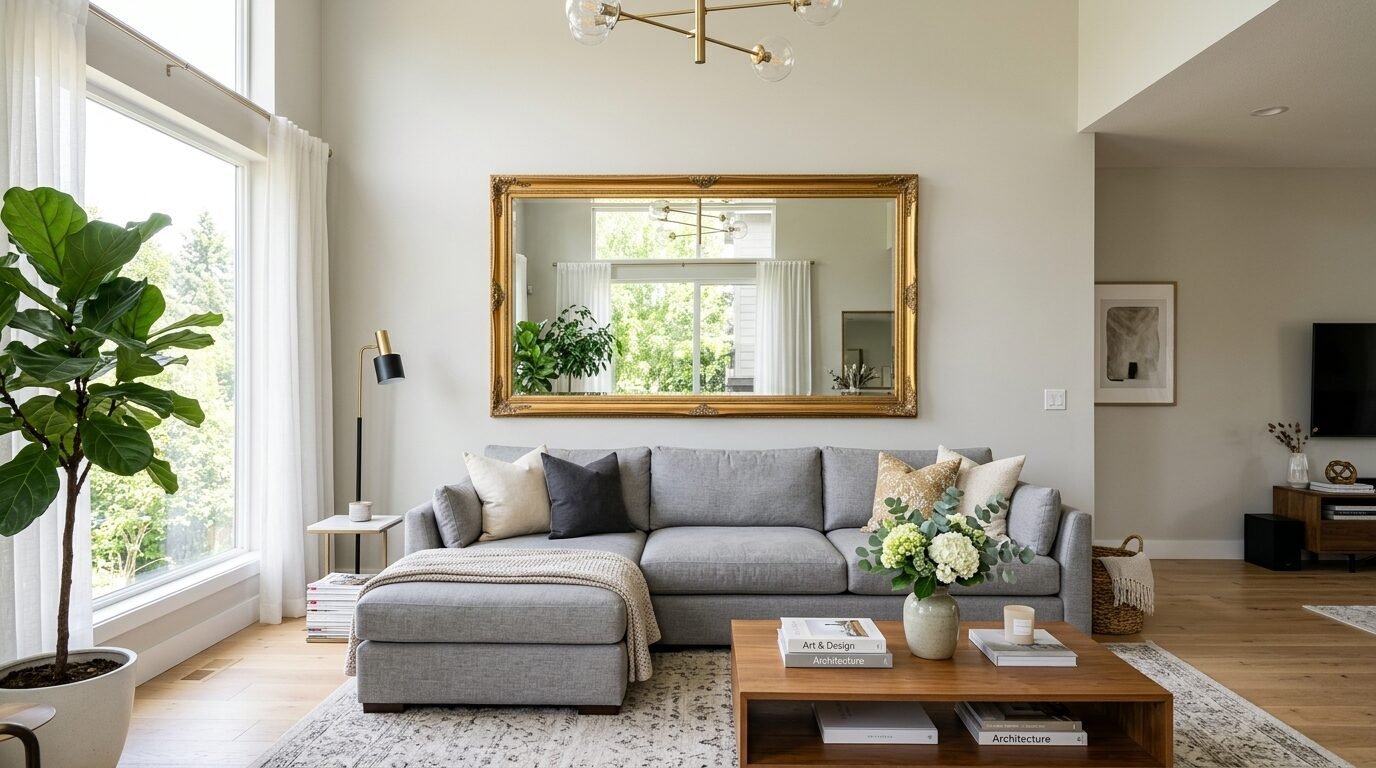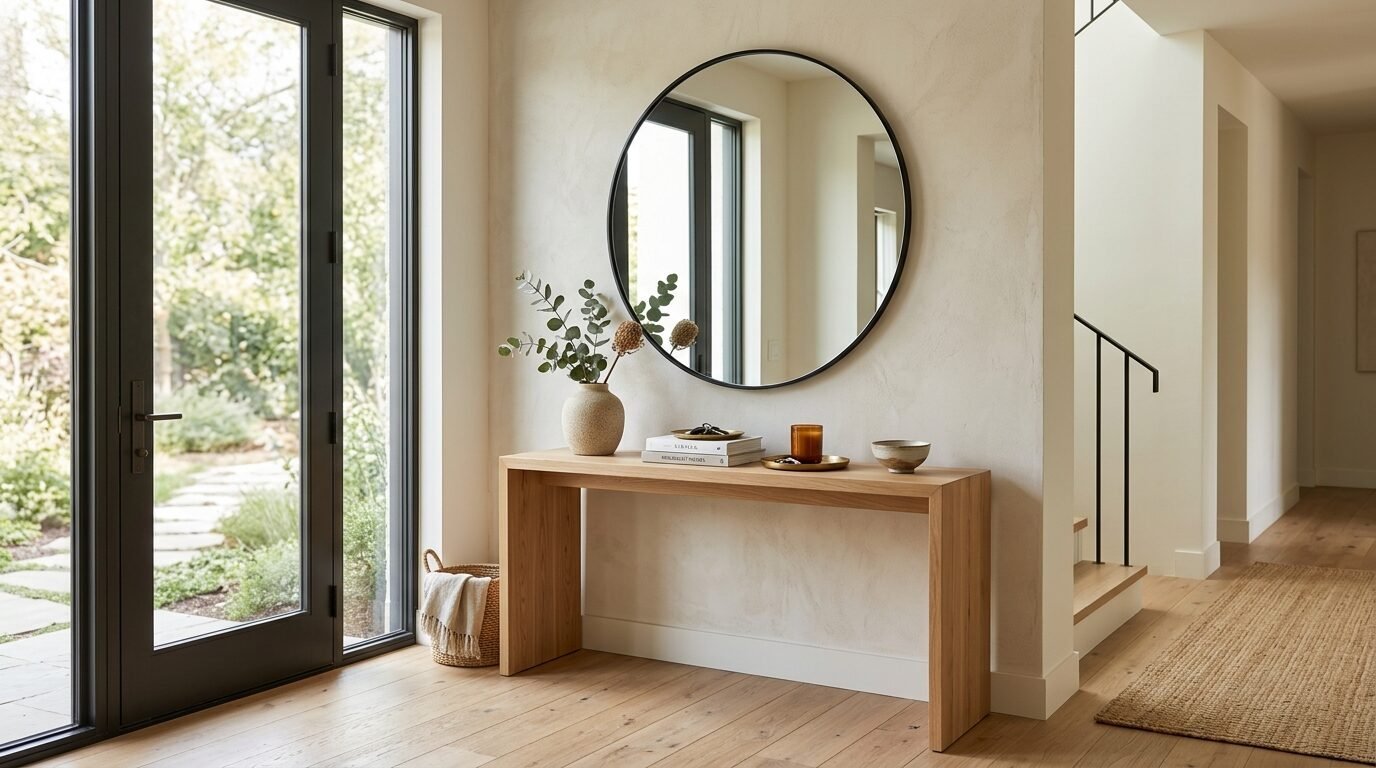
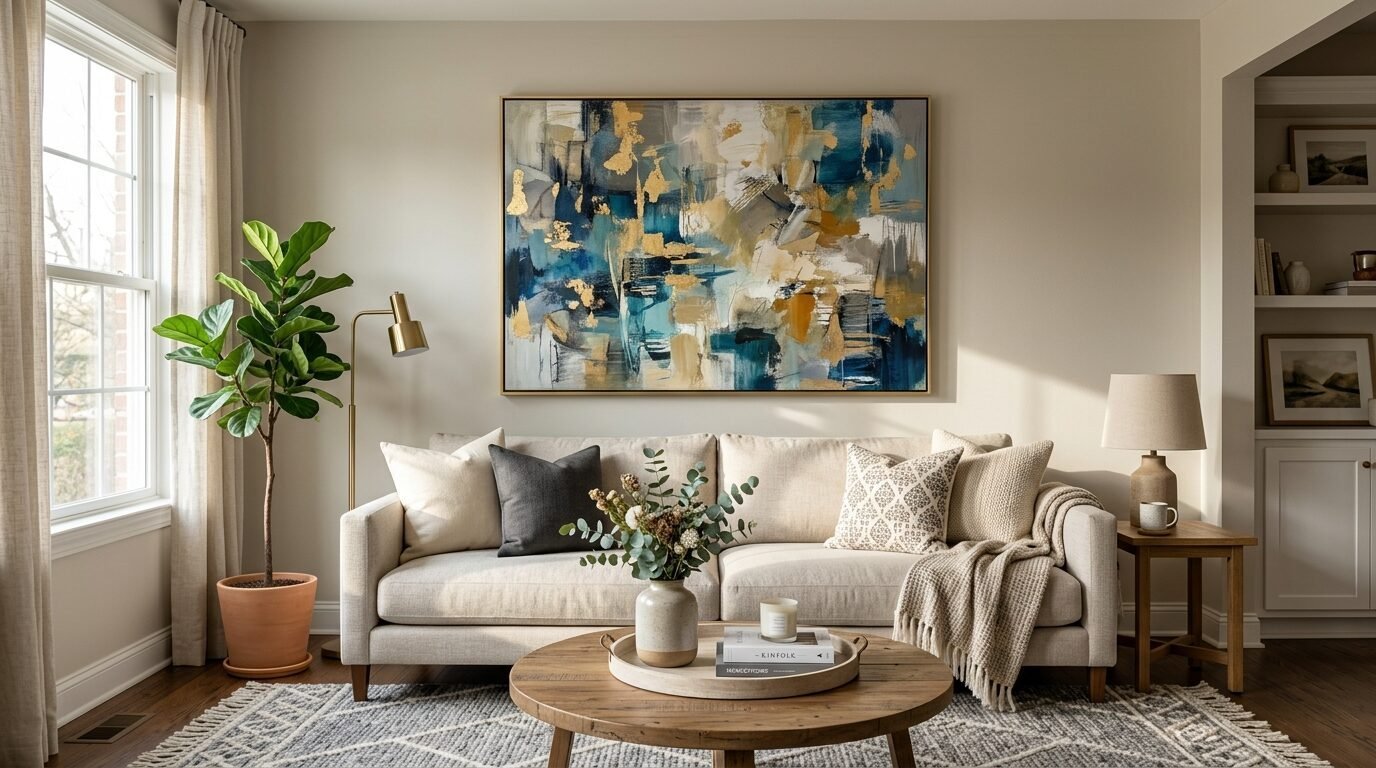
You just bought a beautiful sofa. It sits against a large empty wall. You feel like something is missing. You find a piece of art you love. You hang it up. Suddenly the room feels off. The art looks like a tiny postage stamp on a giant envelope. Or maybe it feels so big it swallows the furniture whole. I see this happen all the time. People spend thousands on furniture but guess on the decor. Getting the scale right changes everything. It makes your living room look like a professional designed it.
I remember helping a friend with her new apartment in Brooklyn. She had a massive velvet sofa. She hung a small 12 by 12 photo above it. The room felt cold and empty. We swapped it for a large canvas. The whole space felt warm instantly. Scale is the secret. It creates a sense of balance. This guide gives you the exact math. You will know exactly what to buy. You will never have to return a heavy frame again.
1. The Two Thirds Ratio Rule
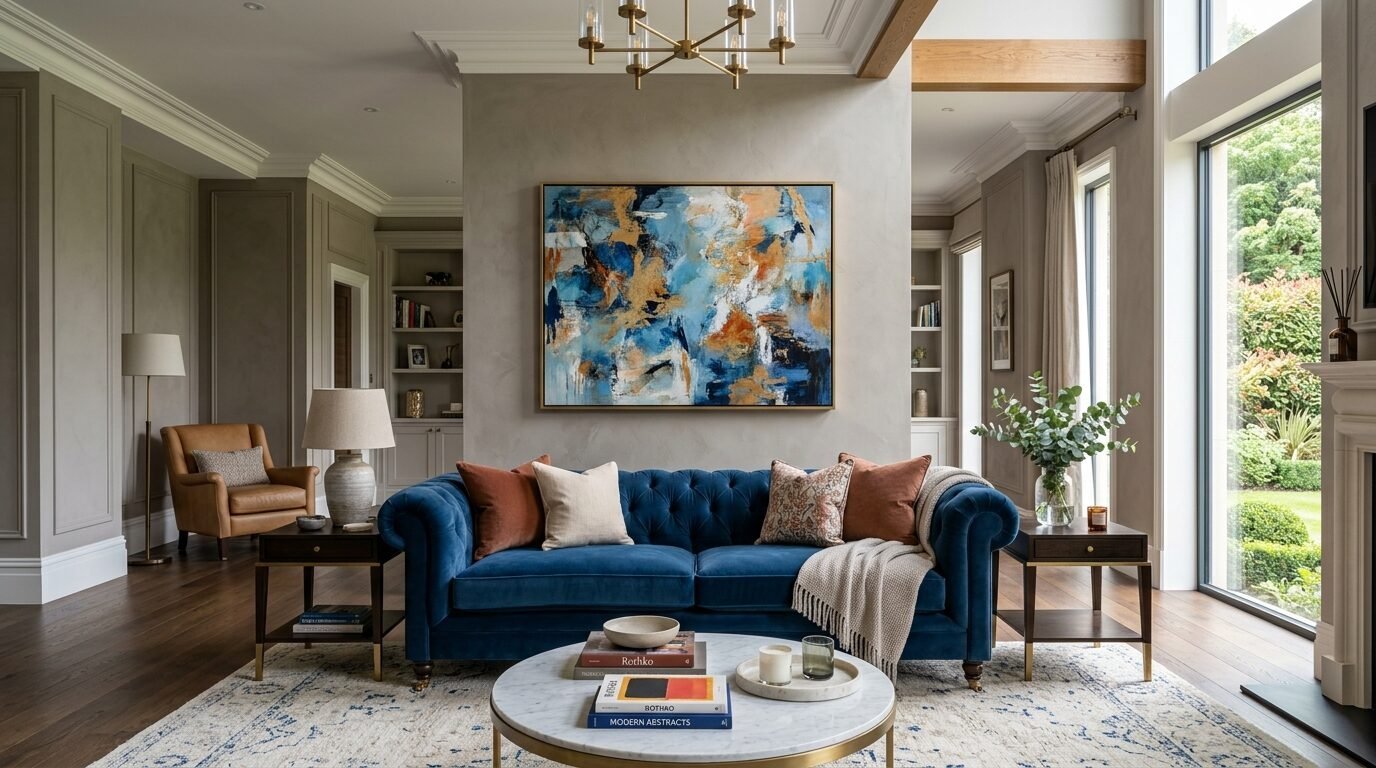
The most important rule for sofa wall decor is the two thirds ratio. Your art should cover about two thirds to three quarters of the width of your couch. This creates a visual anchor. If the art is too small it floats away. If it is wider than the couch it feels top heavy.
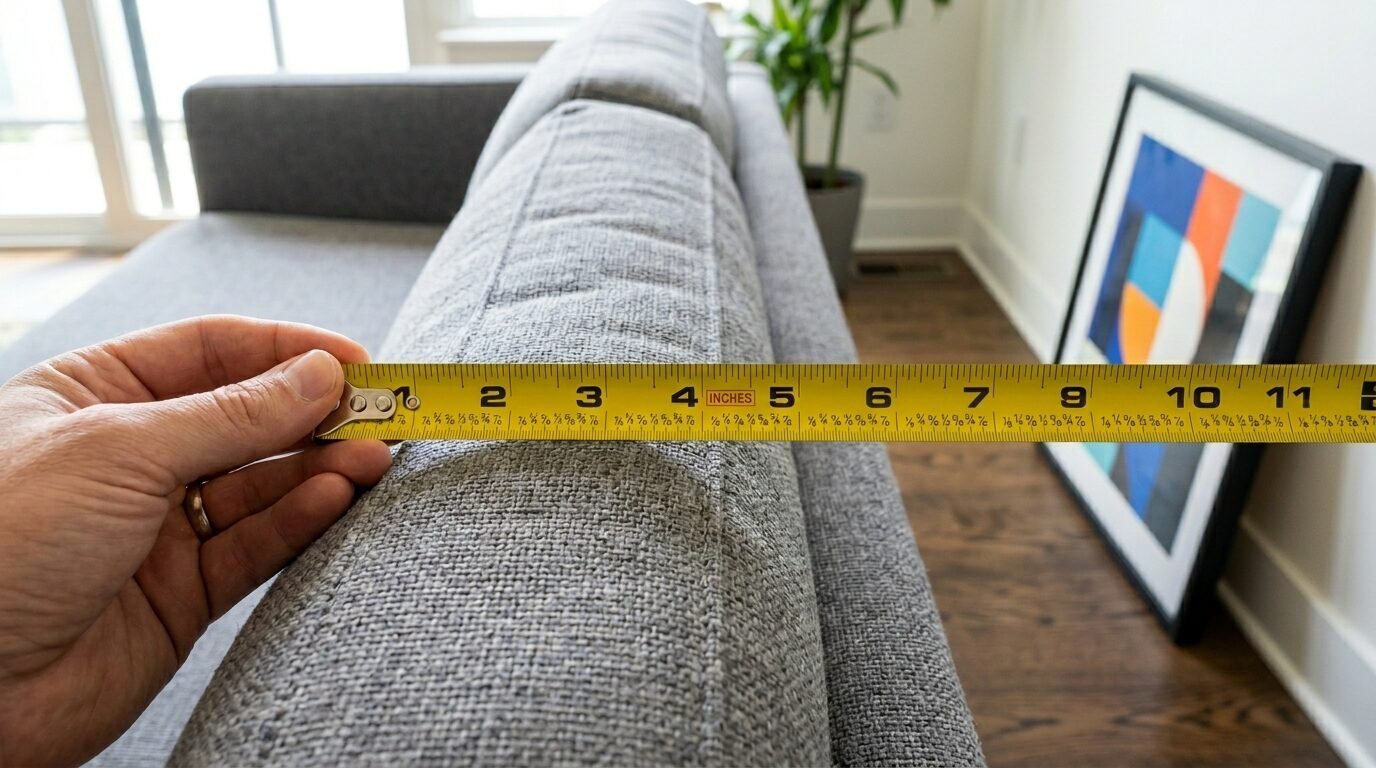
Measure your sofa from arm to arm. Multiply that number by 0.66 and 0.75. This gives you the ideal width range for your art. If your sofa is 84 inches long your art should be between 56 and 63 inches wide. I’ve noticed this range works for almost every style. It keeps the focus on the seating area.
Think about the visual weight. A dark heavy frame feels larger than a thin gold one. If you use a thin frame stay closer to the three quarters mark. If the frame is chunky and ornate the two thirds mark is perfect. Balance art needs this foundation.
2. Standard Sofa Lengths and Art Sizes
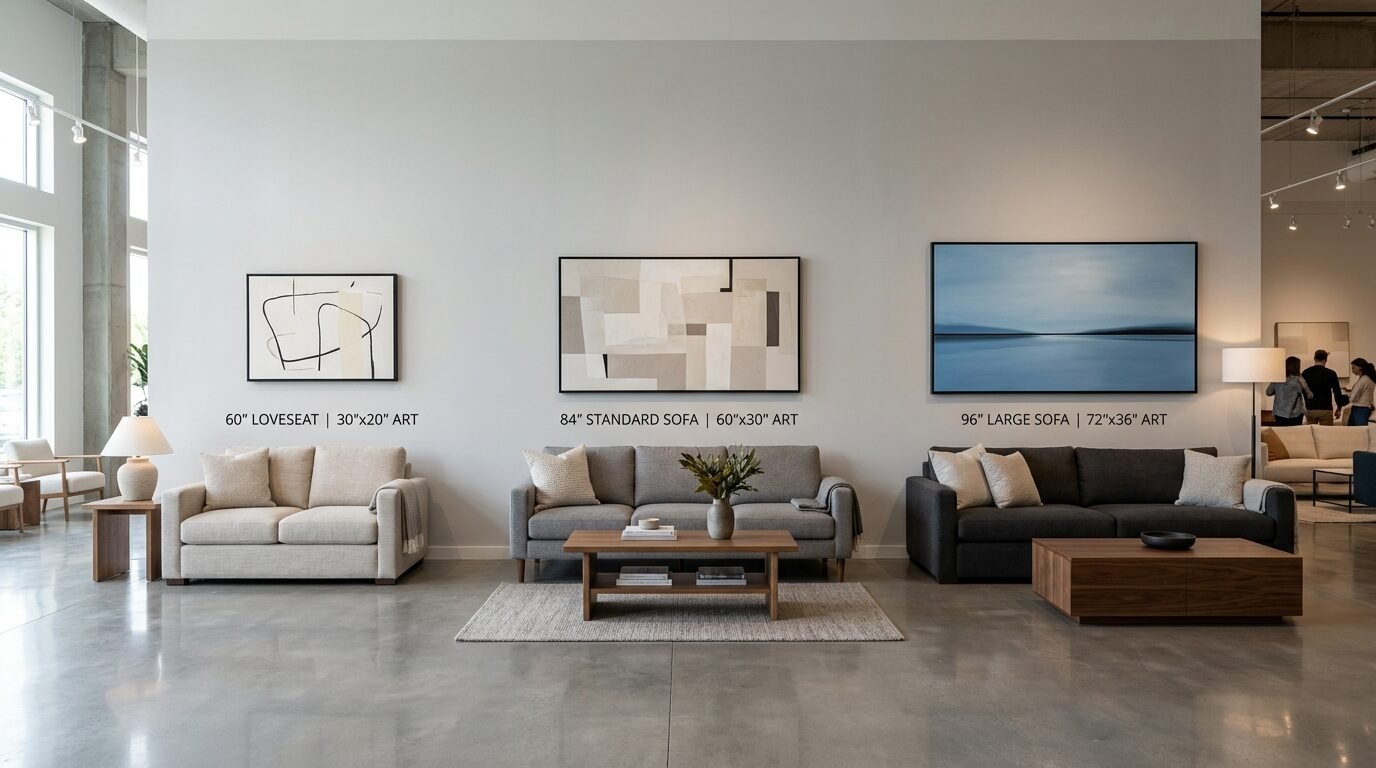
Most people own a standard three seat sofa. These are usually 72 to 96 inches long. For a 72 inch sofa look for art that is 48 to 54 inches wide. For a 96 inch sofa you need art between 64 and 72 inches wide.
Finding a single piece of art that is 70 inches wide is hard. It is also expensive. You can use a set of two or three frames instead. This is called a diptych or triptych. Hang them a few inches apart. Treat the entire group as one single unit. Measure the total width from the outer edge of the first frame to the outer edge of the last frame. Include the gaps in your measurement.
I’ve seen people forget to count the gaps. If you have three 20 inch frames and two 2 inch gaps your total width is 64 inches. This fits an 84 inch sofa perfectly. It looks intentional and clean.
3. Ideal Hanging Height Above the Couch
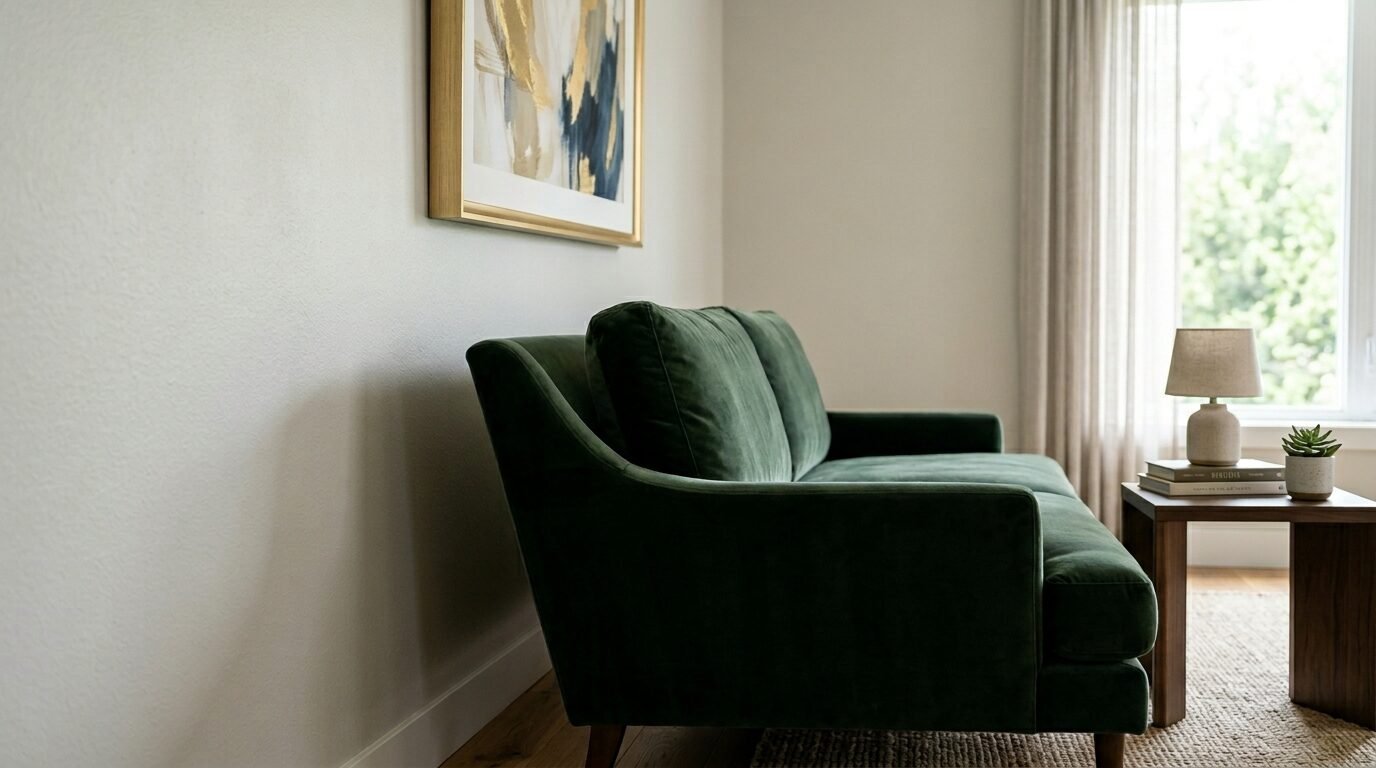
Where you hang the art matters as much as the size. A common mistake is hanging art too high. It should not sit near the ceiling. It should relate to the furniture.
The bottom of the frame should sit 6 to 10 inches above the top of the sofa back. This creates a tight visual connection. If you hang it higher the art looks like it is trying to escape. I’ve tried hanging art 12 inches up and it felt disconnected.
The center of the art should be at eye level. For most people this is 57 to 60 inches from the floor. But when art is above a couch the couch takes priority. If your ceilings are very high you might go up to 10 inches. If you have a low profile modern sofa 6 inches is better. Keep the distance consistent. This makes the hanging art feel like part of the furniture.
4. The Magic of Woven Wall Hanging Textures
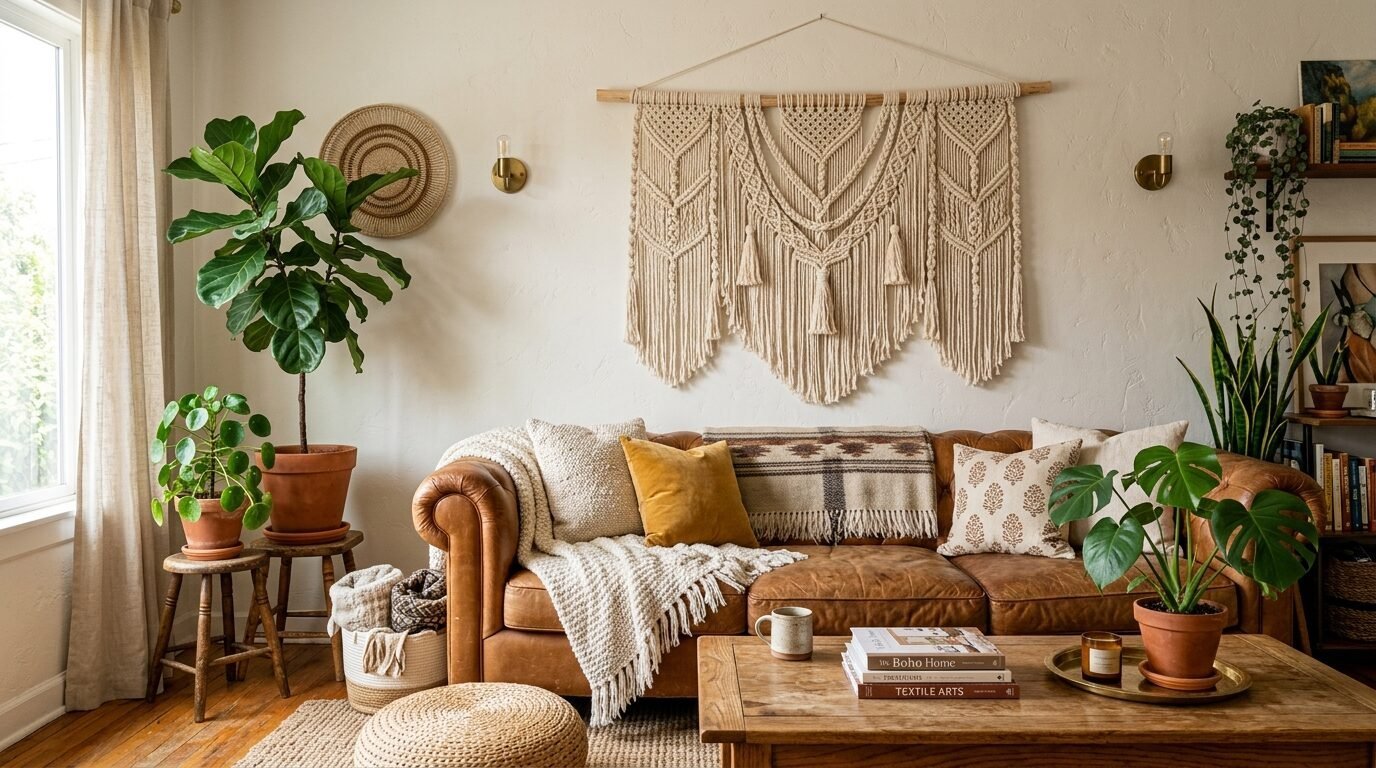
Not all wall decor is a flat canvas. A woven wall hanging is a great choice for sofa wall decor. These pieces add softness to a room with lots of hard lines. They are also lighter than framed art.
When choosing a woven piece follow the same size rules. It should still fill two thirds of the couch width. The organic edges of a textile make a room feel cozy. I saw this work wonders in a minimalist loft. The white walls felt sterile until we added a large cream macrame piece.
Texture absorbs sound too. If your living room has an echo a large textile helps. Ensure the rod or hanger is sturdy. A drooping rod looks messy. Centering the rod over the sofa is key for visual weight.
5. Gallery Wall Math for Large Spaces
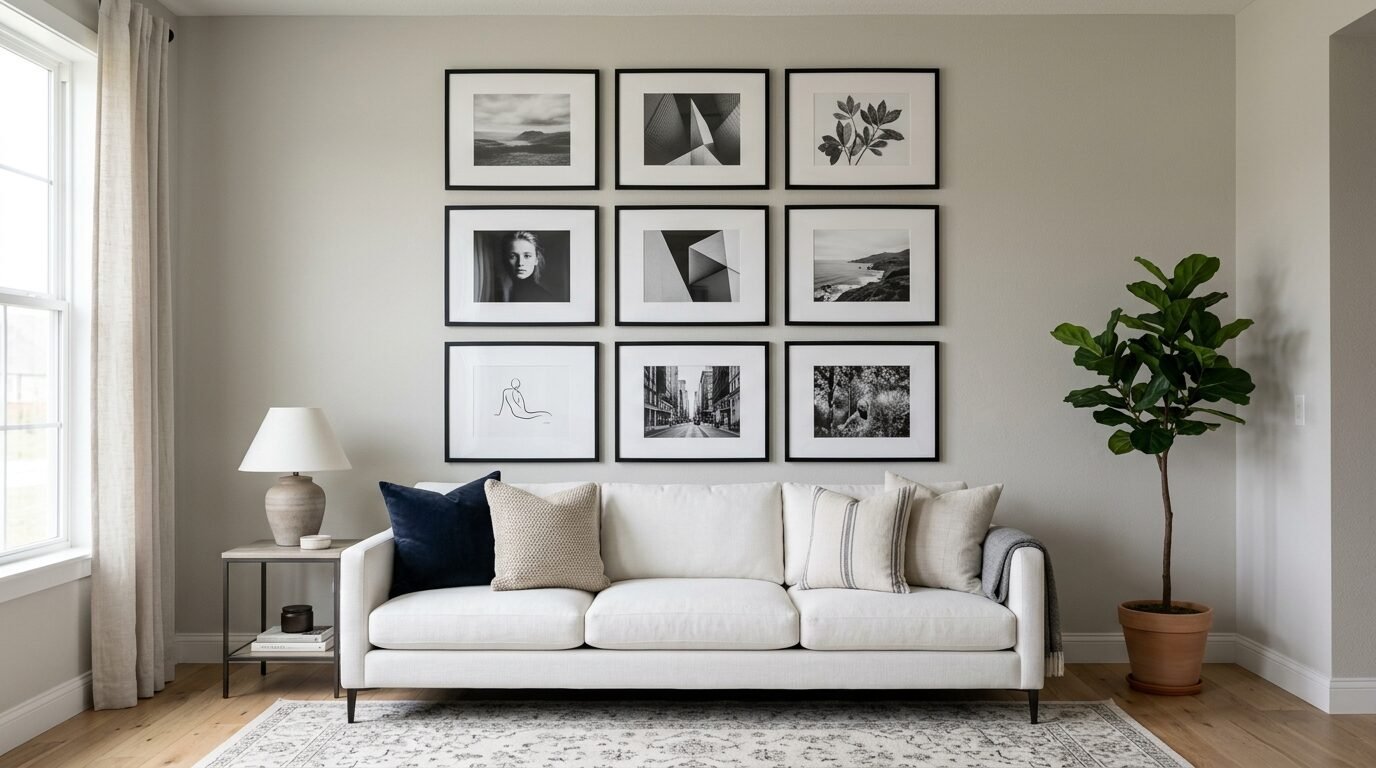
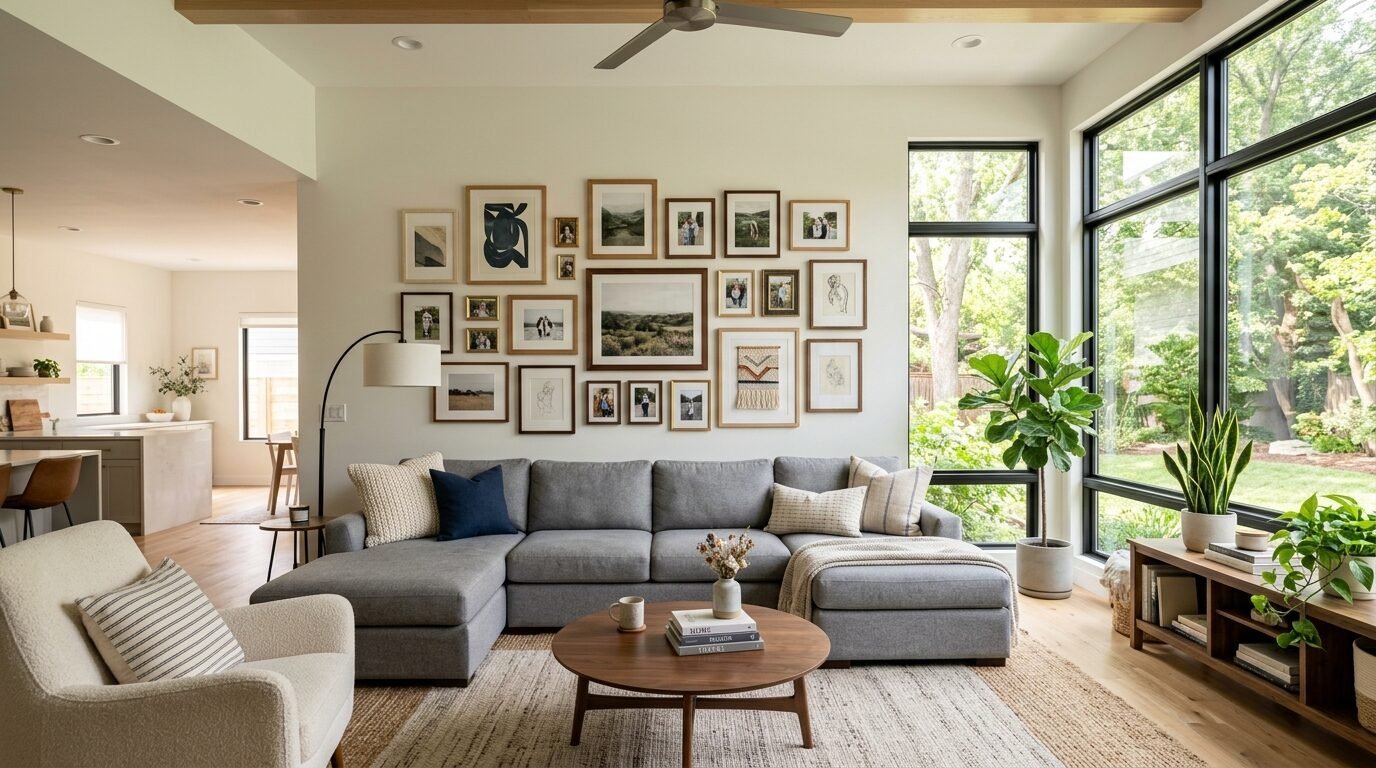
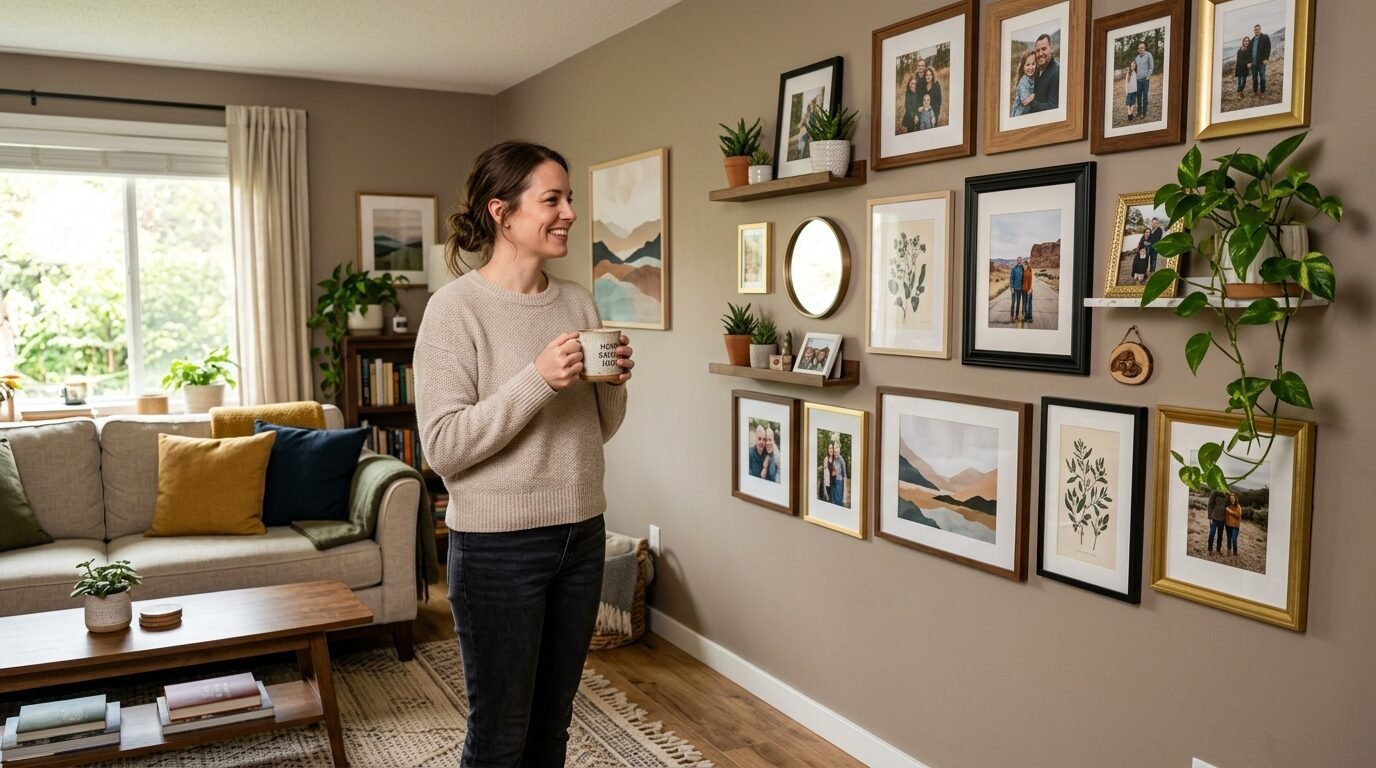
Sometimes one piece of art is not enough. A gallery wall allows you to use smaller pieces to fill a large space. This is a popular style for awesome bedrooms and living rooms alike.
Start with your largest piece in the center. Build outward from there. Keep the spacing between frames tight. I recommend 2 to 3 inches between each frame. If the gaps are too wide the wall looks cluttered rather than cohesive.
The total shape of the gallery should follow the two thirds rule. Lay your frames on the floor first. Trace them onto paper and tape the paper to the wall. This saves you from making extra holes. I’ve seen this save hours of frustration. It lets you see the scale before you commit.
6. Sizing Art for Loveseats and Small Sofas
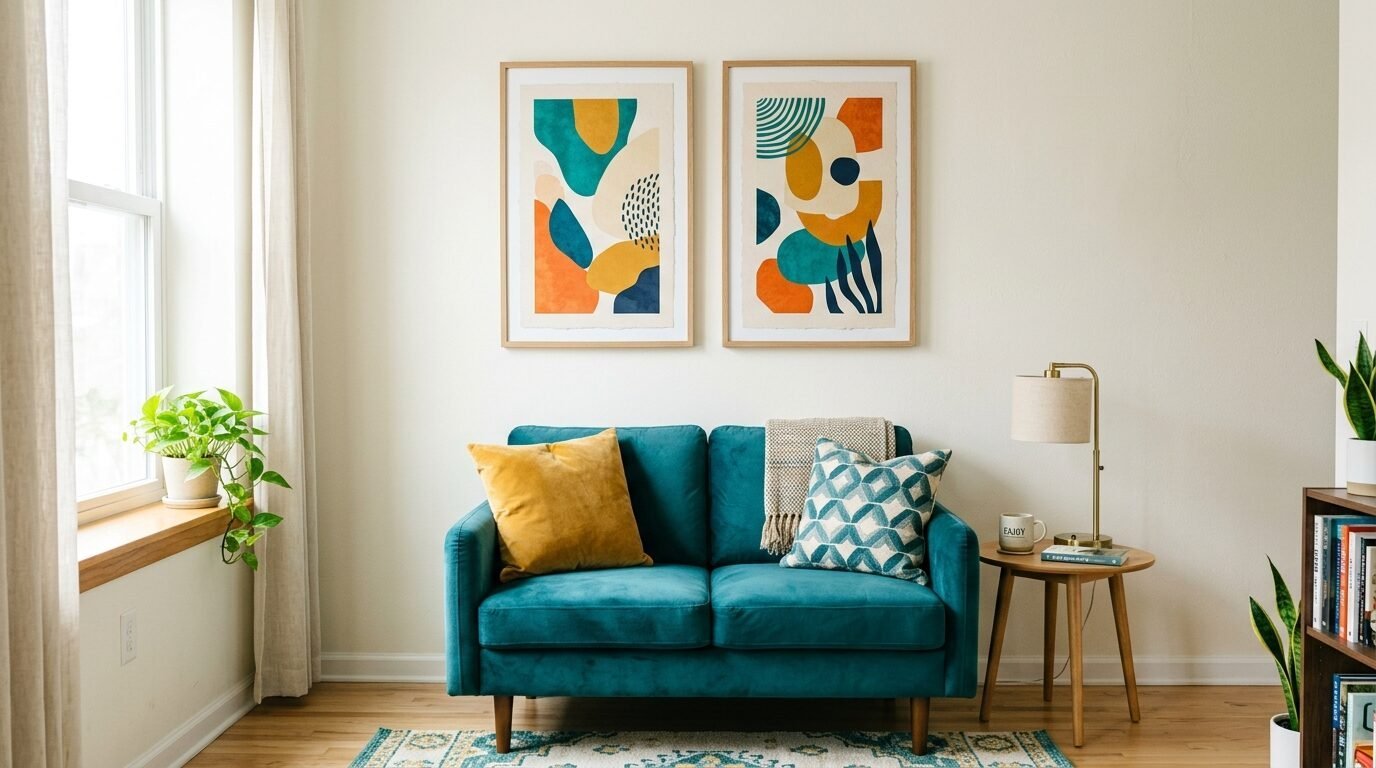
Small sofas need smaller art. A 60 inch loveseat looks best with art that is 40 to 45 inches wide. Using a massive 60 inch piece over a 60 inch loveseat makes the room feel cramped.
A vertical piece can work well here. It draws the eye up and makes the ceiling feel taller. If you choose a vertical piece make sure it is at least 30 inches wide. A skinny tall piece looks like a stripe on the wall.
I once worked with a tiny studio apartment. We used two vertical mirrors above a small sofa. The mirrors were 20 inches wide each. They filled the space and made the room feel double the size. Mirrors are a great alternative to traditional art.
7. Sectional Sofa Layout Strategies
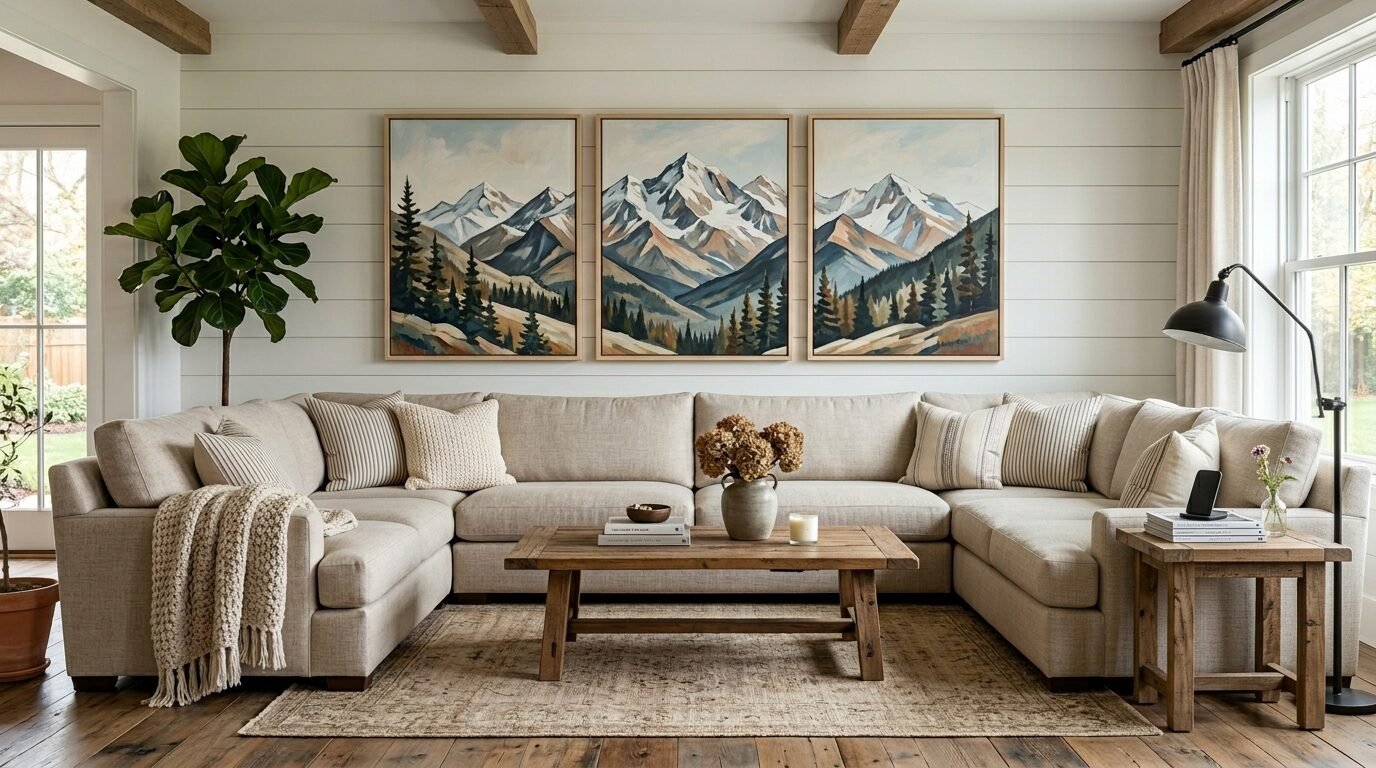
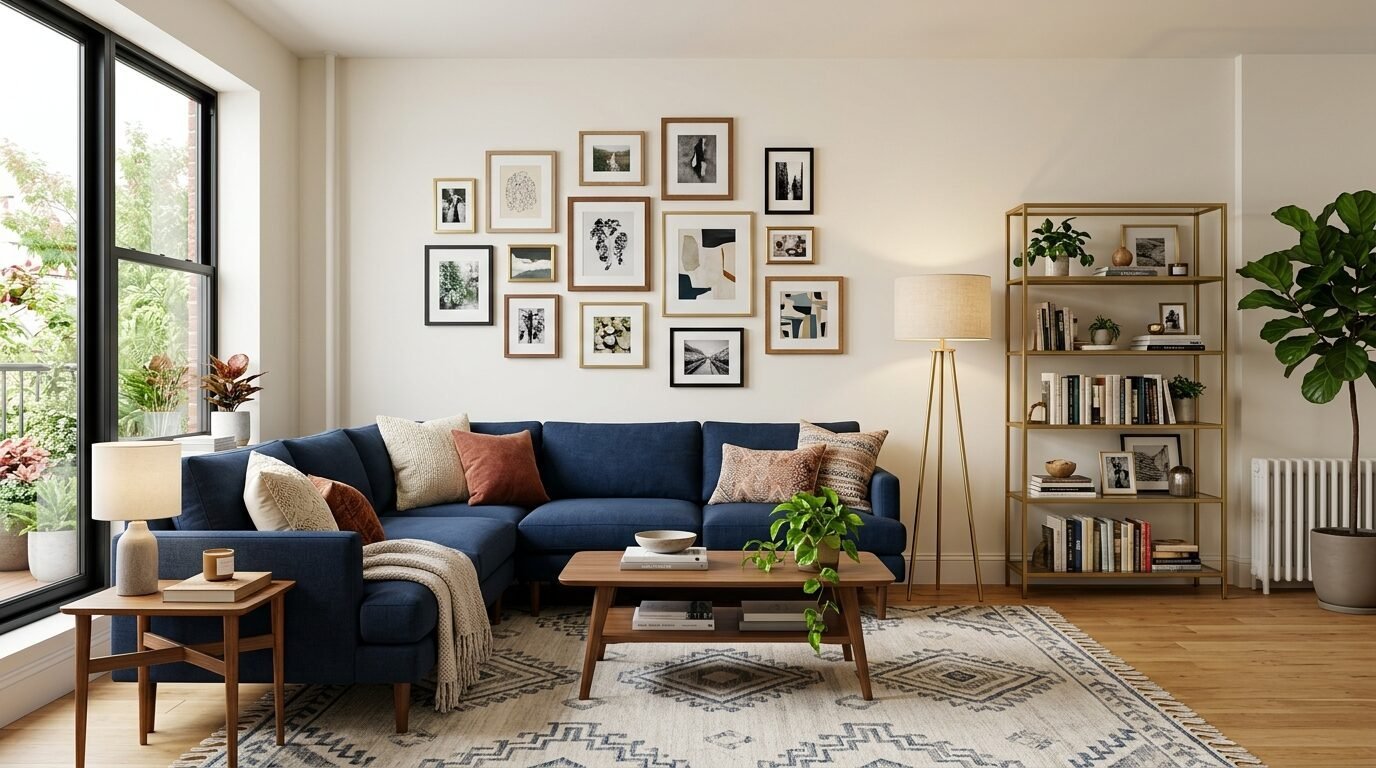
Sectionals are tricky. They have an L shape that creates two different focal points. Most people hang art over the longest section. This is the correct move.
Ignore the “chaise” or the part that sticks out into the room. Center the art over the main horizontal seating area. If you try to center art over the entire footprint it will look off center to the person sitting down.
For a large sectional you need a large scale. This is where a triptych works best. Three large frames side by side fill the long wall without feeling heavy. I’ve noticed that using frames with white mats helps keep a large arrangement from feeling overwhelming.
8. Common Mistakes to Avoid
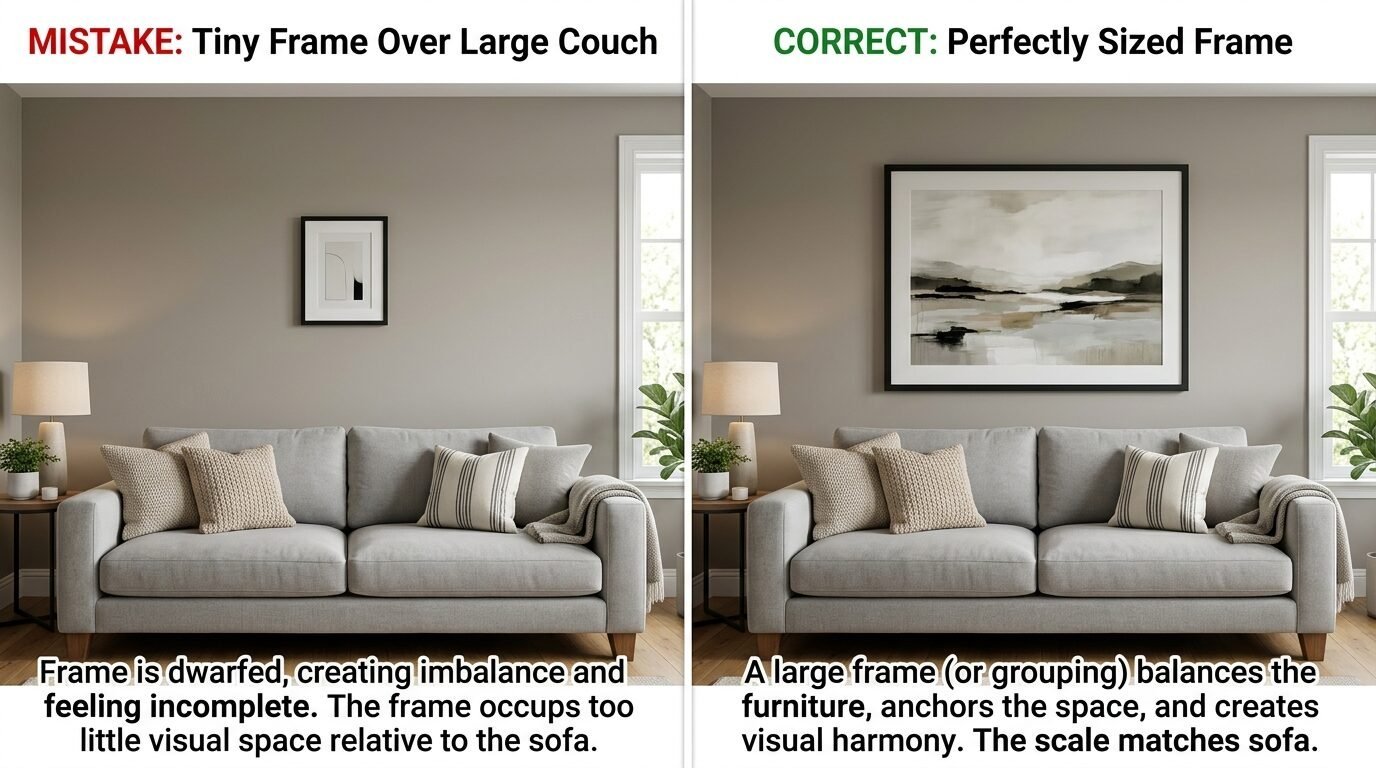
The biggest mistake is the postage stamp effect. This is when the art is less than half the width of the couch. It looks accidental. If your art is too small buy a larger frame with a wide mat. This increases the total size of the piece.
Another mistake is hanging art based on the wall instead of the furniture. Do not center art between two doors if the couch is not centered there. Always center the art to the couch. This creates a “unit” of design.
I’ve seen people hang art leaning against the wall on top of the sofa. This only works if the sofa is rarely used. If someone sits back fast they might hit the art. Always secure your hanging art with proper hooks. Use two hooks for wide pieces to keep them level.
9. Tools for Perfect Placement
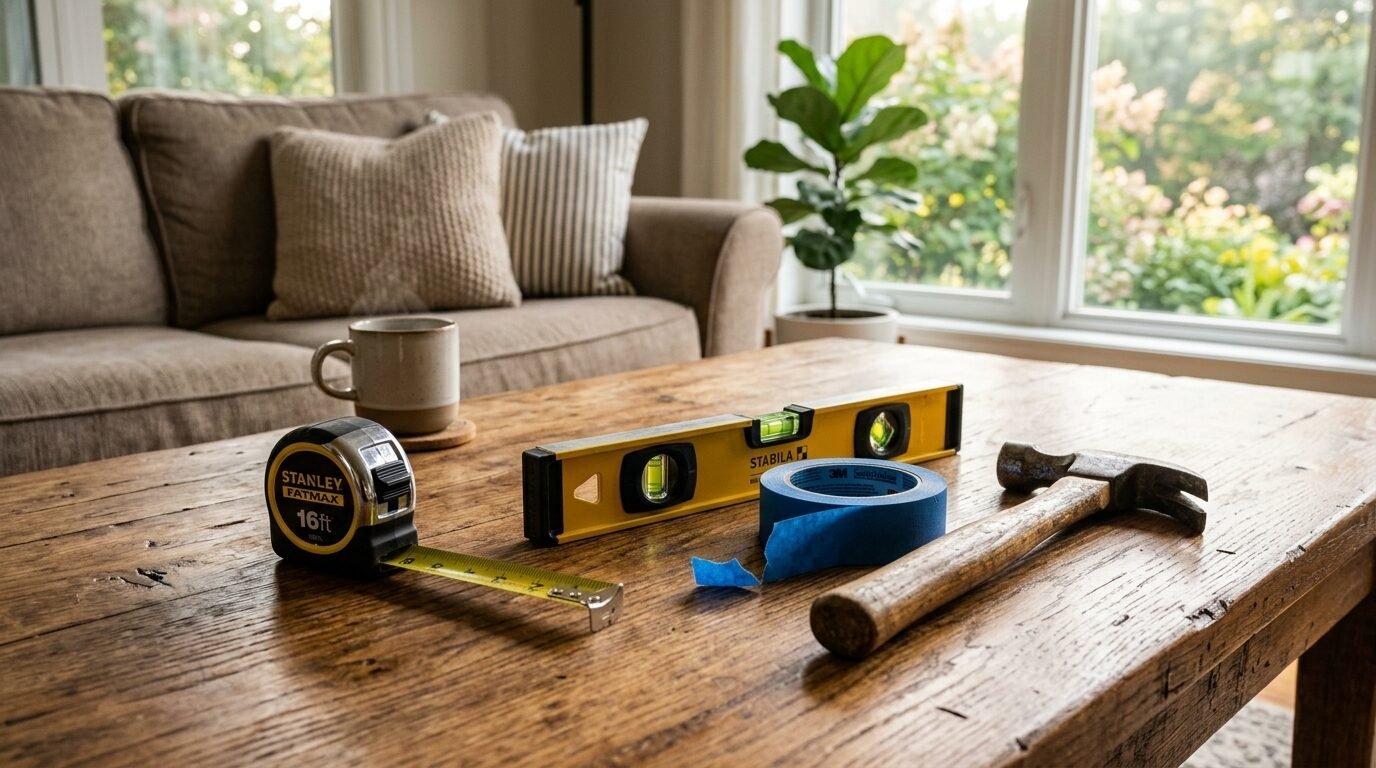
You need a few simple tools. A metal tape measure is better than a cloth one. You need a pencil to mark the wall lightly. A level is essential. Never trust your eyes. Floors and ceilings are often crooked.
Painter’s tape is my favorite tool. Use it to outline the size of the art on the wall. Leave it there for a day. Walk into the room and see how it feels. If it feels too small you know you need a bigger size.
I also use a hammer and 30 pound picture hooks. These hooks stay secure in drywall. For heavy woven wall hanging pieces find a stud. This ensures the piece does not fall.
10. Comparing Art Types for Above Couch Decor
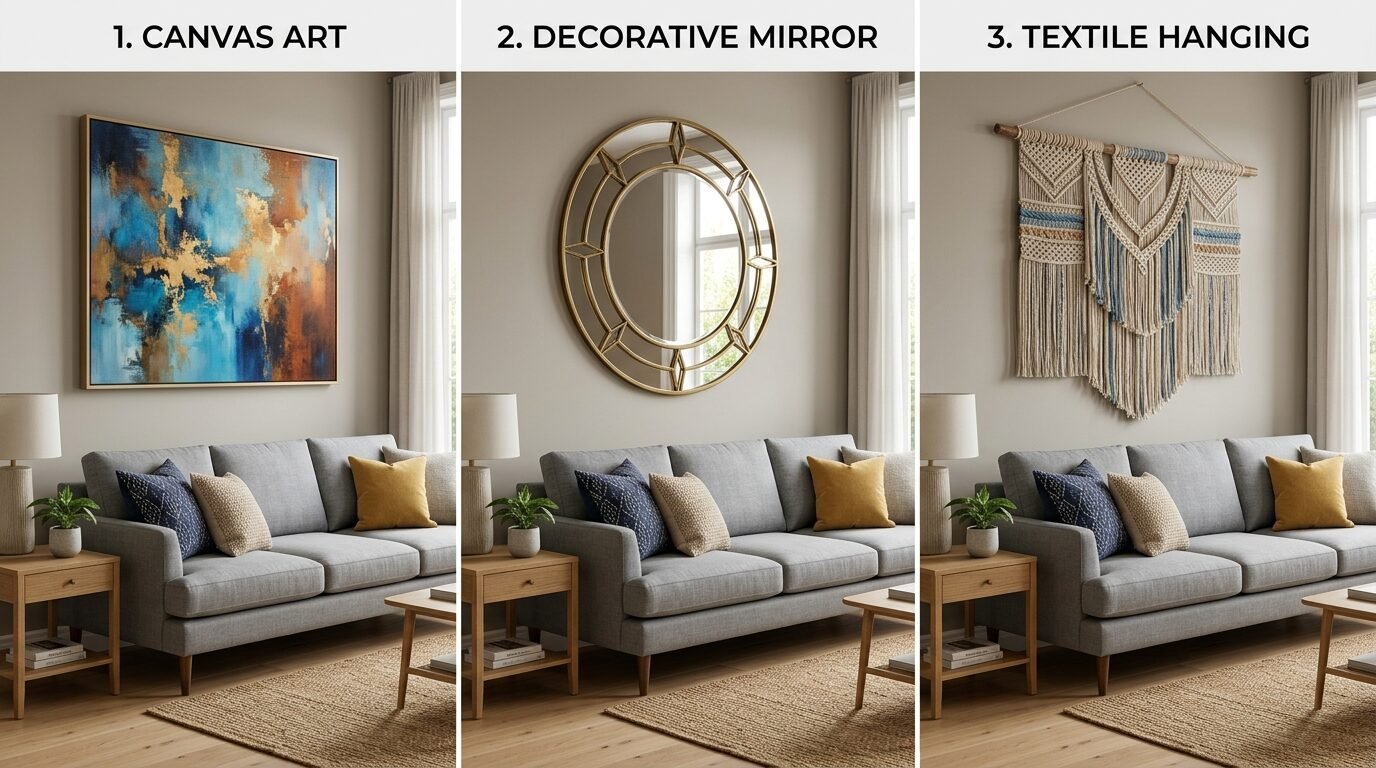
| Art Type | Best For | Pros | Cons |
| Single Large Canvas | Modern Rooms | Clean look | Heavy and expensive |
| Triptych (3 Frames) | Long Sofas | Easy to transport | Hard to level |
| Woven Hanging | Boho Styles | Adds warmth | Collects dust |
| Gallery Wall | Personal Photos | Very flexible | Can look cluttered |
| Large Mirror | Small Rooms | Brightens space | Heavy to hang |
11. Creating Balance with Colors and Frames
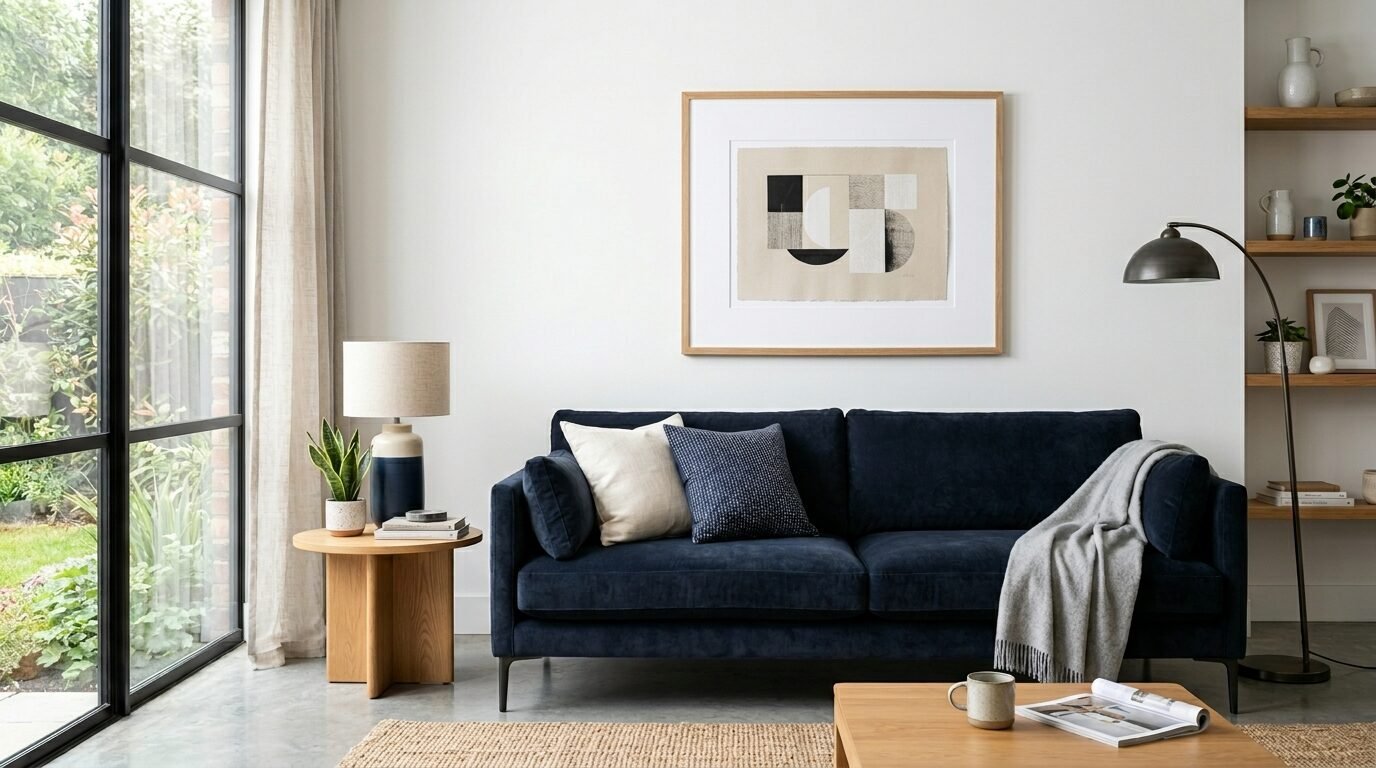
Size is the first step but color affects perceived size. A piece of art with a lot of white space feels lighter. A dark moody painting feels heavier.
If your couch is a dark color like navy or charcoal use a light frame. This creates contrast. If your couch is beige or white a black frame anchors the space. I’ve seen light oak frames work beautifully in awesome bedrooms for a calm feel.
Match the frame style to your room. Metal frames look sleek and industrial. Wood frames feel traditional or rustic. Mixing frame styles is okay for a gallery wall. For a single piece keep it simple.
12. Frequently Asked Questions
How wide should art be over a 84 inch sofa?
Your art should be between 56 and 63 inches wide. This follows the two thirds to three quarters rule. You can use one large piece or a set of smaller ones. Ensure the total width of the group falls in this range.
Can art be wider than the couch?
No. Art that is wider than the couch creates a top heavy look. It makes the sofa look small and weak. It also makes the room feel unbalanced. Always stay within the width of the sofa arms.
Is it okay to hang art off center?
Only if the entire room layout is asymmetrical. For most living rooms centering the art over the couch is the safest choice. It creates a focal point that feels organized.
What if I have a very high ceiling?
You can hang the art slightly higher but stay within 10 inches of the sofa. You should also choose a taller piece of art. Vertical art helps fill the vertical space of a tall wall.
How do I hang a woven wall hanging?
Use a sturdy wooden or metal rod. Center the rod over the sofa. Ensure the piece is wide enough to cover two thirds of the couch. Use two nails or hooks at each end of the rod to keep it straight.
Should I use one big piece or several small ones?
One big piece looks modern and bold. Several small pieces feel cozy and personal. If you have a busy room one large piece helps calm the space. If your room is very simple a gallery wall adds interest.
Does the art have to match the couch color?
It does not have to match exactly. It should complement the tones. If you have a warm leather couch look for art with warm tones. If you have a gray couch cool blues or greens work well.
How high is eye level for hanging art?
Eye level is usually 57 to 60 inches from the floor. However when hanging above furniture the 6 to 10 inch gap above the sofa is more important. Always prioritize the relationship between the art and the furniture.
13. Final Thoughts on Sofa Wall Decor
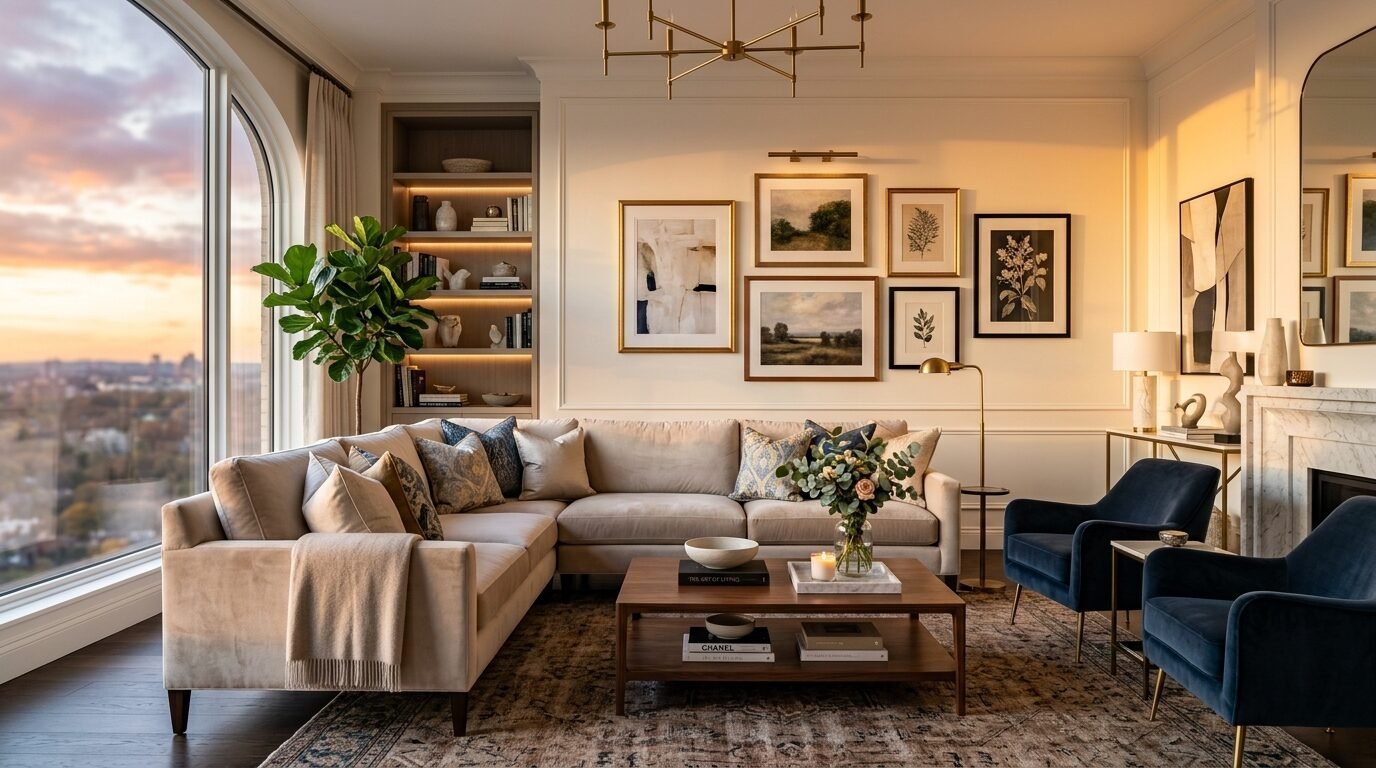
Choosing the right size art is about confidence. Use the math. Trust the two thirds rule. Don’t be afraid to go big. Most people pick art that is too small. A large piece makes a statement. It shows you put thought into your home.
I’ve noticed that once the art is the right size the rest of the room falls into place. The rug feels right. The coffee table looks better. It is the final piece of the puzzle. Grab your tape measure and start looking at your walls. You are ready to create a space you love.

Anya Castellan is the Founder and Editor-in-Chief of Home Wall Trends. An art history graduate of the Rhode Island School of Design with twelve years of experience writing for leading American design publications, she specializes in composition, gallery wall theory, and the quiet architecture of domestic space. A former contributing editor at Architectural Digest and guest lecturer at Parsons School of Design, Anya personally reads and signs off on every piece before it is published.