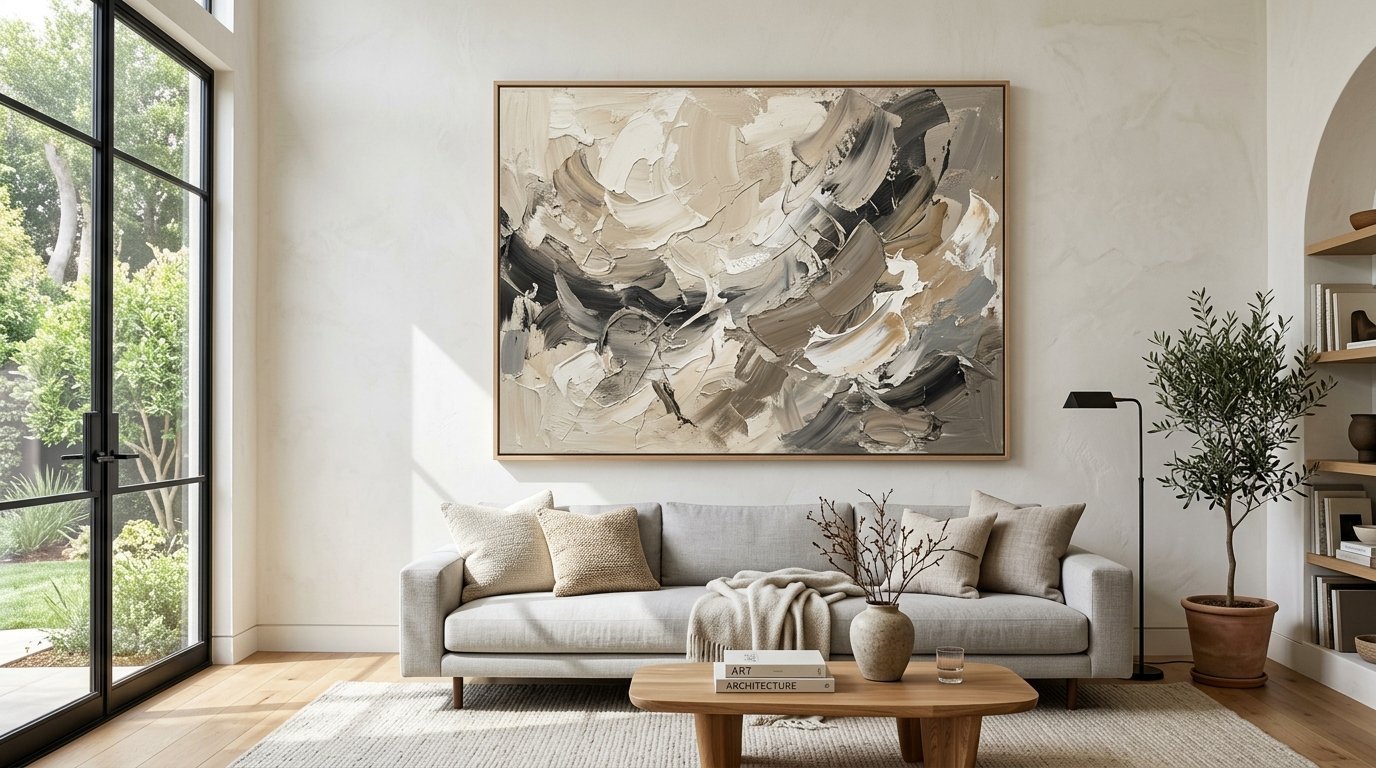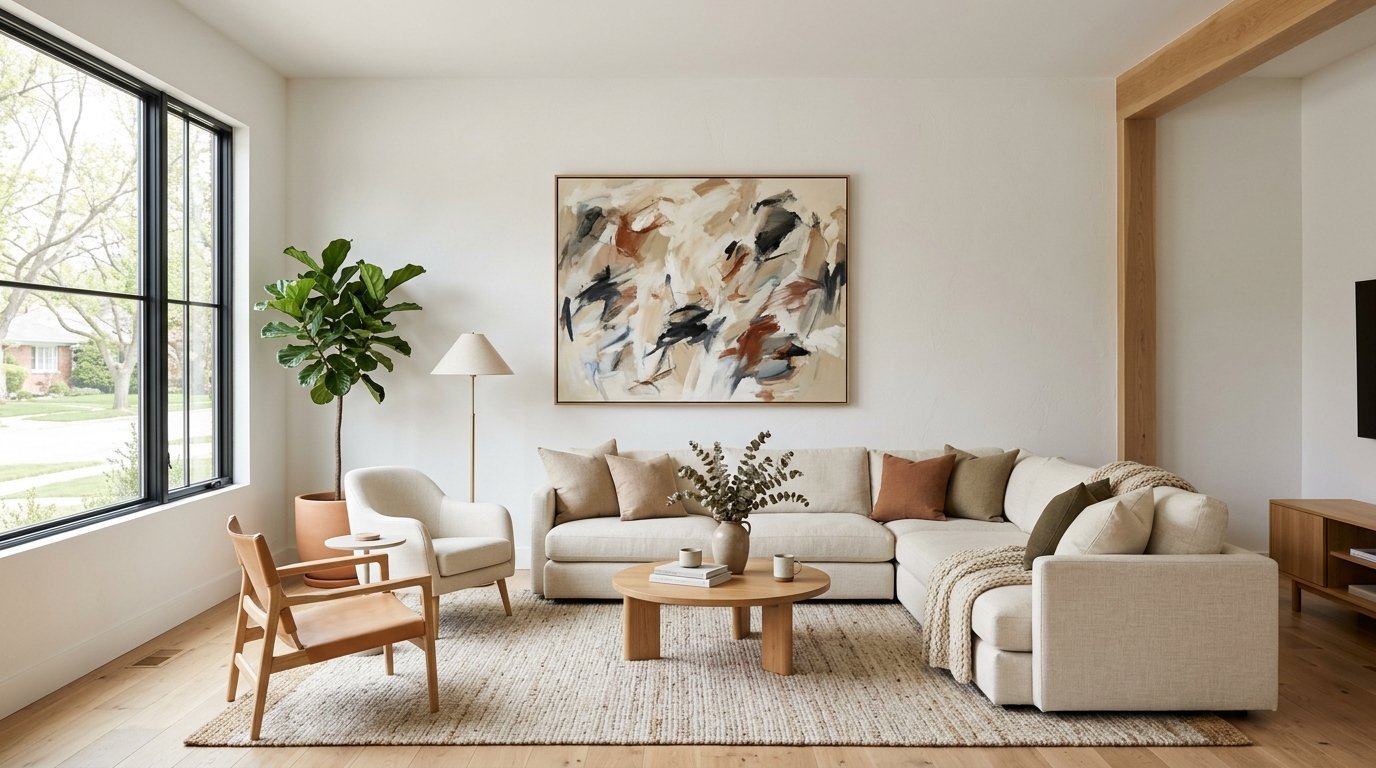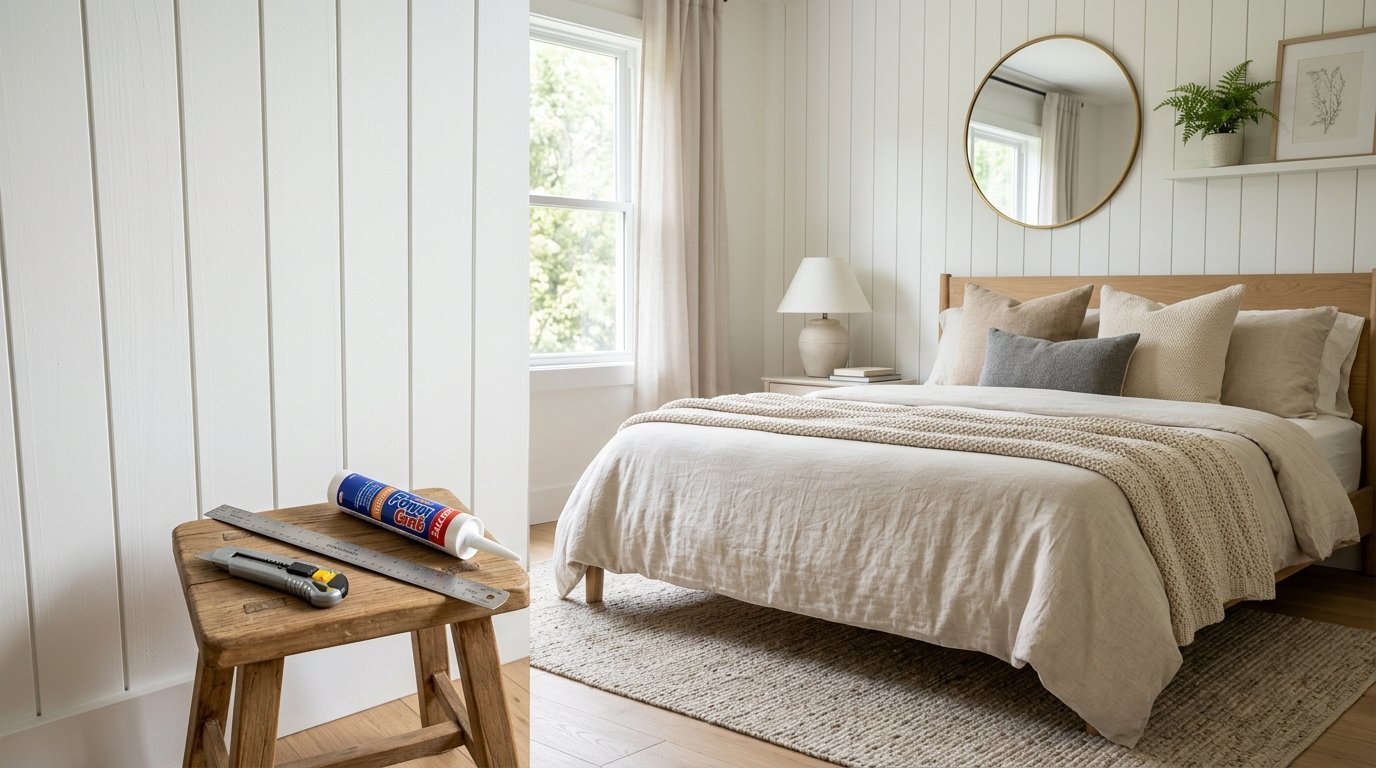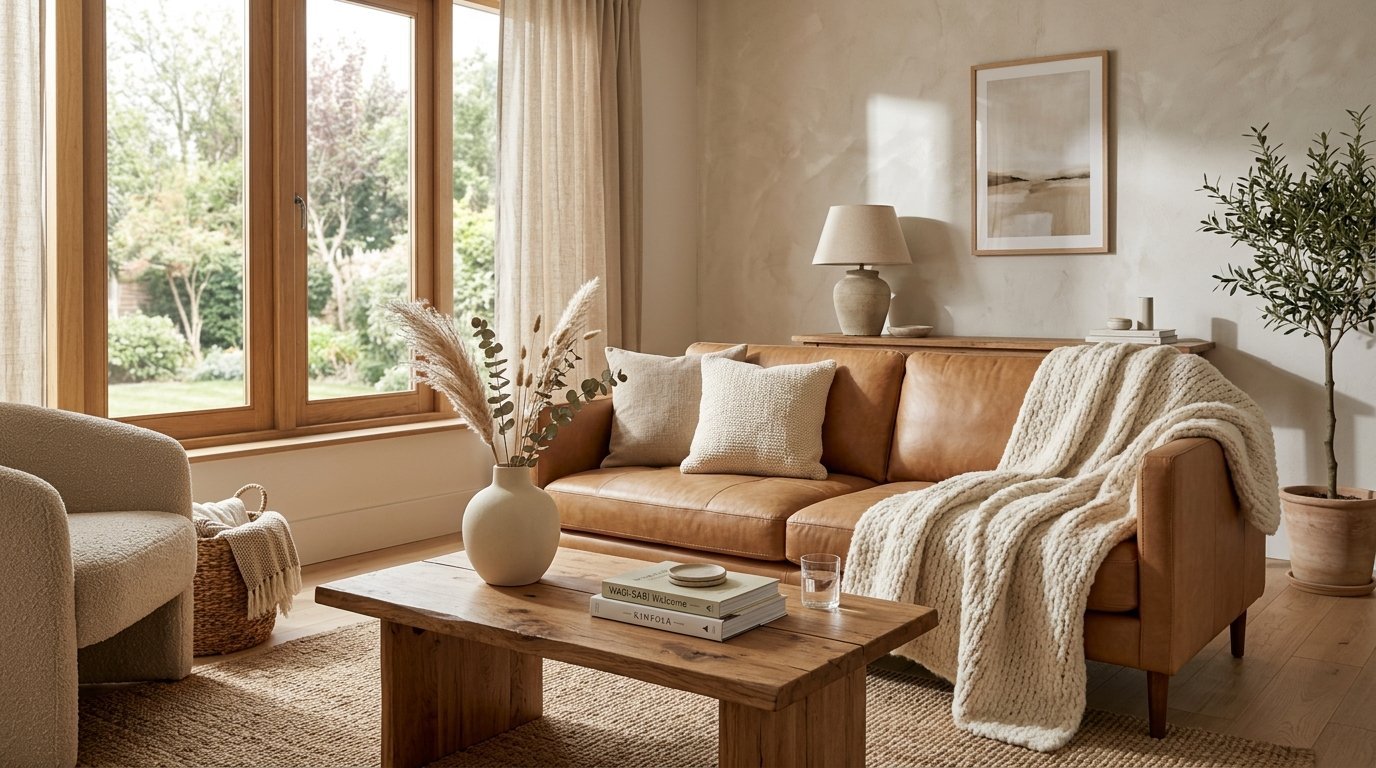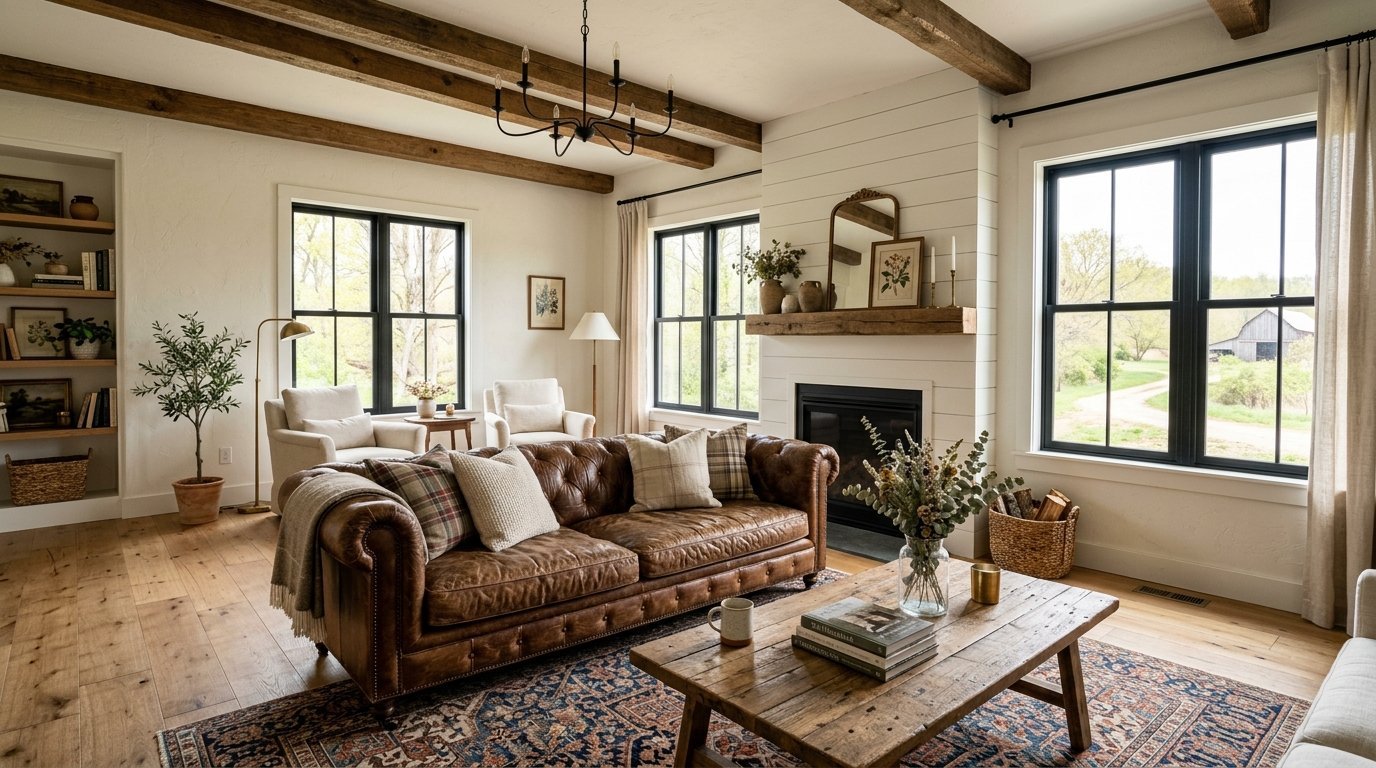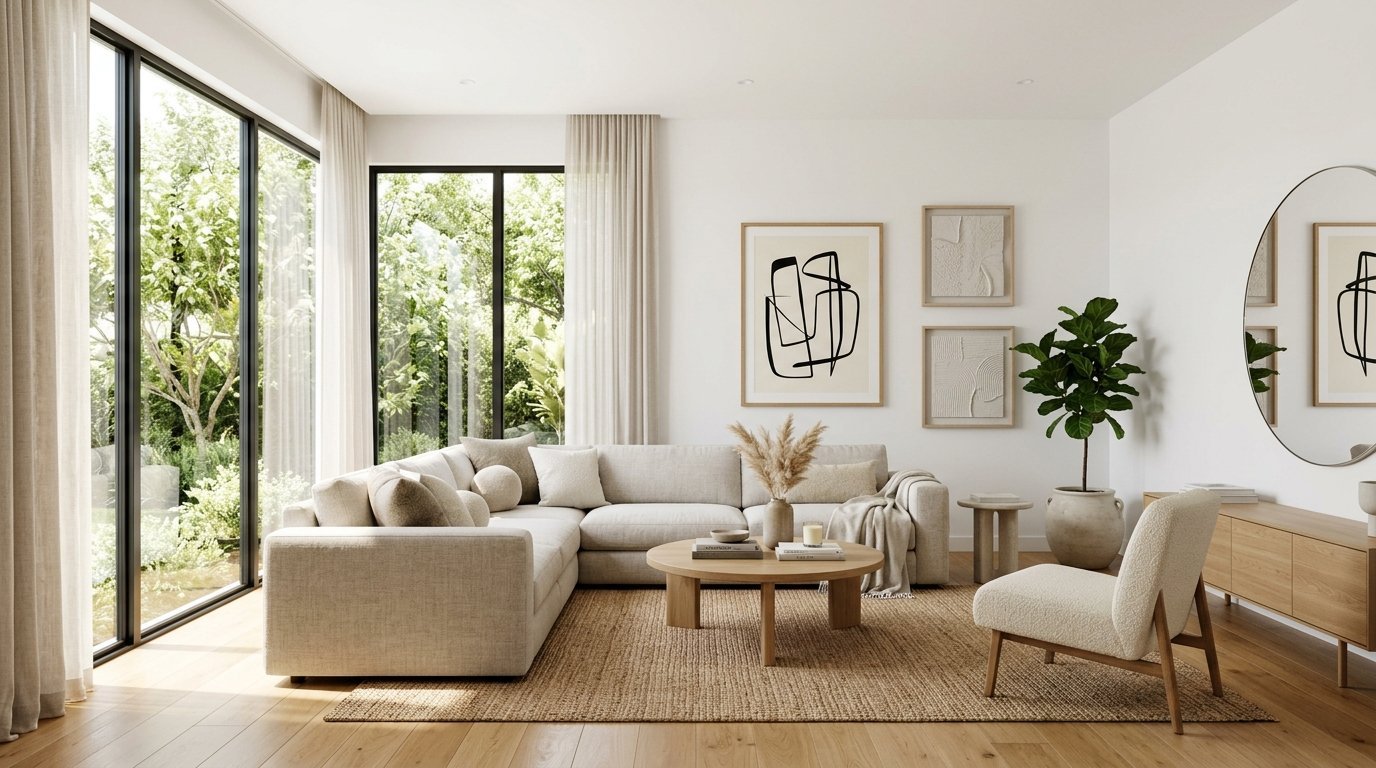
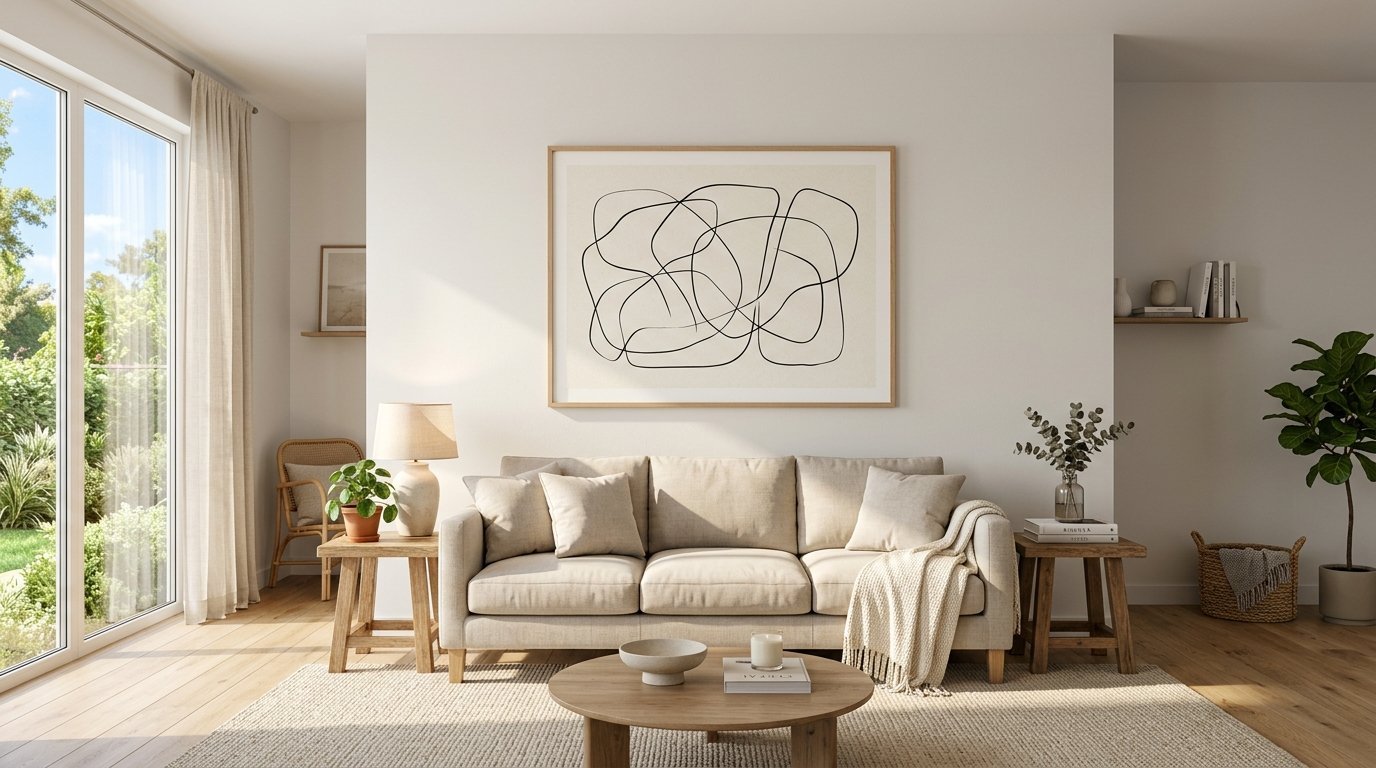
You stare at a massive white wall. It feels huge. The empty space creates instant paralysis. I remember sitting on my floor last Tuesday surrounded by tape and picture frames. People freeze because one wrong nail hole feels permanent. An empty space demands perfection. You want a Minimalist Living Room. You do not want a sterile waiting room. We bridge that gap right here. I have styled dozens of spaces. I know exactly how it feels to overthink a simple room layout.
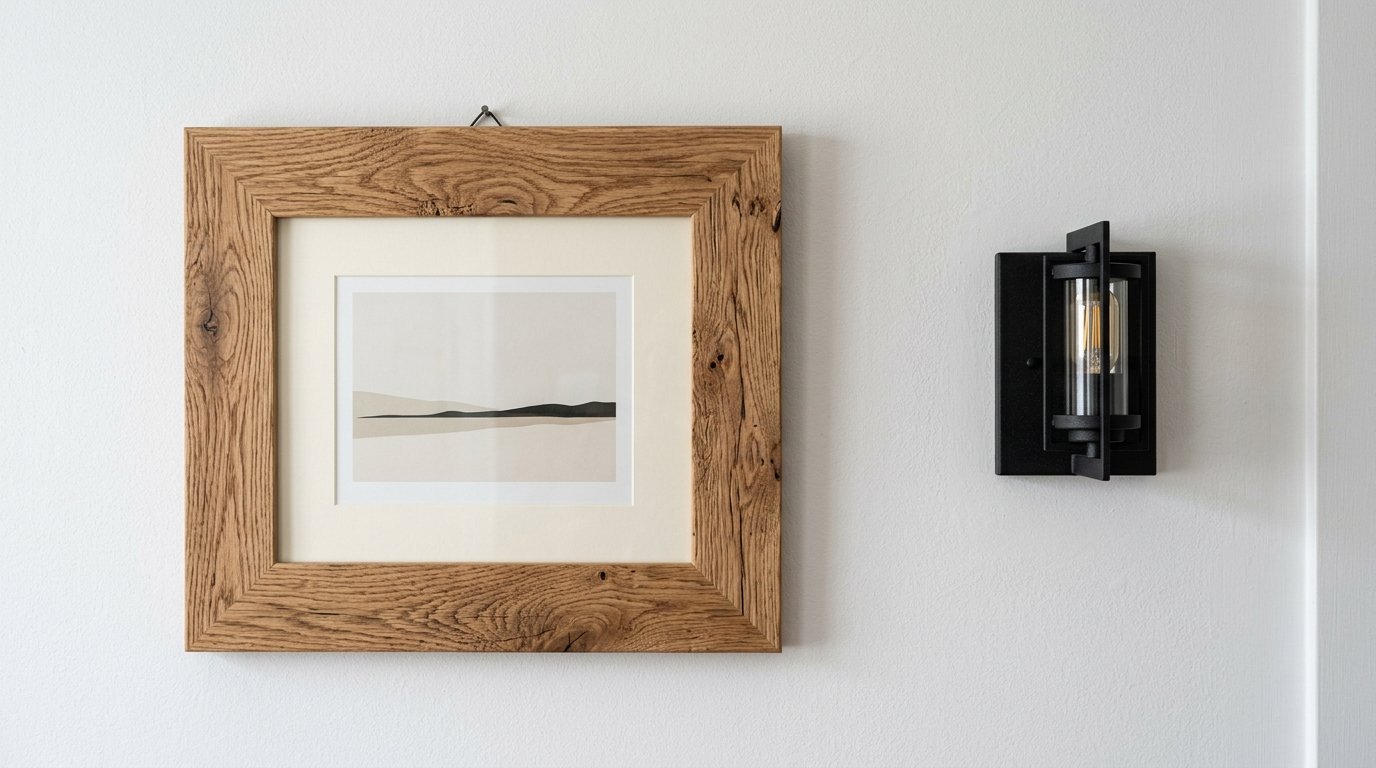
I will show you exact steps to style your blank walls in forty eight hours. You will get specific brand lists and exact spacing measurements. We cover budget options starting at fifty dollars and premium choices around three hundred dollars. I detail exact maintenance routines for mirrors and wood pieces. You want clear directions without fluff. You will walk away with a precise blueprint for Room Decor that breathes. You will know exactly where to place your first nail. You will transform a cold room into a warm space.
Why Do Blank Walls Intimidate So Many People?
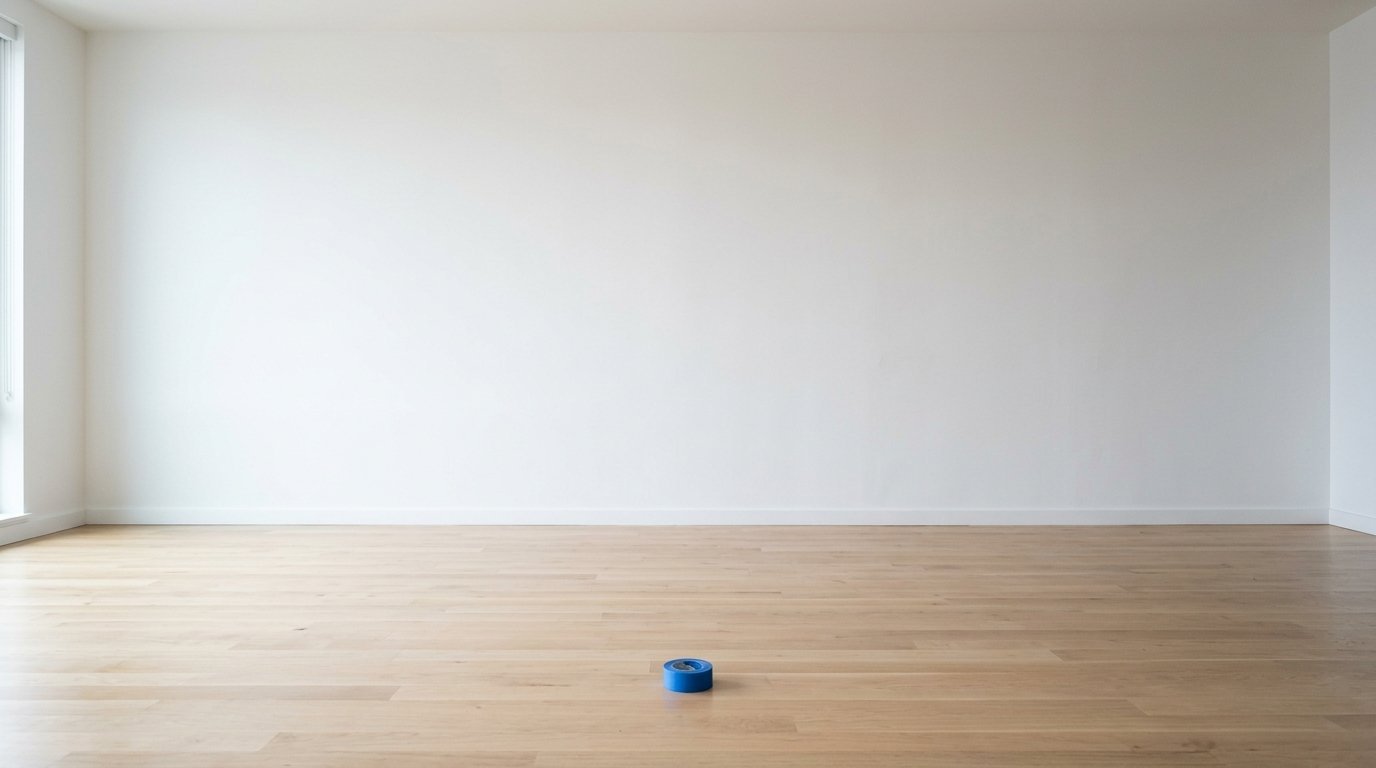
An empty wall acts like a massive spotlight. It exposes every design choice you make. People fear making the wrong choice. They worry about ruining the paint. They fear making the room look cluttered.
In my experience, hesitation comes from a lack of rules. You look at Pinterest and see perfect rooms. You look at your wall and see a blank canvas. The gap feels too wide.
Let me share a story from last year. My friend Sarah bought a new house. She left her living room walls completely bare for nine months. She told me she wanted a Minimalist Home. In reality, she felt terrified of making a mistake. She bought three different prints and kept them in her closet.
We fixed her space in two hours. We stopped looking at the entire wall. We focused on one single anchor point. Once you place one piece, the rest of the room falls into line. You stop guessing. You start moving.
What Are The Core Rules Of Minimalist Room Decor?
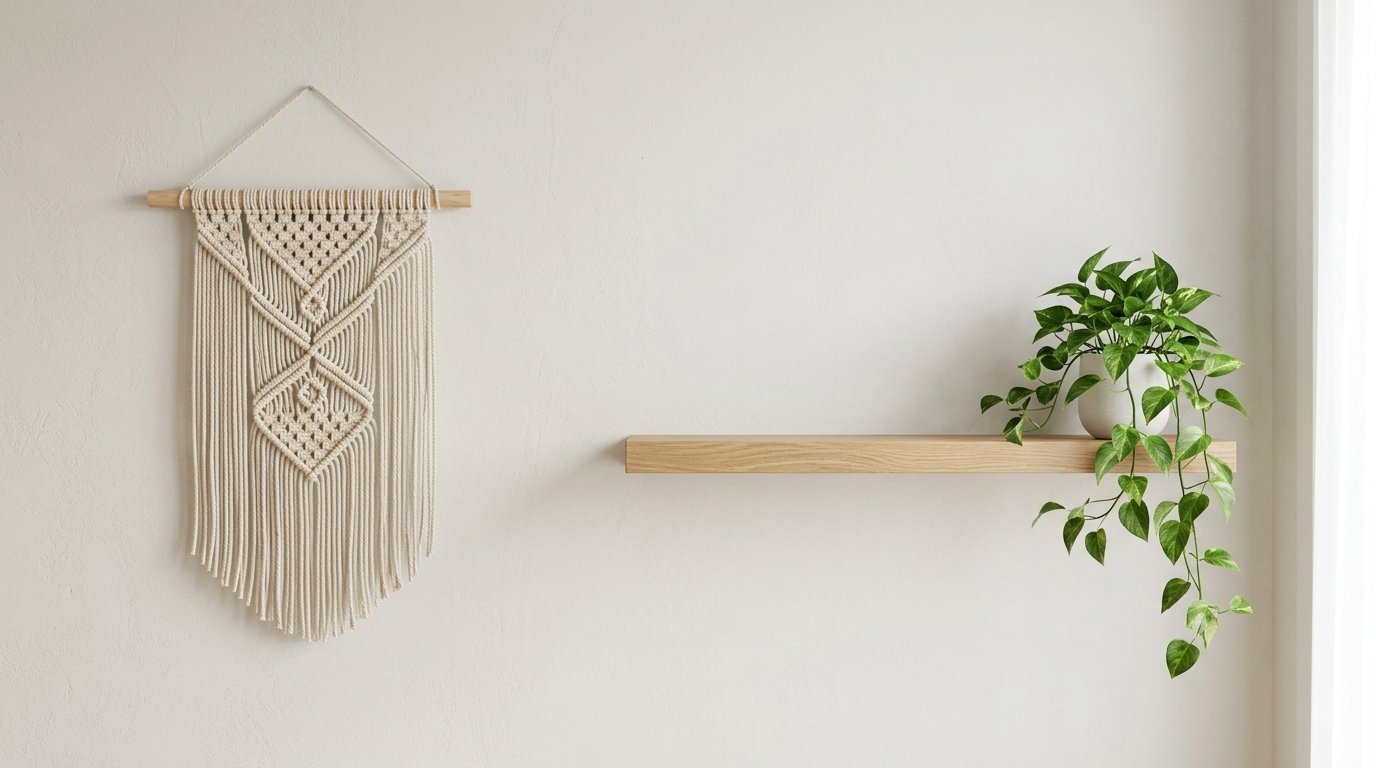
Negative space acts as a physical item. You must treat empty wall space just like a framed print. In a Minimalist Living Room, the empty spaces give your eyes a place to rest.
Texture beats color every single time. A woven piece or a carved frame brings warmth. Bright colors often scream for attention. We want quiet confidence.
- Keep items at eye level.
- Leave plenty of breathing room around edges.
- Stick to three materials maximum per room.
- Match your frame finishes.
A cohesive Living Room Style relies on discipline. You must say no to items that do not fit the specific vision. If a piece feels loud, leave it out. If a piece feels calming, hang it up. You dictate the mood of the room.
How Can You Style Mirrors Without Ruining The Glass?
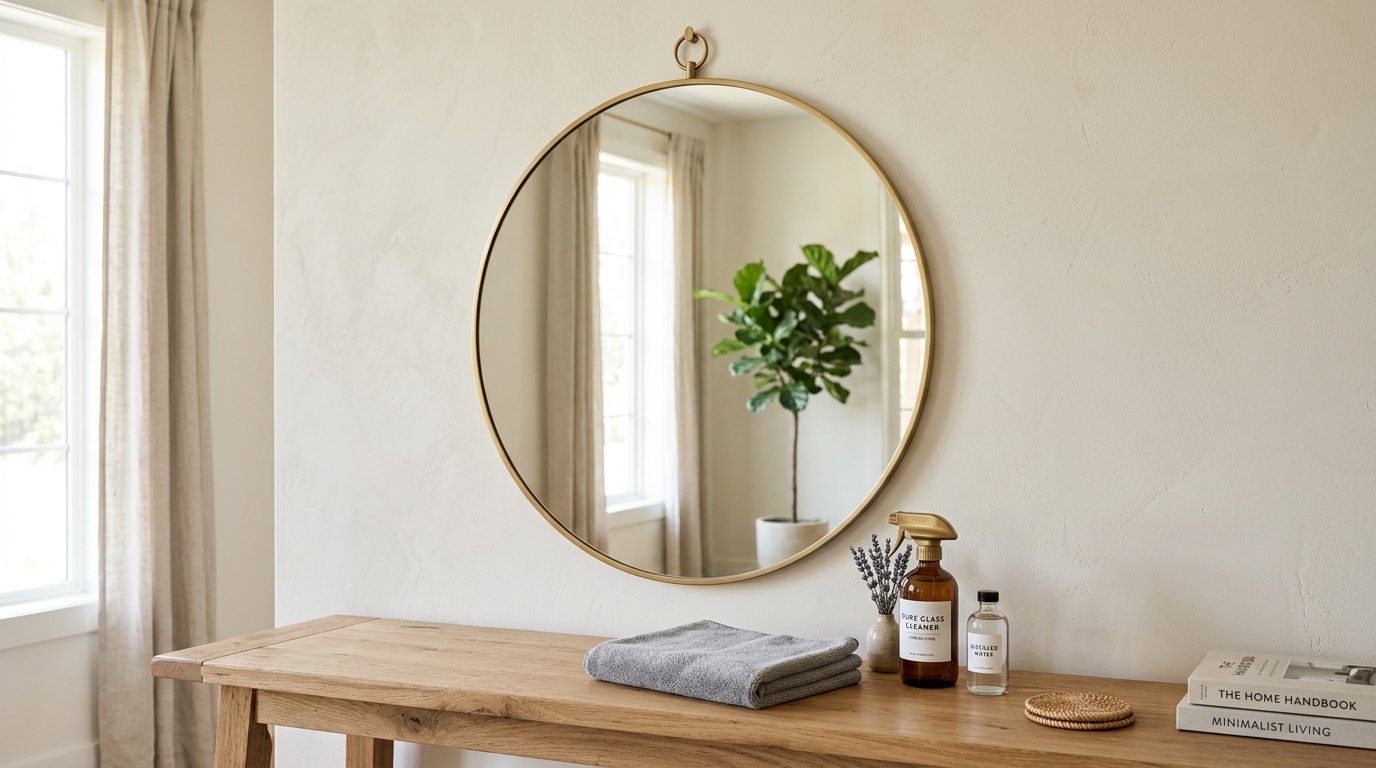
Mirrors open up small rooms. They bounce light across dark corners. They serve as perfect background pieces for photography. I use them constantly for Decor Home Living Room setups. But mirrors require strict care.
In May 2023, moisture destroyed a beautiful piece in my hallway. The damp air got behind the frame. It caused black spots across the entire silver backing. The piece looked ruined. During the summer of 2025, I saw this exact issue again. A gold frame circle mirror in my bedroom gathered water at the absolute bottom curve every time I wiped the glass.
Now I stick to a strict routine. I only clean my pieces with distilled water. I wipe the bottom edges with high purity isopropyl alcohol. I strictly use Norwex or 3M microfiber cloths. This routine prevents water from sitting on the frame edge. Your mirrors will last decades if you keep them dry.
What Natural Materials Work Best For A Minimalist Home?
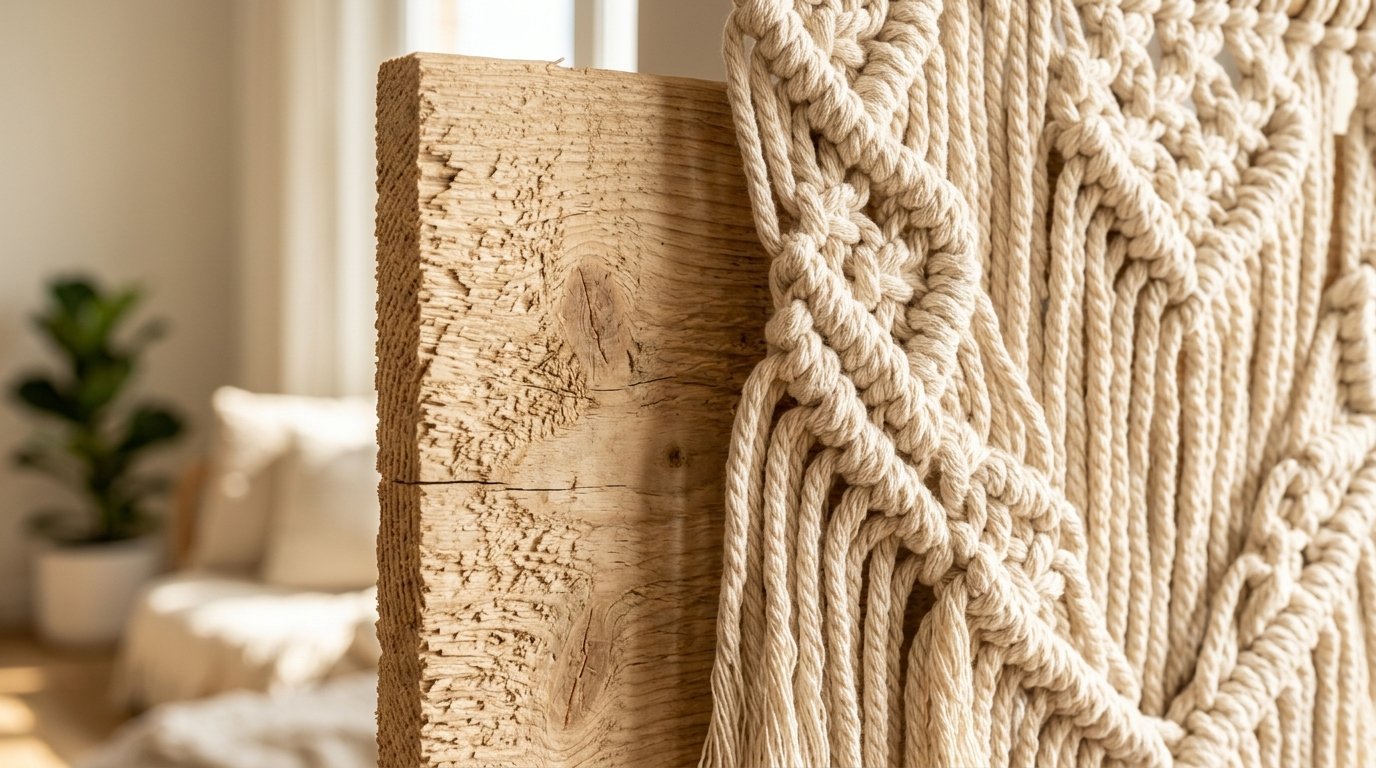
Wood and heavy textiles anchor a room. They ground the space. You want materials that feel real to the touch.
Three months ago, I threw a fresh piece of pine right into the trash. I tried to craft a farmhouse welcome sign. It looked cluttered. It ruined the Minimalism Interior vibe completely. Wood works best when kept raw and simple. You do not need painted words on wood. You just need the grain.
I lean heavily toward macrame wall hangings. A simple handmade piece from a local artisan softens a harsh wall. It fits that aesthetic room vibe nicely. It catches the afternoon light perfectly.
- Look for raw oak frames.
- Find thick cotton textiles.
- Avoid cheap plastic finishes.
- Use matte metals over glossy ones.
These materials absorb light instead of reflecting it harshly. They make your house feel like a quiet sanctuary.
Which Pieces Should Beginners Buy First?
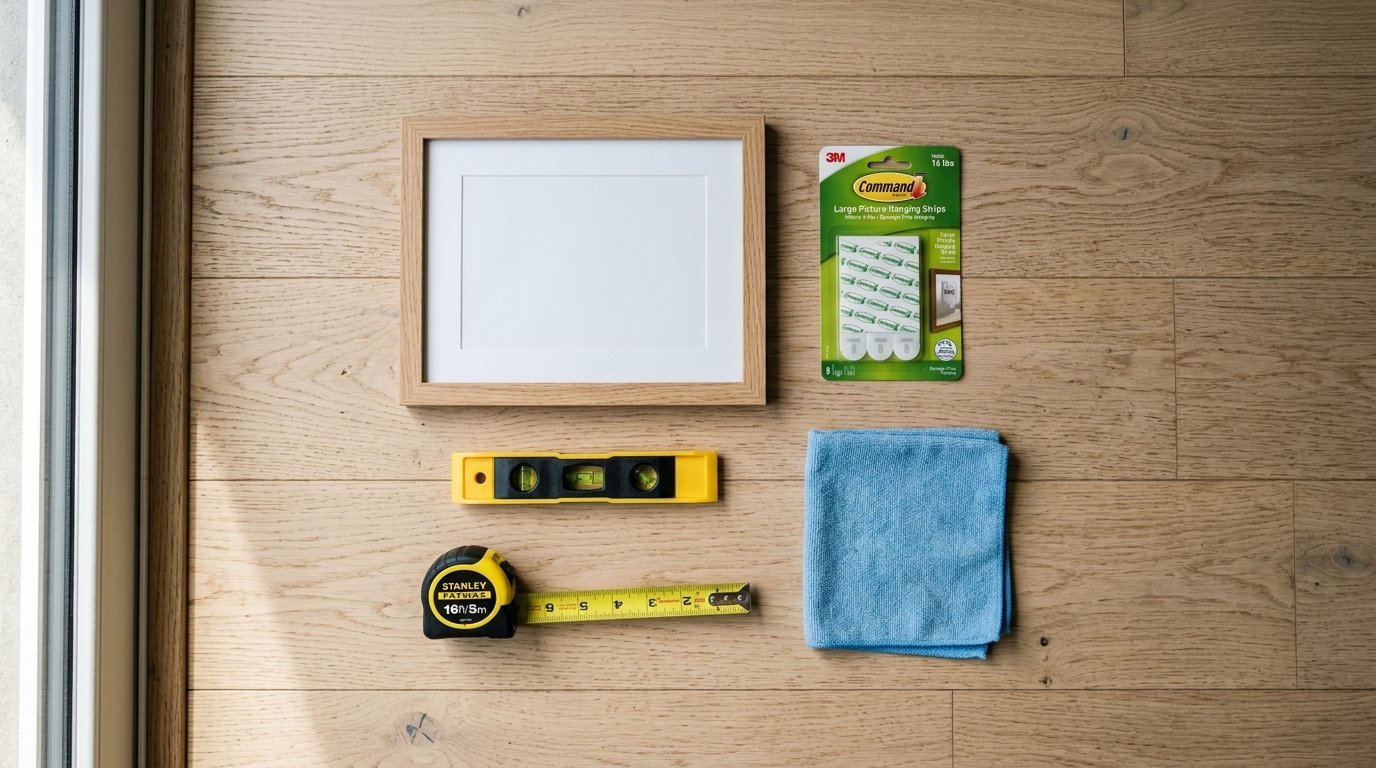
You need a starter kit. I track pricing across dozens of vendors. I recommend specific brands because they last.
Start with a gallery frame from Framebridge. They charge around one hundred dollars for a custom cut. The quality beats anything at big box stores. Next, grab a simple floating shelf from West Elm. It costs about sixty dollars. It gives you a physical ledge for small plants or leaners.
- Framebridge custom frames.
- West Elm wooden floating shelves.
- Command Strips heavyweight hangers.
- Umbra modern round mirrors.
- Crate and Barrel textile hangings.
- Minted independent artist prints.
- Norwex cleaning cloths.
- 3M microfiber towels.
These eight brands provide a solid base. You spend your money once. You get pieces that survive multiple moves and layout changes.
How Do You Arrange Art In A Minimalist Living Room Style?
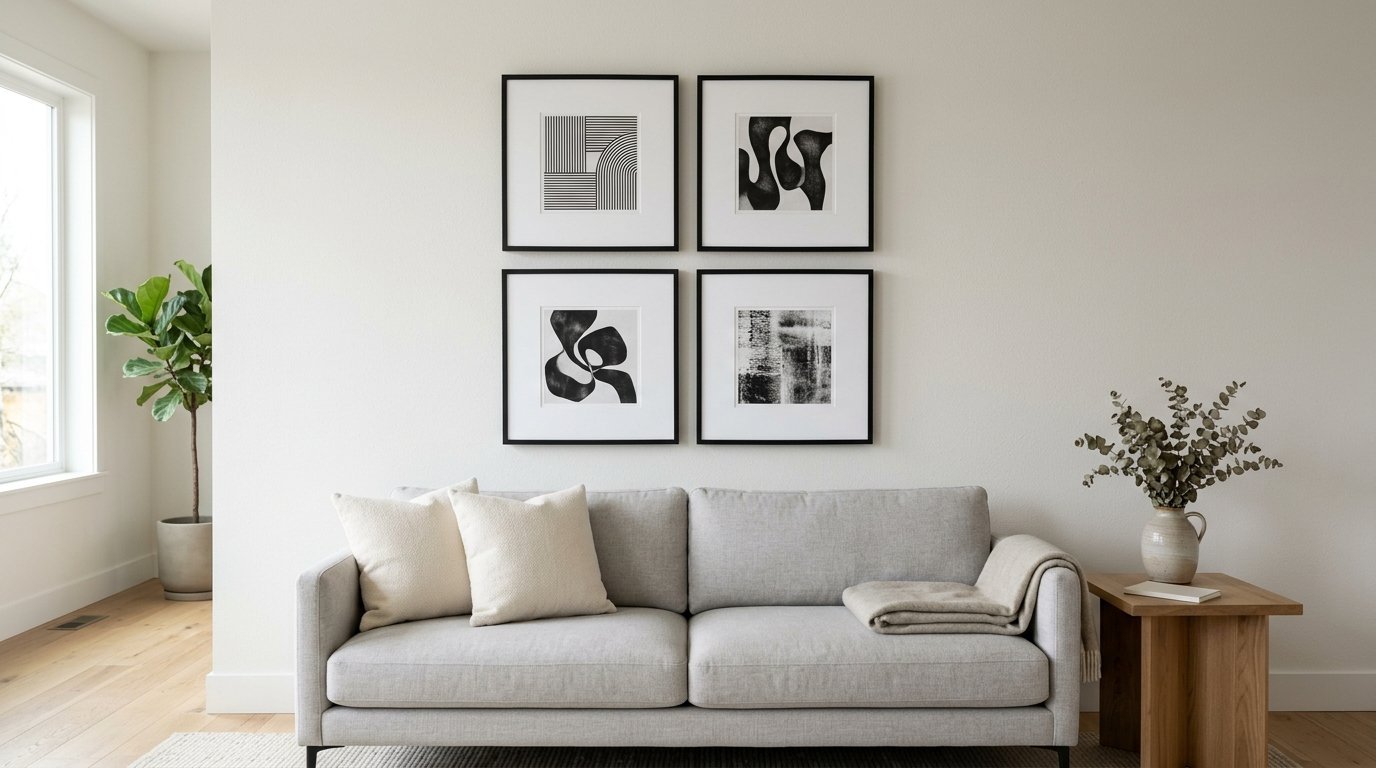
Placement dictates the entire feel of the room. People hang their art way too high. You want the center of your piece exactly fifty seven inches from the floor. Galleries use this exact measurement. It works perfectly.
If you hang a single large piece, center it over your sofa. Leave at least eight inches of space between the sofa back and the bottom of the frame.
If you build a micro gallery, keep the spacing tight. Leave exactly two inches between frames. Treat the group of frames as one single large piece. Map it out on the floor first.
I use painter tape to trace the frames on the wall. I step back. I check the balance. I leave the tape up for two days. If it feels right after forty eight hours, I pick up a hammer. This stops you from putting unnecessary holes in your drywall.
When Should You Leave A Wall Completely Bare?
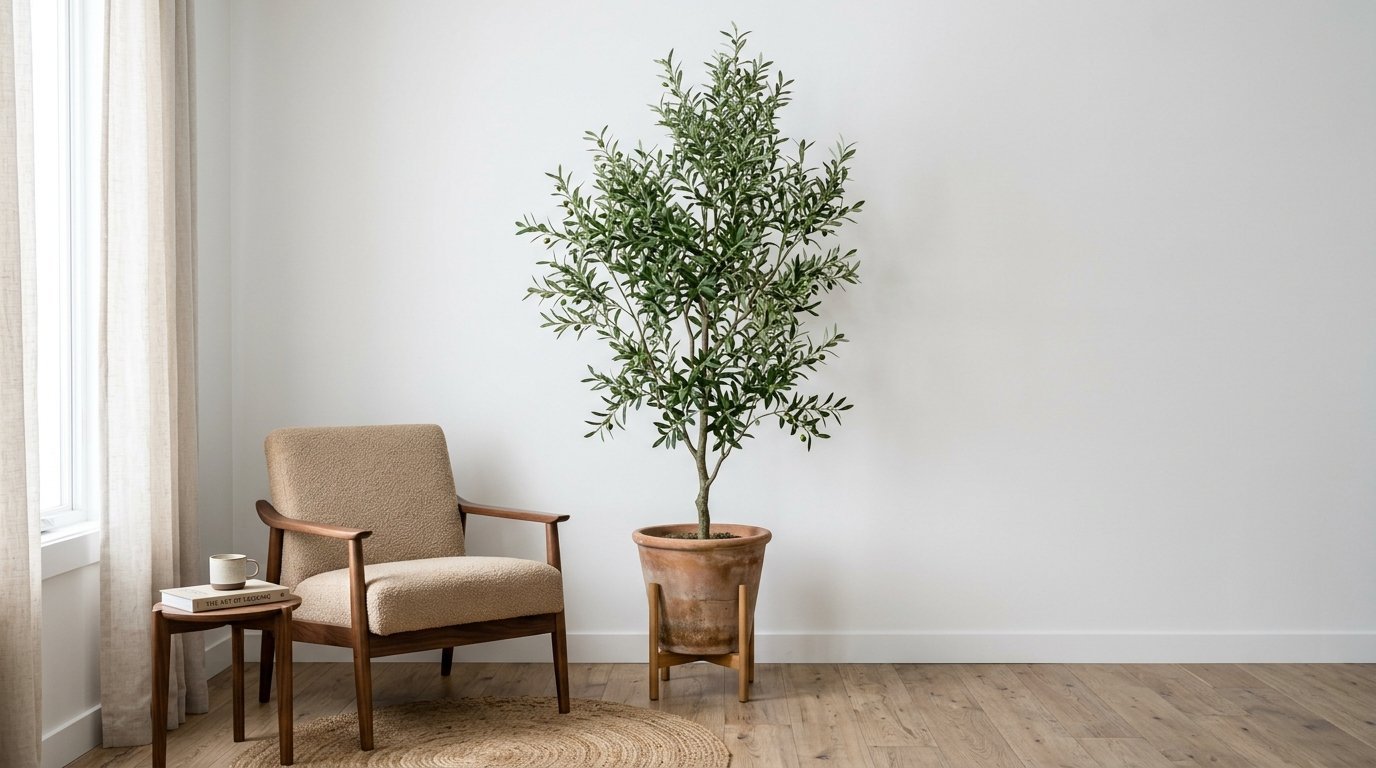
Silence holds power. A blank wall forces your eyes toward other architectural details. You do not have to cover every square inch of your house.
I always leave the wall behind my television completely bare. Screens generate visual noise. Flanking a screen with art makes the room feel chaotic. The space feels cramped.
Hallways also benefit from empty stretches. If you have a narrow hallway, art on both sides creates a tunnel feeling. Decorate one side. Leave the opposite side blank.
Minimalist Interior Design relies on restraint. Think about an art gallery. The white space around the painting matters just as much as the painting itself. Your room works the exact same way. Give your eyes a place to land.
What Lighting Works Best For Minimalism Interior Setups?
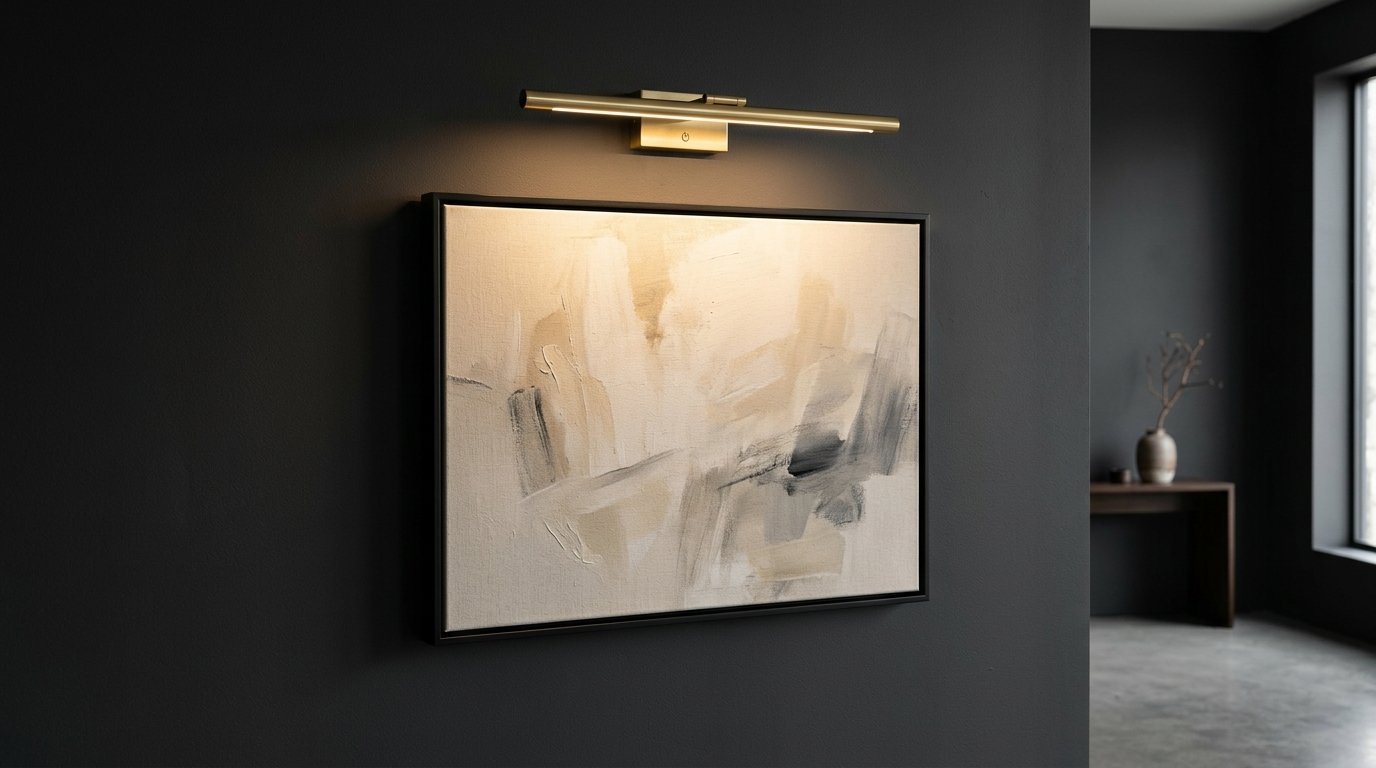
You can buy a beautiful piece of art. If you light it poorly, it looks cheap. Bad lighting ruins good Decor Home Living Room spaces.
Overhead lighting casts harsh shadows. It flattens the texture of your textiles. You want directional light.
I use battery powered picture lights. They cost about forty dollars on Amazon. You mount them right above your frame. They cast a warm glow directly onto the canvas. They require zero hardwiring.
- Use warm white bulbs.
- Avoid daylight bulbs indoors.
- Place floor lamps near wall hangings.
- Let natural window light hit textured pieces.
Shadows define texture. A macrame piece looks flat under overhead lights. When window light hits it from the side, the knots cast long shadows. The piece comes alive.
Where Do People Make The Biggest Decorating Mistakes?
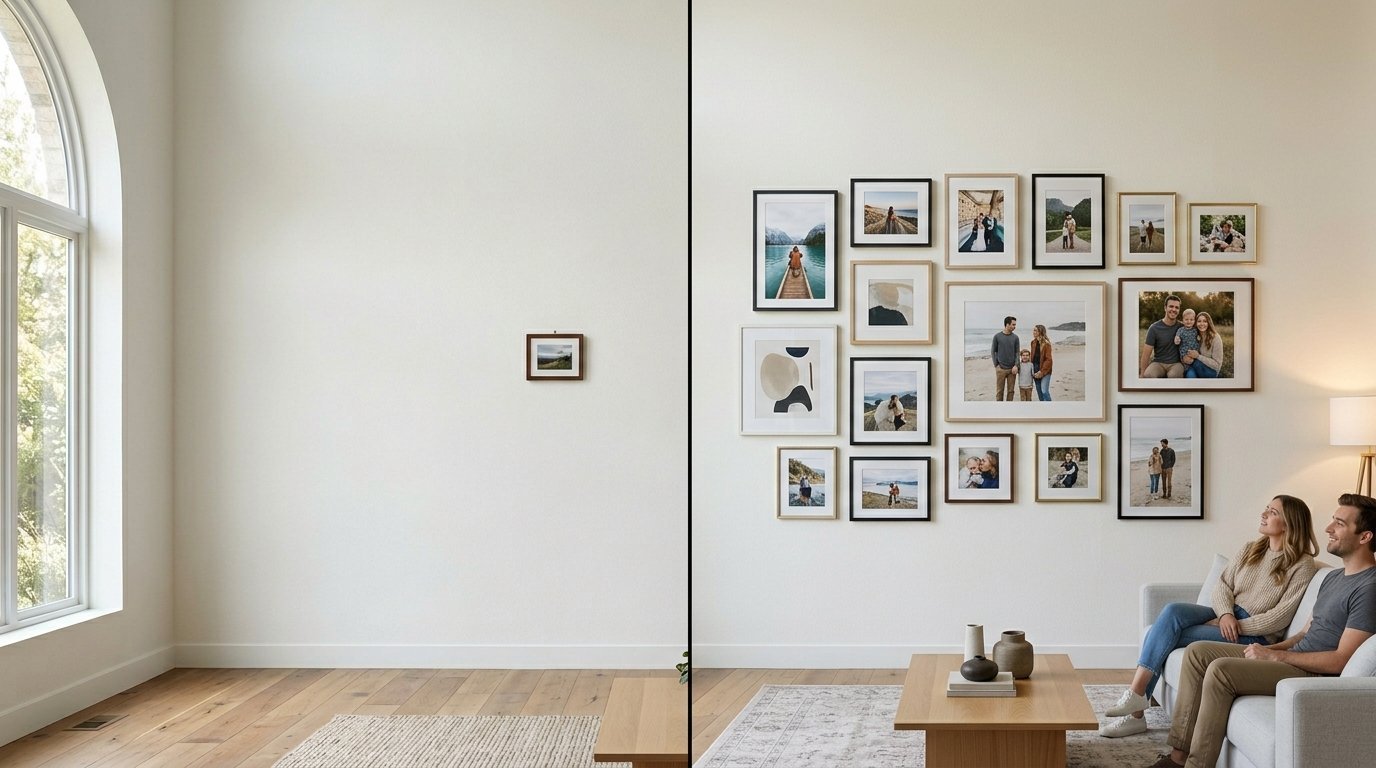
Scale ruins more rooms than color choices. People buy tiny pieces of art for massive walls. A tiny frame on a big wall looks like a postage stamp. It looks accidental.
Go bigger than you think. If you have a ten foot wall, an eight inch frame will disappear. You need a piece that spans at least three feet.
Another mistake involves matching everything perfectly. A room feels dead when the wood floor matches the wood frame exactly. You want slight variations. Mix a dark walnut frame with a light oak shelf. The contrast gives the room life.
I see people hang family photos in cheap plastic frames. If you want to display family memories, print them in black and white. Put them in thick white mats. Frame them in solid black wood. This transforms a basic photo into a piece of fine art.
How Do You Hang Heavy Items Safely?
You found the perfect solid oak mirror. It weighs forty pounds. You feel terrified of ripping a chunk out of your drywall.
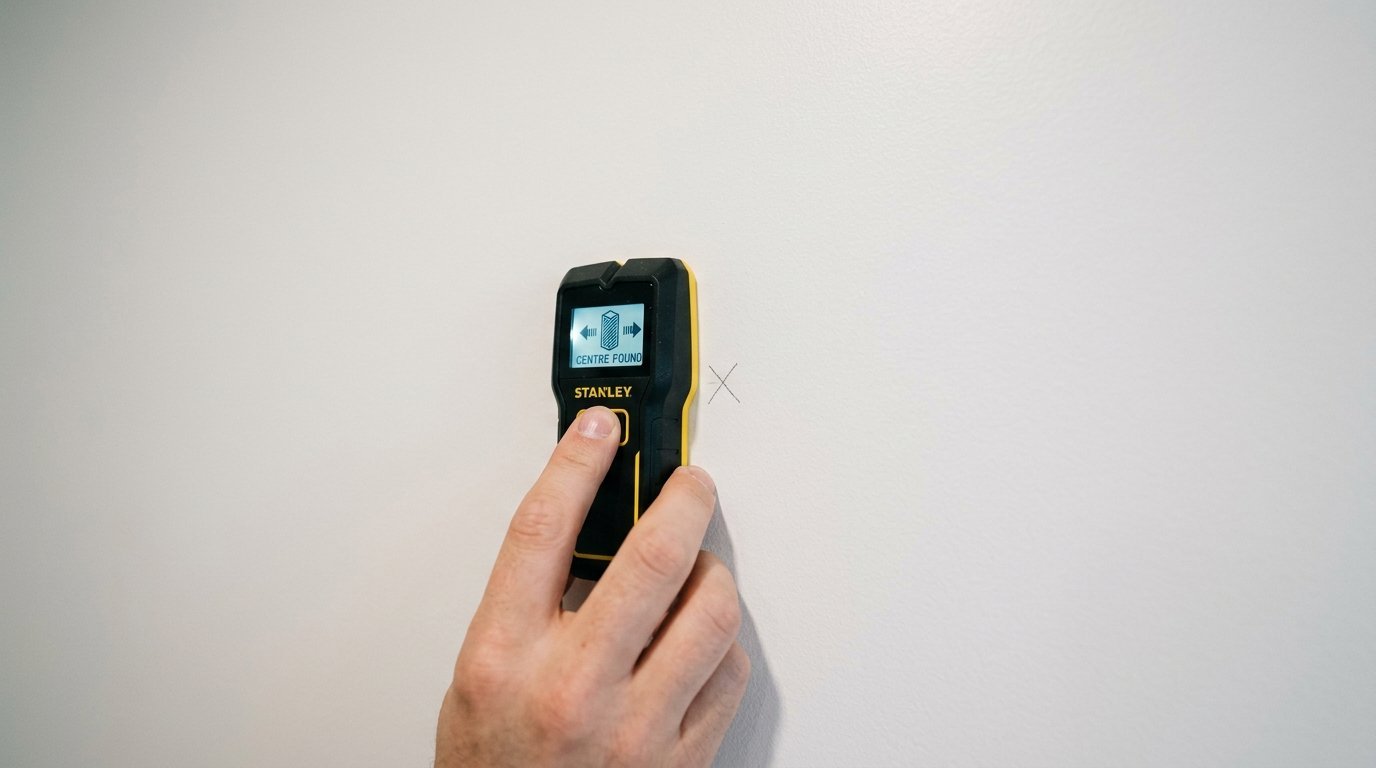
Never guess where your wall studs live. Buy a magnetic stud finder for ten dollars. It will save you hundreds of dollars in drywall repairs.
If you hit a stud, use a long wood screw. If you miss a stud, you must use drywall anchors. I only use the metal threaded anchors. The cheap plastic ones pull out over time.
For anything under ten pounds, I strictly use Command Strips. They hold firmly. They pull off cleanly. I buy the heavyweight velcro versions. I press them against the wall for a full sixty seconds. I wait a full hour before hanging the frame. This waiting period allows the adhesive to set completely.
Frequently Asked Questions
What makes a living room look minimalist?
A space looks calm when surfaces stay clear. You limit color palettes to neutral tones. You hide visible cords. You choose fewer large statement pieces over dozens of tiny trinkets.
How do I choose art for a blank wall?
Look at your existing furniture colors. Pick one neutral shade. Find a piece that features that exact shade heavily. Stick to abstract shapes or simple line drawings.
Can I mix metal finishes in a minimalist room?
Yes. Mixing two metals works well. Matte black pairs perfectly with brushed brass. Never mix more than two. Keep the finishes matte rather than glossy.
How high should a mirror hang?
The center of the mirror should hit exactly eye level for an average adult. This usually means fifty seven to sixty inches from the floor to the absolute center of the glass.
Is it okay to have nothing on the walls?
Yes. Bare walls highlight beautiful furniture. They draw attention to large windows. If your room features great natural light, let the walls stay empty.
How do I warm up a stark white wall?
Bring in natural wood tones. Hang a textile piece. Place a tall olive tree in the corner. Wood and fabric instantly soften harsh white paint.
What is the cheapest way to decorate a large wall?
Paint a large geometric arch directly onto the drywall. It costs the price of a sample paint quart. It acts as a massive piece of custom art.
Do Command Strips really work for heavy frames?
They work for items under ten pounds. You must use the heavy duty velcro strips. You must clean the wall with rubbing alcohol first.
How do I fix a room that feels too cluttered?
Take every single piece of decor off the walls. Put them in a box. Wait three days. Only hang back the pieces you actually missed seeing.
What size art fits over a standard sofa?
The art should span about two thirds of the sofa length. If your sofa measures eighty inches, your art piece or gallery should span about fifty three inches.
Should all picture frames in a room match?
No. An exact match looks like a hotel room. Mix raw wood frames with matte black frames. Keep the style similar, but vary the materials.
How do I clean a mirror without leaving streaks?
Use a dry microfiber cloth first to grab dust. Spray distilled water directly onto a fresh cloth. Wipe in a tight S pattern from top to bottom.
Final Thoughts On Blank Spaces
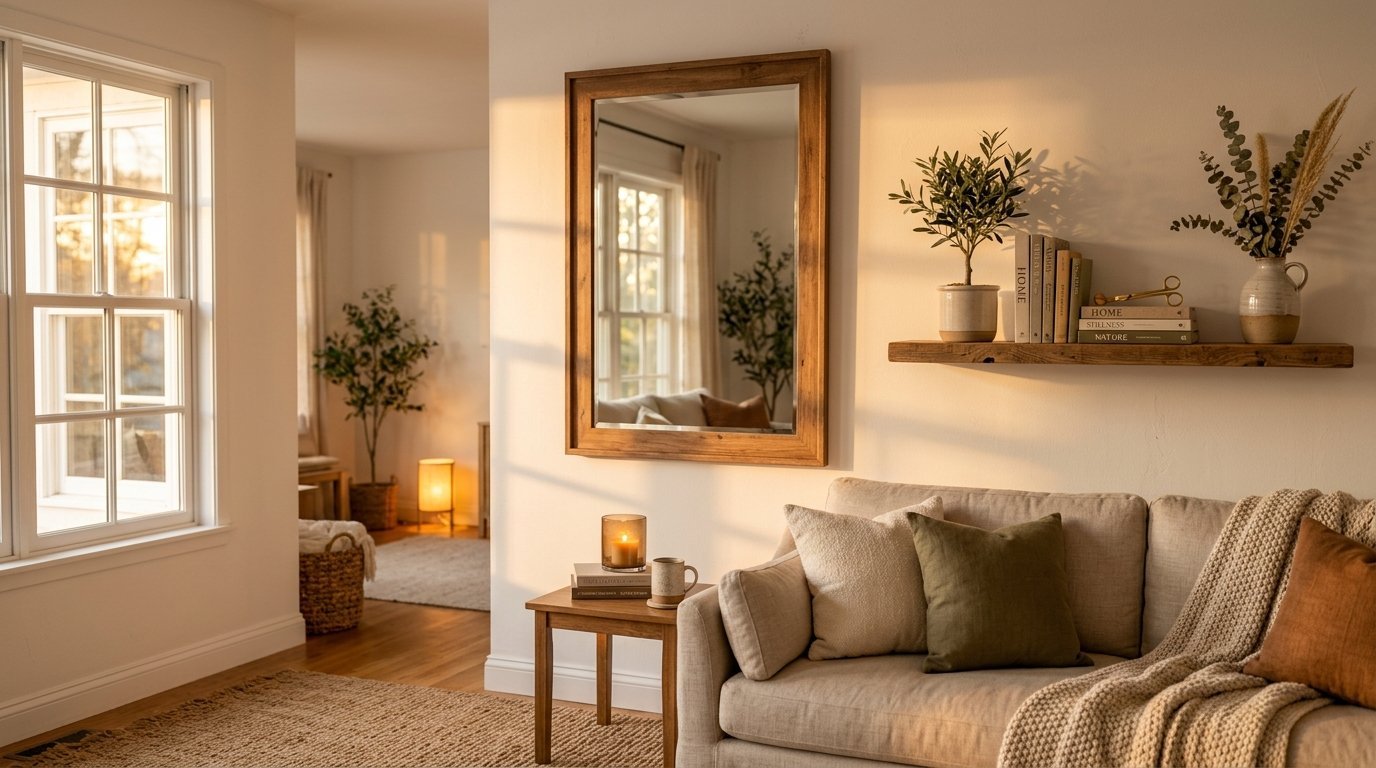
A bare wall offers a fresh start. You hold complete control over what enters your space. Every piece you hang tells a quiet story about what you value.
Take your time. Do not rush to fill every corner just to make the house feel finished. A rushed room always feels chaotic. A slow room feels intentional.
Start with one large piece. Center it perfectly. Step back and live with it for a week. Let the space breathe. You will know exactly what the room needs next. Trust your eyes. Your space will come together beautifully.

Anya Castellan is the Founder and Editor-in-Chief of Home Wall Trends. An art history graduate of the Rhode Island School of Design with twelve years of experience writing for leading American design publications, she specializes in composition, gallery wall theory, and the quiet architecture of domestic space. A former contributing editor at Architectural Digest and guest lecturer at Parsons School of Design, Anya personally reads and signs off on every piece before it is published.