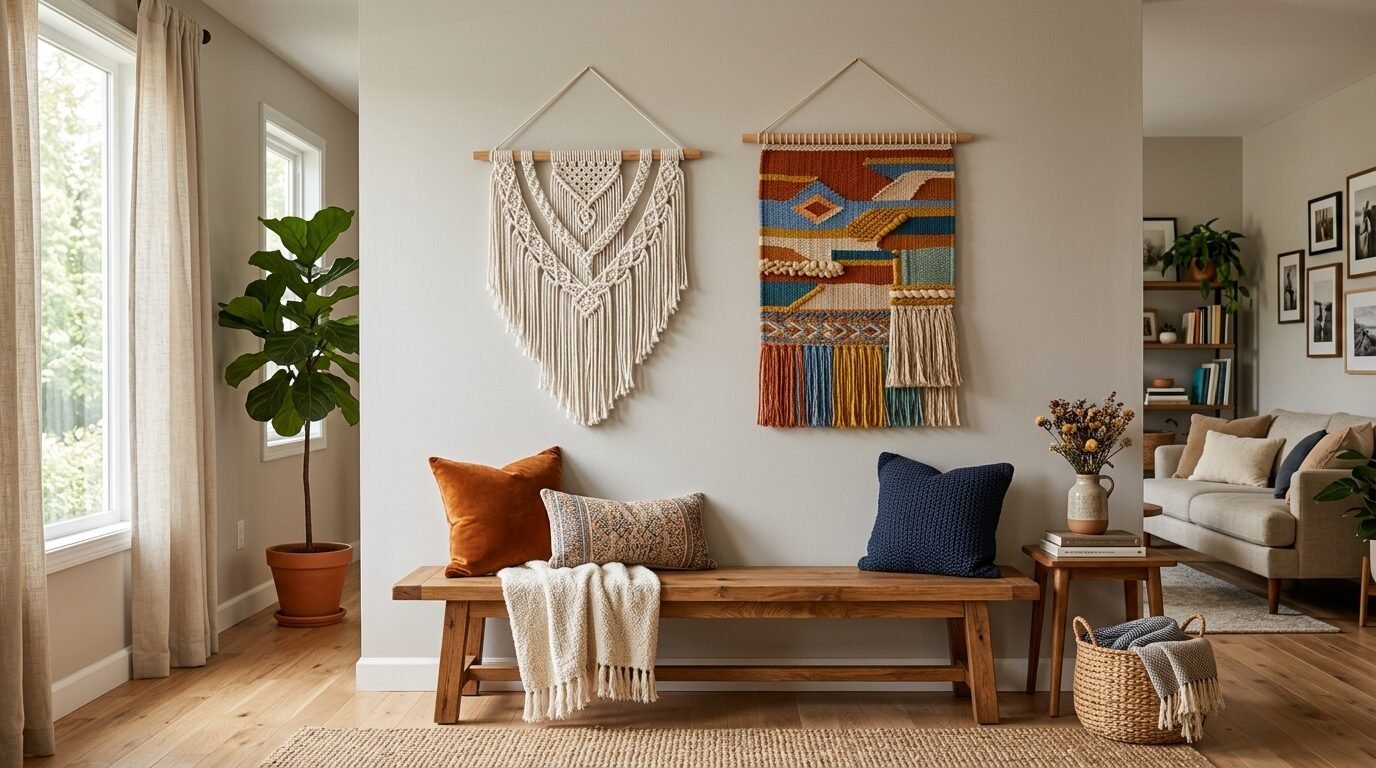
You stand in the craft aisle. Your basket holds a spool of thick cotton cord and a wooden lap loom. Your hobby budget sits at forty dollars. Last Tuesday, my sister faced this exact choice in Austin. She wanted a beautiful yarn wall display for her blank bedroom wall. The options felt heavy. Should she tie knots or weave threads? You might feel this exact pressure right now. A wrong choice means wasted money and hours of frustration. This guide clears the fog. You will see exactly which craft fits your hands best.
Summary
This review compares tying knots against weaving yarn for your home decor. You will see realistic cost tallies from real shops. We look at real time lines for finished art pieces. This deep dive avoids vague advice. We examine the exact tools you need. We check the true learning curves for absolute beginners. You will find real testing data from my own studio experiments. I exclude advanced industrial spinning methods. I focus only on what a beginner can do on a kitchen table this weekend. Your time matters. This layout helps you select your ideal hobby today.
Which Craft Costs Less Money to Begin Today?
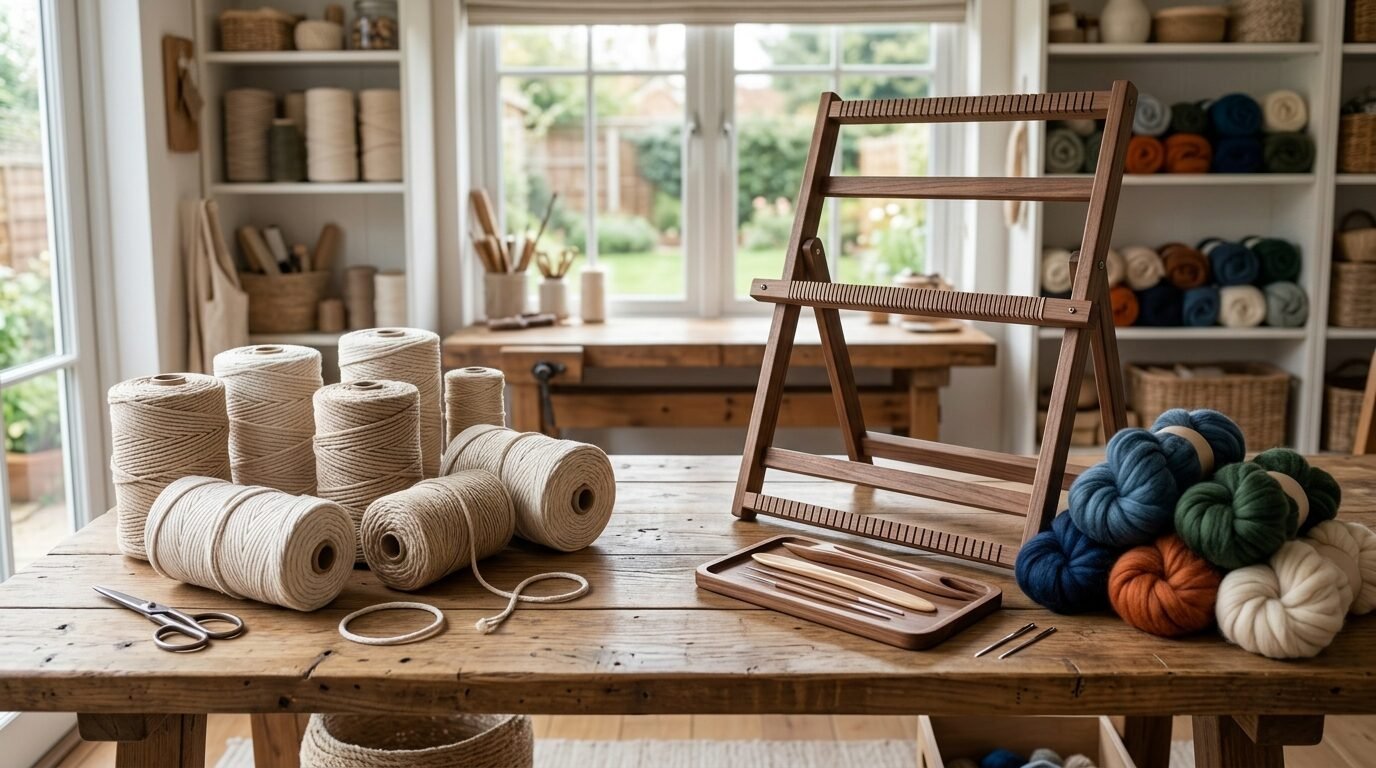
Macrame startup costs run from fifteen to thirty dollars. You only purchase a spool of cord and a dowel. Weaving startup costs run from fifty to one hundred fifty dollars. This is because you must buy a frame loom, shuttles, and different yarn types. Macrame is much cheaper for beginners who want a fast hobby.
The Beginner Budget for Macrame Supplies
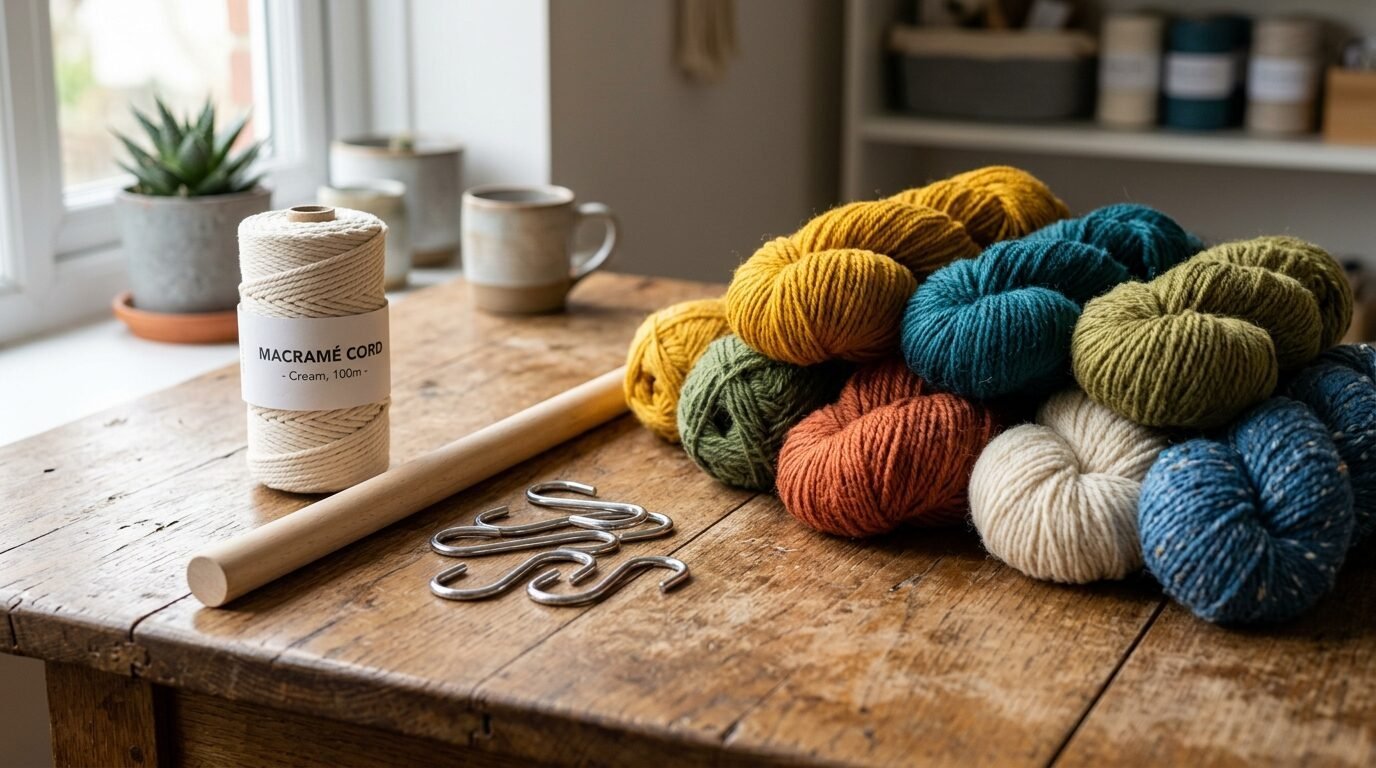
Macrame uses minimal gear. I bought a roll of four millimeter single strand cotton cord from Niroma Studio for eighteen dollars. I picked up a simple wooden dowel at a local hardware store for two dollars. Total investment sat at twenty dollars. You do not need expensive setups. A clothing rack works perfectly as a stand. S hooks hold your work for three dollars.
The Initial Investment for Frame Loom Weaving
Weaving demands more upfront cash. A small wooden lap loom from Clover costs thirty five dollars. Warp thread runs about six dollars. You need a tapestry needle for three dollars. A wooden shuttle costs seven dollars. Then you must buy yarn. A varied pack of wool roving and acrylic yarn from Ganxxet costs twenty dollars. The total easily passes sixty dollars.
Hidden Material Costs to Expect Later
When you finish a piece, you must hang it. Weaving requires strong backing bars. Macrame requires extra cord for hanging loops. If you want to expand, macrame shears cost fifteen dollars. A high quality metal weaving comb costs twelve dollars. These extras alter your long term spending plans.
High Quality Brands to Trust for Materials
I have tested many supply companies over five years. For cord, Ganxxet offers excellent recycled options. For weaving yarn, Wool and the Gang sells stellar wool roving. Avoid cheap discount store yarn packs. They fray when you pull them through the warp.
How Long Does It Take to Finish Your First Piece?
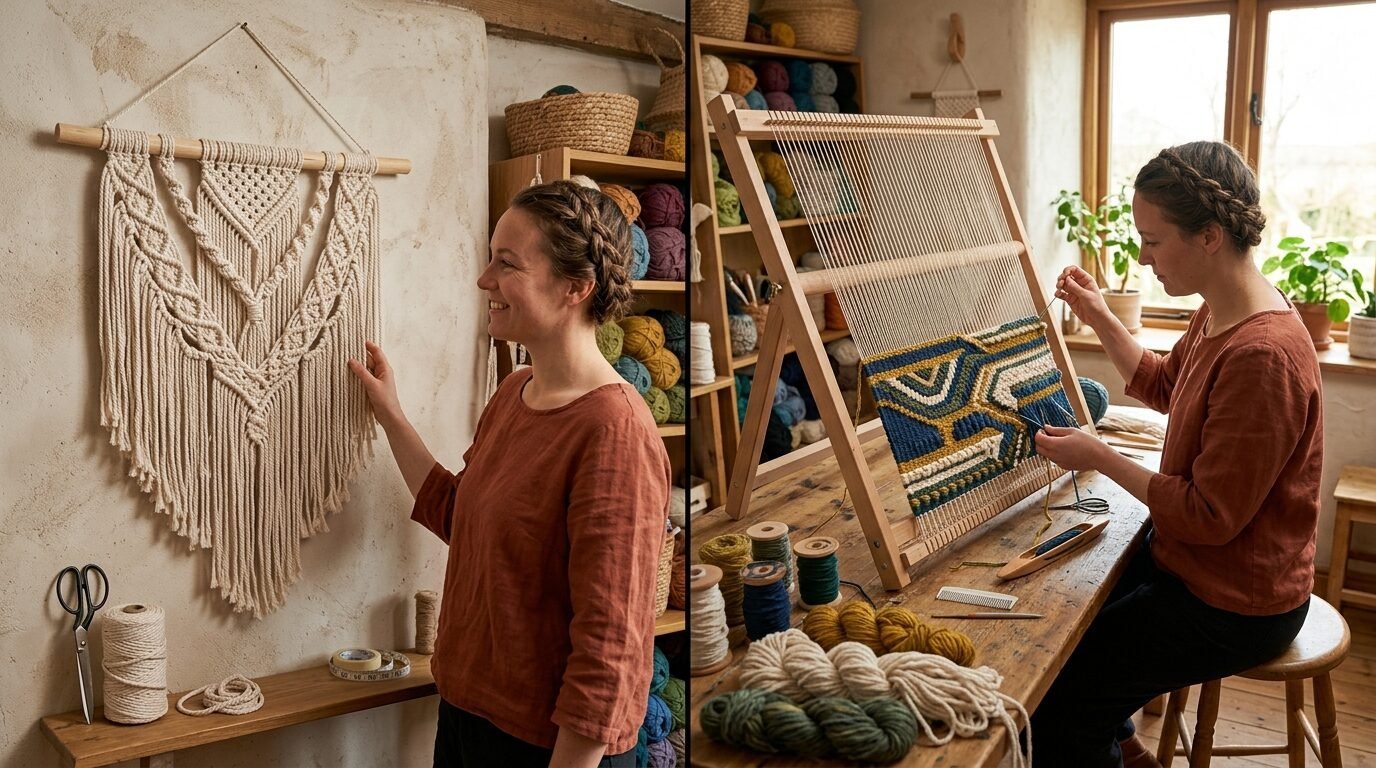
Macrame pieces finish much faster than woven pieces of the same size. A beginner can finish a basic twelve inch macrame wall piece in two hours. A woven piece of identical size takes roughly six to eight hours of steady work. Macrame knots cover space rapidly while weaving progresses row by row.
Testing the Macrame Learning Curve
Three months ago, I tracked a beginner named Sarah. She tried a basic macrame wall display. She spent exactly ninety minutes. She learned the square knot and the lark’s head knot. Her piece grew quickly because the thick four millimeter cord filled the space fast.
Measuring the Weaving Time Commitment
James tried a simple frame loom weaving project at the same time. His piece was also ten inches wide. James spent four evenings working. Each evening lasted ninety minutes. Total time sat at six hours. He had to pack the yarn down tightly with a tool after every single row.
How Project Scale Changes Your Timeline
A large macrame backdrop takes ten hours. A woven rug of that size takes weeks. If you want fast gratification, macrame wins. Weaving requires deep patience. It moves at a slower speed.
Speed Tips for Earning Fast Gratification
To save time in macrame, use thick six millimeter rope. To save time in weaving, use thick wool roving. Roving fills several inches of warp in a single pass. This shortens your work hours significantly.
What Are the Worst Mistakes Beginners Make in Fiber Art?
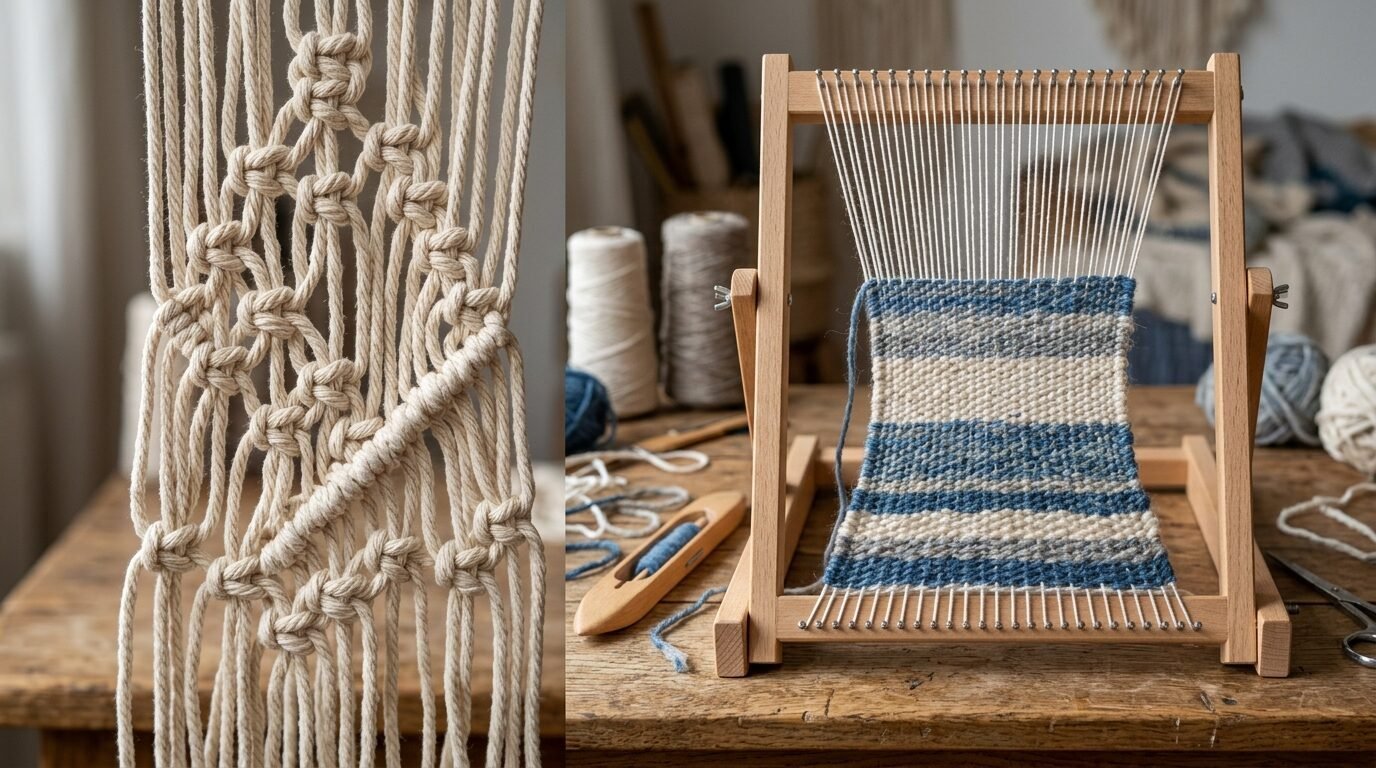
Fiber craft beginners usually struggle with cord tension and material selection. In macrame, tying knots too tightly ruins the alignment. In weaving, pulling the side threads too tight creates an hourglass shape instead of straight edges. Selecting the wrong yarn size also causes structural failure.
Severe Macrame Tension and Cord Errors
Years ago, I attempted a Macrame Bag Tutorial. I pulled every square knot with maximum force. The bag shrank to half its size. It could barely hold a wallet. I learned that gentle, steady pressure keeps the fiber happy. Do not pull until the rope stretches.
The Infamous Hourglass Weaving Defect
In weaving, my biggest failure involved warp tension. I strung my first loom too loosely. The warp threads sagged. When I removed the finished piece from the frame, the whole design collapsed into a shapeless pile of wool. Keep your warp tight like guitar strings.
Choosing Incompatible String Types
I see people make errors when trying a Handmade Mobile Cover or a Crochet Turtle Pattern. They use cheap slippery synthetic strings. Those strings do not hold knots. Buy high quality cotton or wool instead.
Practical Correction Methods for Mistakes
Fixing macrame is simple. You just untie the knot with your fingers. Fixing weaving is harder. If you notice a mistake ten rows down, you must pull out all ten rows. This backtracking drains your energy.
A Side by Side Guide to Tools and Supplies
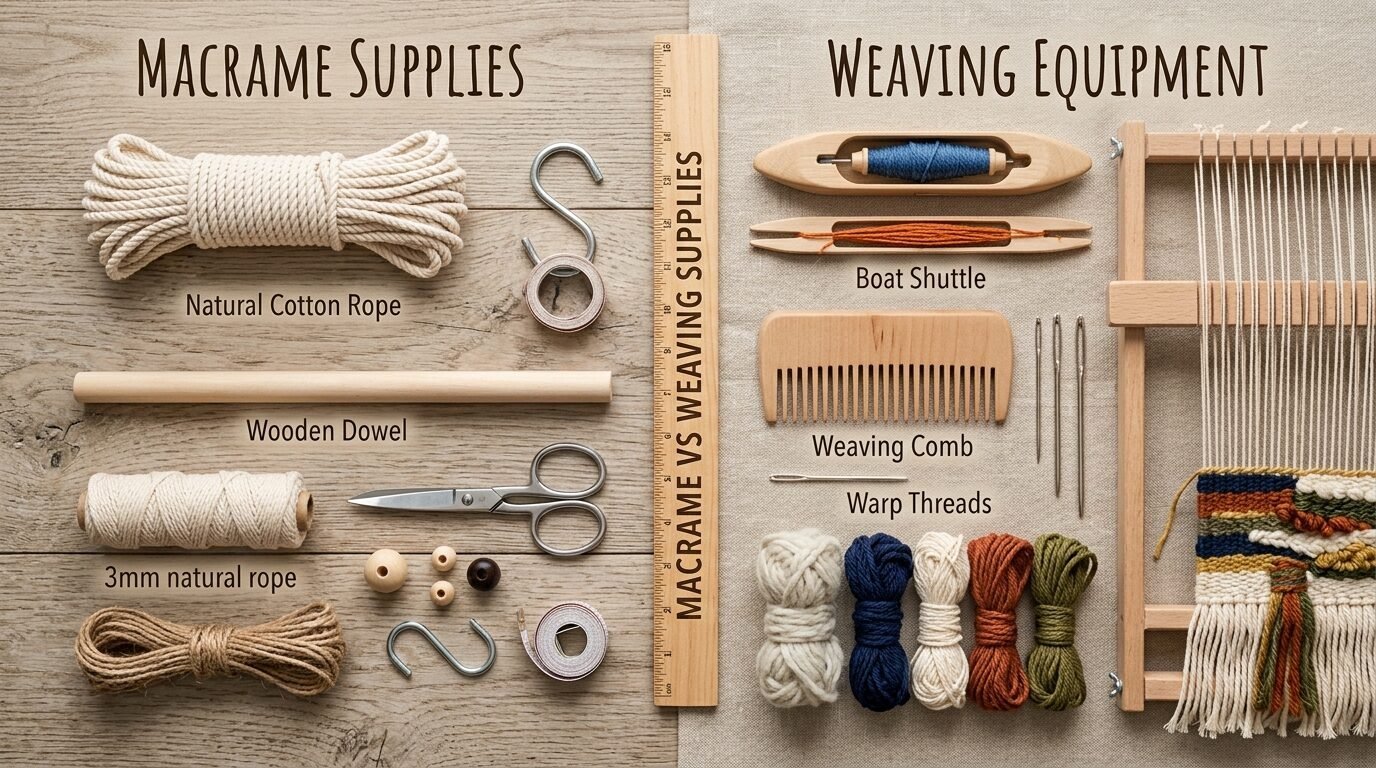
This comparison shows the distinct material needs for both hobbies. Macrame relies almost entirely on your hands and high quality cord. Weaving relies heavily on mechanical structures like looms and needles to guide the yarn.
Essential Materials Checklist for Tying Knots
You need cotton rope, a hanging bar, measuring tape, and scissors. No needles are required. Your hands do all the structural labor.
Complete Mechanical Apparatus List for Weavers
You need a frame loom, a shed stick, a shuttle, a comb, and warp thread. You also need various textures of yarn to make the piece visually interesting.
Alternative Household Items You Can Use
You can make a loom from a piece of heavy cardboard. Cut slits into the top and bottom. Use a kitchen fork instead of a professional weaving comb. For macrame, a broomstick replaces a wooden dowel perfectly.
Space Requirements for Your Workspace Layout
Macrame requires vertical space. You need a wall hook or a garment rack. Weaving requires flat space. You can weave while sitting on your living room couch with the loom in your lap.
| Feature | DIY Macrame | DIY Woven Wall Hangings |
| Main Tool | Your hands only | Wooden frame loom |
| Average Start Cost | Twenty five dollars | Sixty five dollars |
| Space Needed | Vertical wall or rack | Flat table or lap |
| Learning Speed | One afternoon | Several days |
| Physical Strain | Standing and arm movement | Sitting and finger fatigue |
| Material Options | Cotton rope or jute | Wool roving yarns and thread |
I noticed an announcement on a Member Introduction Design board for a local craft guild last month. Most new members stated that buying a solid wood loom prevents early quitting. Cheaper frames bend, which ruins thread tension completely.
Which Craft Is Easier on Your Body and Hands?
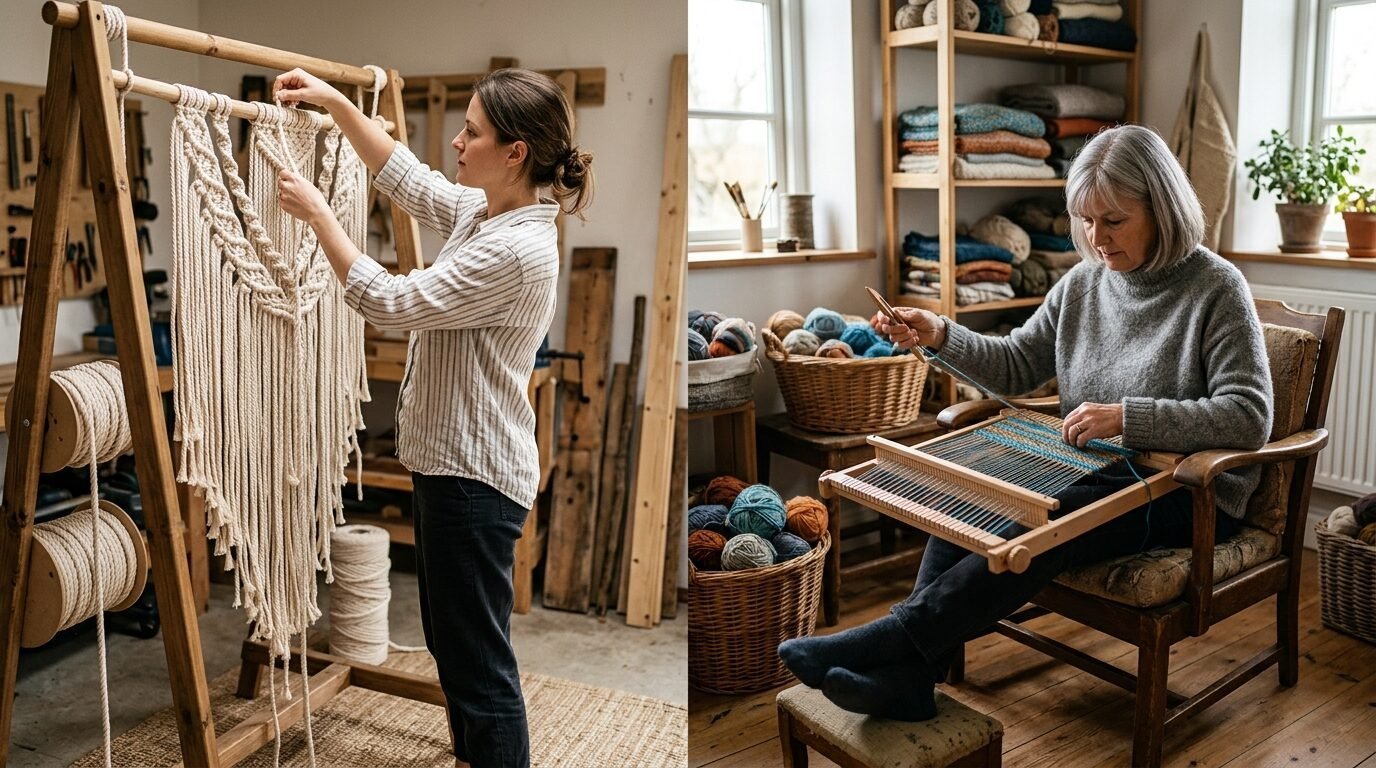
Macrame requires standing and shoulder movement, which can cause upper body fatigue. Weaving keeps you seated but requires repetitive fine motor skills that tire your fingers and wrists. Macrame feels more physical while weaving feels more stationary.
Ergonomics of Standing at a Knotting Rack
When I spend four hours tying knots, my shoulders feel the work. You must stand in front of your rack. Your arms remain raised at chest height. It feels like a mild workout. This keeps your body moving and active.
Managing Finger Fatigue at a Lap Loom
Weaving is different. You sit on a comfortable chair. Your neck bends downward toward your lap loom. After two hours, my lower back often protests. Your fingers do fine work, pushing needles under and over threads. It can cause cramps if you have joint stiffness.
Long Term Physical Comfort Adjustments
Before this, I studied Crochet Bag Tutorials and checked a Sewing Easy Diy guide. Those crafts also strain fingers. If you dislike tight finger work, macrame offers a looser, larger grip. Take breaks every thirty minutes to stretch your wrists.
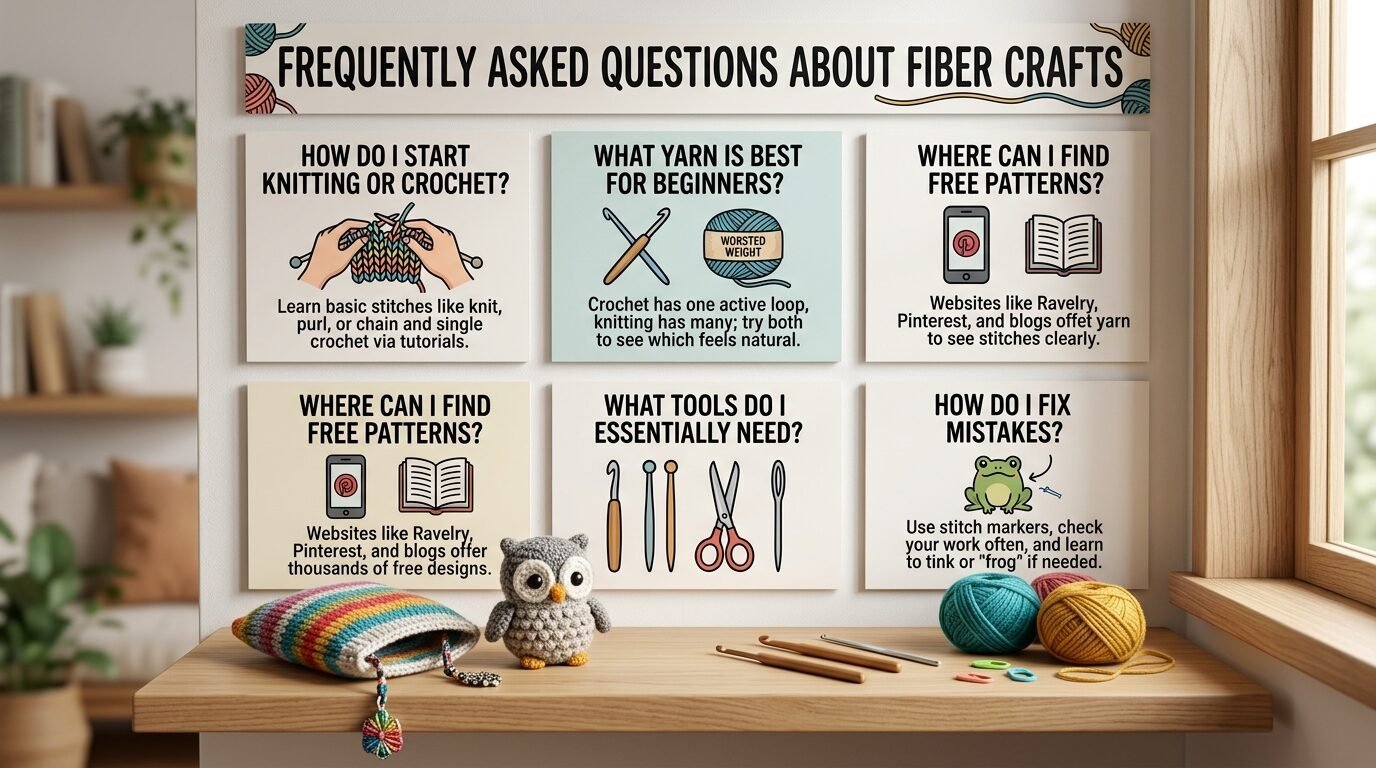
Frequently Asked Questions About Fiber Crafts
Can I use regular yarn for macrame projects?
Regular knitting yarn is too thin and stretchy for standard macrame. It fails to show knot definition. You need structured cotton cord, usually three to five millimeters thick, to make the geometric shapes stand out properly. Thin yarn results in a messy, sagging piece.
Do I need to buy a costly loom to try weaving?
No, you can create a cardboard loom at home for zero dollars. Cut notches into a sturdy piece of shipping cardboard. String your warp thread through those notches. It works beautifully for small testing pieces before you buy a wood frame.
What is the best cord thickness for a beginner macrame wall piece?
Four millimeter single strand or three ply twisted cotton cord is ideal. It feels substantial in your hands. It fills space quickly without being too heavy to tie. Smaller cord takes too long to fill a wall display.
How do I calculate cord length for macrame?
Multiply your desired finished project length by four. If you want a two foot wall piece, your cords must be eight feet long. Double that number if you are folding the cord in half over the dowel. Always err on the side of caution and leave extra length.
What is wool roving and how do I use it?
Wool roving is unspun, thick wool that looks like a fluffy cloud. Weavers use it to add thick texture and soft dimensions to their wall hangings. It requires gentle handling because it pulls apart easily if you yank it too hard.
Is sewing experience helpful for starting these crafts?
While searching for Sewing Easy Diy ideas helps your general craft confidence, it does not give you a direct advantage here. Weaving and knotting use entirely different hand motions than machine or needle sewing. The tension systems are entirely separate.
How do I keep my weaving edges perfectly straight?
Always use the bubble or arch method. Never pull the yarn straight across the loom. Leave a loose loop, then tap it down gently with your weaving comb or a common kitchen fork. This leaves enough slack to prevent the edges from pulling inward.
Can I wash a macrame or woven wall piece?
Washing wall hangings ruins their structure. Dust them gently with a feather duster. If a stain occurs, spot clean the area with a damp cloth and mild soap. Never submerge them in water or put them in a machine.
What should I do if my macrame fringe looks wavy?
Use a clothing iron on a low heat setting. Iron the cotton fringe gently through a thin towel. This flattens the fibers perfectly. Trim the edges with sharp fabric shears afterward to get a clean line.
Where can I find design ideas for my first project?
Look at community platforms like Pinterest or check the Member Introduction Design boards on craft guild sites. Beginners post their early projects there, which shows realistic goals. You can see how real people style their homes.
Is macrame or weaving better for making small items like mobile covers?
Weaving is highly suited for small items. You can weave a beautiful panel that works as a Handmade Mobile Cover. Macrame knots can be too bulky for tiny utility items unless you use micro-cord.
How long does a spool of macrame cord last?
A standard roll of five hundred feet will last through two or three medium sized wall hangings. It depends heavily on how dense your knot choices are. Simple designs use far less rope.
What is the difference between single strand and three ply cord?
Single strand cord consists of hundreds of tiny fibers brushed together. It makes a very soft fringe. Three ply cord twists three sections together, making it stronger and less likely to unravel during mistakes.
Can children learn these crafts easily?
Macrame is easier for children over eight because it uses basic finger motions. Weaving requires strict attention to tension, which sometimes frustrates younger beginners. Start them with a very small cardboard loom project.
Final Decision on Your Craft Journey
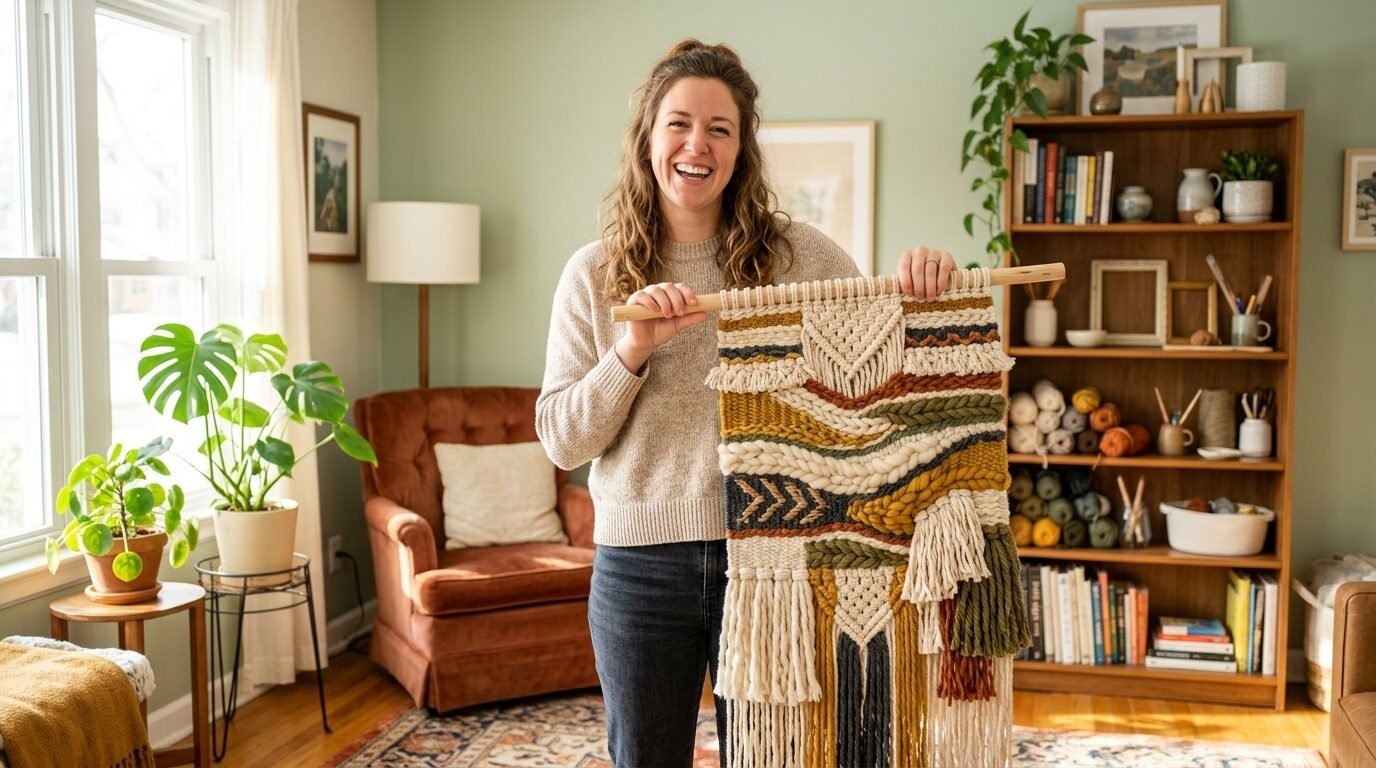
Choose macrame if you want a fast, affordable project with minimal tool requirements. Choose weaving if you enjoy rich textures, slow routines, and working with varied color palettes. Both paths lead to beautiful handmade home style.
Your choice depends on your personal patience and budget. Macrame offers rapid success for twenty dollars. Weaving rewards you with rich textures if you have forty dollars and a few open evenings. I watched my sister finish her macrame piece in one night. It looks incredible over her bed. Start with what matches your current energy. Pick up your supplies and begin creating this weekend.

Anya Castellan is the Founder and Editor-in-Chief of Home Wall Trends. An art history graduate of the Rhode Island School of Design with twelve years of experience writing for leading American design publications, she specializes in composition, gallery wall theory, and the quiet architecture of domestic space. A former contributing editor at Architectural Digest and guest lecturer at Parsons School of Design, Anya personally reads and signs off on every piece before it is published.